
Malawach
(Yemen / Israel / Flatbread / Malawah, Melawwaḥ, מלוואח)
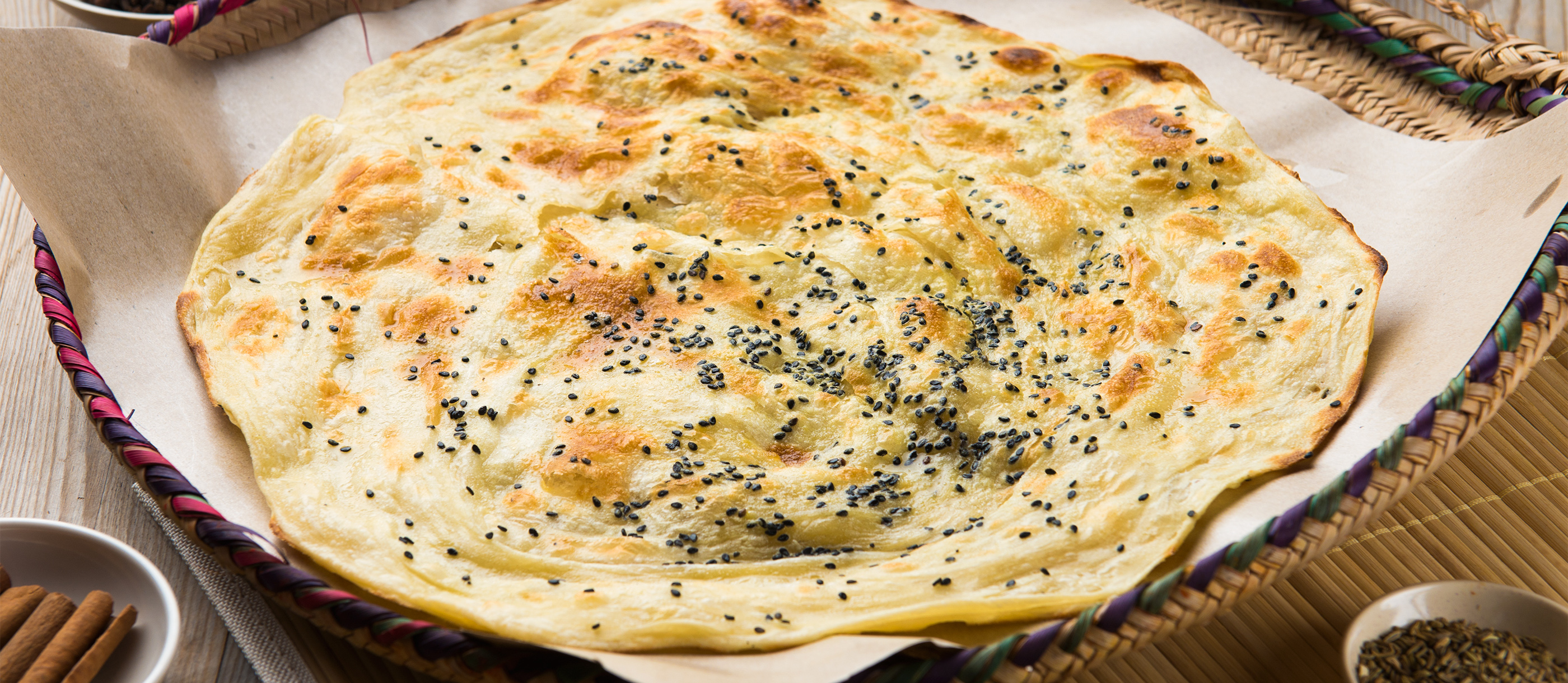
Malawach
Malawach is a laminated flatbread that originated among Yemenite Jewish communities and is now widely eaten in Israel, where it has become a common household and street-food item. It comes from a culinary context in Yemen where dough-based dishes that relied on layering and frying were common in home kitchens, and Jewish communities preserved specific styles of preparation that later spread as migration increased during the twentieth century.
The dough is made from flour, water, salt and fat, mixed into a soft and pliable base that is rolled out thinly, coated generously with oil or margarine, folded or rolled to create layers, and flattened again before cooking; the layering produces a flaky structure that resembles other laminated breads, though the handling method is specific to this dish.
Cooking is done on a hot pan or skillet without additional oil, relying on the fat within the layers to create browning and separation, and the result is a soft, slightly crisp flatbread with distinct strata that pull apart easily. A notable aspect is the versatility of its serving style, as malawach is eaten either plain or accompanied by hard-boiled eggs, grated tomatoes, zhug, cheese, honey or sugar, depending on whether it is served as a savory or sweet meal.
It is eaten throughout Israel in homes, bakeries and market stalls and remains part of Yemenite Jewish cooking in diaspora communities, pairing well with tea, yogurt drinks, fresh salads or dips that balance its richness.
[ Main Ingredients: Wheat Flour, Vegetable Oil or Butter, Salt ]