
| Self-sustaining Engine of Absolute Destruction The true absurdity of the nuclear arsenal lies in the silent, inevitable weapon of time. Just as modern construction crews across Europe still unearth highly unstable, corroded World War II bombs from the mud - requiring massive, high-risk military operations to dismantle eighty years later - our nuclear creations pose a terrifying, permanent threat even if they are never fired. Nuclear warheads are decaying, volatile machines of radioactive isotopes, warping plutonium, and oxidizing electronics that require billions of dollars in |
|
|
The Dawn of the Atomic Age
The complex history, immense cost, and tragic human toll of the Manhattan Project – This chronicle maps the six-year crucible that permanently redefined human warfare and global ethics. It tracks the evolution of nuclear weapons from the initial 1939 Einstein-Szilard warning to the formal surrender of Japan in September 1945. Entries uncover the strategic decisions, geographical anomalies, and devastating radiological impacts that forever altered the global landscape under the shadow of the Trinity test.
|
|
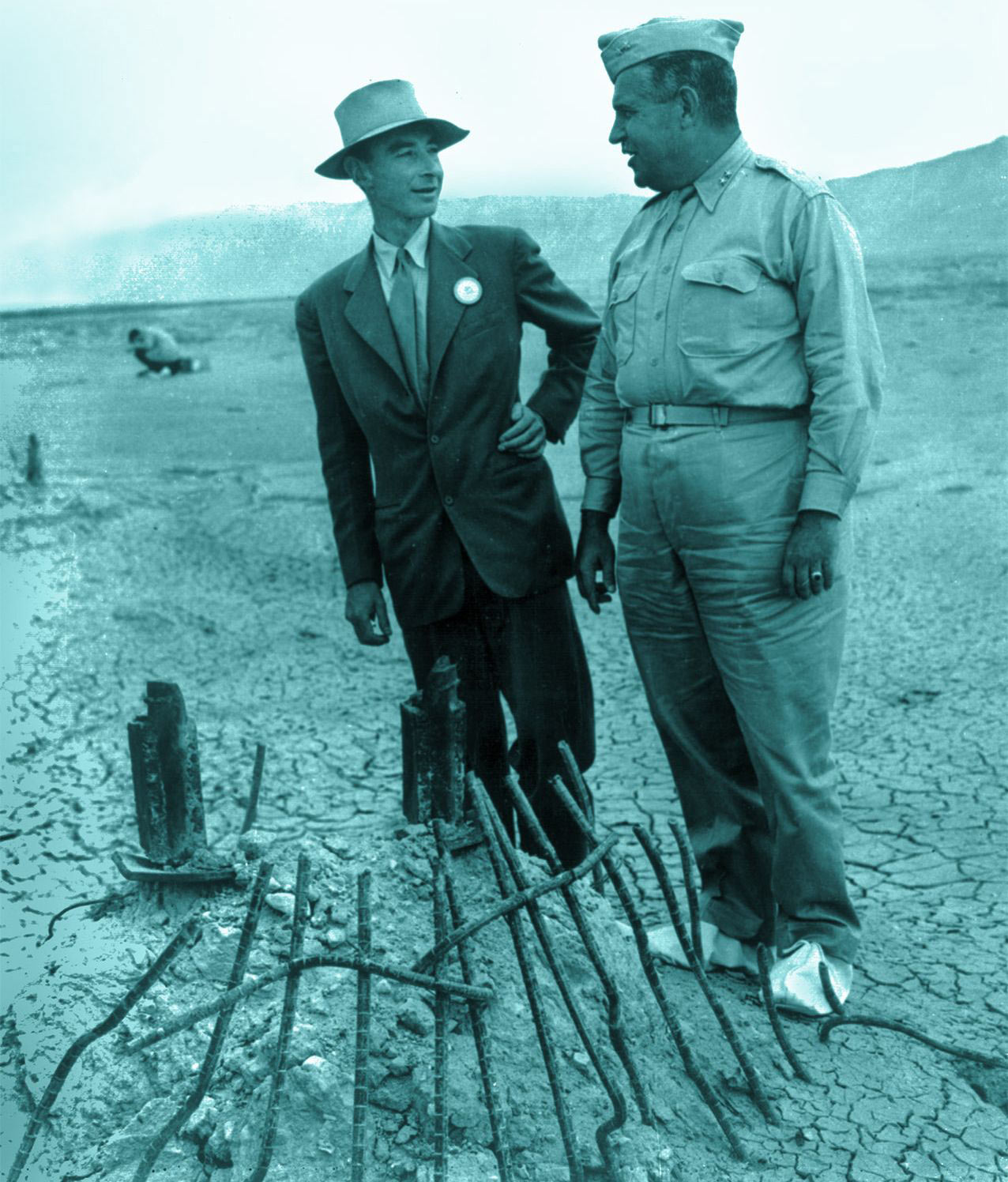
Trinity - The First Test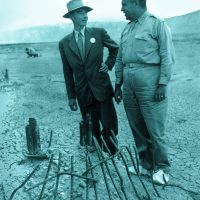 In military history, Trinity was the code name for the first-ever detonation of a nuclear weapon on July 16, 1945, conducted by the United States Army as part of the Manhattan Project. Led by J. Robert Oppenheimer, the plutonum-based implosion device (nicknamed "The Gadget") was successfully tested in the New Mexico desert, ushering in the Atomic Age. This experimental test paved the way for the two functional atomic bombs dropped weeks later - the uranium-based In military history, Trinity was the code name for the first-ever detonation of a nuclear weapon on July 16, 1945, conducted by the United States Army as part of the Manhattan Project. Led by J. Robert Oppenheimer, the plutonum-based implosion device (nicknamed "The Gadget") was successfully tested in the New Mexico desert, ushering in the Atomic Age. This experimental test paved the way for the two functional atomic bombs dropped weeks later - the uranium-based |
|
| click on the tooltip-link to keep it activated – click outside the box to deactivate it / to read more |➔| | |
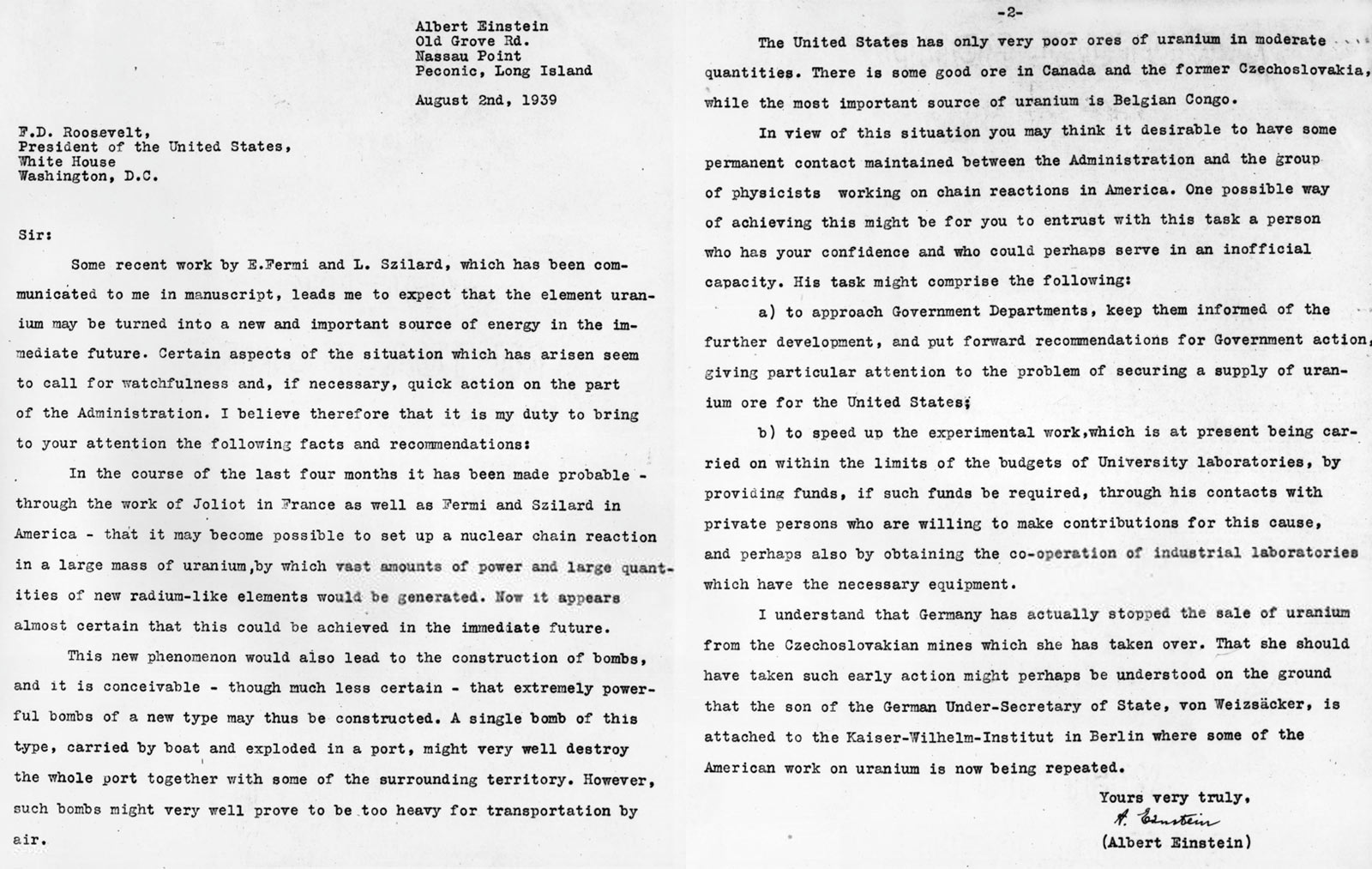
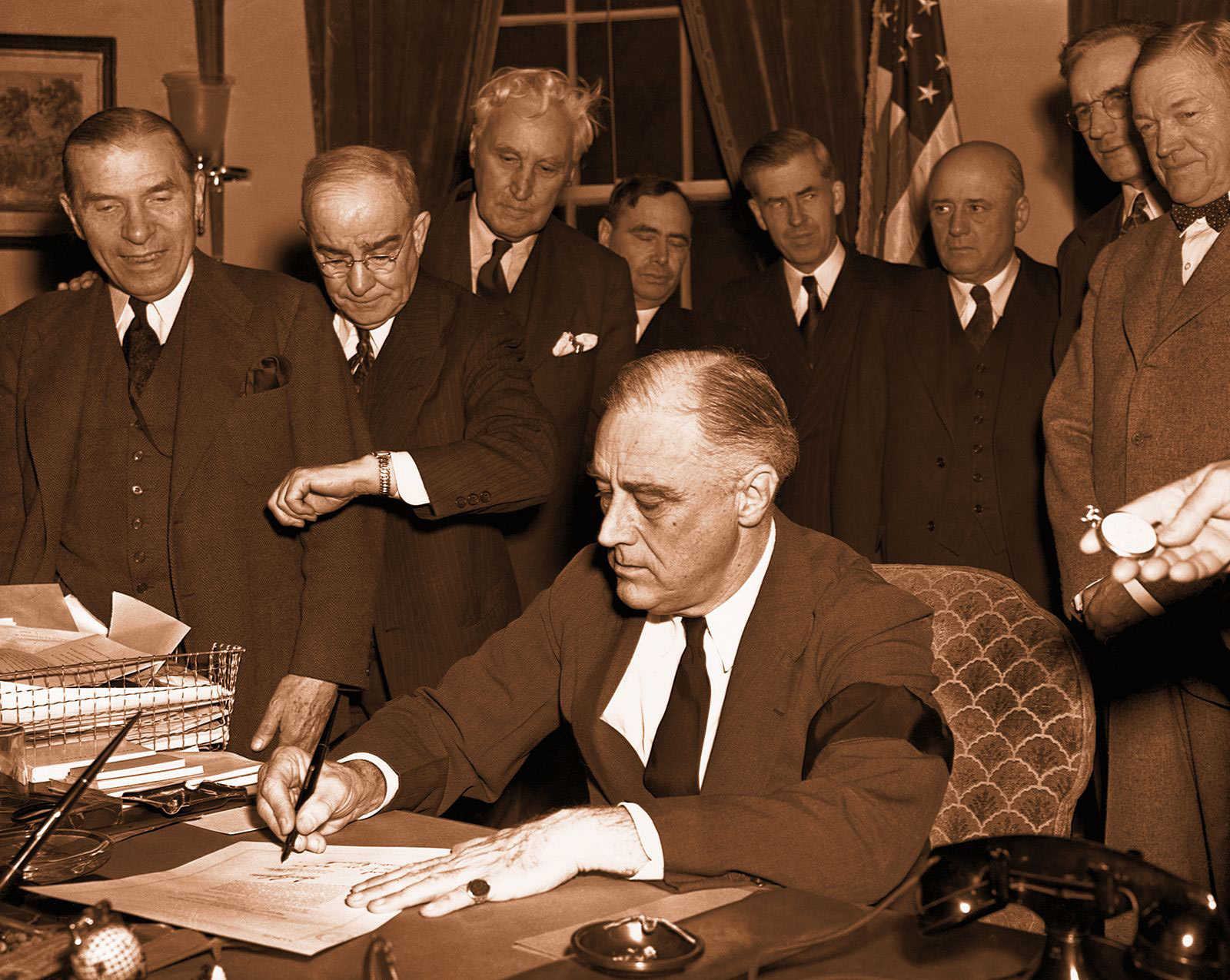
Einstein-Szilard Warning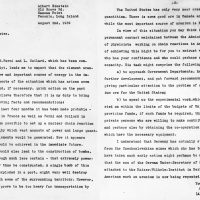 In August 1939, physicist Leo Szilard drafted a historic letter, famously signed by Albert Einstein, to warn President Franklin D. Roosevelt of the devastating military potential of nuclear fission. The letter emphasized that recent scientific breakthroughs could allow an uncontrolled nuclear chain reaction to create an entirely new class of bombs with unprecedented destructive power. Prompted by urgent fears that Nazi Germany was already exploiting Czech mines to pioneer its own atomic weapons program, Szilard and Einstein strongly urged the In August 1939, physicist Leo Szilard drafted a historic letter, famously signed by Albert Einstein, to warn President Franklin D. Roosevelt of the devastating military potential of nuclear fission. The letter emphasized that recent scientific breakthroughs could allow an uncontrolled nuclear chain reaction to create an entirely new class of bombs with unprecedented destructive power. Prompted by urgent fears that Nazi Germany was already exploiting Czech mines to pioneer its own atomic weapons program, Szilard and Einstein strongly urged the|➔| | August 1939 |
September 1, 1939 | Outbreak of World War IIOn September 1, 1939, Nazi Germany invaded Poland, triggering the immediate outbreak of World War II and validating the darkest fears of the scientific community. Just weeks after Einstein and Szilard warned President Roosevelt about atomic weapons, the onset of global warfare accelerated the existential race for nuclear supremacy. As German forces rapidly occupied European territories, Allied leadership became deeply terrified that Nazi scientists would successfully harness uranium fission to construct an unstoppable superweapon. This intense wartime urgency transformed theoretical |➔| |
| The Uranium Committee ReportFollowing the Einstein-Szilard warning, President Roosevelt quickly appointed the Advisory Committee on Uranium to investigate the military viability of nuclear energy. In November 1939, the committee officially reported back to the President, concluding that an explosive chain reaction in uranium was scientifically possible, though still entirely unproved. This historic finding marked the very first time the United States government formally acknowledged the catastrophic potential of atomic weapons. While the report noted that the technology was too experimental for immediate deployment, |➔| | November 1939 |
Early 1940 | The First Federal FundingIn early 1940, the United States government made a modest fund of $6,000 available to the Advisory Committee on Uranium to officially begin research on nuclear fission. This historically small allocation - equivalent to roughly $130,000 today - was specifically used to purchase high-purity graphite and uranium oxides for initial laboratory experiments. Led by physicists Enrico Fermi and Leo Szilard at Columbia University, these early trials aimed to measure the actual rate of neutron absorption to determine if a self-sustaining |➔| |
Discovery of Plutonium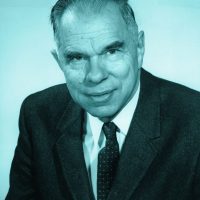 On the night of February 23, 1941, Glenn Seaborg's team at UC Berkeley achieved a monumental turning point by performing the first definitive chemical identification of element 94. Formally named plutonium the following year, this newly isolated synthetic element radically altered the timeline of the Allied nuclear program. While separating weapon-grade uranium-235 from natural uranium was an agonizingly slow, mechanically complex industrial nightmare, plutonium offered a far faster, alternative route to an atomic weapon. Because plutonium is an entirely different On the night of February 23, 1941, Glenn Seaborg's team at UC Berkeley achieved a monumental turning point by performing the first definitive chemical identification of element 94. Formally named plutonium the following year, this newly isolated synthetic element radically altered the timeline of the Allied nuclear program. While separating weapon-grade uranium-235 from natural uranium was an agonizingly slow, mechanically complex industrial nightmare, plutonium offered a far faster, alternative route to an atomic weapon. Because plutonium is an entirely different|➔| | February 23, 1941 |
December 6, 1941 | OSRD Takes CommandOn December 6, 1941, the secret American atomic program reached a vital administrative turning point when it was officially placed under the centralized management of the Office of Scientific Research and Development (OSRD). Directed by the visionary engineer Vannevar Bush, this pivotal reorganization rescued the scattered, slow-moving uranium research groups from bureaucratic gridlock and small-scale academic labs. By integrating civilian science directly with government resources, the OSRD immediately injected massive funding, top-tier scientific talent, and a deep sense of wartime |➔| |
Attack on Pearl Harbor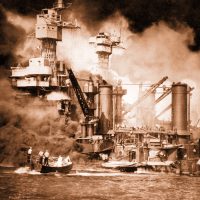 On December 7, 1941, just one day after the project was placed under the OSRD, Japan launched a devastating surprise attack on Pearl Harbor, thrusting the United States directly into World War II. This catastrophic event immediately shattered all remaining political isolationism and instantly electrified the secret American atomic program with unparalleled military urgency. The sudden reality of a brutal, multi-front global war eliminated all academic hesitations regarding the development of weapons of mass destruction. With the nation fully mobilized On December 7, 1941, just one day after the project was placed under the OSRD, Japan launched a devastating surprise attack on Pearl Harbor, thrusting the United States directly into World War II. This catastrophic event immediately shattered all remaining political isolationism and instantly electrified the secret American atomic program with unparalleled military urgency. The sudden reality of a brutal, multi-front global war eliminated all academic hesitations regarding the development of weapons of mass destruction. With the nation fully mobilized|➔| | December 7, 1941 |
December 8, 1941 | America Enters the WarOn December 8, 1941, exactly one day after Pearl Harbor, the United States officially declared war on Japan, permanently entering the global conflict. This monumental declaration instantly placed the nation on a total war footing, reshaping the entire landscape of American industry, science, and governance. For the secret atomic project, this transition meant the immediate removal of all remaining civilian constraints and budget limitations. The federal government began treating the development of an atomic weapon as an absolute national priority, |➔| |
Nazi Germany Declares War to US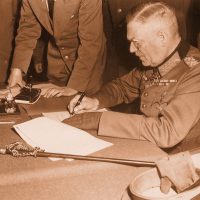 On December 11, 1941, just days after Pearl Harbor, Nazi Germany officially declared war on the United States, cementing a brutal, multi-front global conflict. This monumental declaration turned the secret American atomic initiative into an existential race for survival against a highly advanced adversary. Allied leadership was acutely aware that German physicists had discovered nuclear fission first, sparking terrifying fears that Hitler's regime was already building an atomic bomb. The immediate threat of Nazi nuclear supremacy stripped away any remaining On December 11, 1941, just days after Pearl Harbor, Nazi Germany officially declared war on the United States, cementing a brutal, multi-front global conflict. This monumental declaration turned the secret American atomic initiative into an existential race for survival against a highly advanced adversary. Allied leadership was acutely aware that German physicists had discovered nuclear fission first, sparking terrifying fears that Hitler's regime was already building an atomic bomb. The immediate threat of Nazi nuclear supremacy stripped away any remaining|➔| | December 11, 1941 |
May 1942 | Parallel Production Strategy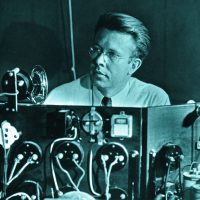 In May 1942, American leadership made the monumental decision to proceed simultaneously on all promising production methods for obtaining fissionable materials. Rather than wasting precious time testing individual technologies sequentially, the government gambled by concurrently funding every viable theory to ensure maximum speed. This high-risk strategy included the aggressive development of the electromagnetic separation process pioneered by Ernest O. Lawrence at UC Berkeley, alongside gaseous diffusion, thermal diffusion, and plutonium production. This unprecedented parallel approach was incredibly expensive and logistically In May 1942, American leadership made the monumental decision to proceed simultaneously on all promising production methods for obtaining fissionable materials. Rather than wasting precious time testing individual technologies sequentially, the government gambled by concurrently funding every viable theory to ensure maximum speed. This high-risk strategy included the aggressive development of the electromagnetic separation process pioneered by Ernest O. Lawrence at UC Berkeley, alongside gaseous diffusion, thermal diffusion, and plutonium production. This unprecedented parallel approach was incredibly expensive and logistically|➔| |
| Army Engineers Assume ManagementIn June 1942, the secret atomic program transitioned from an academic endeavor to a massive military enterprise when the U.S. Army Corps of Engineers was officially assigned management of all construction work. This crucial administrative shift marked the birth of what would become the Manhattan Project. The Army was tasked with building a vast, unprecedented network of secret cities, experimental laboratories, pilot plants, and industrial manufacturing facilities across the nation. Faced with an unyielding wartime timeline, engineers rapidly turned raw |➔| | June 1942 |
August 1942 | Manhattan Project Name In August 1942, the secret atomic program officially established its identity when an office was opened in New York City and named the Manhattan Engineer District (MED). Customary for Army engineering units, the district was named after the physical location of its initial headquarters. This administrative designation gave birth to the Manhattan Project, the iconic name by which the entire global atomic effort would forever be known. Establishing this formal military district allowed the government to operate under complete wartime In August 1942, the secret atomic program officially established its identity when an office was opened in New York City and named the Manhattan Engineer District (MED). Customary for Army engineering units, the district was named after the physical location of its initial headquarters. This administrative designation gave birth to the Manhattan Project, the iconic name by which the entire global atomic effort would forever be known. Establishing this formal military district allowed the government to operate under complete wartime|➔| |
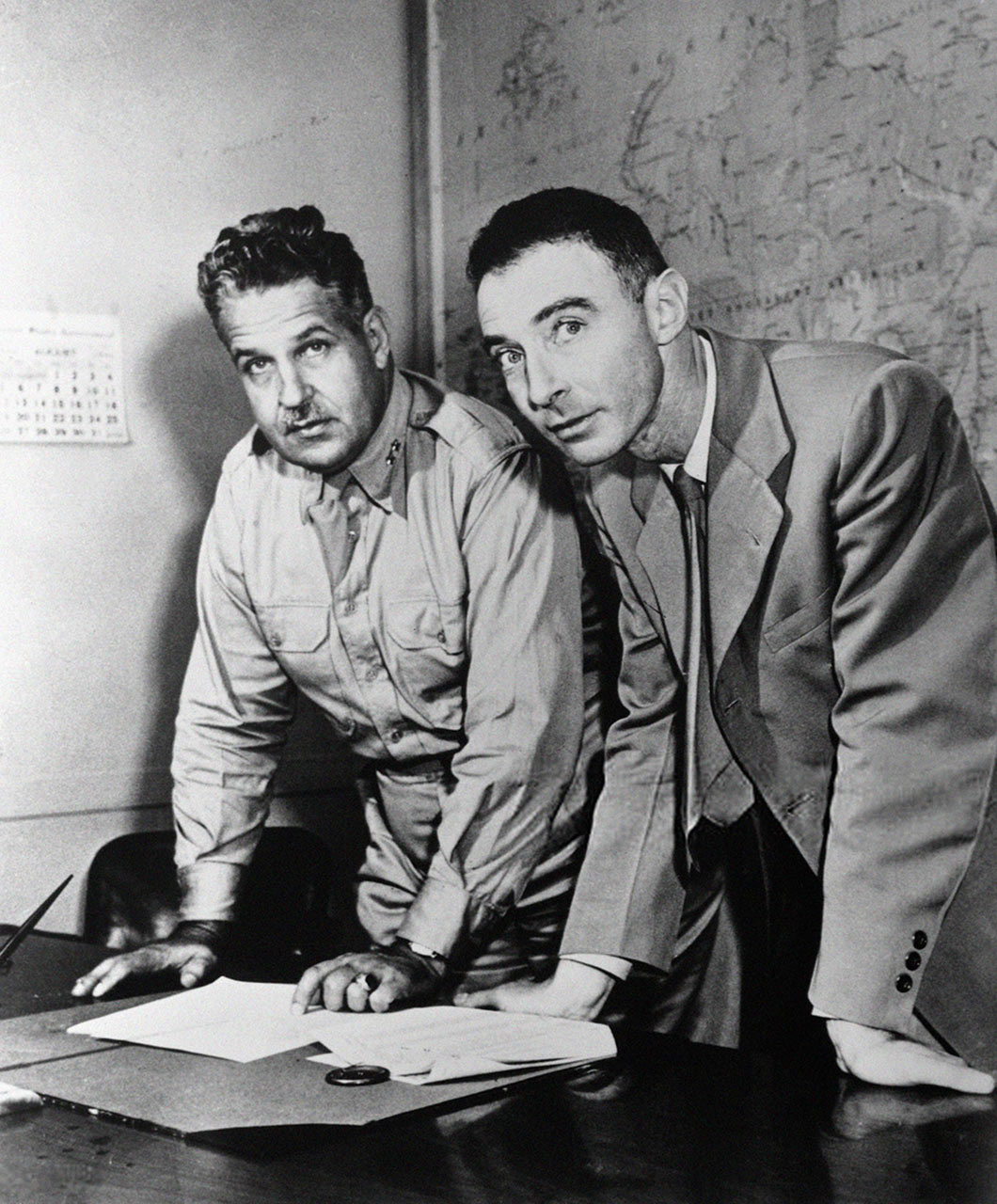
General Groves Takes Command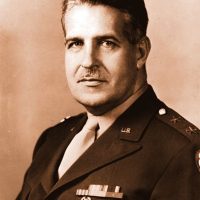 In September 1942, the Manhattan Project secured its definitive leadership when Brigadier General Leslie R. Groves was officially placed in absolute charge of all Army atomic activities. Known for his fierce, uncompromising efficiency - having just overseen the construction of the Pentagon - Groves transformed the project into a hyper-focused military machine. He immediately broke through administrative gridlock, secured the highest possible wartime priority rating for materials, and personally selected the critical production sites at Oak Ridge, Hanford, and Los In September 1942, the Manhattan Project secured its definitive leadership when Brigadier General Leslie R. Groves was officially placed in absolute charge of all Army atomic activities. Known for his fierce, uncompromising efficiency - having just overseen the construction of the Pentagon - Groves transformed the project into a hyper-focused military machine. He immediately broke through administrative gridlock, secured the highest possible wartime priority rating for materials, and personally selected the critical production sites at Oak Ridge, Hanford, and Los|➔| | September 1942 |
December 1942 | DuPont Industrial Partnership In December 1942, the Manhattan Project reached a critical industrial milestone when the federal government signed formal contracts with the DuPont Company. General Groves explicitly selected the chemical giant to design, construct, and operate the world's first industrial-scale plutonium production reactors. This massive corporate partnership successfully bridged the gap between fragile, small-scale laboratory chemistry and unprecedented, heavy industrial manufacturing. Tasked with an incredibly dangerous and completely unproved assignment, DuPont engineered and built the colossal Hanford Engineer Works in Washington state In December 1942, the Manhattan Project reached a critical industrial milestone when the federal government signed formal contracts with the DuPont Company. General Groves explicitly selected the chemical giant to design, construct, and operate the world's first industrial-scale plutonium production reactors. This massive corporate partnership successfully bridged the gap between fragile, small-scale laboratory chemistry and unprecedented, heavy industrial manufacturing. Tasked with an incredibly dangerous and completely unproved assignment, DuPont engineered and built the colossal Hanford Engineer Works in Washington state|➔| |
Fermi - First Controlled Chain Reaction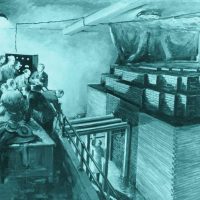 On December 2, 1942, precisely the same month the DuPont contracts were signed, physicist Enrico Fermi achieved one of the greatest milestones in human history by producing the world's first controlled, self-sustaining nuclear chain reaction. Operating in a secret underground squash court at the University of Chicago, Fermi and his brilliant team constructed Chicago Pile-1, a primitive but precise reactor made of graphite blocks and uranium oxide. By carefully withdrawing cadmium control rods, they successfully initiated a controlled atomic fission On December 2, 1942, precisely the same month the DuPont contracts were signed, physicist Enrico Fermi achieved one of the greatest milestones in human history by producing the world's first controlled, self-sustaining nuclear chain reaction. Operating in a secret underground squash court at the University of Chicago, Fermi and his brilliant team constructed Chicago Pile-1, a primitive but precise reactor made of graphite blocks and uranium oxide. By carefully withdrawing cadmium control rods, they successfully initiated a controlled atomic fission|➔| | December 2, 1942 |
April 1943 | Los Alamos Weapon Laboratory Created In April 1943, a secret weapon-design laboratory directed by physicist J. Robert Oppenheimer was officially established at Los Alamos, New Mexico. Project Y was specifically tasked with the monumental challenge of developing methods to reduce raw fissionable materials into pure, weapon-grade metals. Oppenheimer gathered the world's most brilliant scientific minds in this isolated desert outpost to solve unprecedented problems in metallurgy, chemistry, and ordnance engineering. The team had to meticulously learn how to shape highly volatile plutonium and uranium into In April 1943, a secret weapon-design laboratory directed by physicist J. Robert Oppenheimer was officially established at Los Alamos, New Mexico. Project Y was specifically tasked with the monumental challenge of developing methods to reduce raw fissionable materials into pure, weapon-grade metals. Oppenheimer gathered the world's most brilliant scientific minds in this isolated desert outpost to solve unprecedented problems in metallurgy, chemistry, and ordnance engineering. The team had to meticulously learn how to shape highly volatile plutonium and uranium into|➔| |
| Combined Policy CommitteeIn August 1943, international collaboration reached its peak when the United States, Great Britain, and Canada signed the Quebec Agreement, officially establishing a Combined Policy Committee. This historic pact effectively merged the independent British "Tube Alloys" nuclear program into the Manhattan Project. Under this agreement, top-tier British and Canadian scientists—including brilliant minds like Klaus Fuchs, James Chadwick, and Otto Frisch—moved directly to secret U.S. laboratories like Los Alamos. This massive influx of elite international expertise infused the project with vital |➔| | August 1943 |
May 7, 1945 | Surrender of Nazi GermanyBetween 1943 and 1945, the Manhattan Project operated under a total informational blackout, with thousands of workers driving toward an atomic weapon in complete secrecy - though spy Klaus Fuchs secretly funneled blueprints to the Soviet Union. This intense pressure culminated on May 7, 1945, when Nazi Germany officially surrendered, ending the war in Europe. The collapse of the Third Reich permanently shattered the project's original, primary motivation: defeating a German atomic program. However, this historic milestone did not halt |➔| |
An Unprecedented Expenditure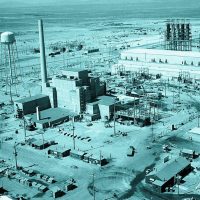 By the summer of 1945, the colossal Hanford Engineer Works in Washington state successfully manufactured quantities of pure plutonium-239 sufficient to produce a full-scale nuclear explosion. By this exact milestone, the total cost of the hyper-secret Manhattan Project had ballooned to an astronomical $2 billion (equivalent to tens of billions today) - an unprecedented expenditure equivalent to tens of billions of dollars today. This massive accumulation of fissile material and financial capital created an immense, virtually unstoppable institutional momentum. The By the summer of 1945, the colossal Hanford Engineer Works in Washington state successfully manufactured quantities of pure plutonium-239 sufficient to produce a full-scale nuclear explosion. By this exact milestone, the total cost of the hyper-secret Manhattan Project had ballooned to an astronomical $2 billion (equivalent to tens of billions today) - an unprecedented expenditure equivalent to tens of billions of dollars today. This massive accumulation of fissile material and financial capital created an immense, virtually unstoppable institutional momentum. The|➔| | Summer 1945 |
July 16, 1945 | The Trinity Test ParametersCode-named Trinity, the world’s first nuclear detonation occurred on July 16, 1945, at 5:29:45 AM in the remote desert of Alamogordo, New Mexico, located 193 kilometers south of Albuquerque. The experimental weapon, officially named "Gadget," utilized a highly complex and volatile plutonium-239 implosion assembly design. The successful blast released a cataclysmic energy output with a TNT equivalent of 21,000 tons, an unprecedented destructive force that instantly vaporized the steel test tower and melted the desert sand into green radioactive glass. |➔| |
Bombing of Hiroshima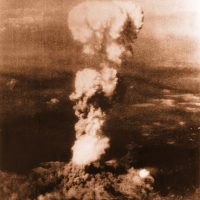 On August 6, 1945, the United States military deployed the world’s first atomic weapon in combat, airbursting it exactly 580 meters above the city of Hiroshima. Nicknamed "Little Boy," this devastating device utilized an entirely untested uranium-235 gun-assembly design, which scientists were so confident would work that it was never experimentally fired at the Trinity test. The resulting detonation released a cataclysmic blast equivalent to 15,000 tons of TNT, generating a blinding flash, a colossal firestorm, and extreme radiation that On August 6, 1945, the United States military deployed the world’s first atomic weapon in combat, airbursting it exactly 580 meters above the city of Hiroshima. Nicknamed "Little Boy," this devastating device utilized an entirely untested uranium-235 gun-assembly design, which scientists were so confident would work that it was never experimentally fired at the Trinity test. The resulting detonation released a cataclysmic blast equivalent to 15,000 tons of TNT, generating a blinding flash, a colossal firestorm, and extreme radiation that|➔| | August 6, 1945 |
August 6, 1945 | The Human Cost of Hiroshima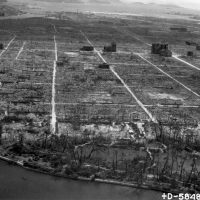 The atomic detonation over Hiroshima inflicted a catastrophic human toll that fundamentally shocked the conscience of the world. The initial blast instantly killed or mortally wounded approximately 70,000 people outright or shortly after, wiping out roughly 27% of the city's total population in a single heartbeat. As intense firestorms consumed civilian districts and lethal, unseen radiation poisoning ravaged survivors, the devastation compounded rapidly. By the year's end, the total estimated casualties soared to an astonishing 140,000 people, representing a staggering The atomic detonation over Hiroshima inflicted a catastrophic human toll that fundamentally shocked the conscience of the world. The initial blast instantly killed or mortally wounded approximately 70,000 people outright or shortly after, wiping out roughly 27% of the city's total population in a single heartbeat. As intense firestorms consumed civilian districts and lethal, unseen radiation poisoning ravaged survivors, the devastation compounded rapidly. By the year's end, the total estimated casualties soared to an astonishing 140,000 people, representing a staggering|➔| |
Bombing of Nagasaki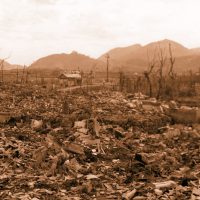 On August 9, 1945, just three days after Hiroshima, the United States deployed its second nuclear weapon, airbursting it 500 meters above the city of Nagasaki. Nicknamed "Fat Man," this devastating bomb was a functional duplicate of the highly volatile plutonium-239 implosion assembly successfully tested weeks earlier at Trinity. The catastrophic blast released an explosive force equivalent to 21,000 tons of TNT, instantly obliterating the city's industrial valleys, unleashing an intense firestorm, and unleashing lethal waves of radiation. This second On August 9, 1945, just three days after Hiroshima, the United States deployed its second nuclear weapon, airbursting it 500 meters above the city of Nagasaki. Nicknamed "Fat Man," this devastating bomb was a functional duplicate of the highly volatile plutonium-239 implosion assembly successfully tested weeks earlier at Trinity. The catastrophic blast released an explosive force equivalent to 21,000 tons of TNT, instantly obliterating the city's industrial valleys, unleashing an intense firestorm, and unleashing lethal waves of radiation. This second|➔| | August 9, 1945 |
August 9, 1945 | The Human Cost of NagasakiThe atomic bombing of Nagasaki inflicted absolute devastation on both the city's population and its infrastructure. The initial plutonium blast instantly killed approximately 40,000 people outright or shortly after, immediately erasing 20% of the total population. Due to severe radiation sickness, horrific thermal burns, and collapsing medical infrastructure, the human toll quickly mounted. By the year's end, total estimated casualties reached 70,000 people, representing a staggering 36% of Nagasaki's entire population. Compounding this human tragedy was the near-total erasure of |➔| |
| Target Topographical ShieldingOn August 9, 1945, pure chance dictated the nuclear destruction of Nagasaki. The B-29 bomber Bockscar spent 45 minutes over its primary target, Kokura, but drifting smoke and heavy clouds completely blocked visual aiming. Running dangerously low on fuel, the aircraft broke away to its secondary target. The plutonium bomb detonated over Nagasaki was significantly more powerful than the Hiroshima weapon, releasing a 21,000-ton TNT equivalent. However, Nagasaki’s highly irregular, mountainous terrain dramatically altered the blast. While the explosion completely |➔| | August 9, 1945 |
Mid-August 1945 | The Biological Toll of RadiationWhile geography altered the physical blast zones, both Hiroshima and Nagasaki suffered an identical, horrific wave of ionizing radiation that bypassed all terrain. Detonated as high-altitude airbursts, the bombs instantly fractured human cellular DNA, triggering fatal Acute Radiation Syndrome across both populations. Immediate symptoms included severe confusion, convulsions, extreme weakness, fatigue, internal bleeding, and purple skin spots called petechiae. Victims also suffered hair loss, throat ulcerations, and absolute immune collapse from bone marrow destruction. Beyond the immediate deaths, radiation injuries |➔| |
| The Surrender Announcement of JapanOn August 14, 1945, Emperor Hirohito officially announced Japan's acceptance of the Allied surrender terms, broadcasting the historic message to his nation the following day. While this announcement effectively halted active combat operations, it did not constitute the formal, legal end of the conflict. The declaration immediately initiated a tense, complex transitional period marked by deep internal military unrest and a chaotic scramble to transition command across vast Pacific battlefields. Allied forces tightly maintained their strategic military posture while scrambling |➔| | August 14, 1945 |
September 2, 1945 | Formal Surrender of Japan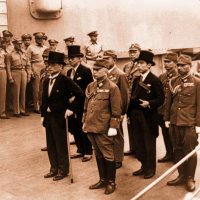 On September 2, 1945, the catastrophic global conflict of World War II finally reached its official, legal conclusion aboard the battleship USS Missouri in Tokyo Bay. Surrounded by Allied representatives, Japanese foreign minister Mamoru Shigemitsu and General Yoshijiro Umezu formally signed the Instrument of Surrender, officially submitting to General Douglas MacArthur. This historic, solemn ceremony permanently ended the bloodshed across the Pacific and initiated the official Allied occupation of Japan. By cementing the definitive conclusion of the war, this final On September 2, 1945, the catastrophic global conflict of World War II finally reached its official, legal conclusion aboard the battleship USS Missouri in Tokyo Bay. Surrounded by Allied representatives, Japanese foreign minister Mamoru Shigemitsu and General Yoshijiro Umezu formally signed the Instrument of Surrender, officially submitting to General Douglas MacArthur. This historic, solemn ceremony permanently ended the bloodshed across the Pacific and initiated the official Allied occupation of Japan. By cementing the definitive conclusion of the war, this final|➔| |
The Dawn of the Atomic Age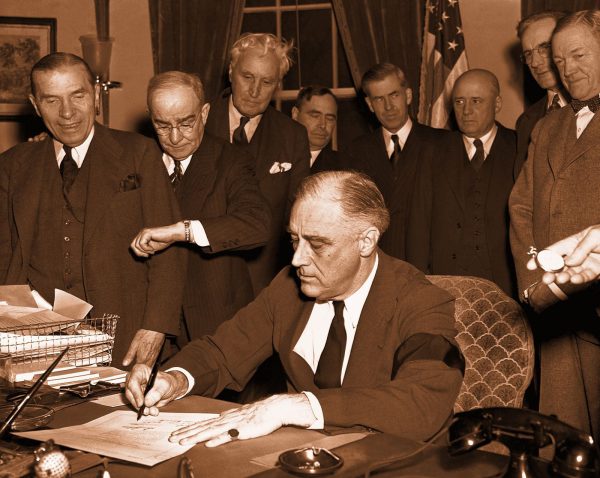 In 1939, the discovery of nuclear fission was an extraordinary leap in theoretical physics. Driven by a humanistic dread of a Nazi nuclear monopoly, the world's greatest scientific minds united to warn the civilian world of atomic energy‘s raw potential. Their goal was defensive: a desperate attempt to protect global freedom from absolute tyranny. In 1939, the discovery of nuclear fission was an extraordinary leap in theoretical physics. Driven by a humanistic dread of a Nazi nuclear monopoly, the world's greatest scientific minds united to warn the civilian world of atomic energy‘s raw potential. Their goal was defensive: a desperate attempt to protect global freedom from absolute tyranny.U.S. Declares War to Japan) The Military Hijacking - Once the state |
|
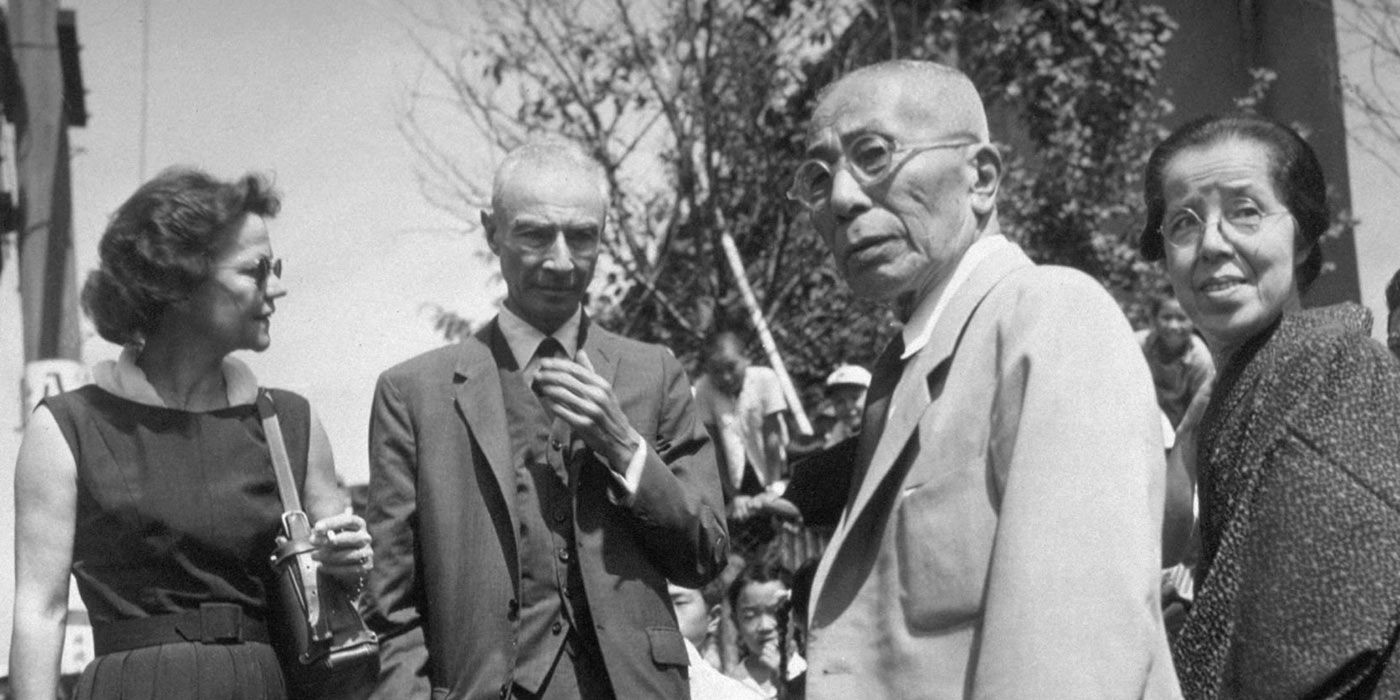
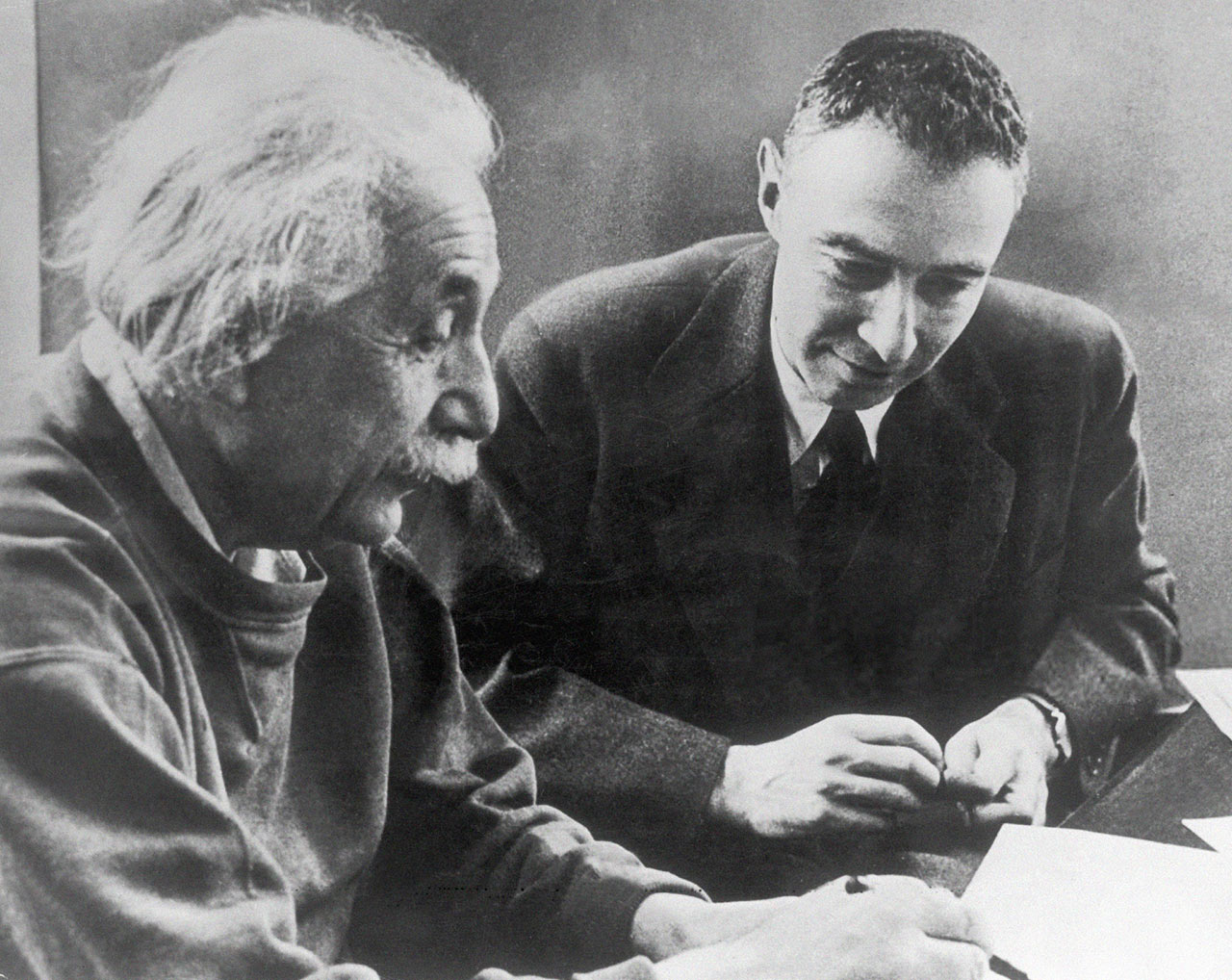
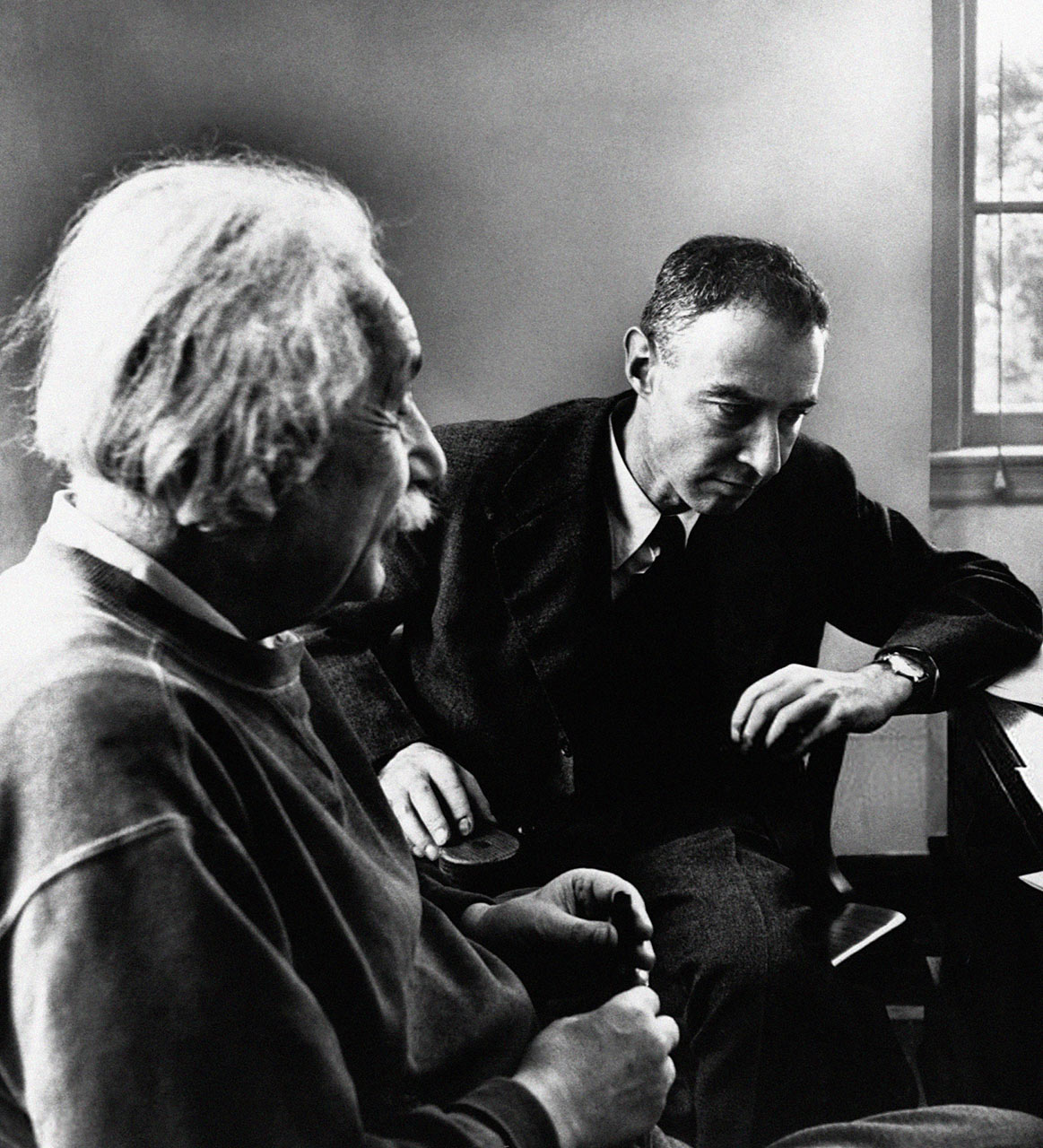
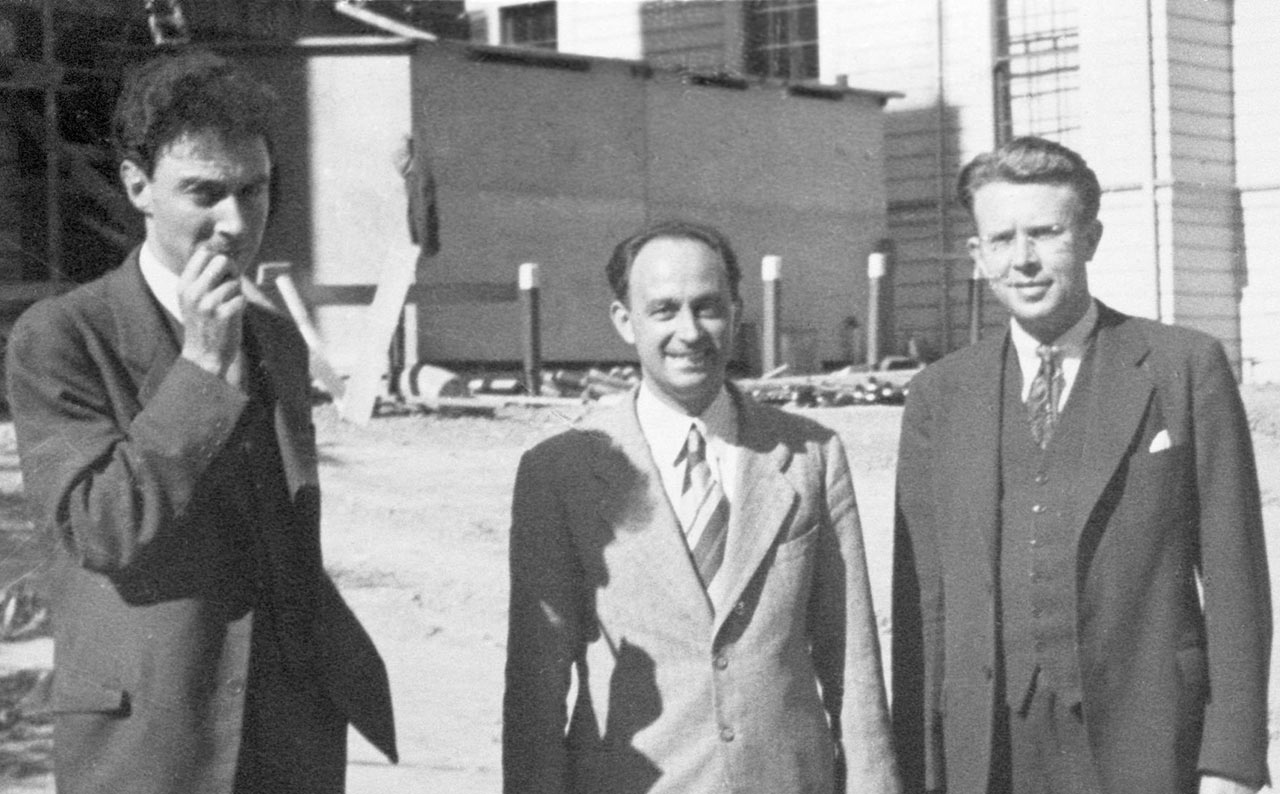
| Nuclear physicist Julius Robert Oppenheimer (1904-1967), the “Father” of Atomic Bomb
J Robert Oppenheimer
Showing 1 - 10 of 11 items / Page 1 of 2
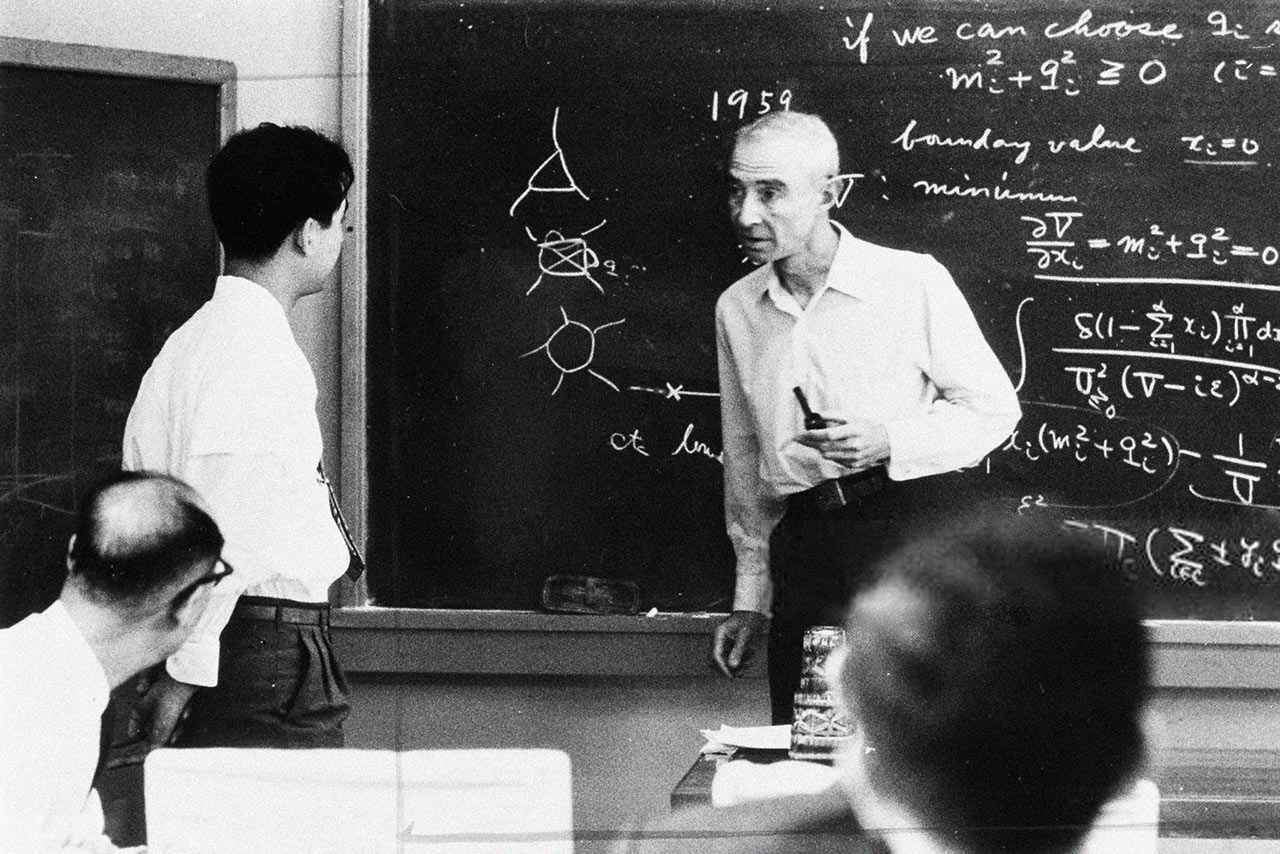 Oppenheimer Theoretical physicist Robert Oppenheimer lectures at Kyoto University on September... | ➜ |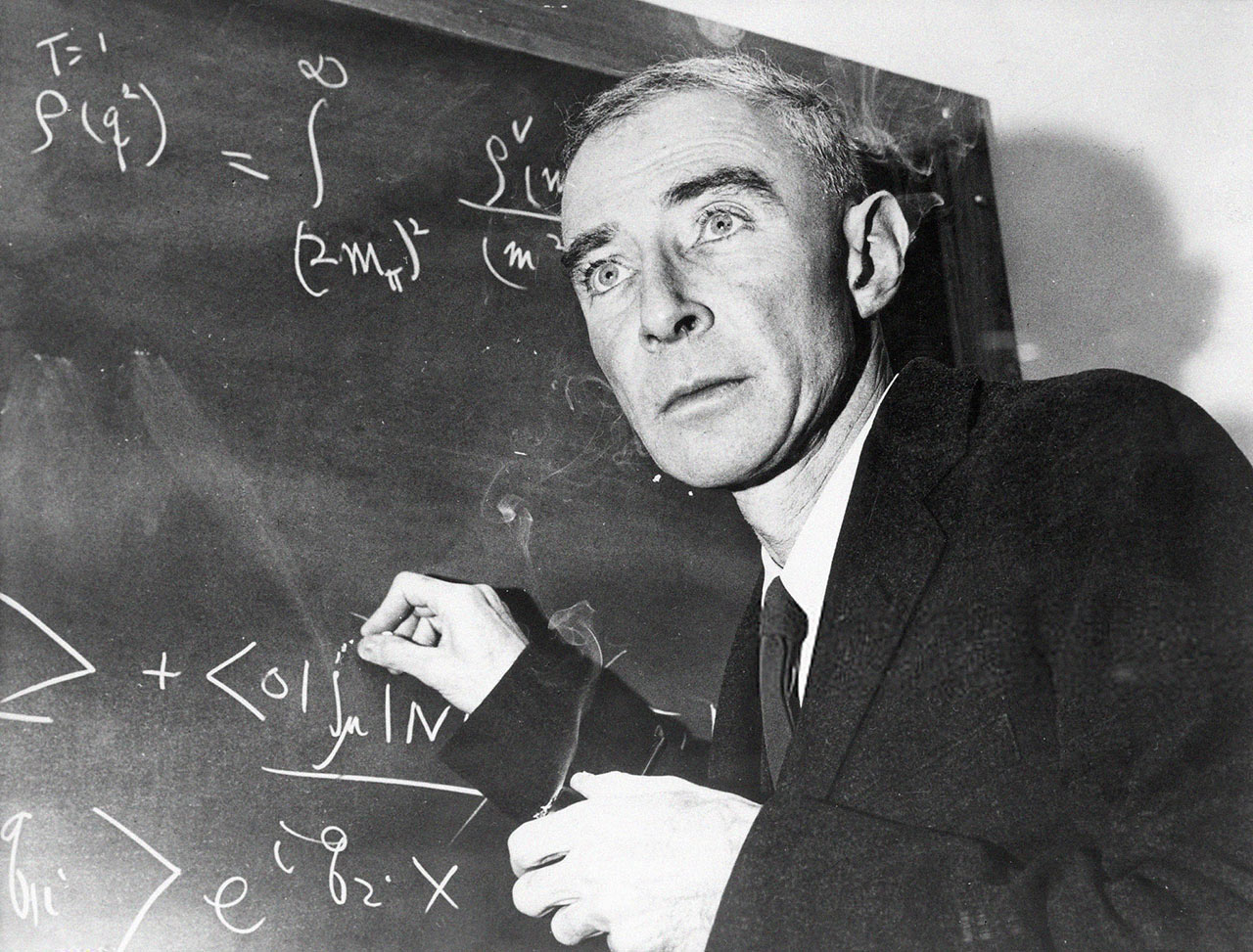 Physicist Julius Robert Oppenheimer 4 Physicist Julius Robert Oppenheimer - Portrait (Photo by Corbis) | ➜ |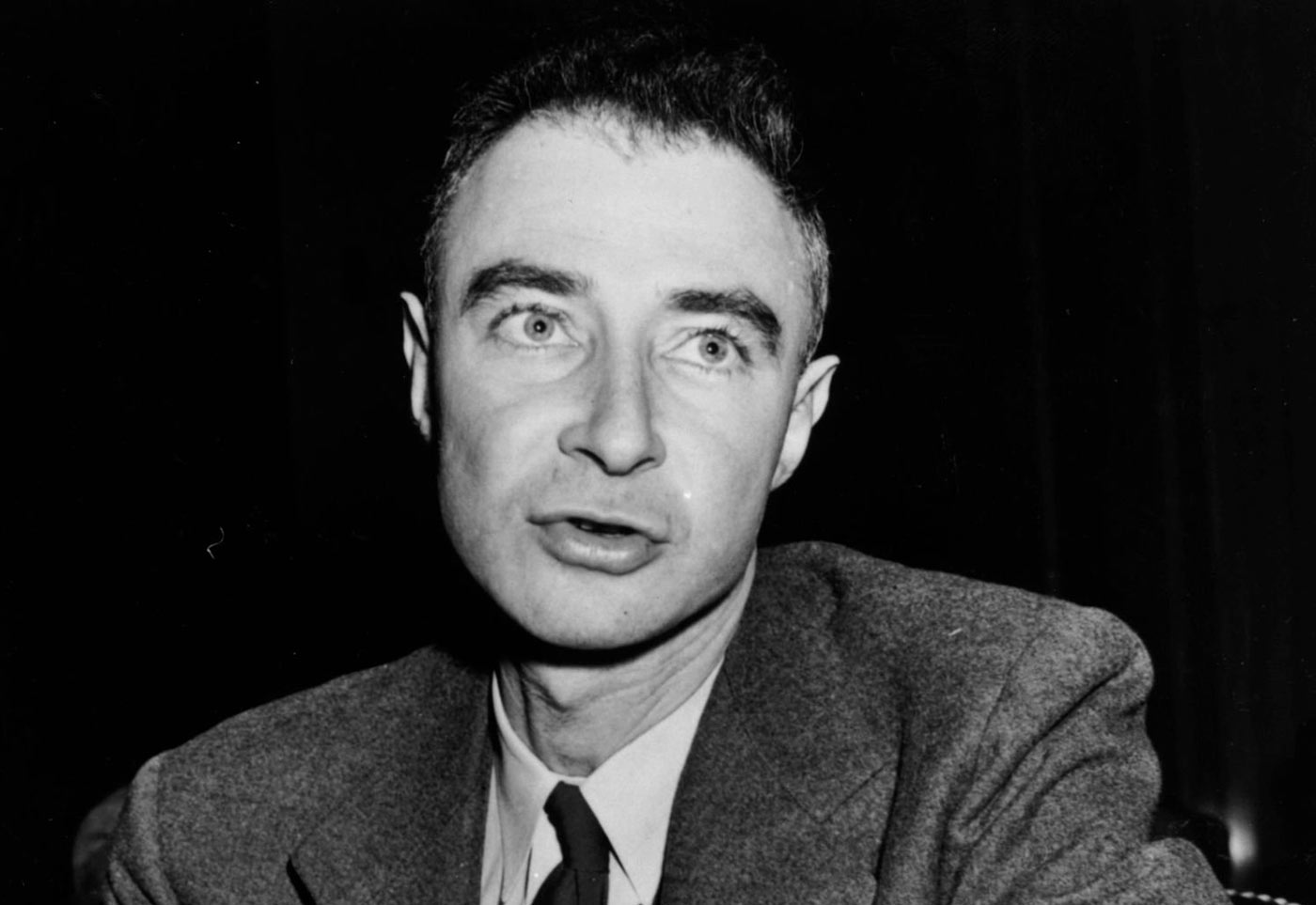 Physicist Julius Robert Oppenheimer 5 Nuclear physicist Julius Robert Oppenheimer (1904-1967), director of the Los... | ➜ |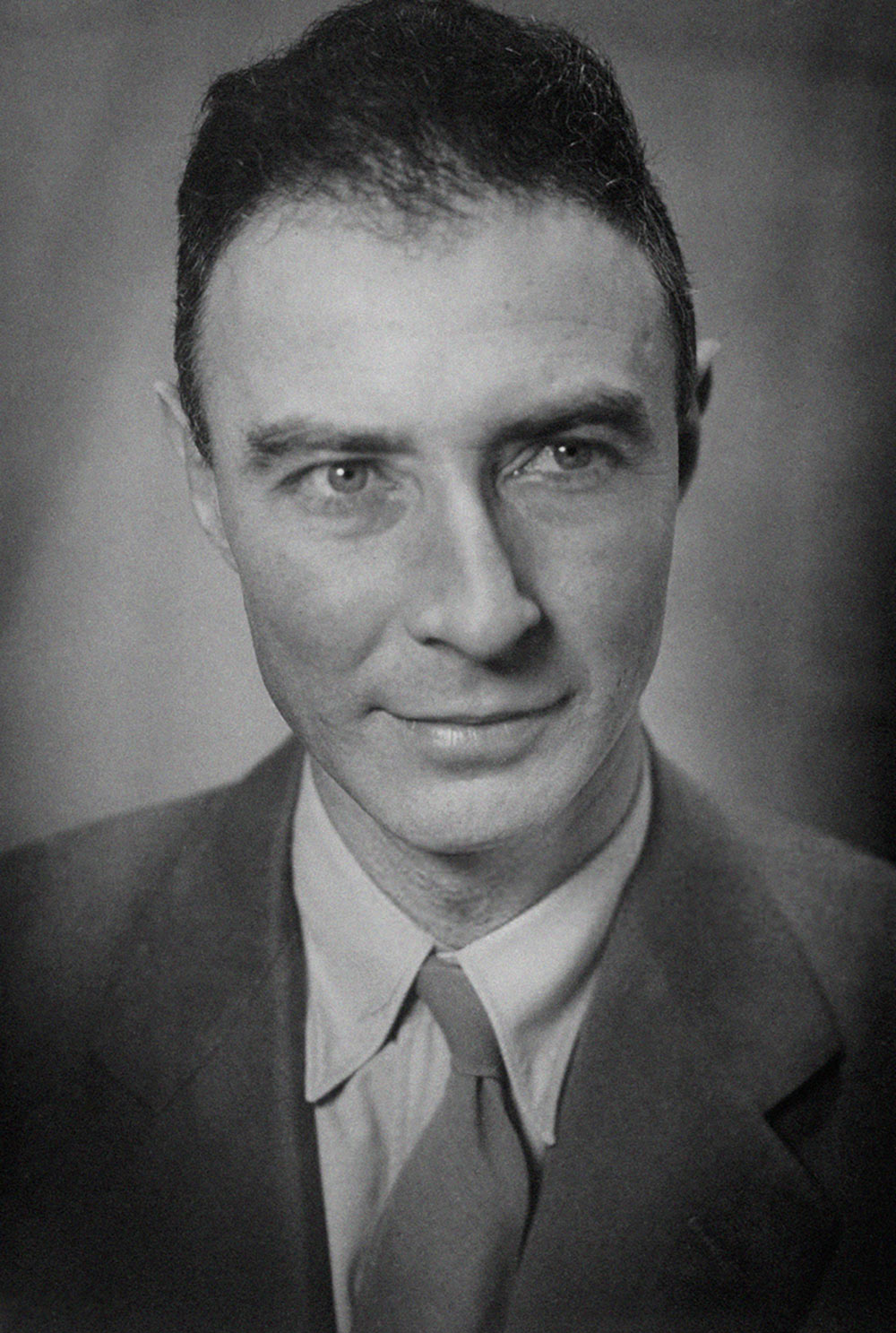 Physicist Julius Robert Oppenheimer 6 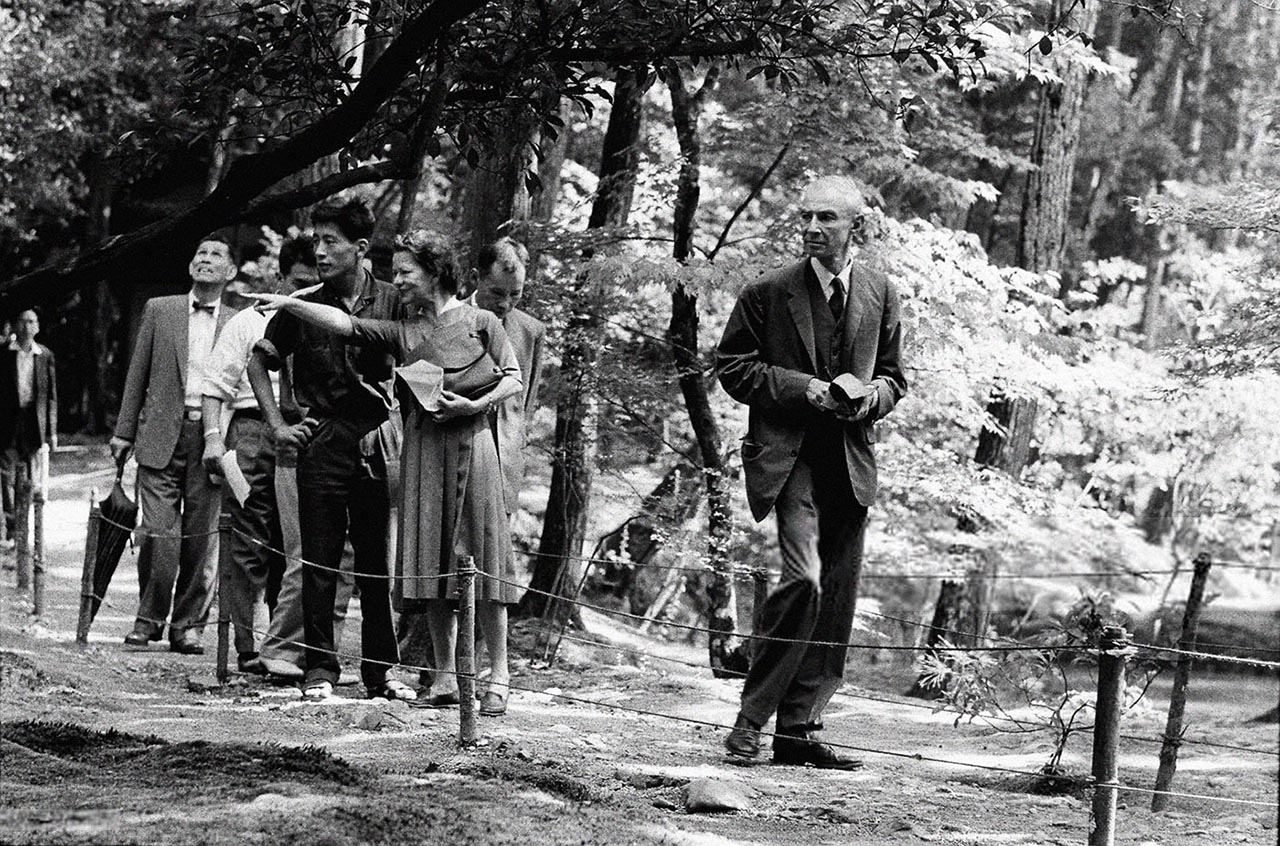 Physicist Julius Robert Oppenheimer 7 J. Robert Oppenheimer and his wife Katherine meet with Japanese... | ➜ | |
|
 |
|
| Generational Catastrophic Inheritance Even if a single nuclear weapon is never fired in anger, we have left our children and grandchildren a catastrophic inheritance. Dismantling a nuclear weapon is vastly more complex and dangerous than building one. It requires specialized robotic facilities, decades of security, and the impossible task of storing the resulting radioactive waste - which remains lethal for 24,000 years - safely away from the environment. We have effectively forced future generations to spend their wealth, their scientific brilliance, and their |
|
Father of the Atomic Bomb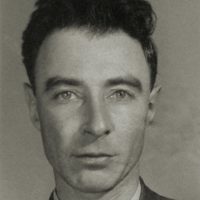 Julius Robert Oppenheimer earned the title “Father of the Atomic Bomb” because he birthed the weapon from a theoretical concept into a physical reality. His fatherhood was not just about scientific brilliance, but about his unique ability to manage, nurture, and drive a massive, unprecedented scientific apparatus. Julius Robert Oppenheimer earned the title “Father of the Atomic Bomb” because he birthed the weapon from a theoretical concept into a physical reality. His fatherhood was not just about scientific brilliance, but about his unique ability to manage, nurture, and drive a massive, unprecedented scientific apparatus.He created Los Alamos because General Leslie Groves chose him to bridge the gap between abstract physics and practical engineering. As a master coordinator, he managed over 3000 elite scientists, channeling their |➔| |
Now I am become DeathWhen the world's first nuclear device detonated in the New Mexico desert on July 16, 1945, Julius Robert Oppenheimer watched the massive fireball rise and famously recalled a haunting line from the Hindu scripture, the Bhagavad Gita: "Now I am become Death, the destroyer of worlds". This profound, grim reflection signaled the immediate and heavy moral burden he would carry for the rest of his life, transforming him from the triumphal creator of the atomic bomb into a man deeply |➔| |
McCarthyism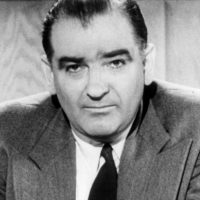 McCarthyism is a political practice defined by the accusation and investigation of left-wing individuals of communist and Soviet influence on American institutions and of Soviet espionage in the United States during the late 1940s through the 1950s, heavily associated with the McCarthy era. After the mid-1950s, U.S. senator Joseph McCarthy, who had spearheaded the campaign, gradually lost his public popularity after several of his accusations were found to be false. McCarthyism is a political practice defined by the accusation and investigation of left-wing individuals of communist and Soviet influence on American institutions and of Soviet espionage in the United States during the late 1940s through the 1950s, heavily associated with the McCarthy era. After the mid-1950s, U.S. senator Joseph McCarthy, who had spearheaded the campaign, gradually lost his public popularity after several of his accusations were found to be false.The McCarthy era was a period of |➔| |
Surrender of Nazi GermanyBetween 1943 and 1945, the Manhattan Project operated under a total informational blackout, with thousands of workers driving toward an atomic weapon in complete secrecy - though spy Klaus Fuchs secretly funneled blueprints to the Soviet Union. This intense pressure culminated on May 7, 1945, when Nazi Germany officially surrendered, ending the war in Europe. The collapse of the Third Reich permanently shattered the project's original, primary motivation: defeating a German atomic program. However, this historic milestone did not halt |➔| |
| Acute Radiation Syndrome (ARS)While geography altered the physical blast zones, both Hiroshima and Nagasaki suffered an identical, horrific wave of ionizing radiation that bypassed all terrain. Detonated as high-altitude airbursts, the bombs instantly fractured human cellular DNA, triggering fatal Acute Radiation Syndrome across both populations. Immediate symptoms included severe confusion, convulsions, extreme weakness, fatigue, internal bleeding, and purple skin spots called petechiae. Victims also suffered hair loss, throat ulcerations, and absolute immune collapse from bone marrow destruction. Beyond the immediate deaths, radiation injuries |➔| |
The Original Target List MatrixNagasaki was not even on the Manhattan Project Target Committee's original list. The military specifically selected large, dense cities containing vital industrial or military infrastructure that had been left untouched by conventional firebombing. This was done deliberately to isolate and accurately measure the raw blast radius and destructive capabilities of a single atomic weapon. Nagasaki was strictly the secondary target for the August 9 mission. The primary target was Kokura a city home to one of |➔| |
| Bombing of HiroshimaOn August 6, 1945, the United States military deployed the world’s first atomic weapon in combat, airbursting it exactly 580 meters above the city of Hiroshima. Nicknamed "Little Boy," this devastating device utilized an entirely untested uranium-235 gun-assembly design, which scientists were so confident would work that it was never experimentally fired at the Trinity test. The resulting detonation released a cataclysmic blast equivalent to 15,000 tons of TNT, generating a blinding flash, a colossal firestorm, and extreme radiation that |➔| |
The Human Cost of HiroshimaThe atomic detonation over Hiroshima inflicted a catastrophic human toll that fundamentally shocked the conscience of the world. The initial blast instantly killed or mortally wounded approximately 70,000 people outright or shortly after, wiping out roughly 27% of the city's total population in a single heartbeat. As intense firestorms consumed civilian districts and lethal, unseen radiation poisoning ravaged survivors, the devastation compounded rapidly. By the year's end, the total estimated casualties soared to an astonishing 140,000 people, representing a staggering |➔| |
| Bombing of NagasakiOn August 9, 1945, just three days after Hiroshima, the United States deployed its second nuclear weapon, airbursting it 500 meters above the city of Nagasaki. Nicknamed "Fat Man," this devastating bomb was a functional duplicate of the highly volatile plutonium-239 implosion assembly successfully tested weeks earlier at Trinity. The catastrophic blast released an explosive force equivalent to 21,000 tons of TNT, instantly obliterating the city's industrial valleys, unleashing an intense firestorm, and unleashing lethal waves of radiation. This second |➔| |
The Human Cost of NagasakiThe atomic bombing of Nagasaki inflicted absolute devastation on both the city's population and its infrastructure. The initial plutonium blast instantly killed approximately 40,000 people outright or shortly after, immediately erasing 20% of the total population. Due to severe radiation sickness, horrific thermal burns, and collapsing medical infrastructure, the human toll quickly mounted. By the year's end, total estimated casualties reached 70,000 people, representing a staggering 36% of Nagasaki's entire population. Compounding this human tragedy was the near-total erasure of |➔| |
| The Topographical Shielding EffectThe "Fat Man" plutonium bomb dropped on Nagasaki was significantly more powerful than Hiroshima's "Little Boy" (generating 21,000 tons of TNT equivalent compared to Hiroshima's 15,000 tons). Despite this 40% increase in raw explosive energy, it caused fewerimmediate deaths and less total geographic destruction because of how the two cities were built. Hiroshima (The Flat Delta) - Hiroshima was built on a completely flat, sea-level river delta. When the bomb exploded, the blast wave expanded uniformly in |➔| |
Formal Surrender of JapanOn September 2, 1945, the catastrophic global conflict of World War II finally reached its official, legal conclusion aboard the battleship USS Missouri in Tokyo Bay. Surrounded by Allied representatives, Japanese foreign minister Mamoru Shigemitsu and General Yoshijiro Umezu formally signed the Instrument of Surrender, officially submitting to General Douglas MacArthur. This historic, solemn ceremony permanently ended the bloodshed across the Pacific and initiated the official Allied occupation of Japan. By cementing the definitive conclusion of the war, this final |➔| |
 Sky Division & Logios'Logios' represents an AI entity, helping with data, stats, knowledge, words, calculations, even by engaging with suggestions and boosting creativity, helping human creator in exploring and developing content. 'Logios' sometimes can be a single AI-platform, or many of them. If a code-script is used somewhere (like the slider, tooltip etc) then credits for assistance belong exclusively to DeepSeek AI.
Logios - from the Greek λόγιος (lógios), meaning "learned, eloquent, one who speaks with reason"., 2026
Sky Division & Logios'Logios' represents an AI entity, helping with data, stats, knowledge, words, calculations, even by engaging with suggestions and boosting creativity, helping human creator in exploring and developing content. 'Logios' sometimes can be a single AI-platform, or many of them. If a code-script is used somewhere (like the slider, tooltip etc) then credits for assistance belong exclusively to DeepSeek AI.
Logios - from the Greek λόγιος (lógios), meaning "learned, eloquent, one who speaks with reason"., 2026
A small tribute – Looking at history through a purely human lens – focusing on the universal human cost, the shared generational burdens, and the timeless lessons of peace that belong to all of us. Europe remembers the sacrifices that brought liberation, and the vital lessons history teaches us – lessons we must never forget.