
(S. Guraziu – Sky Division, Sept 2026)
Sometimes I joke (usually with friends) saying “…my music is about as good as Armin van Buuren’s music, when he started with Push. I’m not joking, I’m quite serious, of course I’m not saying I’m as good as Armin, I’m saying I’m as good as Armin was… when he started” : )
Friends usually laugh, or smile, they think I am really joking. In my view that’s a great self-deprecating joke, and it works on two levels – they first hear it as a modest, factual comparison – “as good as Armin when he started” – and then they realize I’m cheekily placing my music beside a future legend’s earliest work : ) Thus, according to me, the “punchline” would be the implied comparison.
| “Push“, 1995 (extract) – earliest release – debut, often associated with the Push EP or early single material. | “Blue Fear“, 1997 (extract) – his breakthrough hit, and the first track to achieve significant international recognition. |
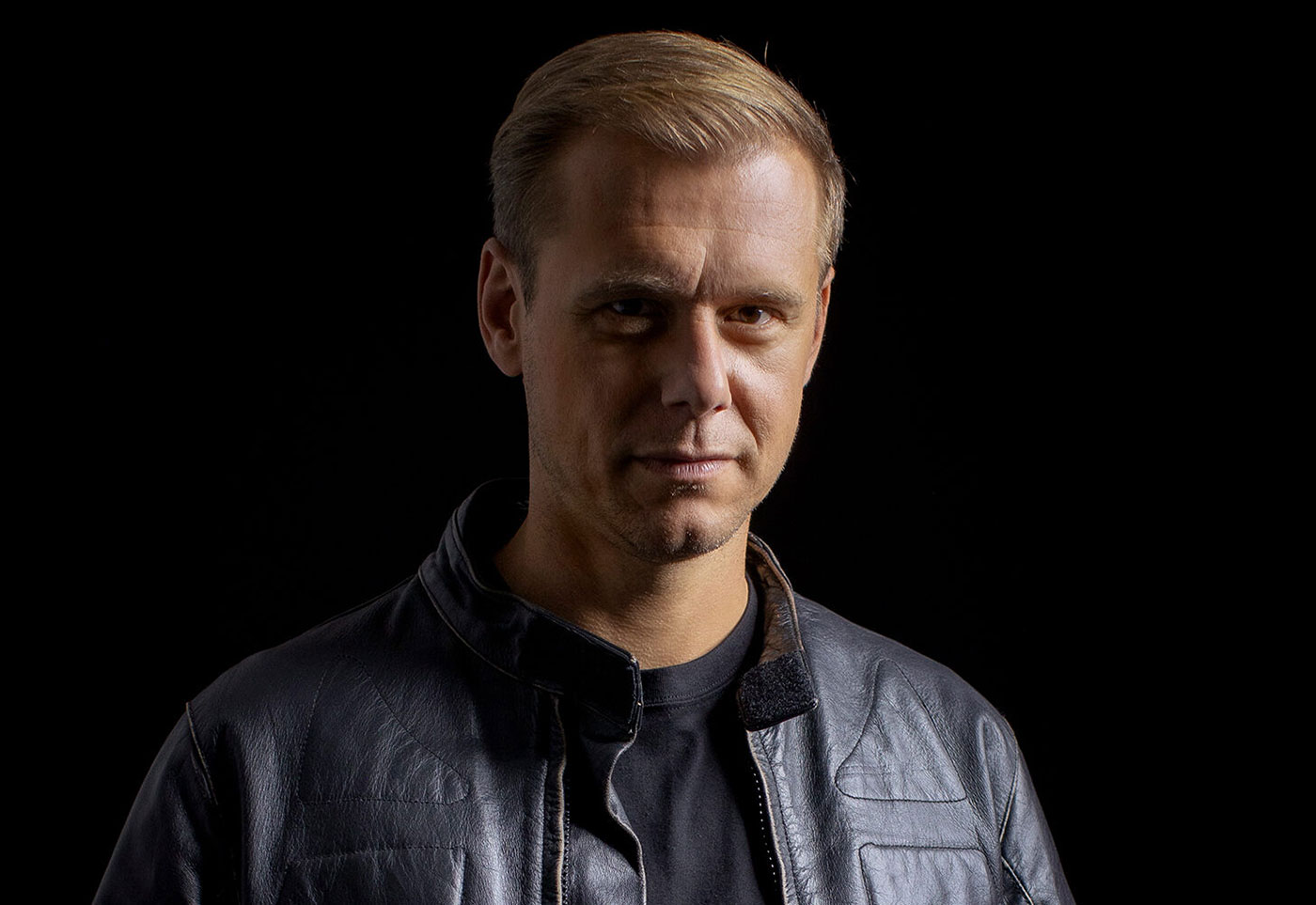
Jokes aside, it’s true that every great journey begins with a first step – and Armin’s great journey began with a “Push”. Released in 1995, the track marked the emergence of a young artist who would go on to reshape the global trance scene. The title “Push” is almost modest, just as the music too. Six years later, in 2001, he began broadcasting “A State of Trance“, inviting listeners into a weekly world of melodies, momentum and discovery. What started as a radio show soon became a global meeting point for trance fans, heard across dozens of countries and ultimately helping transform Armin van Buuren into an international phenomenon.
“Push” (released in 1995) is generally cited as Armin van Buuren’s first release, issued under the name Armin. But his first major success he achieved with “Blue Fear,” which is now regarded as a trance classic. “Blue Fear” (released in 1997) was his breakthrough – this track marked the beginning of his influential career in the electronic dance music scene. Since his debut with “Push” in 1995, Armin van Buuren has released many notable songs, including “Shivers” (2005), “This Is What It Feels Like” (2013), and “Blah Blah Blah” (2018). His music spans various genres and sub-genres, showcasing his evolution as an artist over the years.
***
Electronic music, in general, began somewhere around 1955, when the RCA Synthesizer filled a room with cold, humming circuits – no beats, no bass, no drops. Just pure, curious electricity. Nobody danced to it, but somebody listened. By 1963, Delia Derbyshire was cutting magnetic tape with scissors to create the Doctor Who theme – a ghost in the BBC Radiophonic Workshop, building the future from test oscillators and razor blades. Then came Kraftwerk, Donna Summer, Giorgio Moroder, Jean Michel Jarre etc. The kick drum that never stopped. The 1980s brought house, techno, and the first true dance floors.
The 1990s exploded with rave and big beat, in that long ascent, around 1995, a young Dutch musician made his entrance with a track called “Push“. The title and the music almost sounded like a note from a laboratory experiment. After Kraftwerk’s machines, Moroder’s pulse and the towering anthems of the 1990s, there was Armin van Buuren, not yet the global icon, just a young artist pressing forward with a modest first step.
The quality of electronic music was already “defined” (almost two decades) before Armin’s “Push”. Long before, in 1977, Donna Summer came with “I Feel Love“. Or, in 1982 Stu Phillips came with “Knight Rider Theme“. Or, Jan Hammer in 1984 came with his legendary “Miami Vice Theme“. Or, in 1990 Depeche Mode and Technotronic amazed us with “Enjoy The Silence” and “Pump Up The Jam“. In 1992 Snap! were thinking “Rhythm Is A Dancer“, a year later, in 1993 two beautiful acting performers of 2 Unlimited were dancing to “No Limit“, Culture Beat were singing with “Mr. Vain” and Haddaway was asking “What Is Love“… etc.
From cold circuits in a room to a signal heard across the planet, electronic music had completed an astonishing journey. And in the middle of that journey stood a track called “Push” – an early experiment that, in retrospect, sounded like the first beat of something much larger. Perhaps Armin wasn’t Jan Hammer class yet, or Depeche Mode’s class, but that “push” kept moving. What began as a modest first step in the Netherlands would grow into one of electronic music’s most influential careers.
In June 2001, Armin van Buuren launched “A State of Trance“, a weekly radio show devoted to the sounds, discoveries and emotional journeys of trance. Week by week, the program crossed borders, connected listeners and helped turn a DJ’s passion into an international phenomenon – eventually reaching tens of millions of listeners in more than 80 countries. What started as a broadcast became a worldwide music “ritual”.
***
Next time we will try to cover the international phenomenon “A State of Trance” (ASOT), which started in 2001 and 2 decades later in 2021, the show reached its 1,000th episode – by then, it was reaching 40-50 million listeners in more than 80 countries around the globe. On September 18, 2026 trance music lovers of the world were listening ASOT episode #1295…
 S. Guraziu – Sky Division & Logios, Sept. 2026