|
Traditional Chinese festivals are a cyclical rhythm woven into the fabric of life, intimately connected to the agricultural seasons, ancestral reverence, and the emotional bonds of family and community. Most festivals follow the lunar calendar, and their dates shift within the Gregorian year, yet their core remains unchanged: the Spring Festival celebrates reunion and renewal, Qingming balances mourning with the vitality of spring, the Dragon Boat Festival commemorates loyalty and community, and the Mid-Autumn Festival extols completeness and gratitude.
Beyond these major celebrations, festivals such as the Double Ninth, Winter Solstice, and Xiaonian each carry their own unique rituals and emotional tones, collectively forming a cultural map that spans the entire year. Through food, ritual, and storytelling, these festivals pass down values from generation to generation – respect for ancestors, cherishing of loved ones, awe of nature, and hope for the future. For anyone seeking to understand Chinese culture, festivals are the most vivid and heartfelt entry point. |
|||||||||||||||||||||||||||||||||||||||||||||||||||||||||||||
Chinese Lunar New Year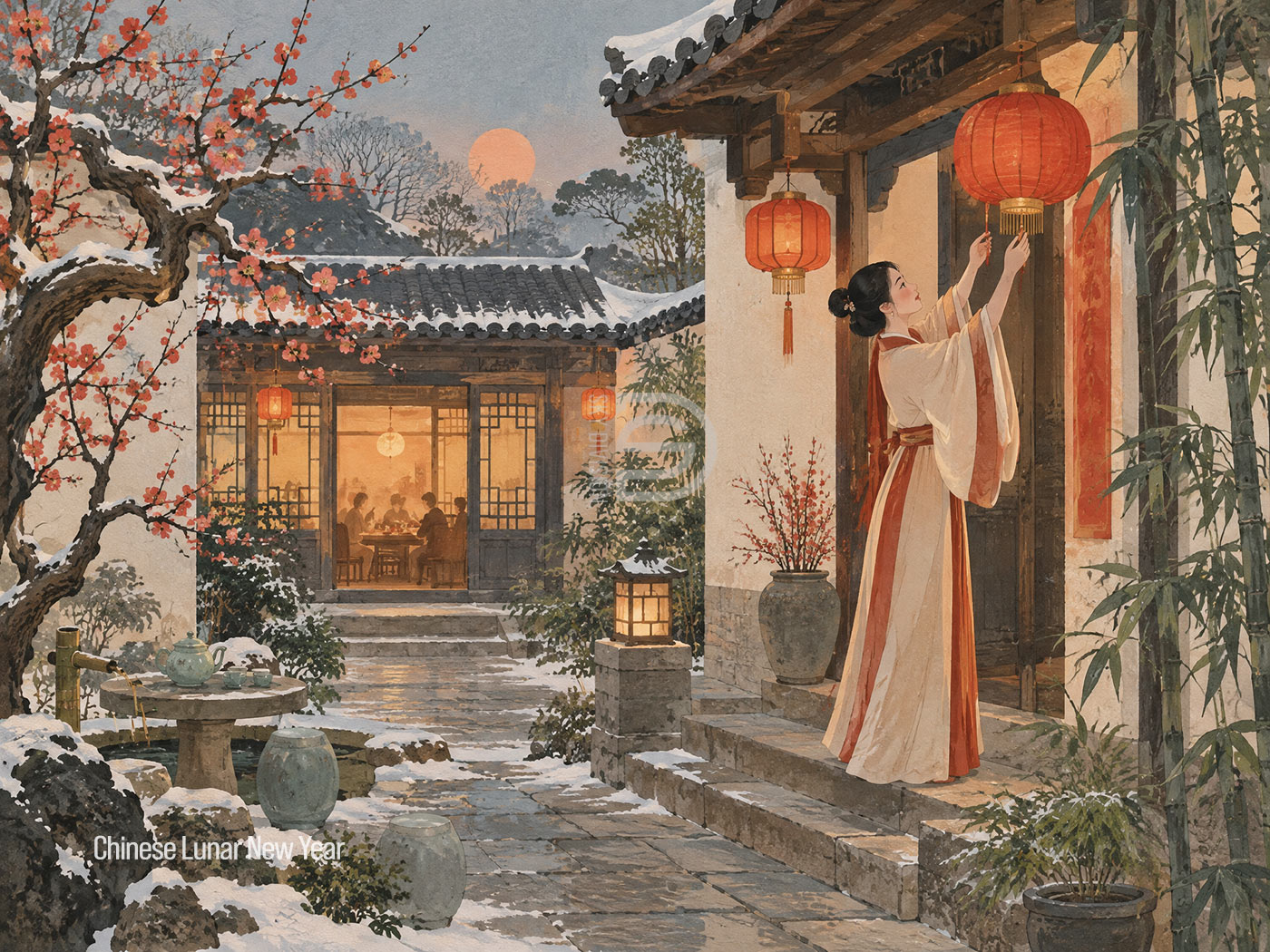 The Most Important Celebration of Family and Renewal - The Chinese Lunar New Year is the most important traditional festival in China. Celebrated on the first day of the first lunar month, the Chinese Lunar New Year (Spring Festival) is the most significant and widely observed holiday in Chinese culture, marking the transition from winter to spring and the beginning of a new zodiac cycle. Rooted in ancient agrarian traditions and legends - most notably the myth of the ferocious |
Lantern Festival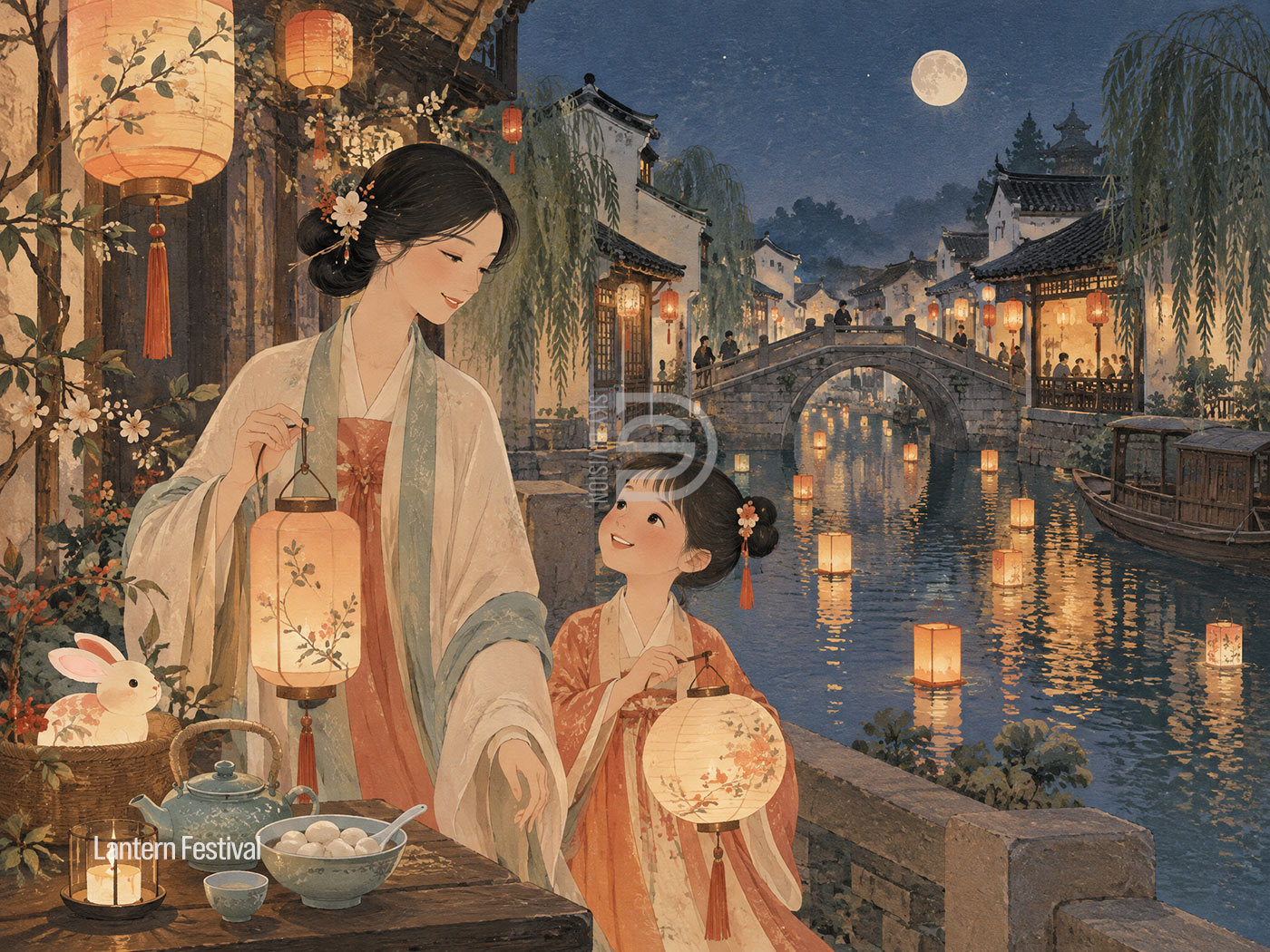 The Grand Finale of the Lunar New Year - Celebrated on the 15th day of the 1st lunar month - the first full moon of the new year - the Lantern Festival (Yuanxiao Jie) marks the official conclusion of the extended Chinese New Year celebrations. With origins dating back over two thousand years to the Han Dynasty, the festival was historically rooted in the worship of the supreme deity Taiyi and the Buddhist practice of lighting lamps to honor the |
||||||||||||||||||||||||||||||||||||||||||||||||||||||||||||
Dragon Heads-Raising Day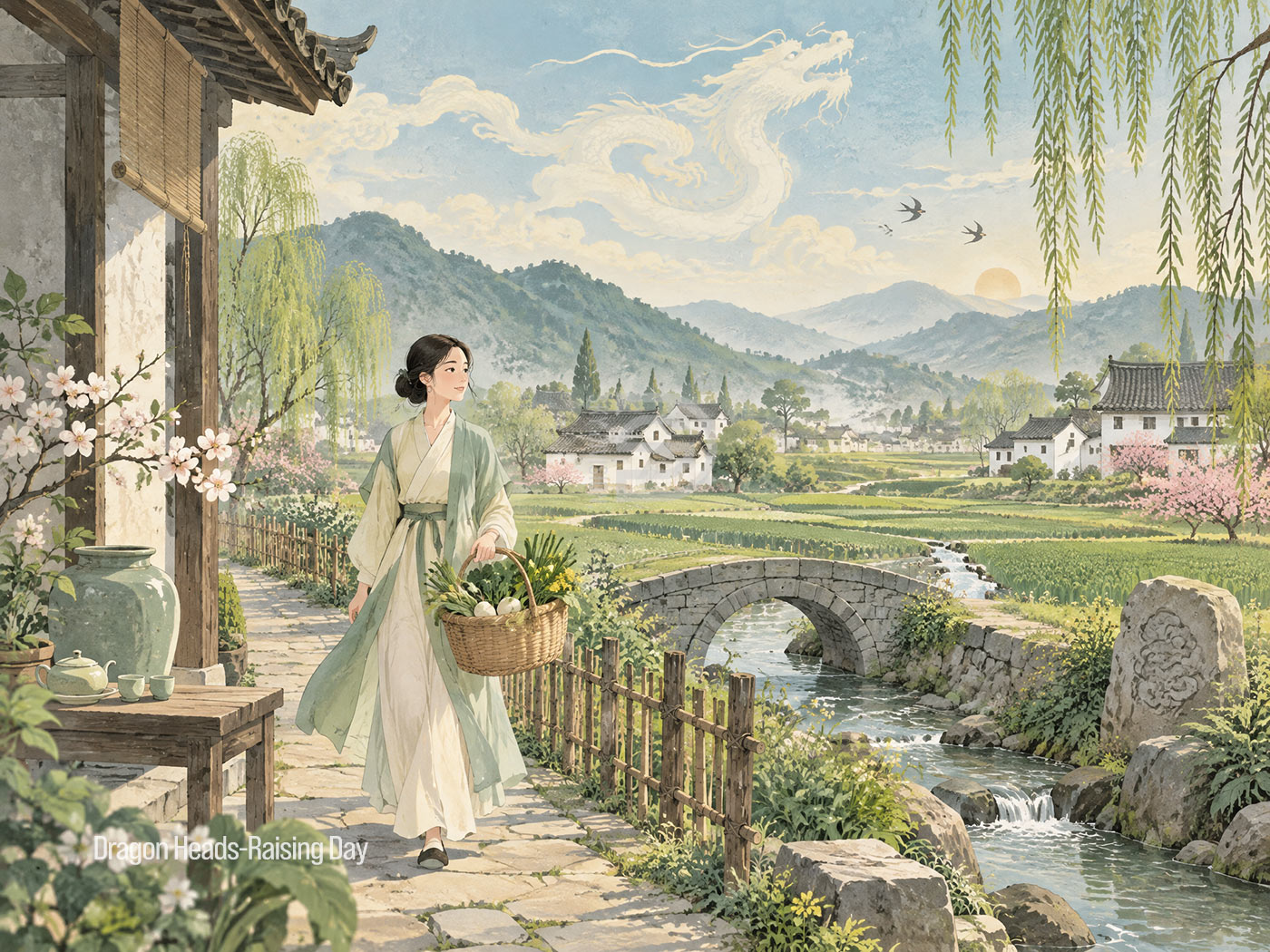 Awakening the Dragon and Welcoming Spring - Dragon Heads-Raising Day symbolizes the revival of all things, the return of spring to the earth, and a new beginning. Celebrated on the 2nd day of the 2nd lunar month, Dragon Heads-Raising Day (Longtaitou) marks the awakening of the mythical dragon, a revered symbol of power, rain, and agricultural prosperity in Chinese culture. Rooted in ancient astronomy and agrarian rituals, the festival signifies the end of winter hibernation and the return of spring, |
Shangsi Festival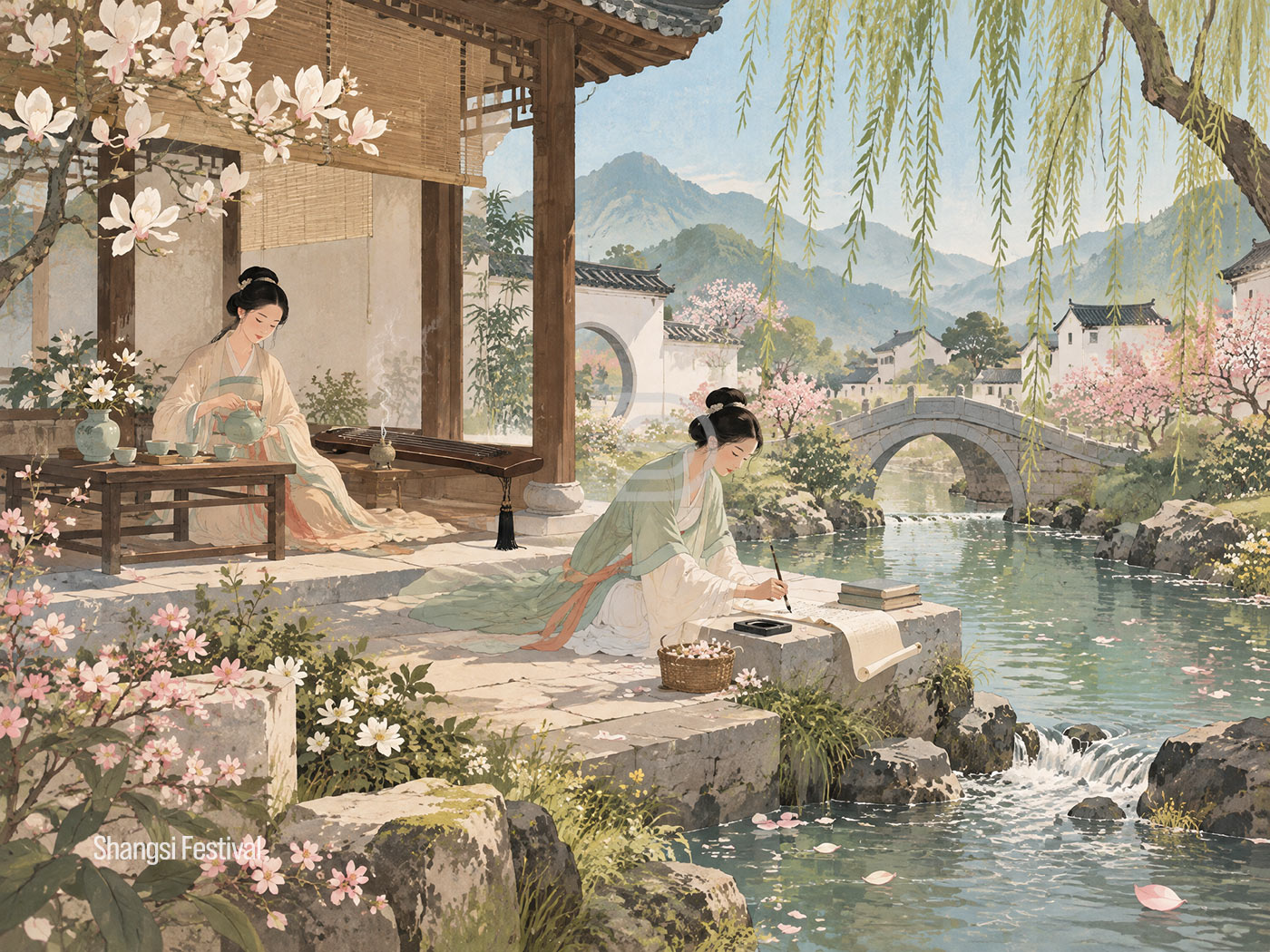 The Ancient Spring Rite of Purification and Renewal - Inspired by the concept of "floating cups along winding streams," the Shangsi Festival is depicted through scenes of Jiangnan gardens, streams, tea ceremonies, calligraphy, and spring gatherings, showcasing the poetic lifestyle in traditional Chinese culture. Celebrated on the third day of the third lunar month, the Shangsi Festival (also known as the Double Third Festival) is one of China's most ancient holidays, rooted in rituals of purification and the welcoming of |
||||||||||||||||||||||||||||||||||||||||||||||||||||||||||||
Qingming Festival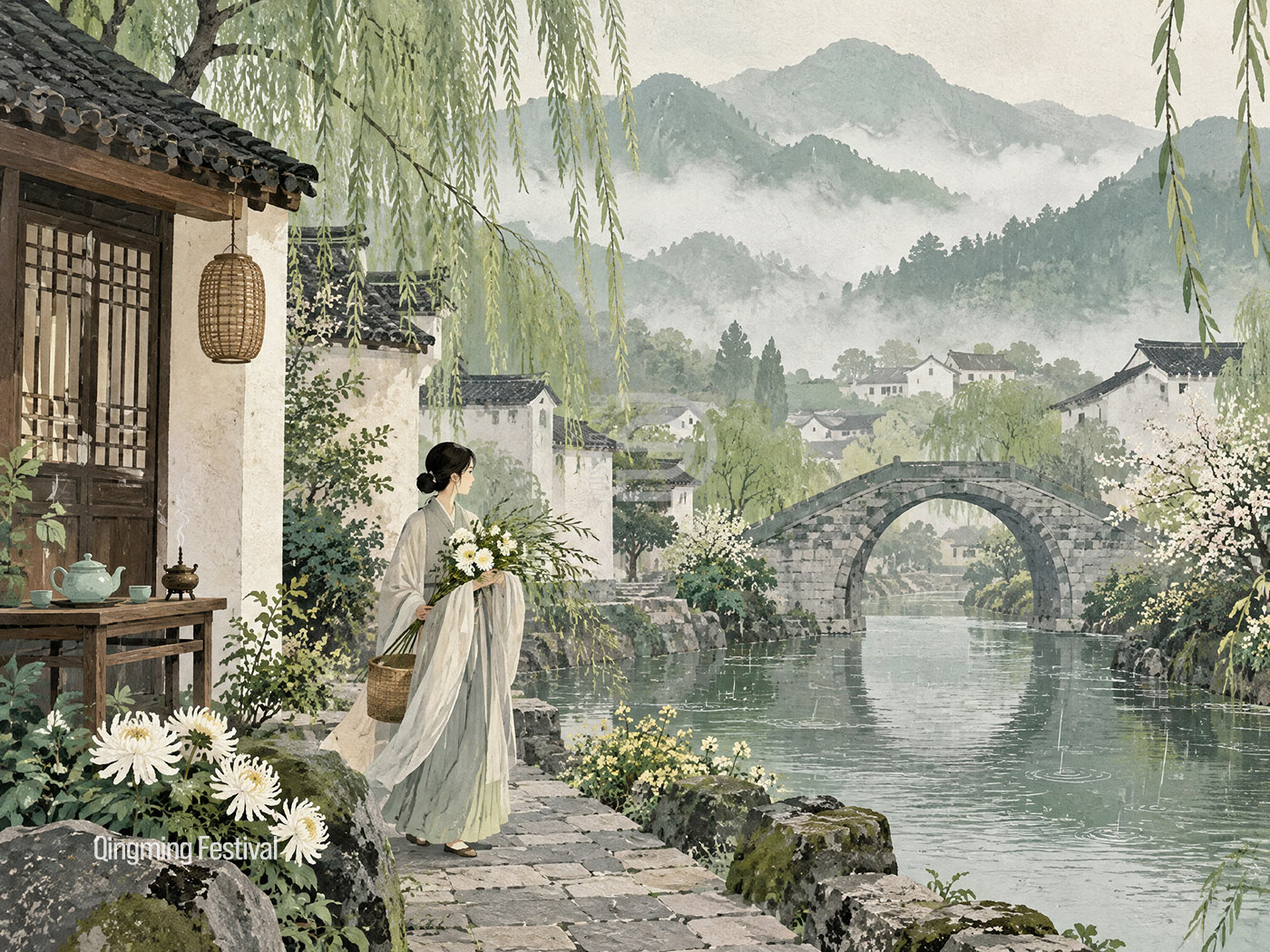 Honoring Ancestors and Embracing Spring - Observed in early April, the Qingming Festival (Tomb-Sweeping Day) is one of the most important traditional Chinese holidays, falling on the 15th day after the Spring Equinox. Its name, meaning "clear and bright," reflects the season's transition from the cold, dormant winter to the vibrant, blossoming spring. Rooted in ancient agrarian rituals and later formalized during the Tang Dynasty, the festival is a profound expression of filial piety - the cornerstone of Chinese cultural |
Dragon Boat Festival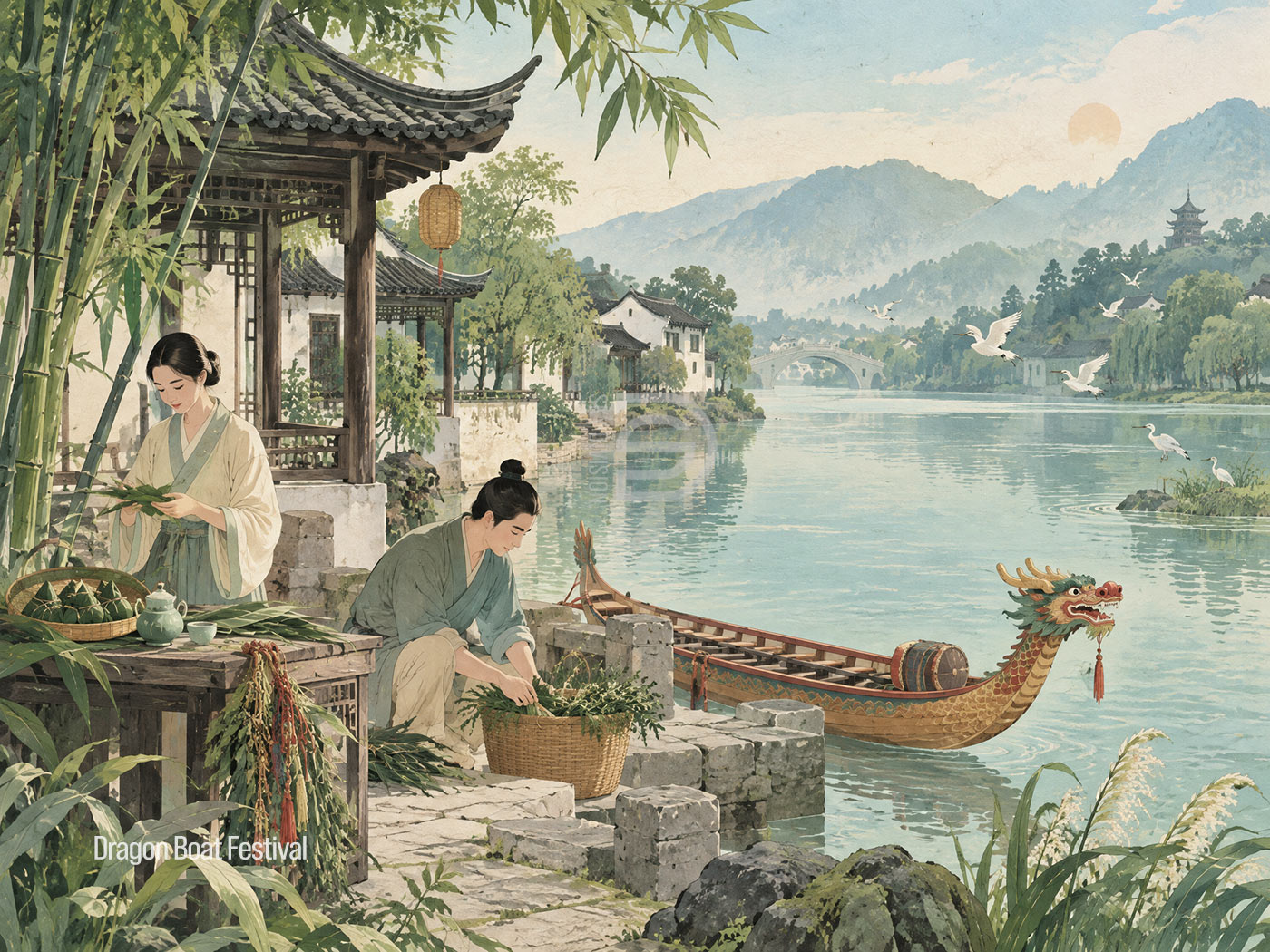 Honoring a Poet and Warding Off Evil - The Dragon Boat Festival is not only a commemoration of Qu Yuan but also carries the cultural meanings of courage, protection, health, unity, and welcoming the height of summer. Celebrated on the 5th day of the 5th lunar month, the Dragon Boat Festival (Duanwu Jie) is one of China's most ancient and culturally significant holidays, recognized by UNESCO as Intangible Cultural Heritage. Its origins are multifaceted, blending ancient agricultural rituals for warding |
||||||||||||||||||||||||||||||||||||||||||||||||||||||||||||
Qixi Festival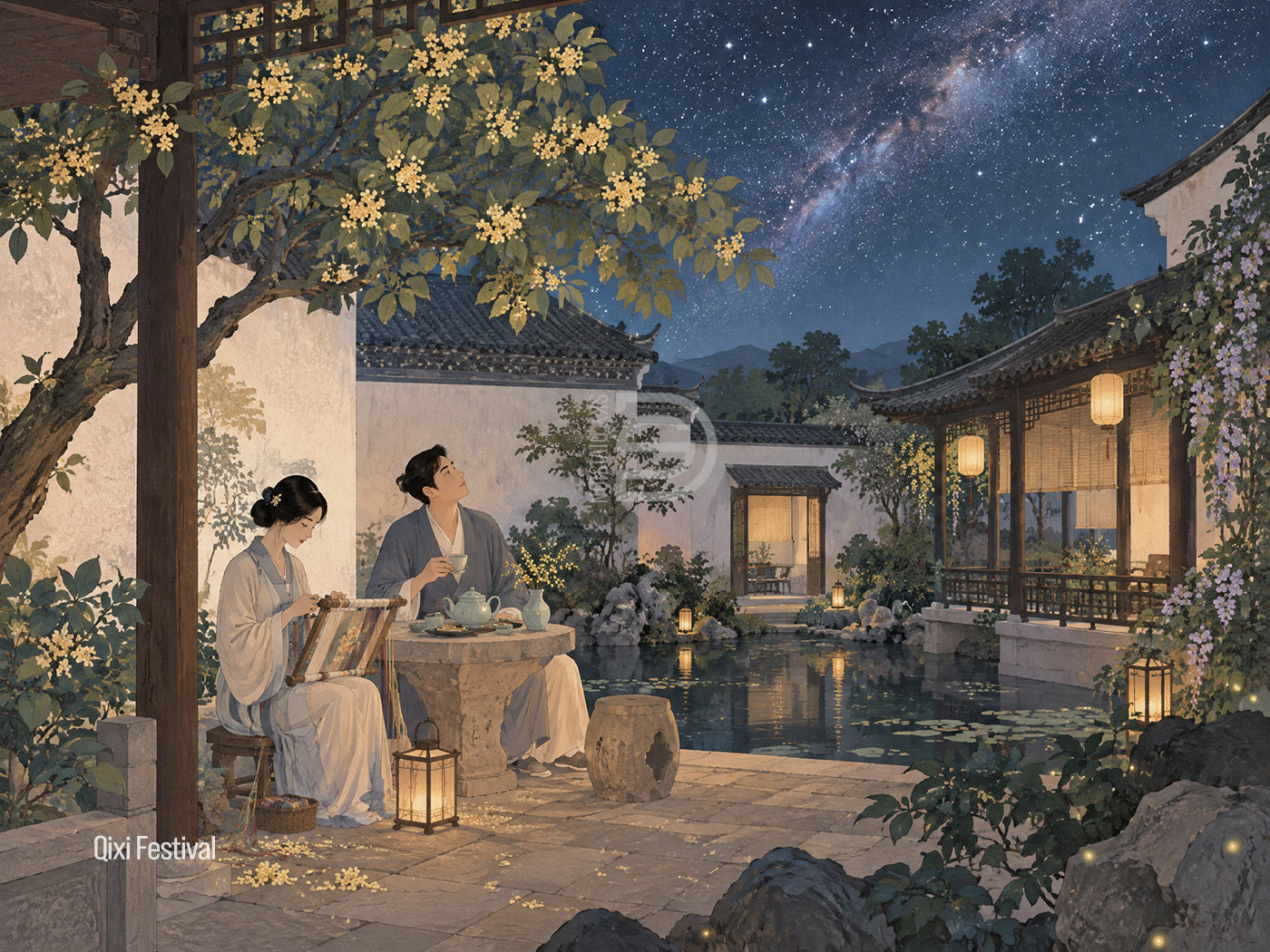 The Chinese Valentine's Day - The Celebration of Love and Celestial Reunion - Celebrated on the 7th day of the 7th lunar month, the Qixi Festival is often referred to as the Chinese Valentine's Day, rooted in one of the most enduring and romantic legends of East Asian folklore. The festival commemorates the tragic yet beautiful love story of Zhinü (the Weaver Girl), a celestial maiden, and Niulang (the Cowherd), a mortal man. Separated by the Milky Way as punishment |
Zhongyuan Festival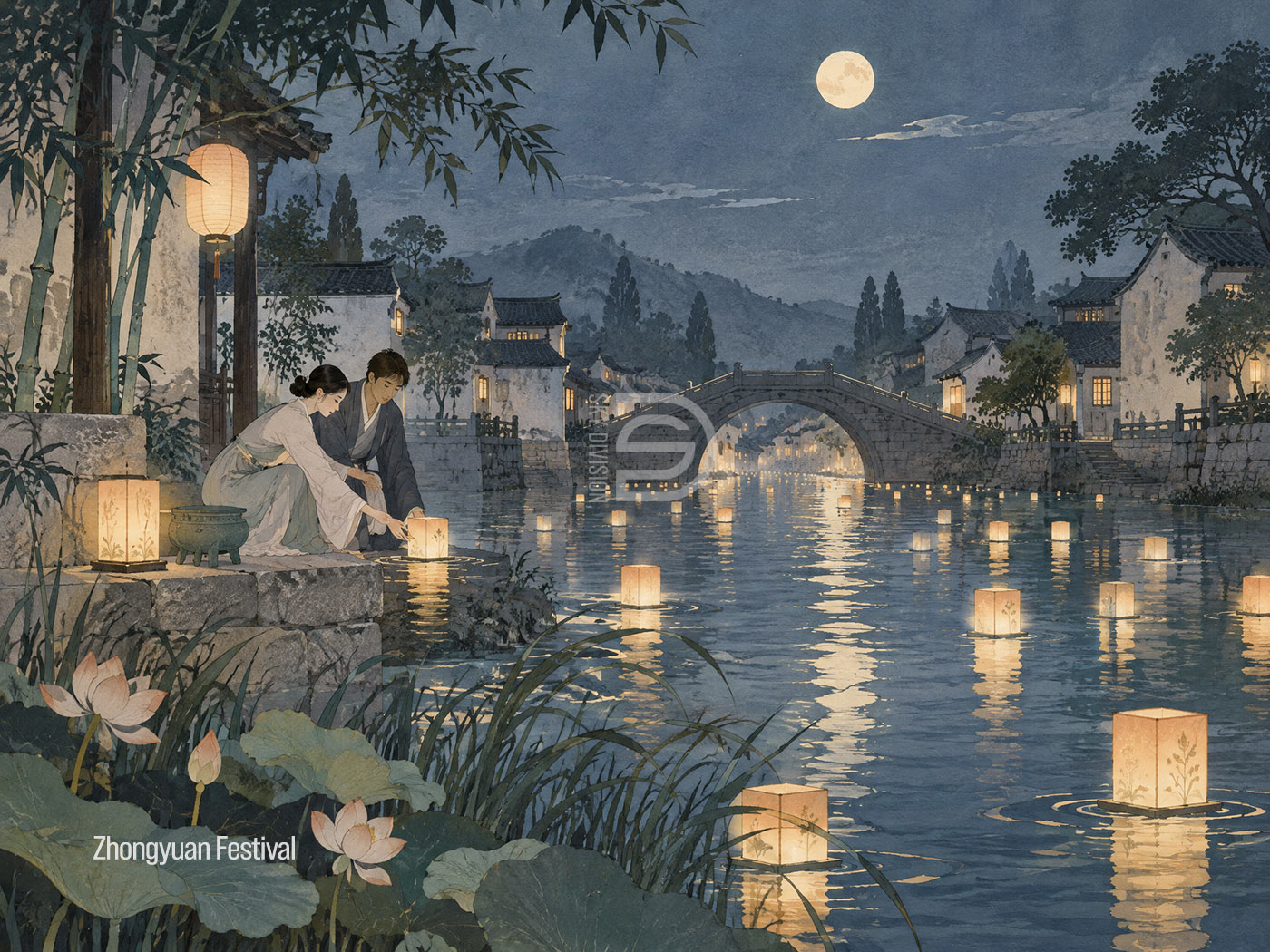 The Festival of Ancestors and Floating Lights - The Day of Ancestral Remembrance and Compassion - Falling on the 15th day of the 7th lunar month, the Zhongyuan Festival - often referred to as the Ghost Festival - is a deeply spiritual and solemn occasion rooted in the traditional East Asian concept of filial piety. According to folk belief, the gates of the afterlife open during this month, allowing spirits to visit the living world. The festival is closely tied |
||||||||||||||||||||||||||||||||||||||||||||||||||||||||||||
Mid-Autumn Festival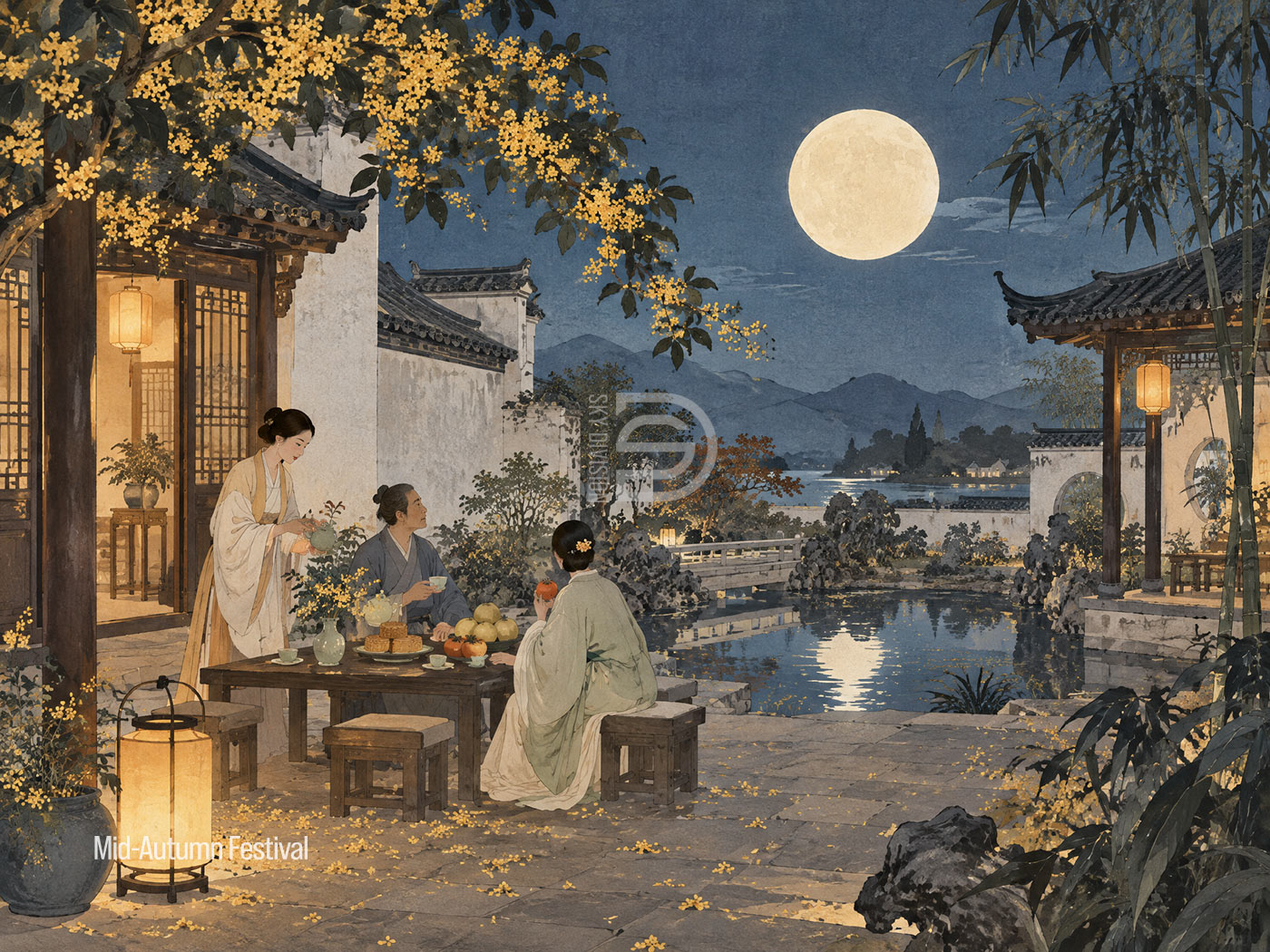 The Celebration of Reunion Under the Harvest Moon - The Mid-Autumn Festival symbolizes not only reunion but also gratitude, harvest, moonlit nights, and the harmony between humans and nature. Celebrated on the 15th day of the 8th lunar month, the Mid-Autumn Festival is one of the most cherished holidays in East Asian culture, falling when the moon is at its brightest and most perfectly round. The full moon has long symbolized completeness, unity, and family reunion, making this festival a |
Double Ninth Festival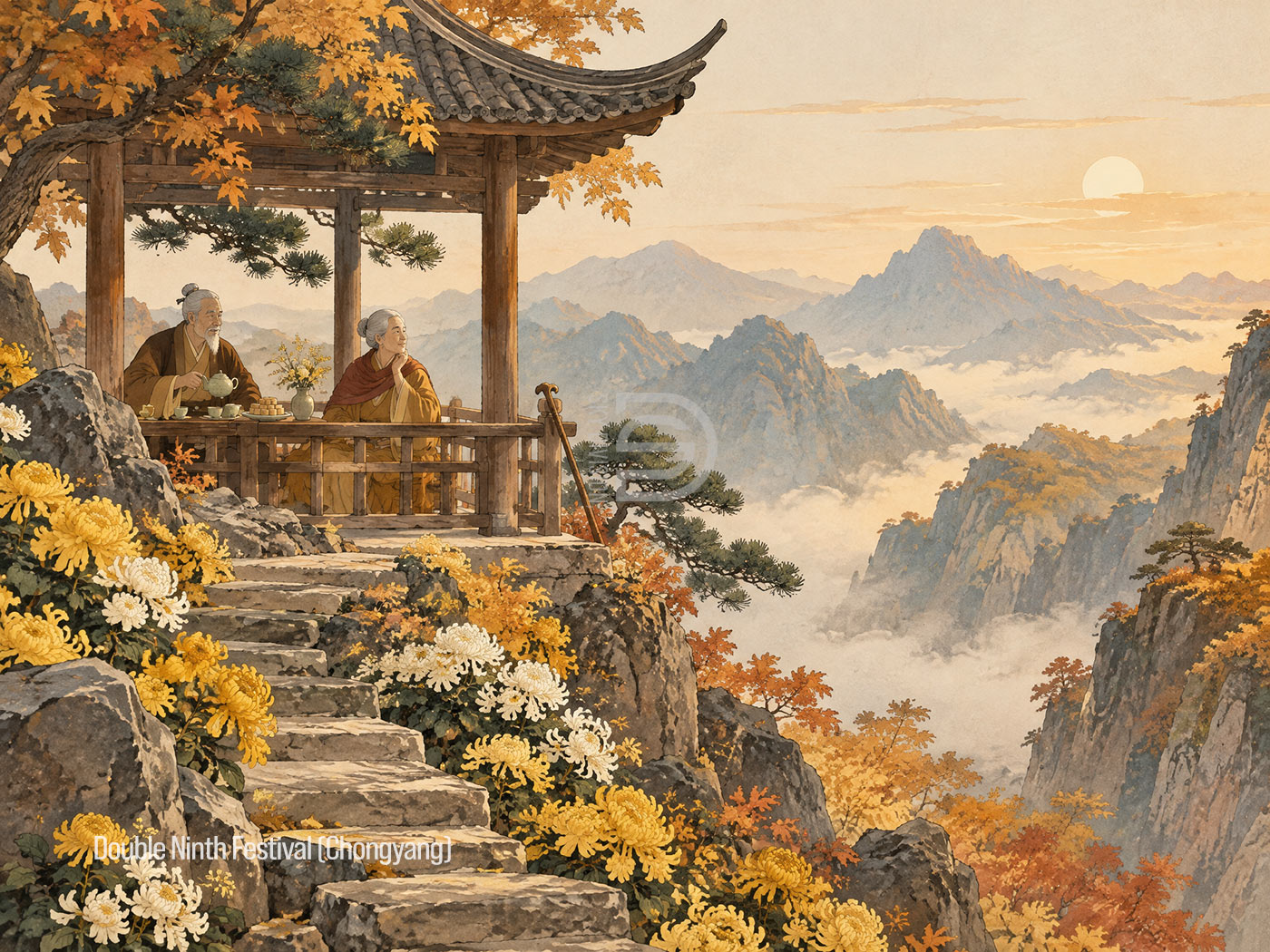 The Day of Ascending Heights and Honoring Elders - Falling on the ninth day of the ninth lunar month, the Double Ninth Festival (Chongyang) derives its name from the I Ching, where "nine" is regarded as a yang (positive) number - the double nine signifies overlapping yang energies, symbolizing auspiciousness and vitality. The festival's core customs include climbing heights to escape misfortune and absorb the crisp autumn air, appreciating chrysanthemums (which bloom in late autumn and symbolize resilience and longevity), |
||||||||||||||||||||||||||||||||||||||||||||||||||||||||||||
Cold Clothes Festival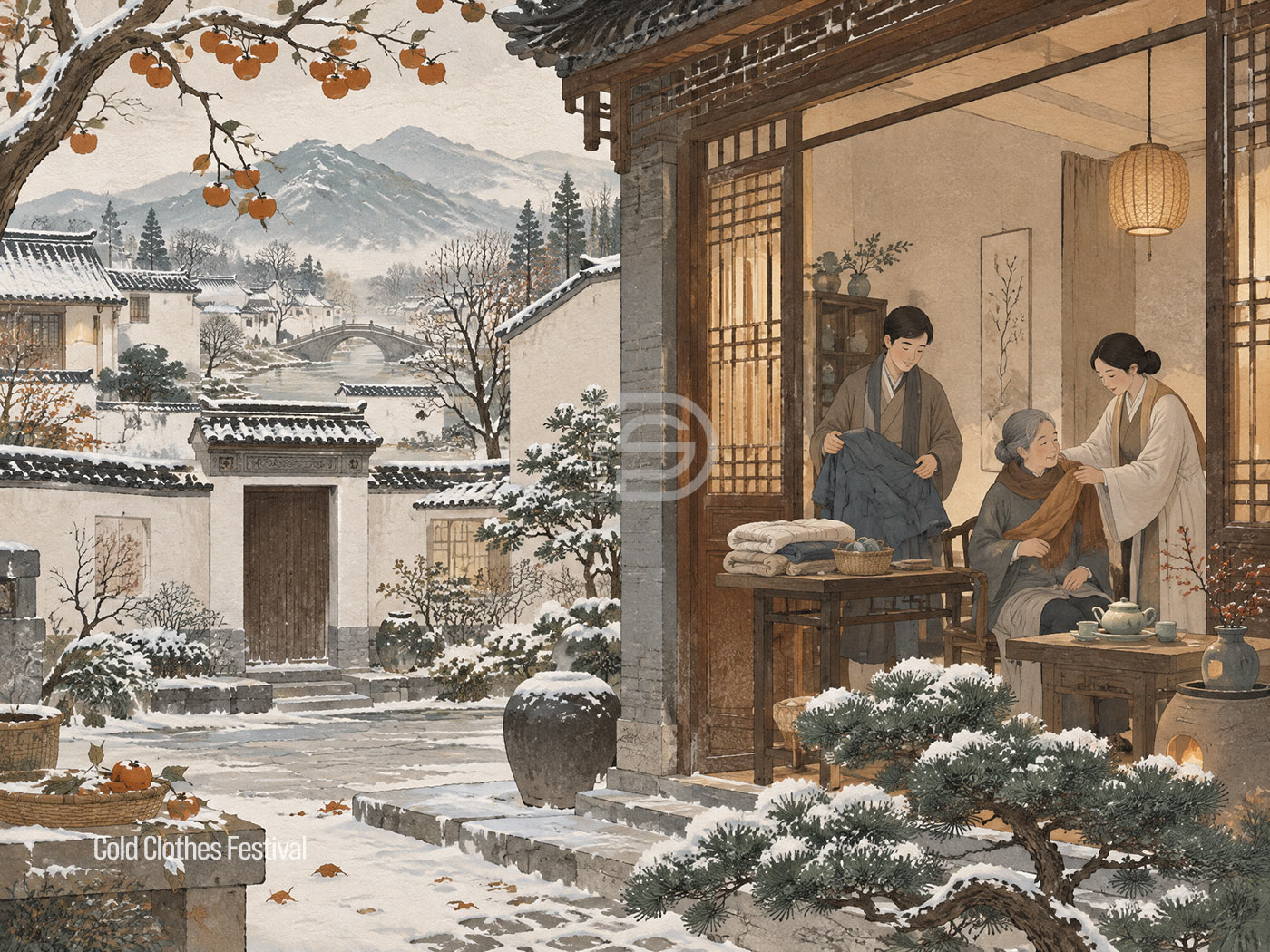 Honoring Ancestors and Preparing for Winter - The Cold Clothes Festival is an important traditional Chinese festival for welcoming early winter, cherishing loved ones, and expressing care. Observed on the 1st day of the 10th lunar month, the Cold Clothes Festival (Hanyi Jie) is a traditional Chinese holiday dedicated to honoring ancestors and ensuring the well-being of the deceased as the harsh winter months approach. Rooted in ancient filial piety and the belief that the spirit world mirrors the living |
Winter Solstice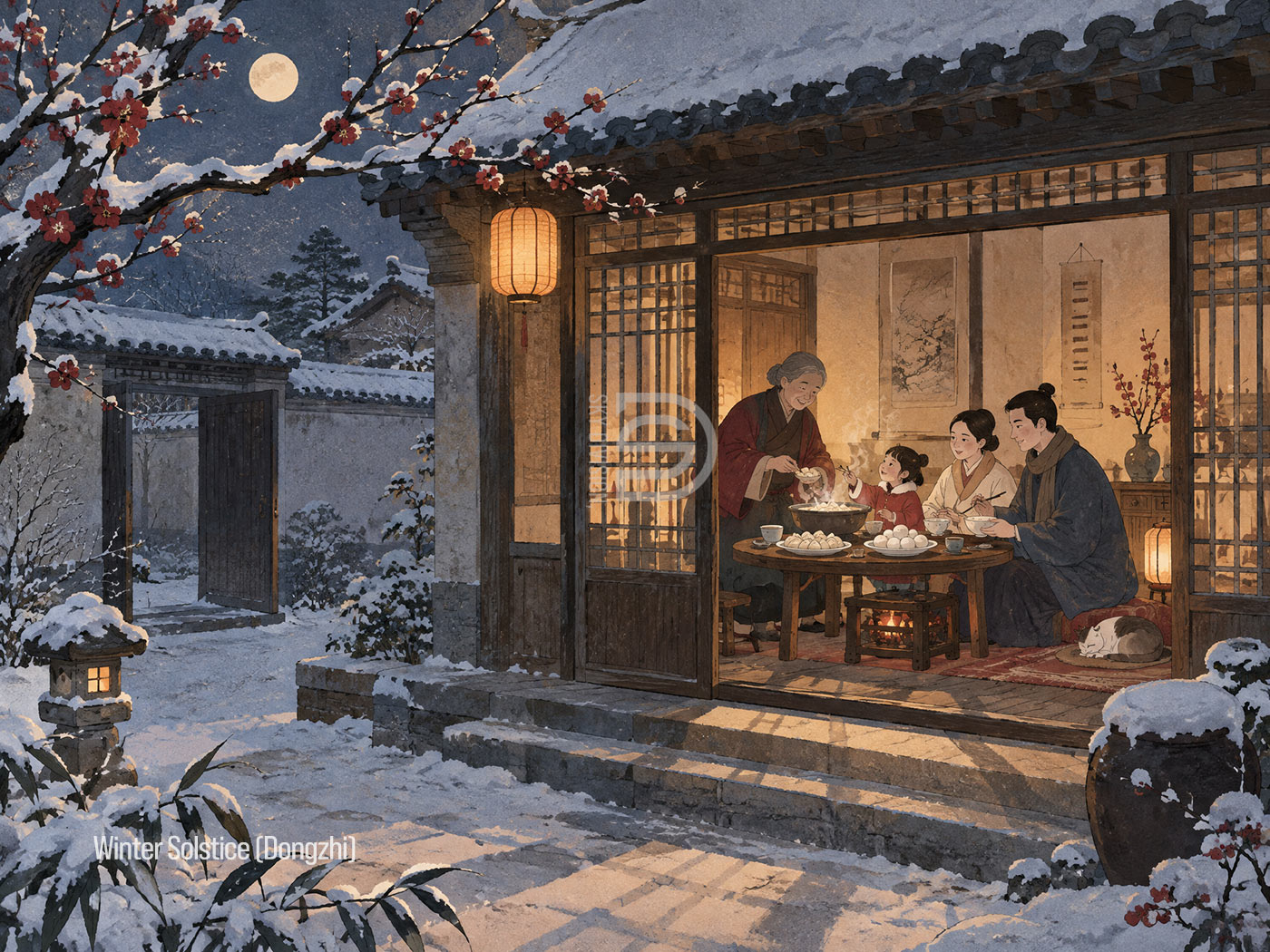 The Return of Light and the Gathering of Family - The Winter Solstice (Dongzhi) is one of the twenty-four solar terms, marking the shortest day and longest night of the year, as well as the traditional turning point toward the return of sunlight. In ancient times, it was considered as significant as the Lunar New Year, and people would hold ceremonies to honor ancestors and pray for health, family reunion, and a bountiful harvest. The food customs vary distinctly by |
||||||||||||||||||||||||||||||||||||||||||||||||||||||||||||
Laba Festival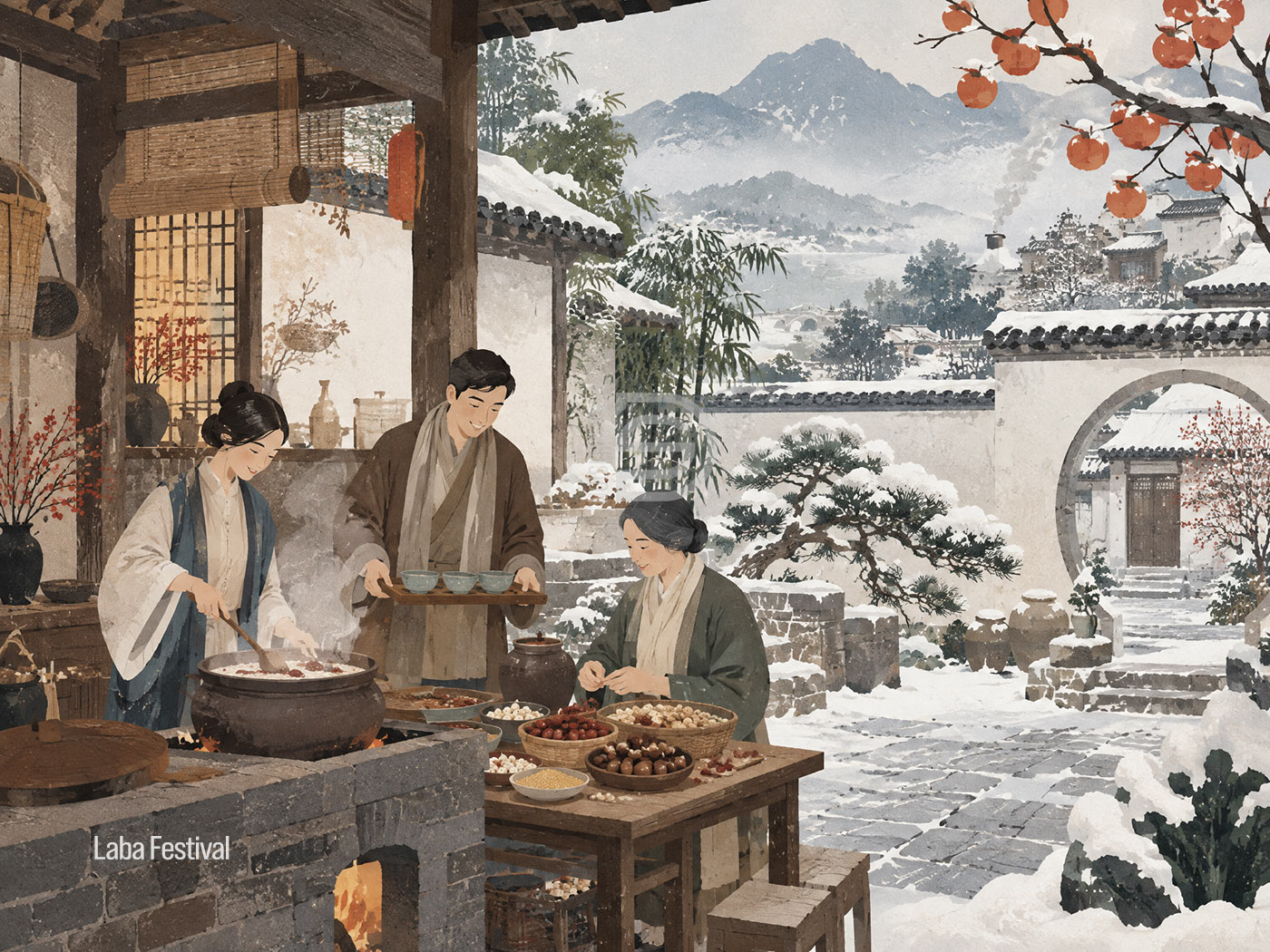 The Prelude to the Lunar New Year - The Laba Festival is a prelude to the Chinese New Year, symbolizing harvest, sharing, gratitude, reunion, and the warmth of winter. Celebrated on the 8th day of the 12th lunar month, the Laba Festival is an ancient traditional holiday that marks the beginning of the countdown to the Chinese New Year. Originally rooted in ancient agrarian harvest rituals and later intertwined with Buddhist traditions - commemorating the day of the Buddha's enlightenment |
Xiaonian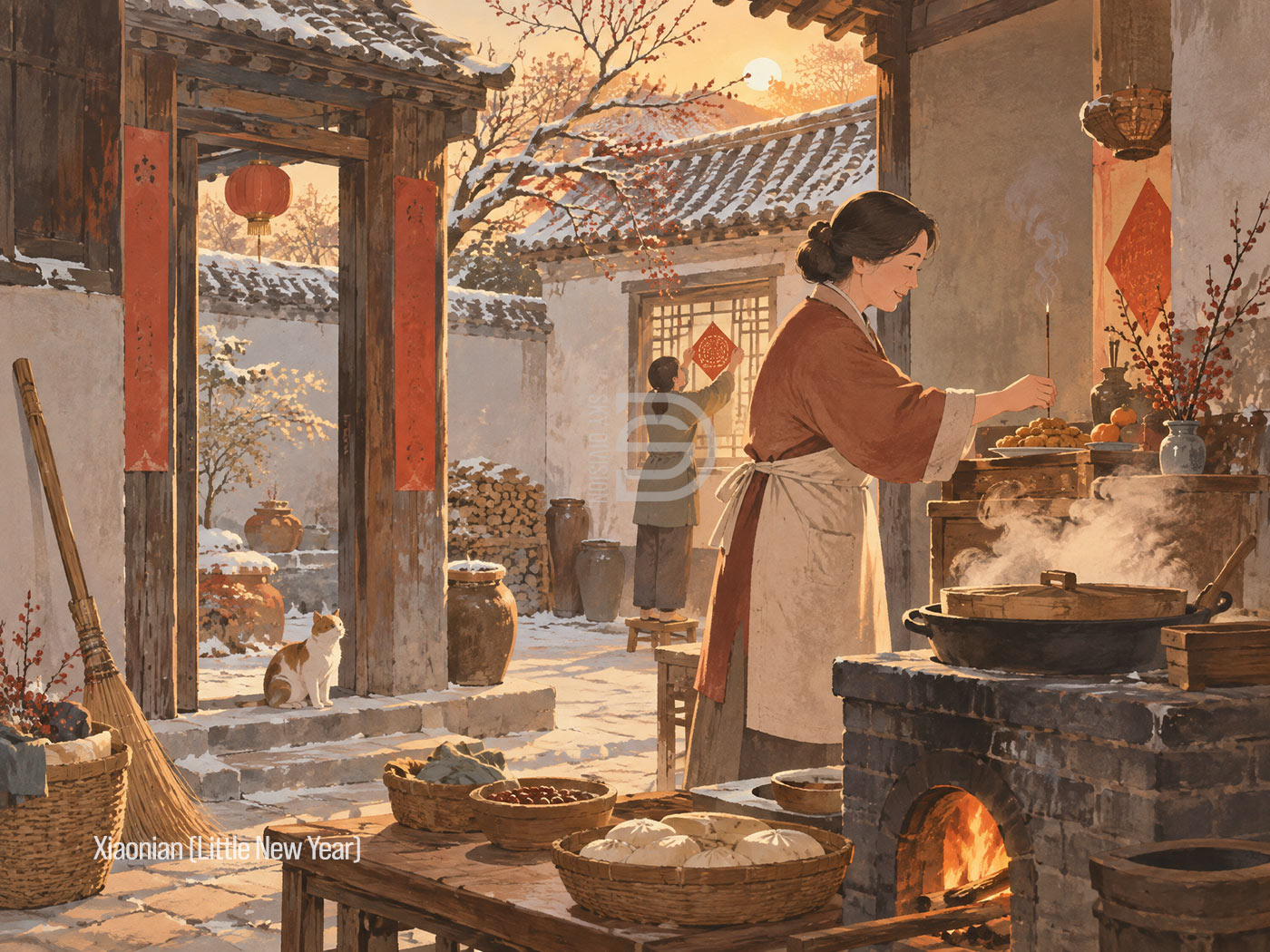 (Little New Year) The Prologue to the Spring Festival - Xiaonian falls on the 23rd or 24th day of the twelfth lunar month (varying by region) and is regarded as the prelude to the Lunar New Year, officially kicking off the countdown to the Spring Festival. The most important custom of the day is the "Kitchen God farewell" ritual: legend has it that the Kitchen God ascends to heaven on this day to report to the Jade Emperor on the |
||||||||||||||||||||||||||||||||||||||||||||||||||||||||||||
|
14 festivals arranged in chronological order according to the lunar calendar (with the Winter Solstice noted by its solar calendar timing, as it is a solar term rather than a lunar date). This order follows the traditional Chinese festival cycle from the start of the lunar year through to its end.
Notes: |
|||||||||||||||||||||||||||||||||||||||||||||||||||||||||||||
 Sky Division & Logios'Logios' represents an AI entity, helping with data, stats, knowledge, words, calculations, helping human creator in exploring and developing content. 'Logios' sometimes can be a single AI-platform, or many of them. If a code-script is used somewhere then credits for assistance belong exclusively to DeepSeek AI.
Logios - from the Greek λόγιος (lógios), meaning "learned, eloquent, one who speaks with reason"., 2026 |
|||||||||||||||||||||||||||||||||||||||||||||||||||||||||||||