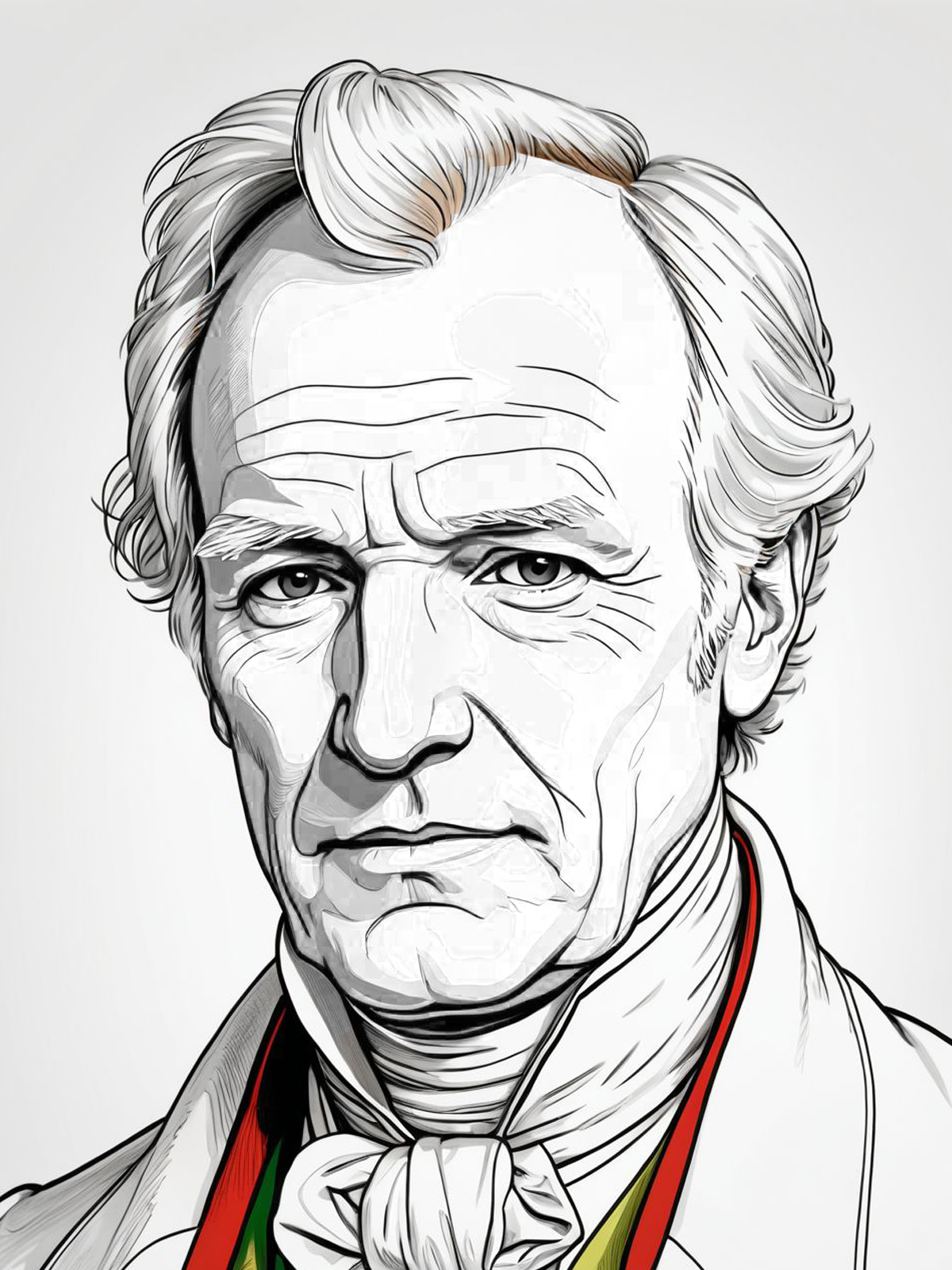
Alexander von Humboldt
Alexander von Humboldt (1769-1859), was a legendary German naturalist, explorer, and geographer whose work laid the foundations for modern ecology and biogeography. Between 1799 and 1804, Humboldt conducted an extensive, perilous scientific expedition through the Americas, mapping uncharted territories and meticulously measuring meteorological, geological, and botanical data. He was the first person to describe human-induced climate change and visualized nature as a complex, interconnected global web rather than a collection of isolated species. His masterwork, Cosmos, attempted to unify all scientific knowledge of the universe into a comprehensive narrative. Humboldt’s unique holistic approach to science inspired generations of thinkers, including Charles Darwin and John Muir. His legacy survives today through countless geographic features, currents, and species named in his honor, celebrating his status as one of history's greatest scientists.