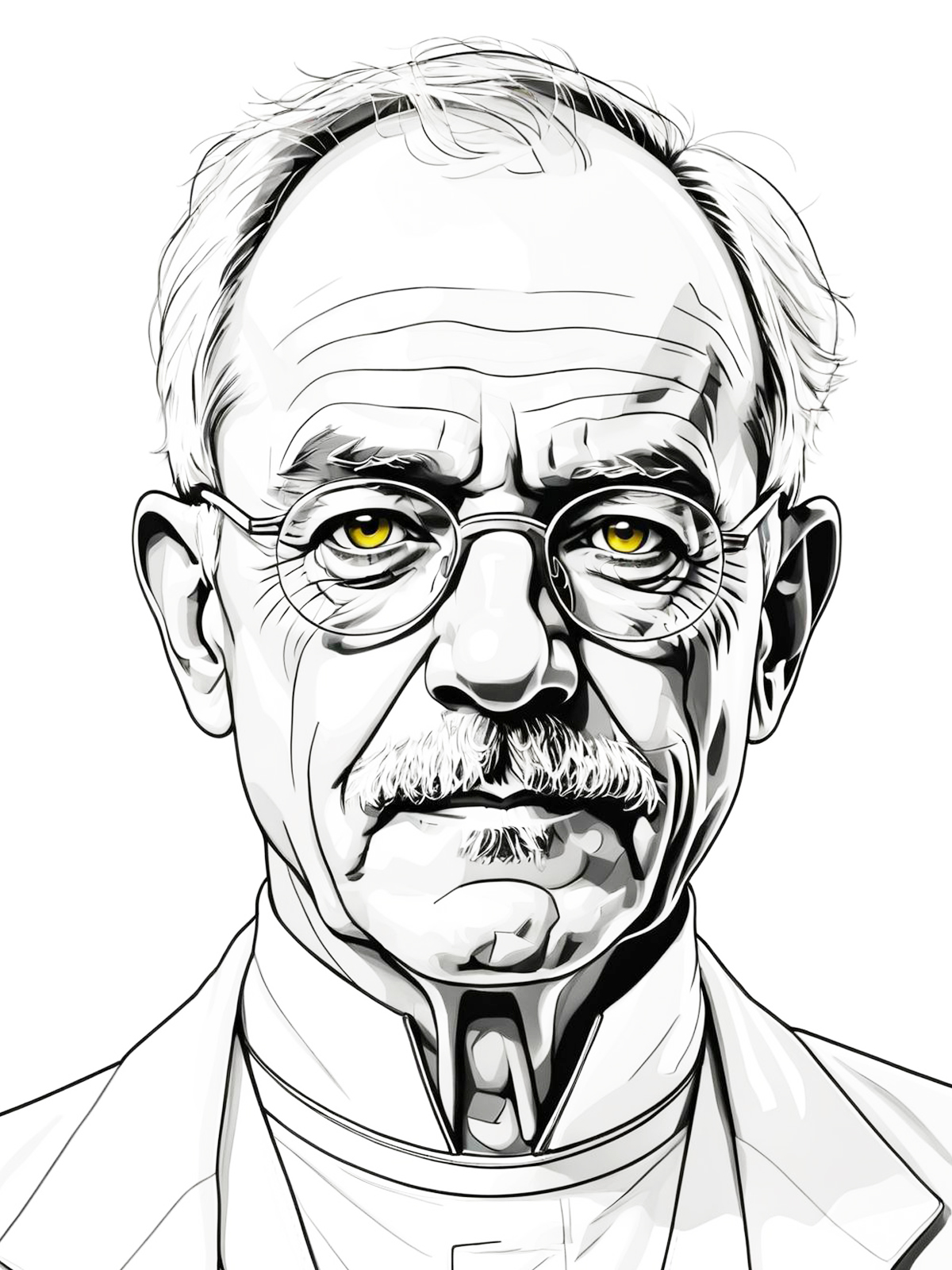
Carl Bosch
Carl Bosch (1874-1940), was a brilliant German chemist and engineer who successfully bridged the gap between scientific laboratory discoveries and massive industrial production. He is best known for scaling up Fritz Haber’s laboratory method of fixing atmospheric nitrogen into an industrial reality. This breakthrough, known as the Haber-Bosch process, allowed for the mass production of synthetic fertilizers, which revolutionized global agriculture and effectively saved billions of people from starvation. For his pioneering work in high-pressure chemical technology, Bosch was awarded the Nobel Prize in Chemistry in 1931. He later served as the head of the chemical giant IG Farben. Bosch was also an outspoken critic of Nazi policies and actively tried to protect Jewish scientists from persecution. His engineering genius permanently altered global food security and established chemical engineering as a vital, modern industrial discipline.