
Eos
The goddess and personification of the dawn, who rose each morning from her home at the edge of the river Oceanus to deliver light and disperse the night. In Greek tradition and poetry, she is characterized as a goddess with a great sexual appetite, who took numerous human lovers for her own satisfaction and bore them several children. According to Apollodorus, Aphrodite was the culprit behind Eos's numerous love affairs, having cursed the goddess with insatiable lust for mortal men.
Eos is presented as a daughter of the Titans Hyperion and Theia, the sister of the sun god Helios and the moon goddess Selene. In rarer traditions, she is the daughter of the Titan Pallas. Each day she drives her two-horse chariot, heralding the breaking of the new day and her brother's arrival.
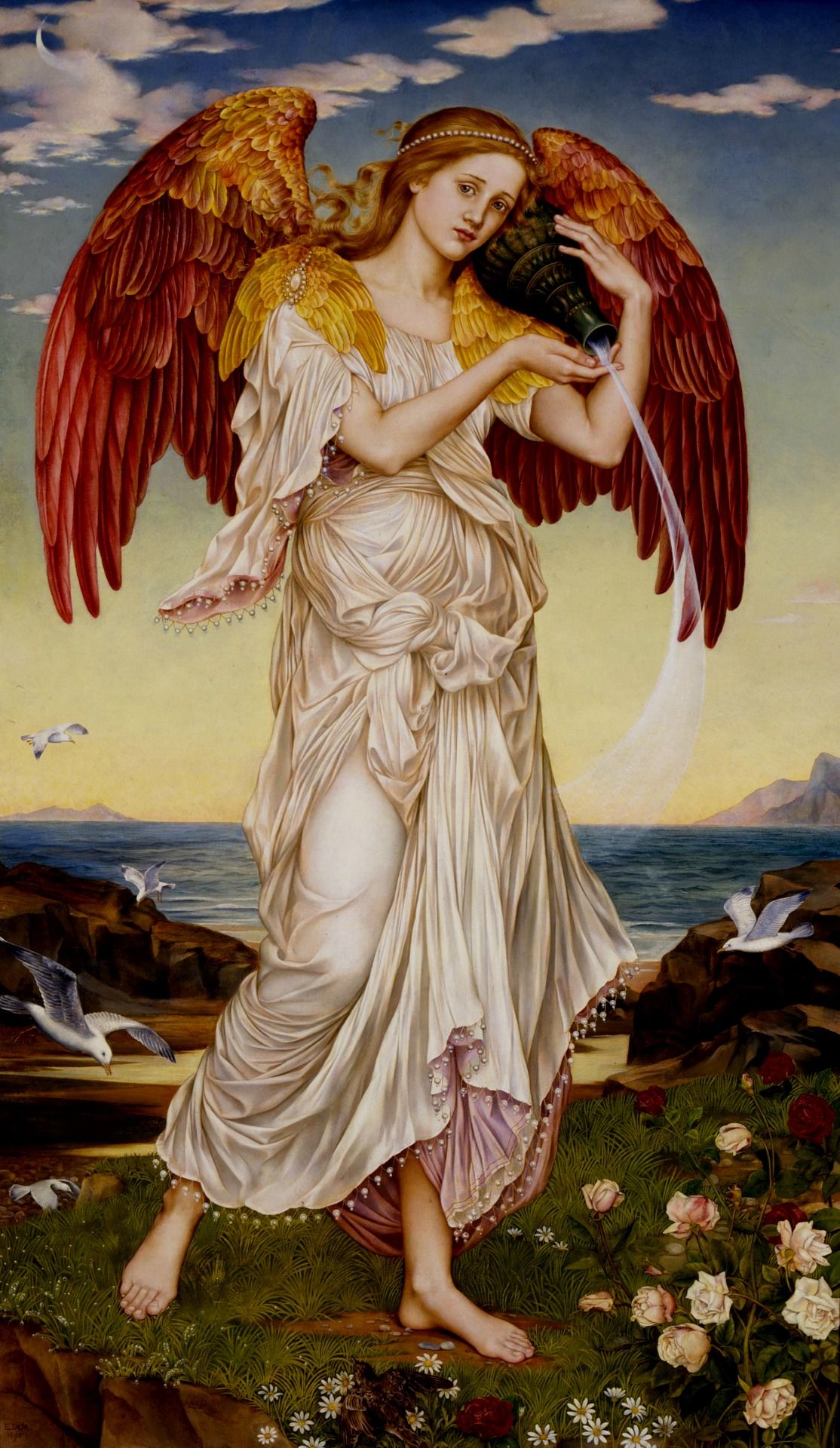
Evelyn De Morgan - Eos, 1895
Although primarily associated with the dawn and early morning, sometimes Eos would accompany Helios for the entire duration of his journey, and thus she is even seen during dusk. Eos fell in love with mortal men several times, and would abduct them in similar manner to how male gods did mortal women. Her most notable mortal lover is the Trojan prince Tithonus, for whom she ensured the gift of immortality, but not eternal youth, leading to him aging without dying for an eternity.
Image: Eos, a 1895 painting by the English artist Evelyn De Morgan, in a Pre-Raphaelite style. It depicts the Greek goddess Eos, goddess of the dawn and of love, standing on a seashore, surrounded by birds and flowers and pouring water from a jug.