
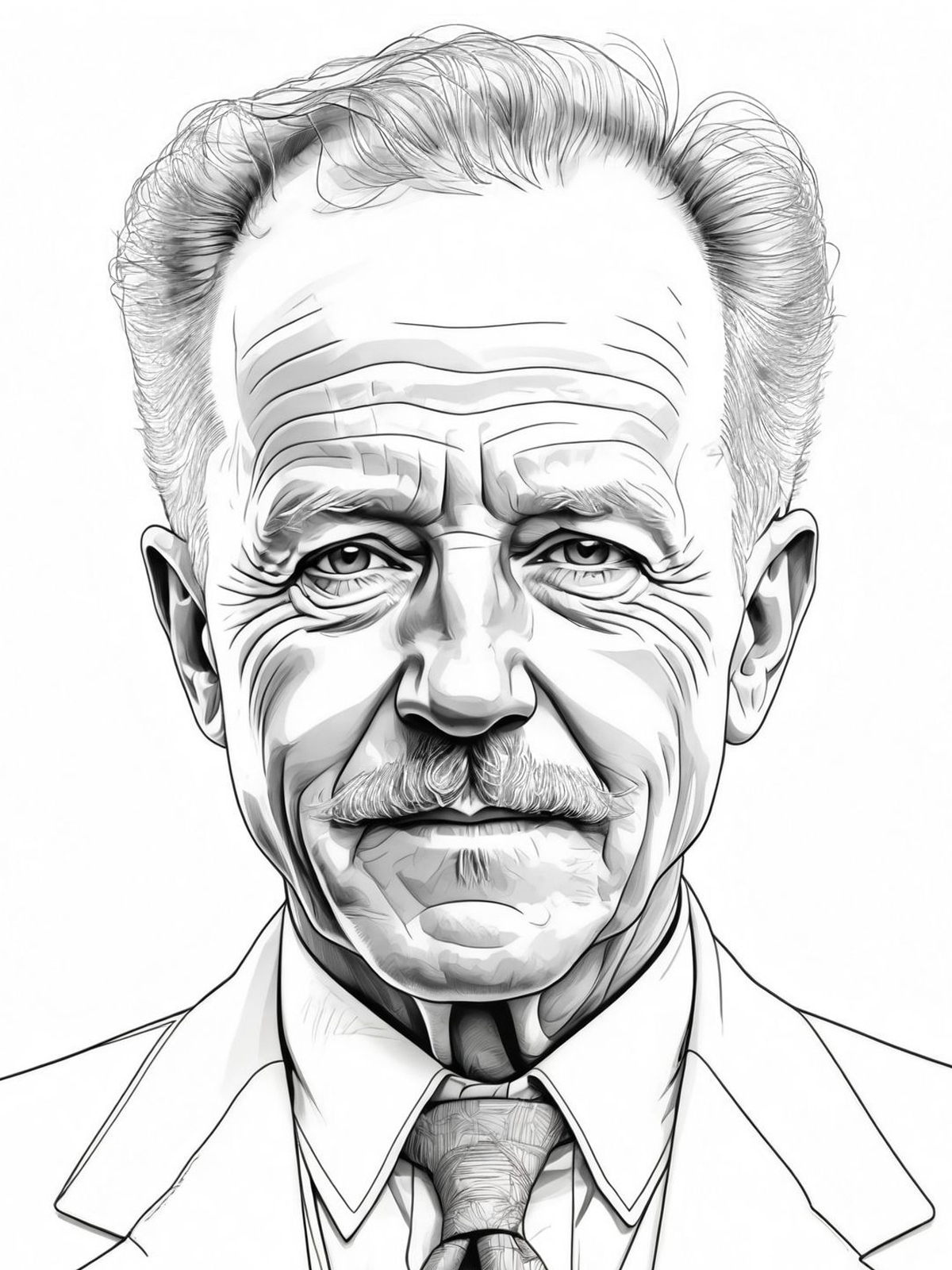
Werner Heisenberg
Werner Heisenberg (1901-1976), was a pioneering physicist who made significant contributions to the development of quantum mechanics in the early 20th century. He is most famous for formulating the Heisenberg Uncertainty Principle in 1927, which states that it is impossible to simultaneously determine the precise position and momentum of a particle with perfect accuracy. This principle fundamentally changed our understanding of the behavior of particles on the atomic and subatomic scales. Heisenberg’s matrix mechanics and wave mechanics played a crucial role in the development of quantum theory. He received the Nobel Prize in Physics in 1932 for his creation of quantum mechanics.
Science & Technology