
Traditional Yemeni cuisine is distinct from the wider Middle Eastern cuisines with regional variation. Despite being an Arab country, Yemeni cooking traditions have been influenced more by Indian and Indonesian methods as a result of its maritime history. The generous offering of food to guests is one of the customs in Yemeni culture, and a guest not accepting the offering is considered an insult. Meals are typically consumed while sitting on the floor or ground. Unlike the tradition in most Arab countries, lunch is the main meal of the day in Yemen, not dinner.
Some Dishes & Recipes & DrinksSome of the most popular Yemeni dishes are: |
||
| click on the tooltip-link to keep it activated – click outside the box to deactivate it | ||
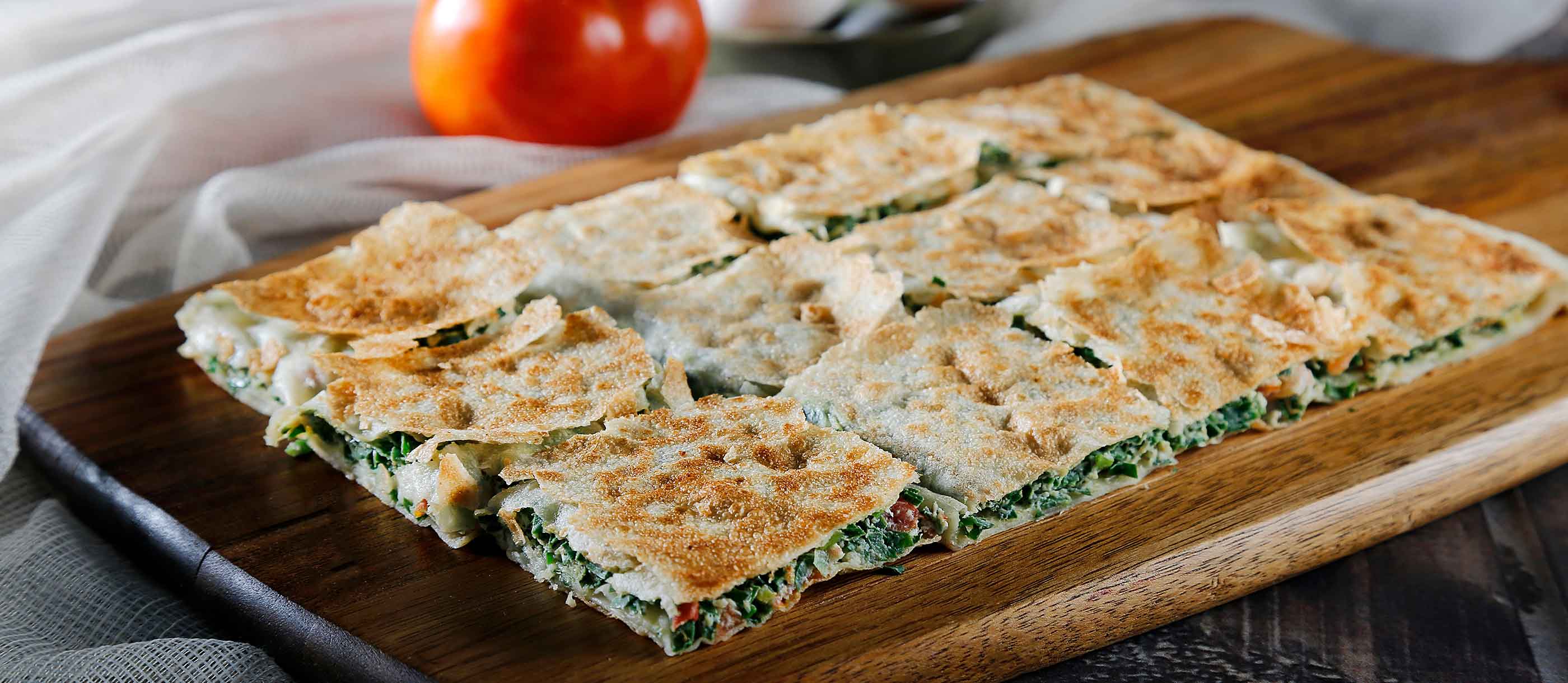
| Martabak(Murtabak, Mutabbaq, مطبق, มะตะบะ, Mataba)
MartabakMartabak is a roti-like stuffed and fried pancake which is often served as a popular street food item in countries such as Saudi Arabia, Yemen, Indonesia, and Malaysia. Although the fillings may vary, some of the most popular ones include ground meat, eggs, garlic, onions, peppers, curry, and ghee. Fresh herbs such as coriander and mint are often used for additional flavoring. The flatbread dough is supposed to be |
Maraq(Meat Soup / Yemen)
MaraqMaraq is a delicate and aromatic Yemeni lamb (or chicken) broth soup that is traditionally served at the beginning of the meal. Each family and restaurant makes a different maraq stock, so it may be simmered with garlic, turmeric, onions, coriander, pepper, or cinnamon, depending on personal preferences. The stock can also act as a base for numerous other dishes, such as salta, a stew that is also the national |
Zhoug(Sahawiq, سحوق, Shug, Bisbas, סחוג, Zhug, Skhug, Skoug, Schug)
ZhougZhoug is a traditional Middle Eastern sauce and condiment that's believed to originate from Yemen, but it's also very popular in Israel. The sauce is usually made from green or red hot peppers, garlic, coriander, cumin, cardamom, salt, and various spices. There are many versions of the sauce, so people often add other ingredients into it, such as mint or lemon juice. What is important |
| Madfoon(Al Hudaydah, Yemen / Meat Dish, Rice Dish / Madfoun, مدفون)
MadfoonMadfoon is one of numerous Arabian meals made with a combination of meat and rice. This signature dish is differentiated by a cooking technique in which the marinated meat is cooked in an underground hole where it is placed on the sand and surrounded by charcoal. The smoke and heat slowly cook the meat, keeping it succulent and tender while providing it with |
Mandi(Meat Dish, Rice Dish / Mindi, Mandy, Mandee, مندي, Mandi rice / Hadhramaut Governorate, Yemen, Saudi Arabia)
MandiMandi is Yemen's national dish (also popular in Saudi Arabia), consisting of lamb or chicken meat, fragrant basmati rice and a mixture of various spices. If lamb is used in the dish, it should be small-sized and as young as possible, to further enhance the flavors. To make mandi, the meat should be cooked in the tandoor, |
Jachnun(Pastry, Breakfast, Flatbread / Aden Governorate, Yemen, Israel / Jahnun, גַ'חְנוּן)
JachnunJachnun is a slow-cooked, rolled dough dish from the cuisine of Yemenite Jews, prepared for consumption on Shabbat morning and today widely eaten in Israel. It consists of thinly stretched dough brushed with fat, rolled tightly, placed in a pot, and cooked at low heat overnight until it becomes soft, amber-colored, and slightly sweet. Its development took place among Jewish communities in Yemen, |
| Sayadiyah(Saltwater Fish Dish, Rice Dish / Siyyadiyeh, صيادية, Sayadiyah, Sayadiah, Al-Sayadiah / Yemen, Egypt, Syria, Tabuk Region, Saudi Arabia, Lebanon)
Sayadiyah |
Shakshouka(Egg Dish, Breakfast, Vegetarian Dish / Shakshuka, Patakenjac, Chakchouka, Ojja, שקשוקה , شكشوكة / Yemen, Algeria, Egypt, Israel, Libya, Morocco, Palestine, Tunisia)
ShakshoukaShakshouka is a delicious combination of eggs poached in a spicy tomato sauce. Although it has an unusual name, the dish is straightforward and easy to make. It is usually made in a skillet in which onions, tomatoes, and spices are cooked until they form a delicious tomato sauce. Eggs are then |
Malawach(Yemen / Israel / Flatbread / Malawah, Melawwaḥ, מלוואח)
MalawachMalawach is a laminated flatbread that originated among Yemenite Jewish communities and is now widely eaten in Israel, where it has become a common household and street-food item. It comes from a culinary context in Yemen where dough-based dishes that relied on layering and frying were common in home kitchens, and Jewish communities preserved specific styles of preparation that later spread as migration increased during the twentieth century.<br |
| Kubaneh(כובאנה / Bread, Breakfast)
KubanehKubaneh is a popular Yemeni-Jewish bread consisting of flour, sugar, salt, and butter. It is traditionally served warm for breakfast. The bread comes in two varieties: folded (the dough is shaped into balls, combined with butter, and rolled in a spiral) and monkey bread (balls of dough are dipped in butter and placed in the pan). |
Saltah(Stew / Yemen)
SaltahSaltah is the national dish of Yemen, a hearty stew usually eaten for lunch. It can be prepared with or without meat. The key ingredients in saltah are hilbeh, a condiment based on fenugreek, and zhug, a condiment consisting of chillies, oil, cumin, garlic and coriander. Hilbeh and zhug are added to the brown stew that often contains lamb or chicken meat, if used at all. It is quite likely that |
Malooga(Flatbread / ملوجة)
MaloogaMalooga is a yeasted Yemeni flatbread that is traditionally baked in a taboon. It consists of flour, yeast, water, salt, oil, and dark clarified butter known as semn. The bread has a status of being an inexpensive item for the poor people of Yemen. |
| Masoub(Dessert, Breakfast / Feetamuus, معصوب)
MasoubMasoub is a Yemeni dessert that is popular throughout the Arabian peninsula. In its basic form, the dish consists of mashed bananas and bread that are usually enriched with butter, cream, spices, honey, and dates. Masoub is traditionally served on large plates, and it is meant to be enjoyed as a communal meal. |
Areeka(Dessert, Breakfast, Snack - العريكة بالقشطة)
AreekaAreeka is a traditional dessert that is prepared with a combination of mashed dates and crumbled bread such as khubz, while the additions usually include cream, condensed milk, honey, and spices. This filling dessert can be enjoyed for breakfast or as a light snack, and it is typically drizzled with honey and garnished with slivered almonds. |
Bint al-Sahn(Dessert, Sweet Pastry, Phyllo Pastry / Sabayah, بنت الصحن)
Bint al-SahnBint al-Sahn, also known as Yemeni honey cake, consists of multiple thin layers of dough brushed with ghee (clarified butter), baked until golden, and then drizzled with honey. The top of the pastry is glazed with an egg wash and topped with nigella seeds. Bint al-Sahn is known for its flaky, buttery texture and sweet flavor, making it a popular dessert or treat, especially |
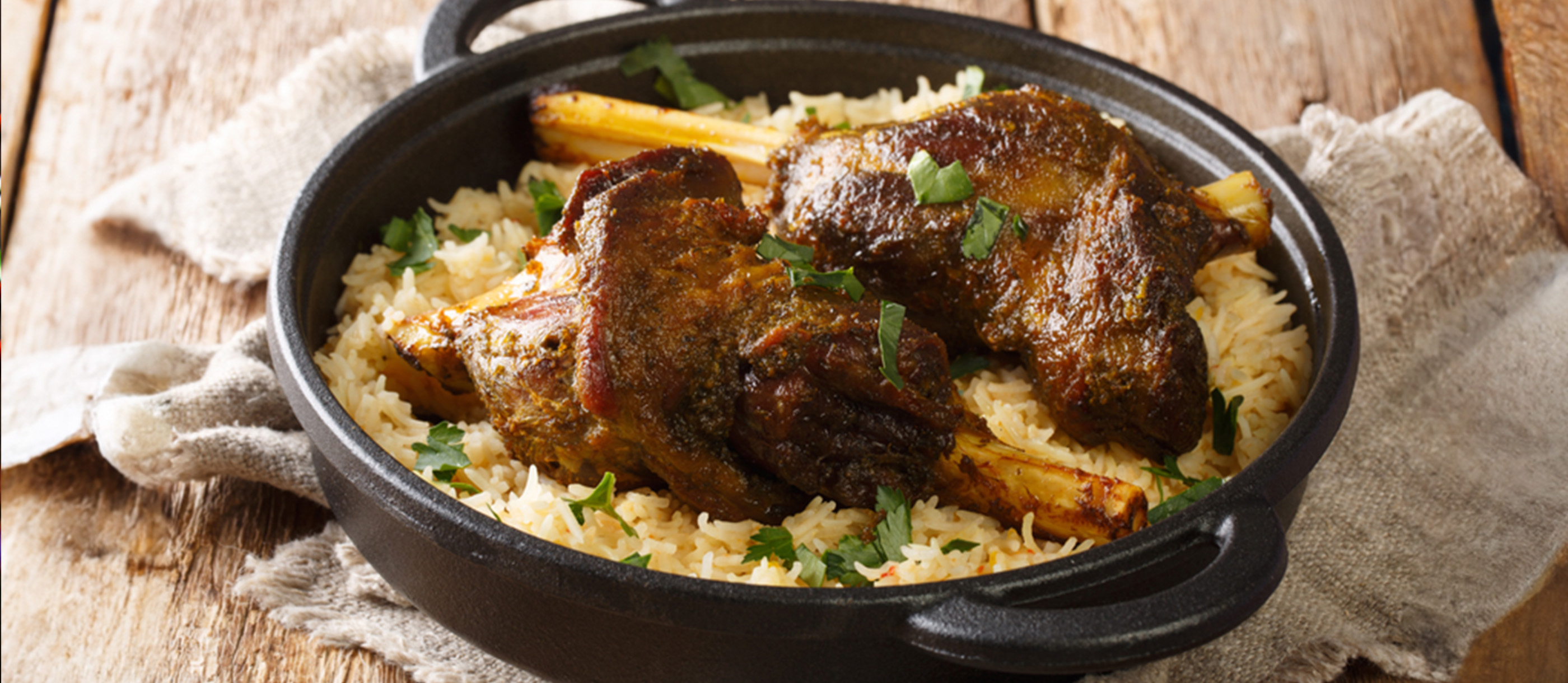
| Haneeth(Rice Dish, Lamb Dish / Arabian Peninsula, Asir, Saudi Arabia / الحنيذ)
HaneethHaneeth is a traditional dish from the Asir region of Saudi Arabia and Shabwah / Hadramout region of Yemen, popular across the Arabian Peninsula. It features slow-roasted, spice-rubbed lamb, typically cooked in a Tannour oven, served on a bed of rice. It is cooked in a tannour oven and has a different spice rub. Haneeth is usually served on a plate of rice. |
Aseeda (Asida)(Breakfast, Porridge, Pudding / Aseeda, Aseedah, Asida, عصيدة / Yemen, Saudi Arabia)
Aseeda (Asida)Aseeda or asida is a moist, pasty dough consisting of wheat flour or sorghum, water, yogurt, salt and sunflower oil that is then served with a variety of accompaniments, such as honey, butter, dates or even a savory version with meat stew, depending on regional preferences. The dish is traditionally eaten without any utensils. Using only one's fingers, aseeda is eaten |
Lahoh(لحوح, Lahooh, Laxoox, Canjeero, Canjeelo, 𐒐𐒖𐒄𐒝𐒄, 𐒋𐒖𐒒𐒃𐒜𐒇𐒙)
LahohLahoh is a spongy flatbread popular throughout Somalia, Ethiopia, and Djibouti, among others. It is characterized by its circular shape with numerous holes on the surface. This pancake-like bread is made with plain flour, unlike its cousin injera which is usually made with teff flour. Lahoh can be consumed with both sweet and savory ingredients and dishes such as honey, sugar, stews, or soups. |
| Qishr(Drink, Herbal Infusion / Yemen)
Qishr is a traditional Yemeni infusion made with coffee husks, ginger, sugar, and sometimes cinnamon. In the past, qishr was used by Muslim dervishes as a part of religious ceremonies, but nowadays it is considered a universal drink which is consumed instead of coffee because it is less expensive. |
Shahi Haleeb(Tea, Herbal Infusion / Shai haleeb, Haleeb shai, Shai Adeni, Shai mulaban / Yemen)
Shahi haleeb is a traditional spiced milk tea, known for its soothing and aromatic flavors. It is made by simmering milk with a blend of spices such as cardamom, cloves, and sometimes saffron, along with black tea leaves. Sweetened with sugar or honey, shahi haleeb is a popular beverage enjoyed in Yemen, especially in the mornings or evenings. |
|
|
|
||
Martabak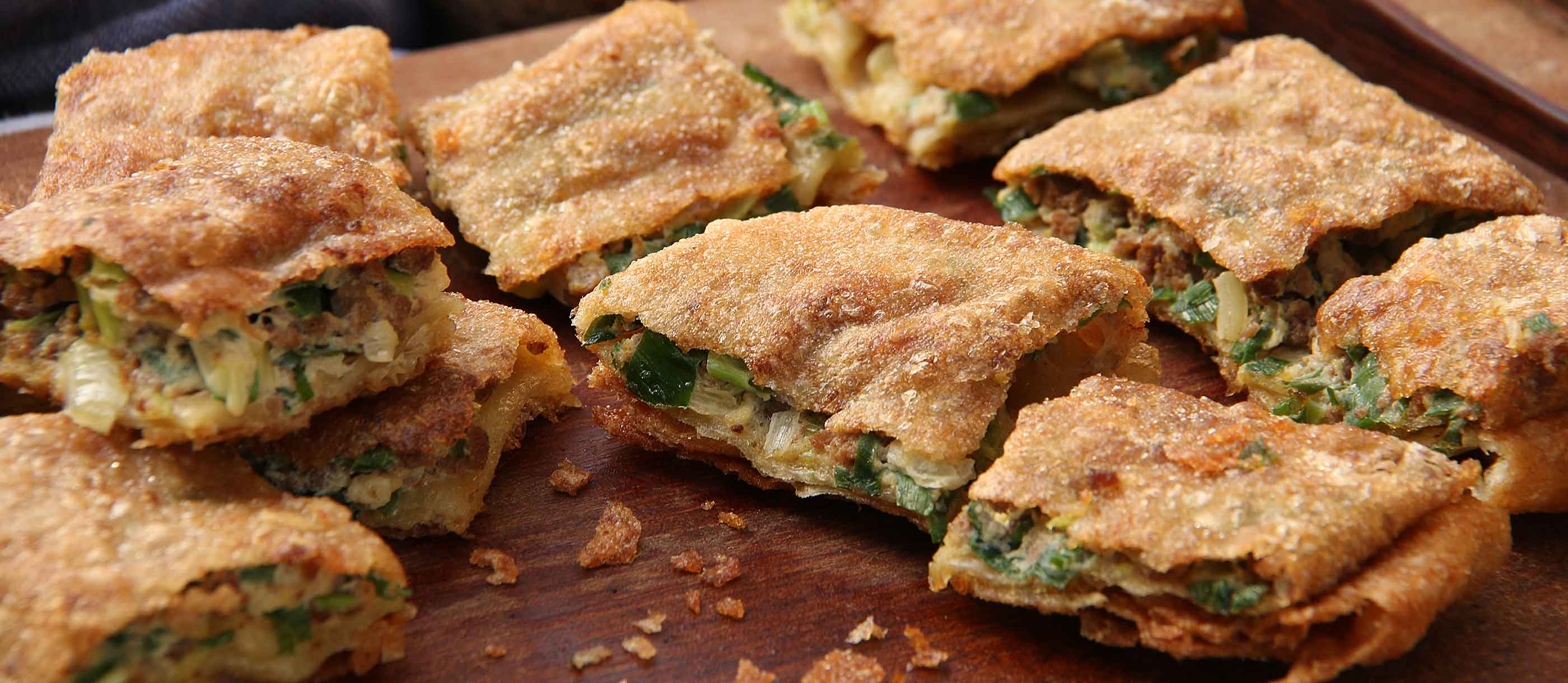 (Murtabak, Mutabbaq, مطبق, มะตะบะ, Mataba) (Murtabak, Mutabbaq, مطبق, มะตะบะ, Mataba)
Martabak is a roti-like stuffed and fried pancake which is often served as a popular street food item in countries such as Saudi Arabia, Yemen, Indonesia, and Malaysia. Although the fillings may vary, some of the most popular ones include ground meat, eggs, garlic, onions, peppers, curry, and ghee. Fresh herbs such as coriander and mint are often used |
Maraq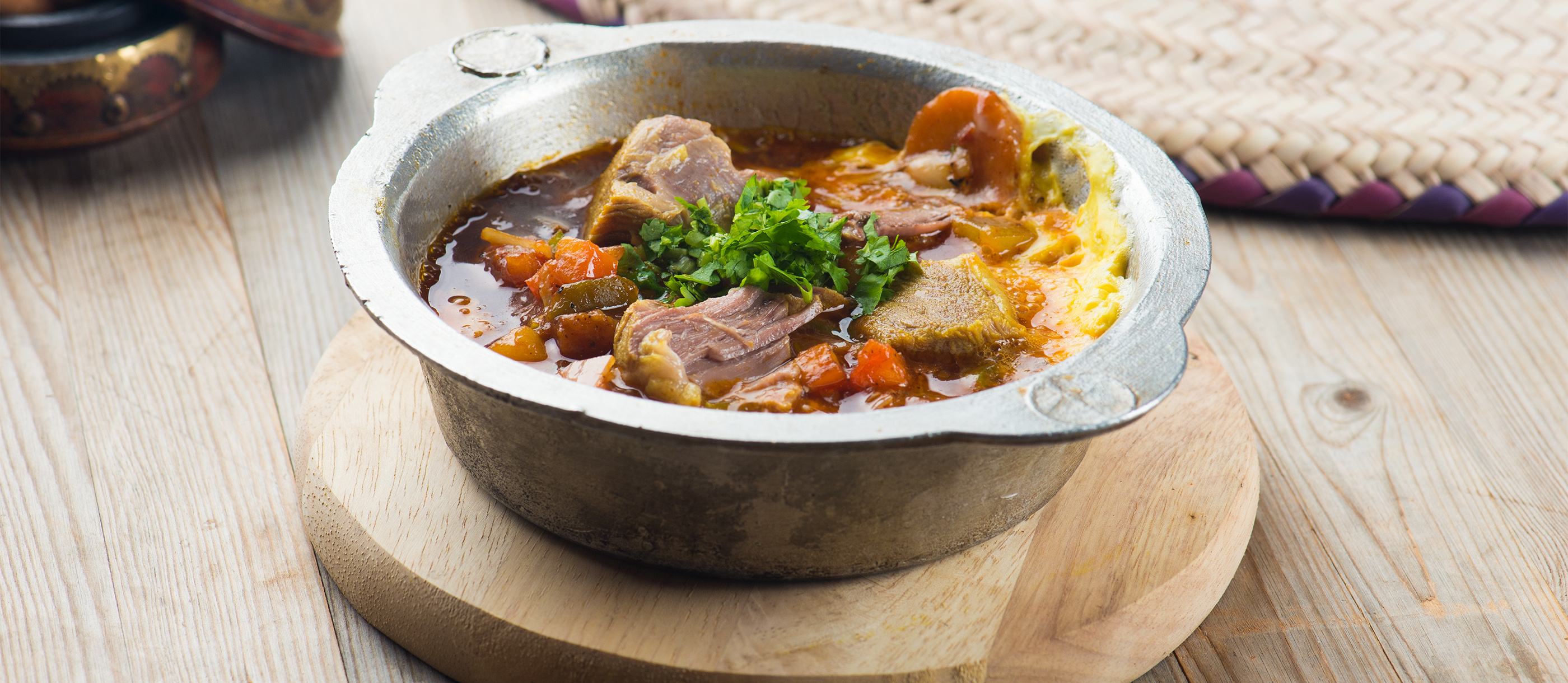 (Meat Soup / Yemen) (Meat Soup / Yemen)
Maraq is a delicate and aromatic Yemeni lamb (or chicken) broth soup that is traditionally served at the beginning of the meal. Each family and restaurant makes a different maraq stock, so it may be simmered with garlic, turmeric, onions, coriander, pepper, or cinnamon, depending on personal preferences. The stock can also act as a base for numerous other dishes, |
Zhoug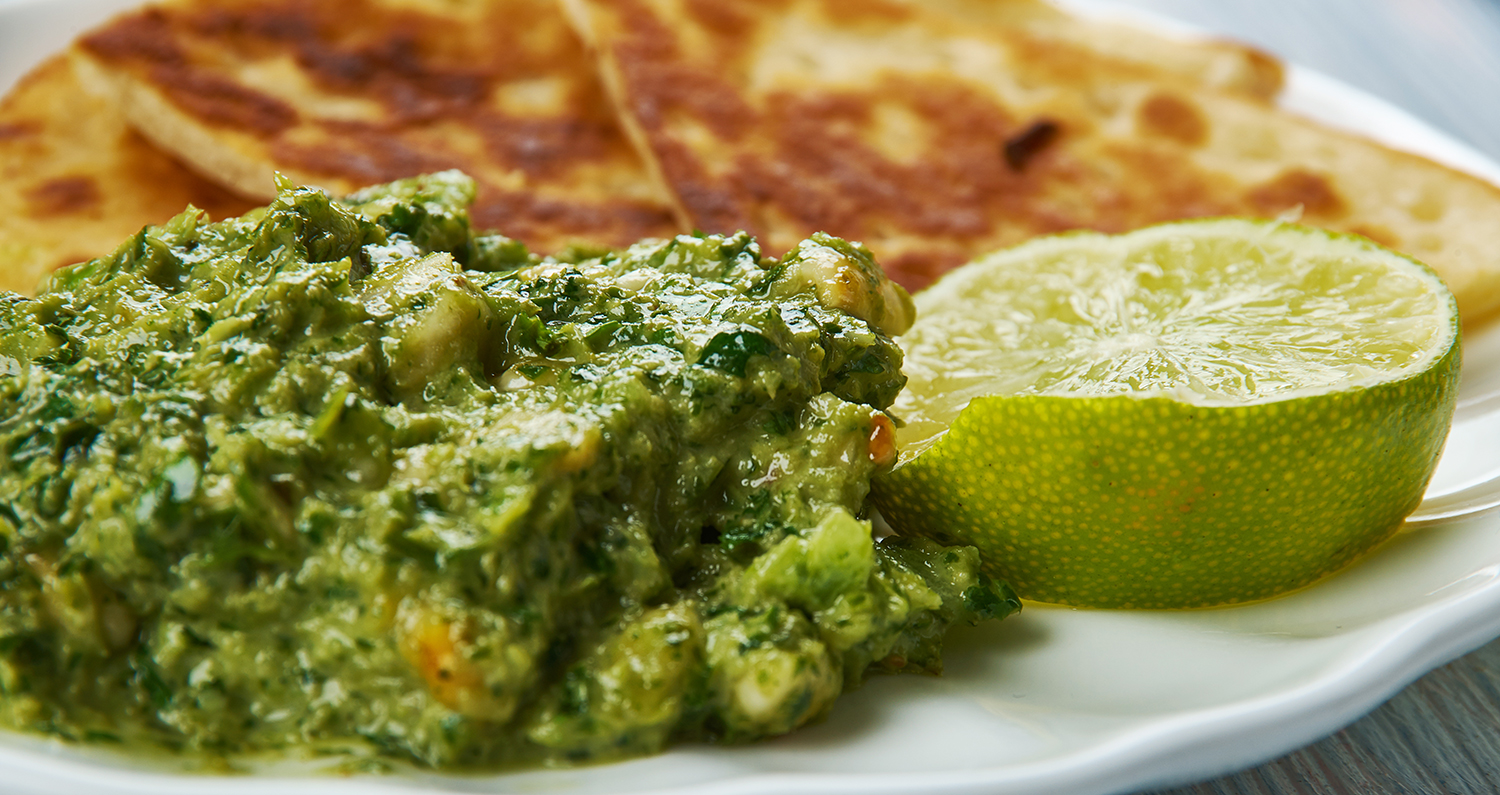 (Sahawiq, سحوق, Shug, Bisbas, סחוג, Zhug, Skhug, Skoug, Schug) (Sahawiq, سحوق, Shug, Bisbas, סחוג, Zhug, Skhug, Skoug, Schug)
Zhoug is a traditional Middle Eastern sauce and condiment that's believed to originate from Yemen, but it's also very popular in Israel. The sauce is usually made from green or red hot peppers, garlic, coriander, cumin, cardamom, salt, and various spices. There are many versions of the sauce, so people often add other ingredients into |
Madfoon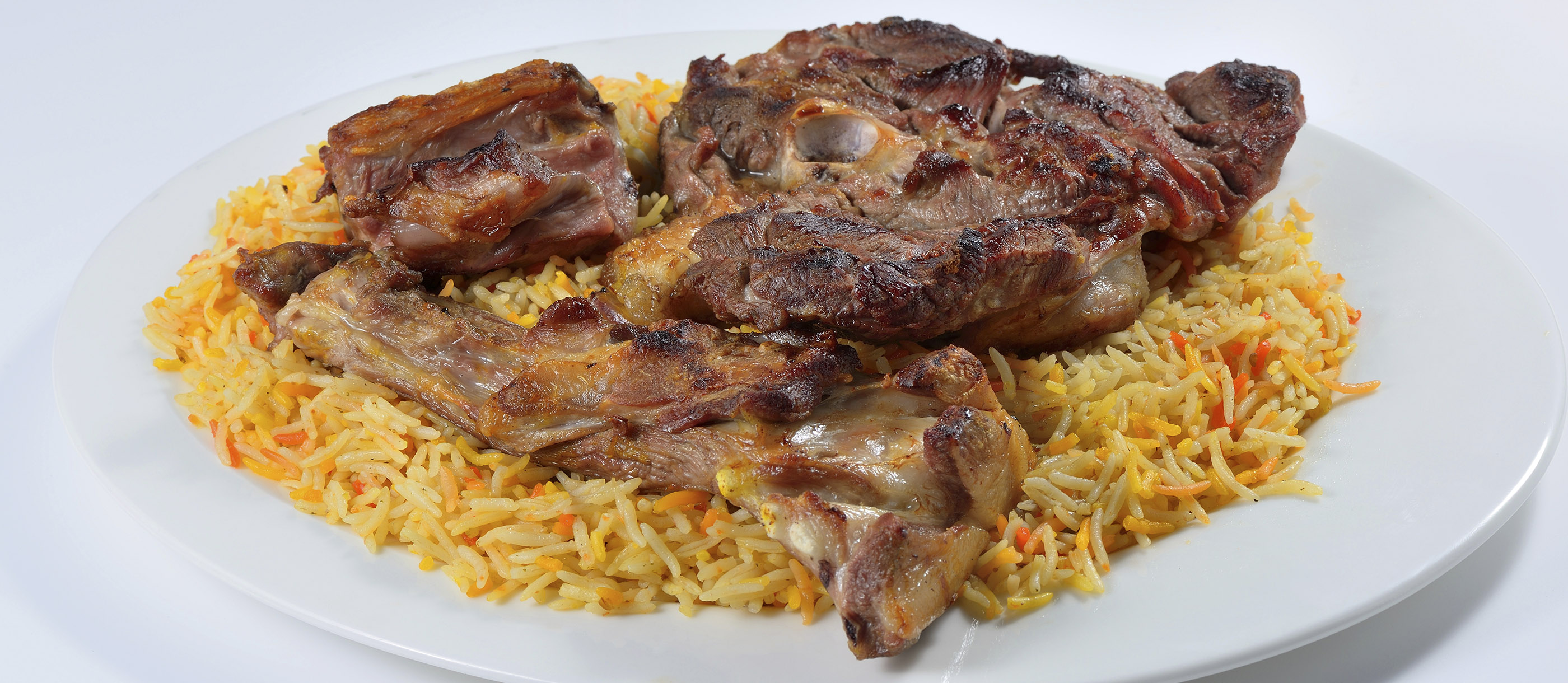 (Al Hudaydah, Yemen / Meat Dish, Rice Dish / Madfoun, مدفون) (Al Hudaydah, Yemen / Meat Dish, Rice Dish / Madfoun, مدفون)
Madfoon is one of numerous Arabian meals made with a combination of meat and rice. This signature dish is differentiated by a cooking technique in which the marinated meat is cooked in an underground hole where it is placed on the sand and surrounded by charcoal. The smoke and heat slowly cook the |
Mandi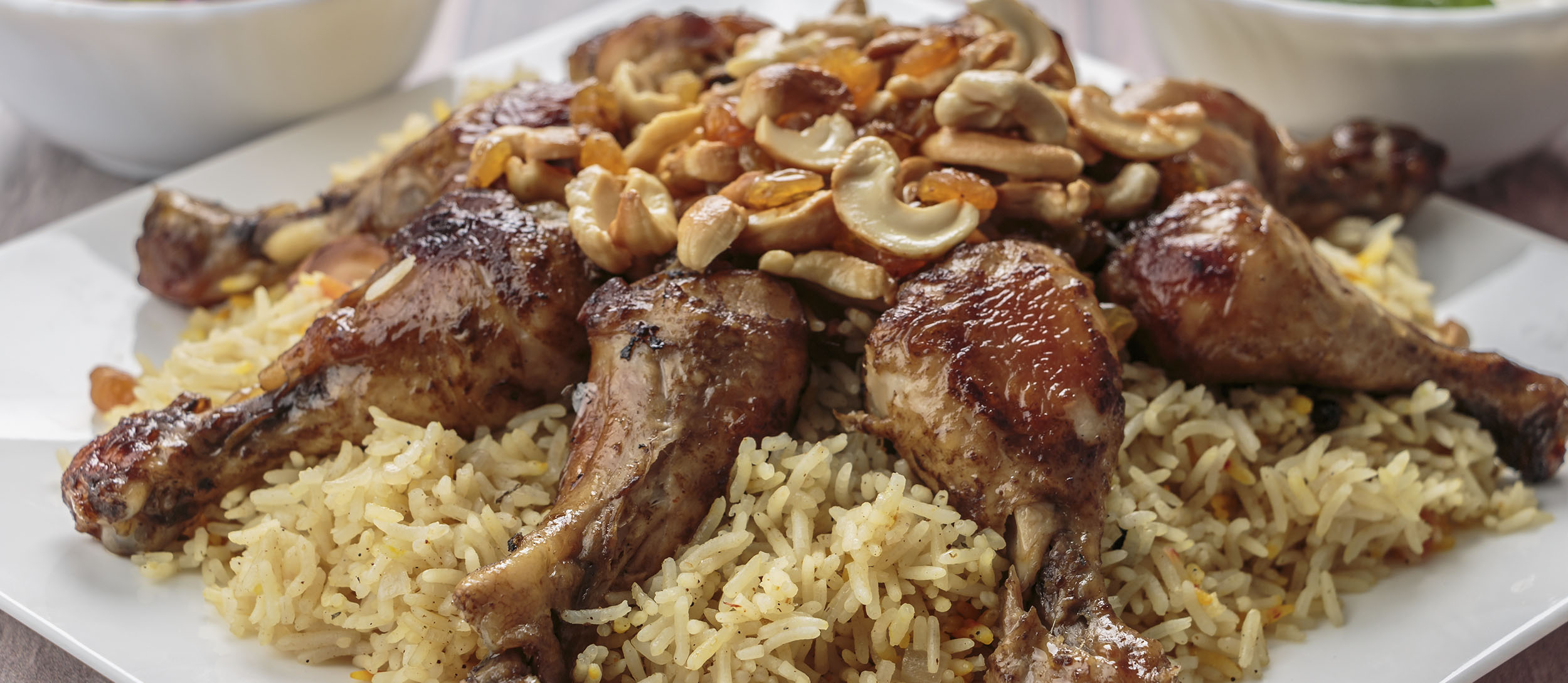 (Meat Dish, Rice Dish / Mindi, Mandy, Mandee, مندي, Mandi rice / Hadhramaut Governorate, Yemen, Saudi Arabia) (Meat Dish, Rice Dish / Mindi, Mandy, Mandee, مندي, Mandi rice / Hadhramaut Governorate, Yemen, Saudi Arabia)
Mandi is Yemen's national dish (also popular in Saudi Arabia), consisting of lamb or chicken meat, fragrant basmati rice and a mixture of various spices. If lamb is used in the dish, it should be small-sized and as young as possible, to further enhance the flavors. To |
Jachnun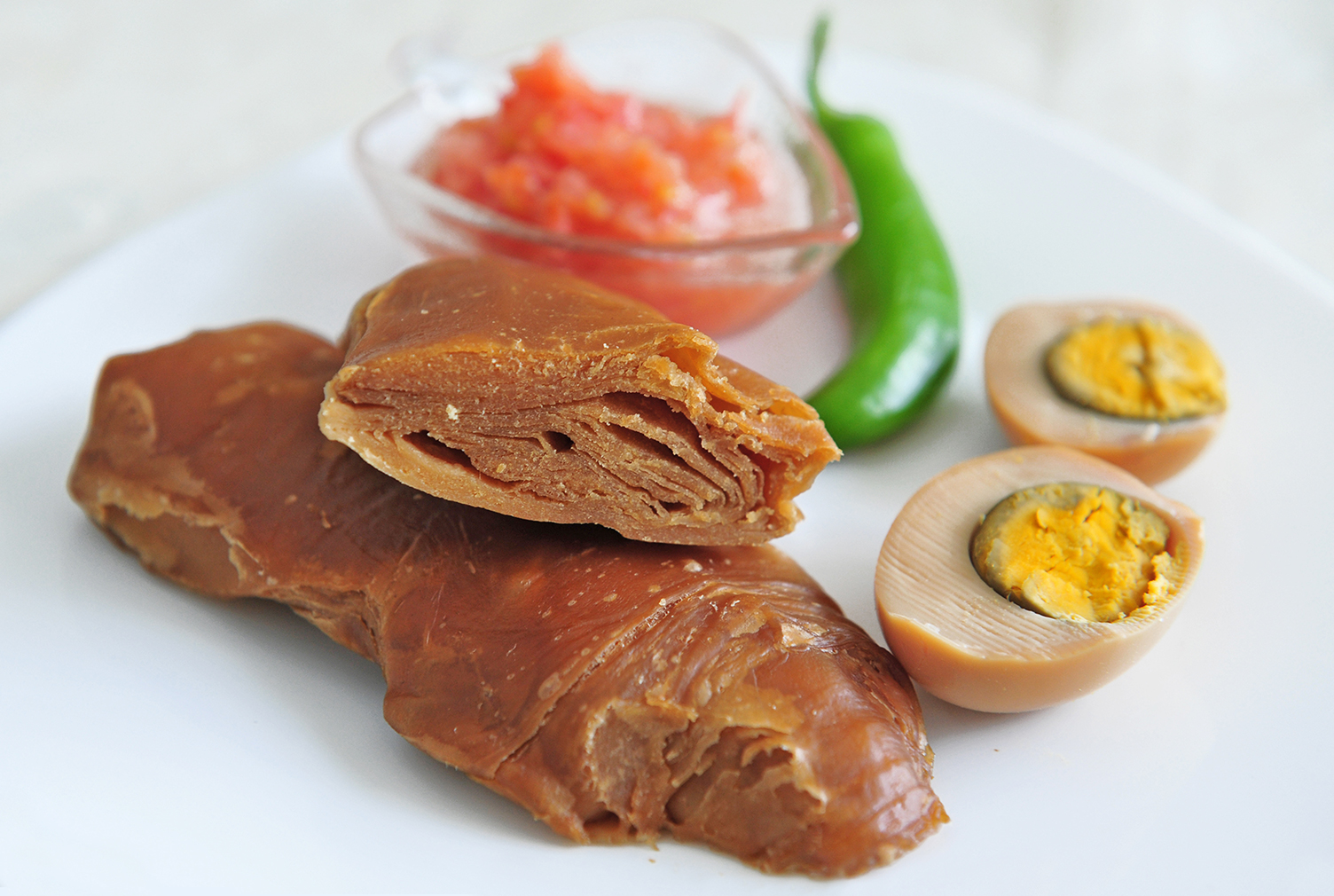 (Pastry, Breakfast, Flatbread / Aden Governorate, Yemen, Israel / Jahnun, גַ'חְנוּן) (Pastry, Breakfast, Flatbread / Aden Governorate, Yemen, Israel / Jahnun, גַ'חְנוּן)
Jachnun is a slow-cooked, rolled dough dish from the cuisine of Yemenite Jews, prepared for consumption on Shabbat morning and today widely eaten in Israel. It consists of thinly stretched dough brushed with fat, rolled tightly, placed in a pot, and cooked at low heat overnight until it becomes soft, amber-colored, and slightly sweet. |
Sayadiyah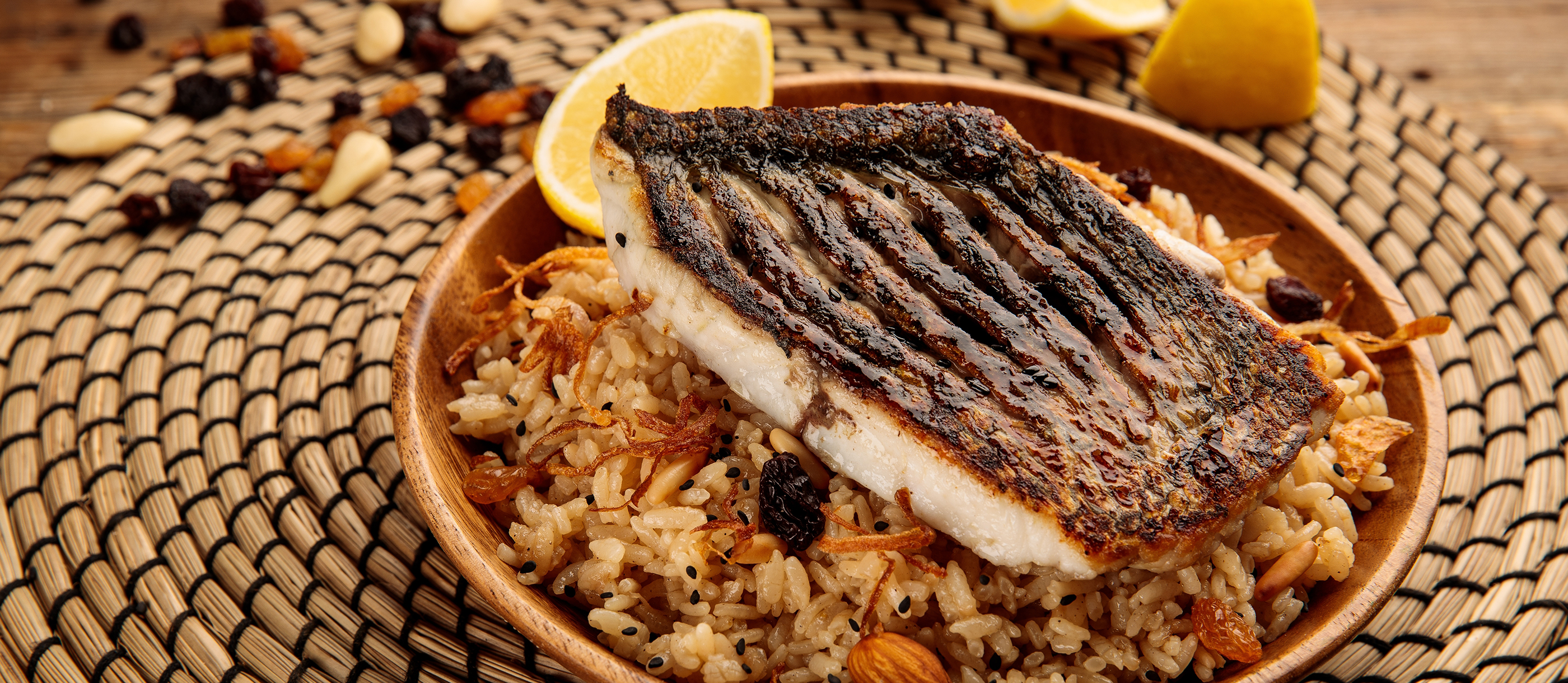 (Saltwater Fish Dish, Rice Dish / Siyyadiyeh, صيادية, Sayadiyah, Sayadiah, Al-Sayadiah / Yemen, Egypt, Syria, Tabuk Region, Saudi Arabia, Lebanon) (Saltwater Fish Dish, Rice Dish / Siyyadiyeh, صيادية, Sayadiyah, Sayadiah, Al-Sayadiah / Yemen, Egypt, Syria, Tabuk Region, Saudi Arabia, Lebanon)
This traditional combination of rice and fish is typically prepared with white fish such as sea bass or red snapper. The fish is fried or baked separately, while the rice is cooked in a special fish broth that is prepared with fried onions and bahārāt |
Shakshouka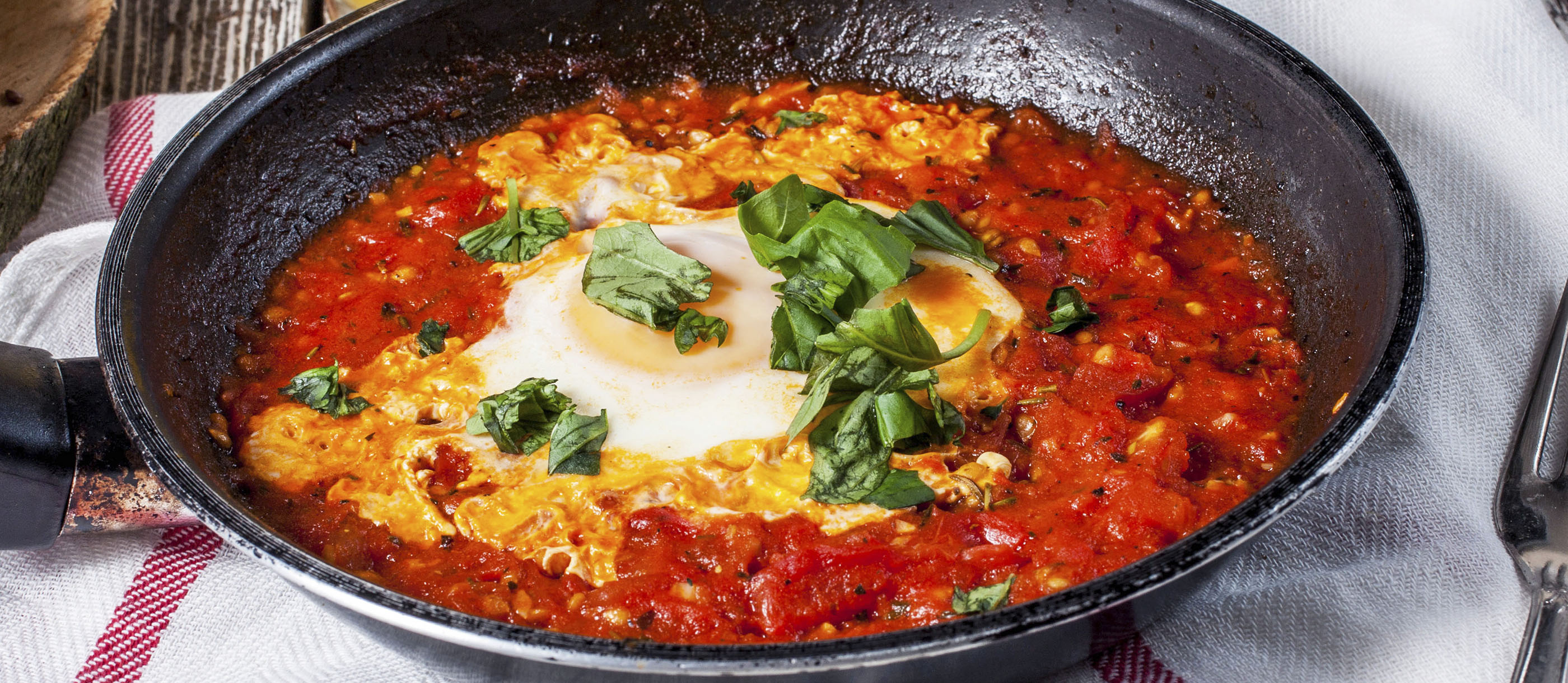 (Egg Dish, Breakfast, Vegetarian Dish / Shakshuka, Patakenjac, Chakchouka, Ojja, שקשוקה , شكشوكة / Yemen, Algeria, Egypt, Israel, Libya, Morocco, Palestine, Tunisia) (Egg Dish, Breakfast, Vegetarian Dish / Shakshuka, Patakenjac, Chakchouka, Ojja, שקשוקה , شكشوكة / Yemen, Algeria, Egypt, Israel, Libya, Morocco, Palestine, Tunisia)
Shakshouka is a delicious combination of eggs poached in a spicy tomato sauce. Although it has an unusual name, the dish is straightforward and easy to make. It is usually made in a skillet in which onions, tomatoes, and spices are cooked until they form |
Malawach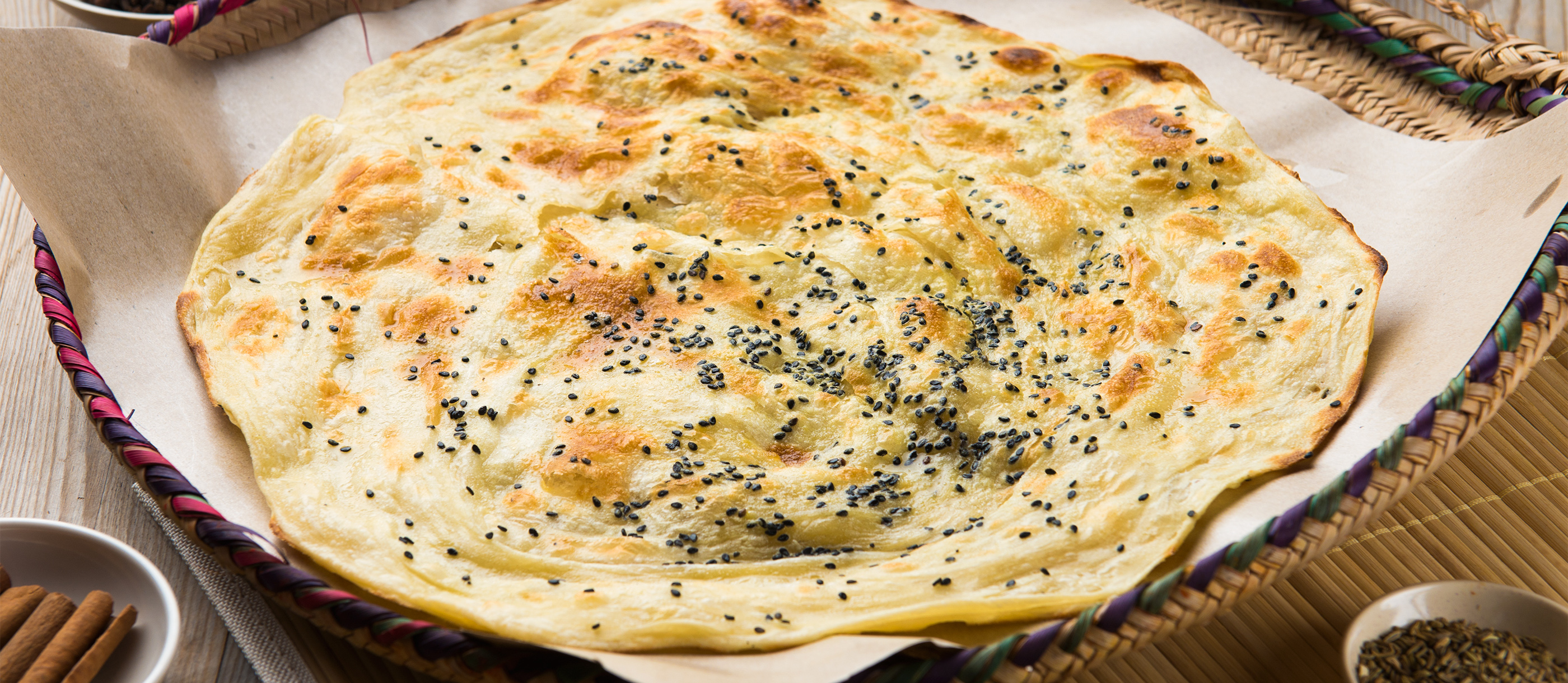 (Yemen / Israel / Flatbread / Malawah, Melawwaḥ, מלוואח) (Yemen / Israel / Flatbread / Malawah, Melawwaḥ, מלוואח)
Malawach is a laminated flatbread that originated among Yemenite Jewish communities and is now widely eaten in Israel, where it has become a common household and street-food item. It comes from a culinary context in Yemen where dough-based dishes that relied on layering and frying were common in home kitchens, and Jewish communities preserved specific styles of preparation |
Kubaneh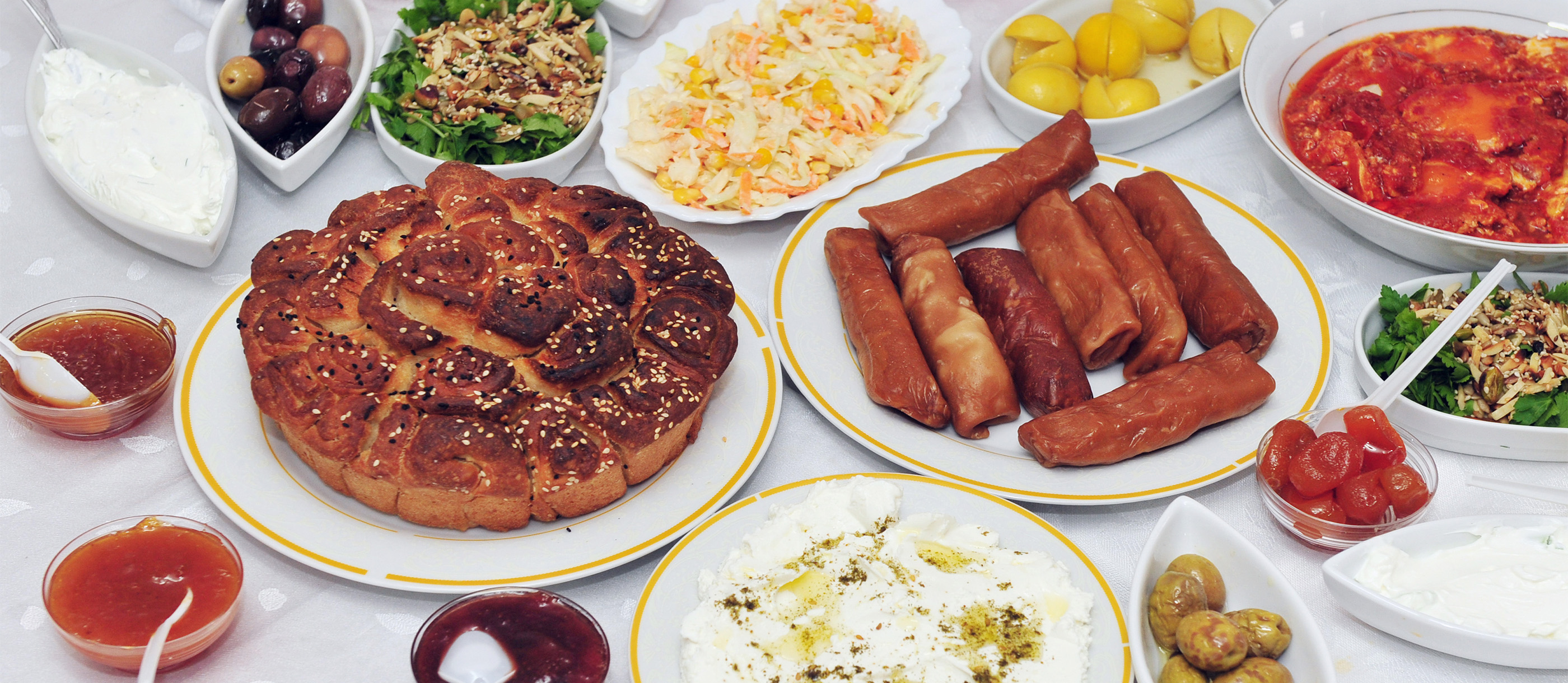 (כובאנה / Bread, Breakfast) (כובאנה / Bread, Breakfast)
Kubaneh is a popular Yemeni-Jewish bread consisting of flour, sugar, salt, and butter. It is traditionally served warm for breakfast. The bread comes in two varieties: folded (the dough is shaped into balls, combined with butter, and rolled in a spiral) and monkey bread (balls of dough are dipped in butter and placed in the pan). |
Saltah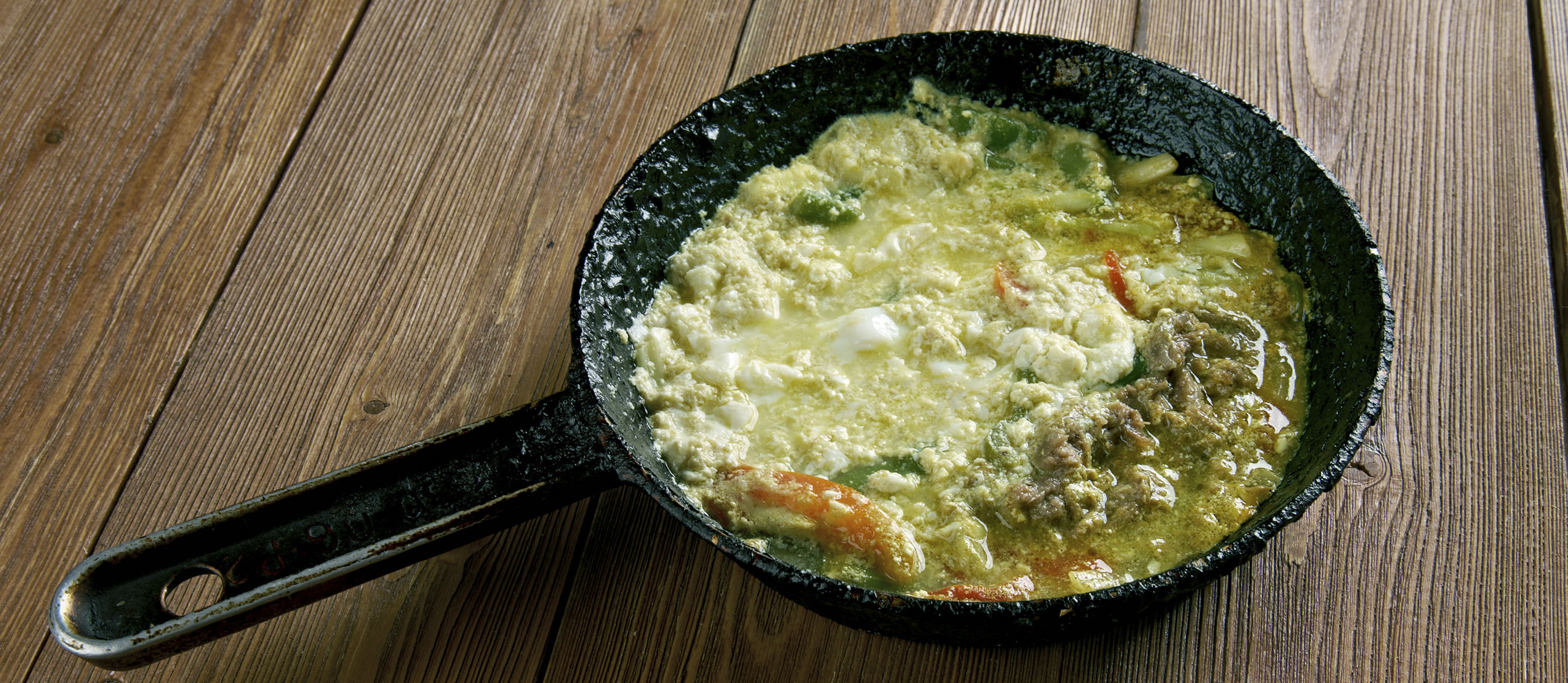 (Stew / Yemen) (Stew / Yemen)
Saltah is the national dish of Yemen, a hearty stew usually eaten for lunch. It can be prepared with or without meat. The key ingredients in saltah are hilbeh, a condiment based on fenugreek, and zhug, a condiment consisting of chillies, oil, cumin, garlic and coriander. Hilbeh and zhug are added to the brown stew that often contains lamb or chicken |
Malooga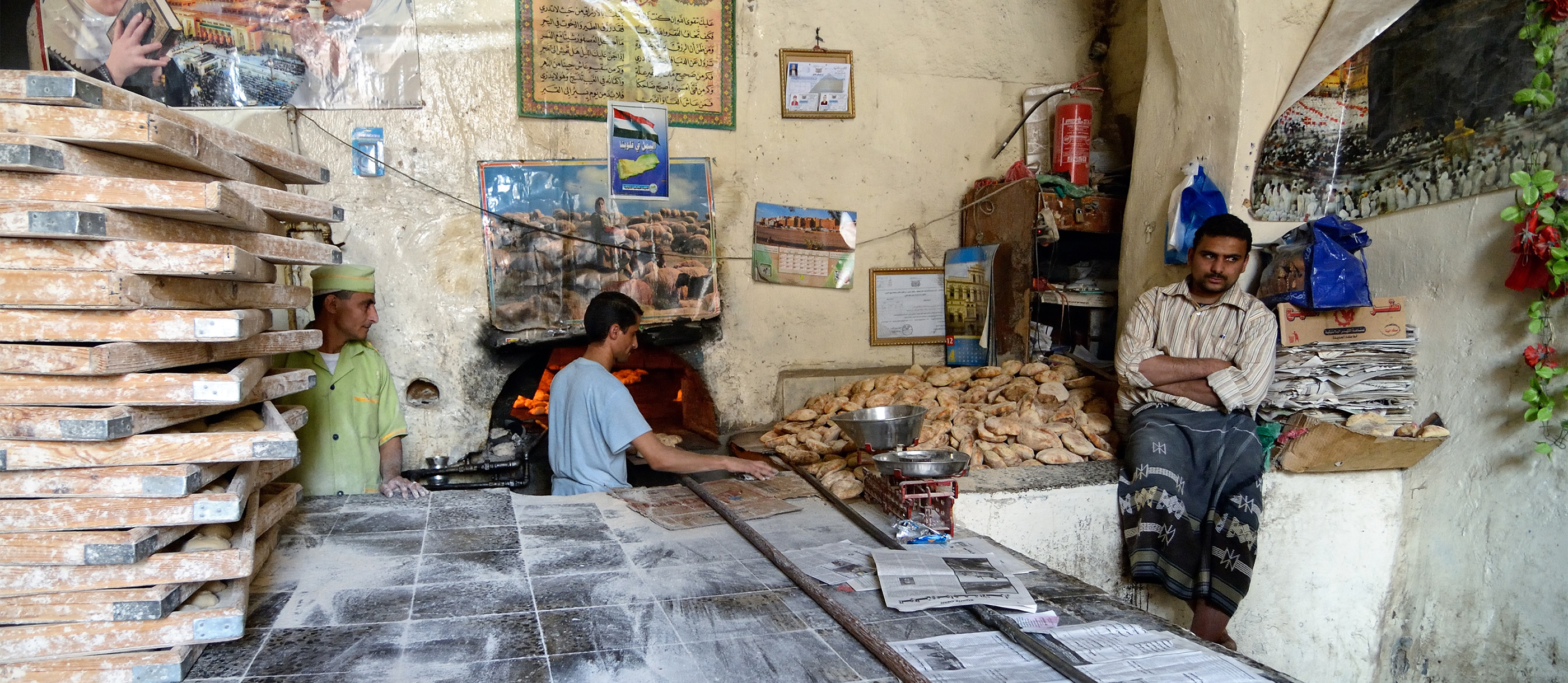 (Flatbread / ملوجة) (Flatbread / ملوجة)
Malooga is a yeasted Yemeni flatbread that is traditionally baked in a taboon. It consists of flour, yeast, water, salt, oil, and dark clarified butter known as semn. The bread has a status of being an inexpensive item for the poor people of Yemen. |
Masoub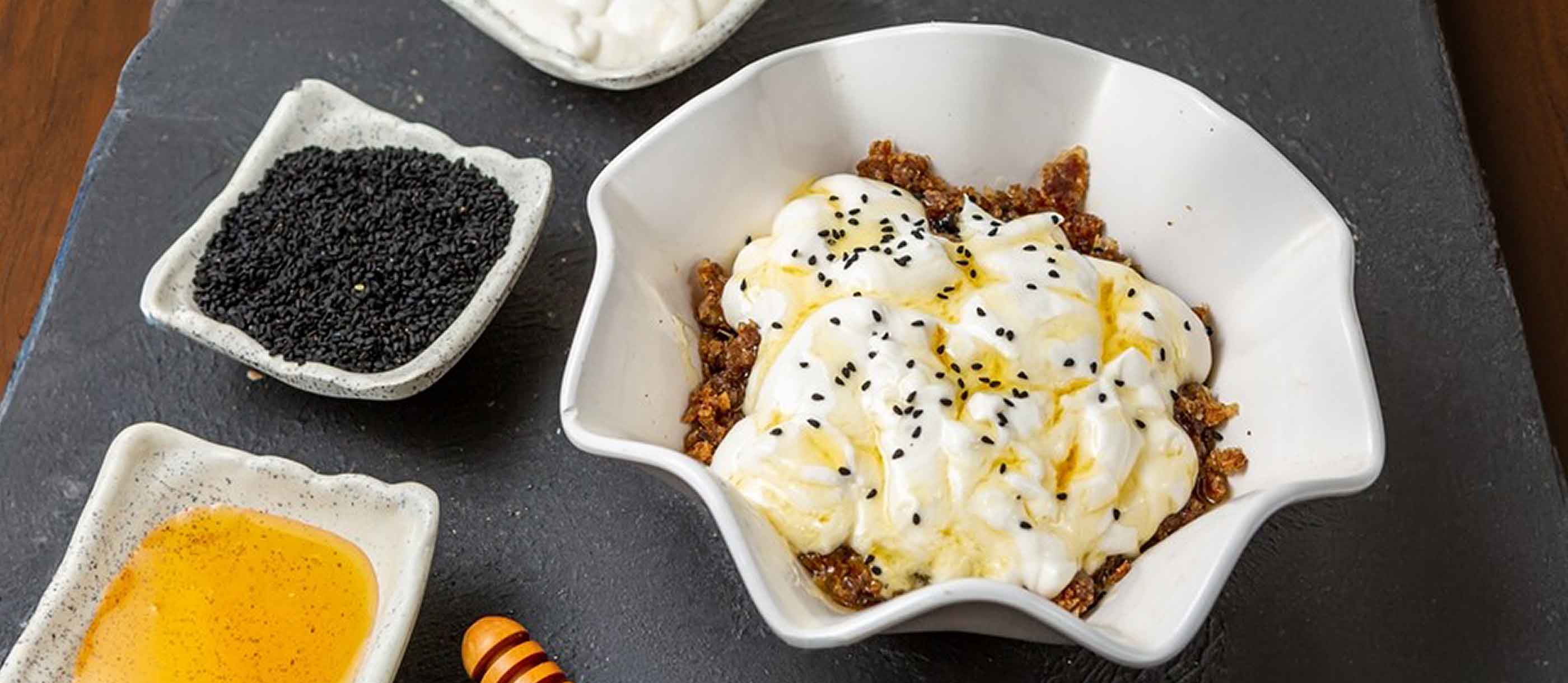 (Dessert, Breakfast / Feetamuus, معصوب) (Dessert, Breakfast / Feetamuus, معصوب)
Masoub is a Yemeni dessert that is popular throughout the Arabian peninsula. In its basic form, the dish consists of mashed bananas and bread that are usually enriched with butter, cream, spices, honey, and dates. Masoub is traditionally served on large plates, and it is meant to be enjoyed as a communal meal. |
Areeka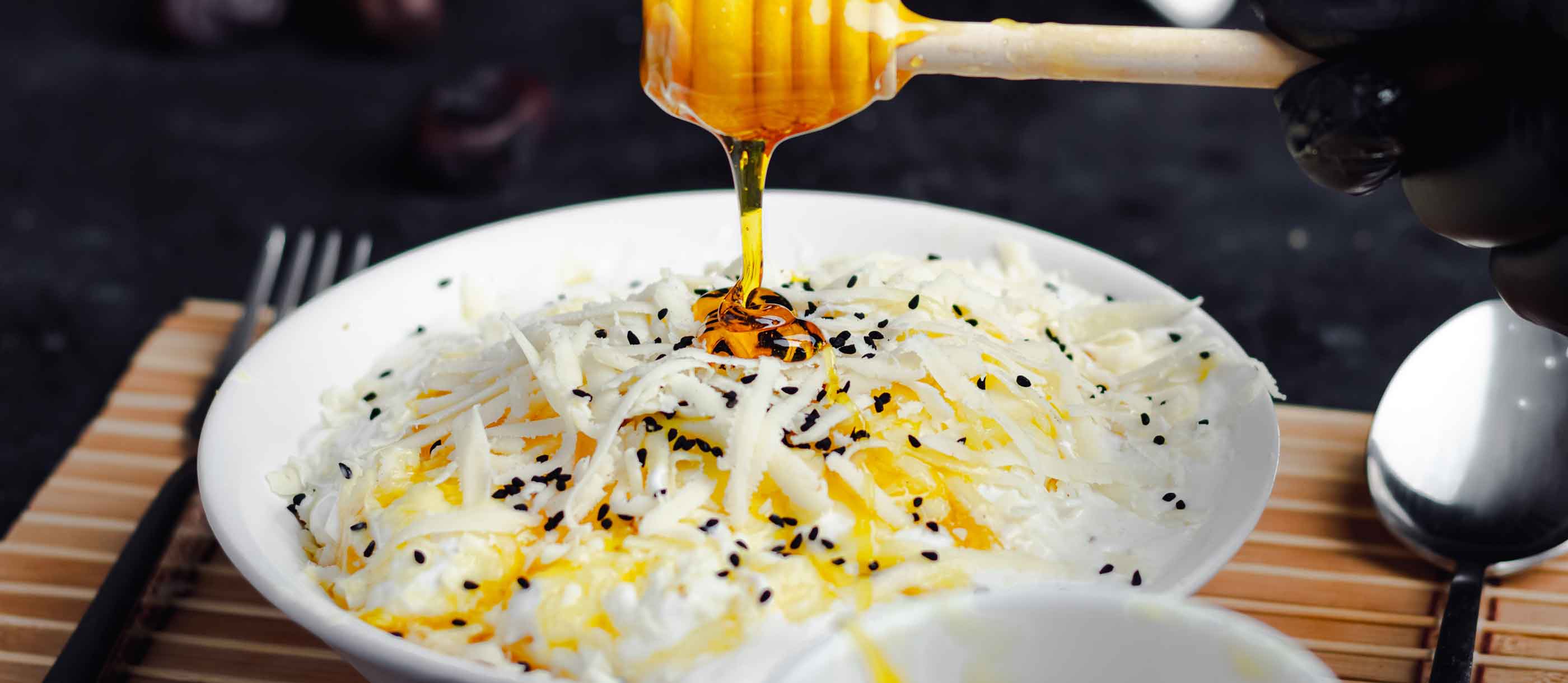 (Dessert, Breakfast, Snack - العريكة بالقشطة) (Dessert, Breakfast, Snack - العريكة بالقشطة)
Areeka is a traditional dessert that is prepared with a combination of mashed dates and crumbled bread such as khubz, while the additions usually include cream, condensed milk, honey, and spices. This filling dessert can be enjoyed for breakfast or as a light snack, and it is typically drizzled with honey and garnished with slivered almonds. |
Bint al-Sahn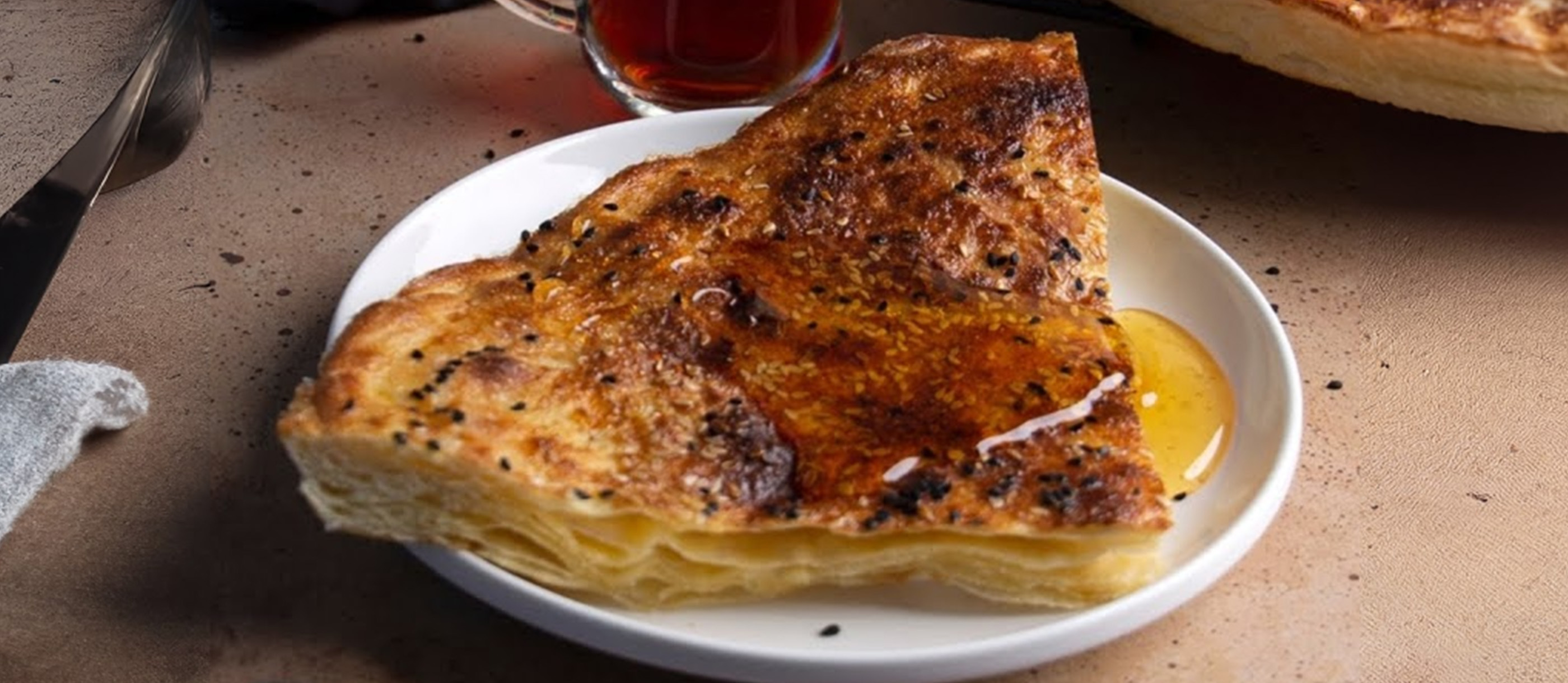 (Dessert, Sweet Pastry, Phyllo Pastry / Sabayah, بنت الصحن) (Dessert, Sweet Pastry, Phyllo Pastry / Sabayah, بنت الصحن)
Bint al-Sahn, also known as Yemeni honey cake, consists of multiple thin layers of dough brushed with ghee (clarified butter), baked until golden, and then drizzled with honey. The top of the pastry is glazed with an egg wash and topped with nigella seeds. Bint al-Sahn is known for its flaky, buttery texture and |
Haneeth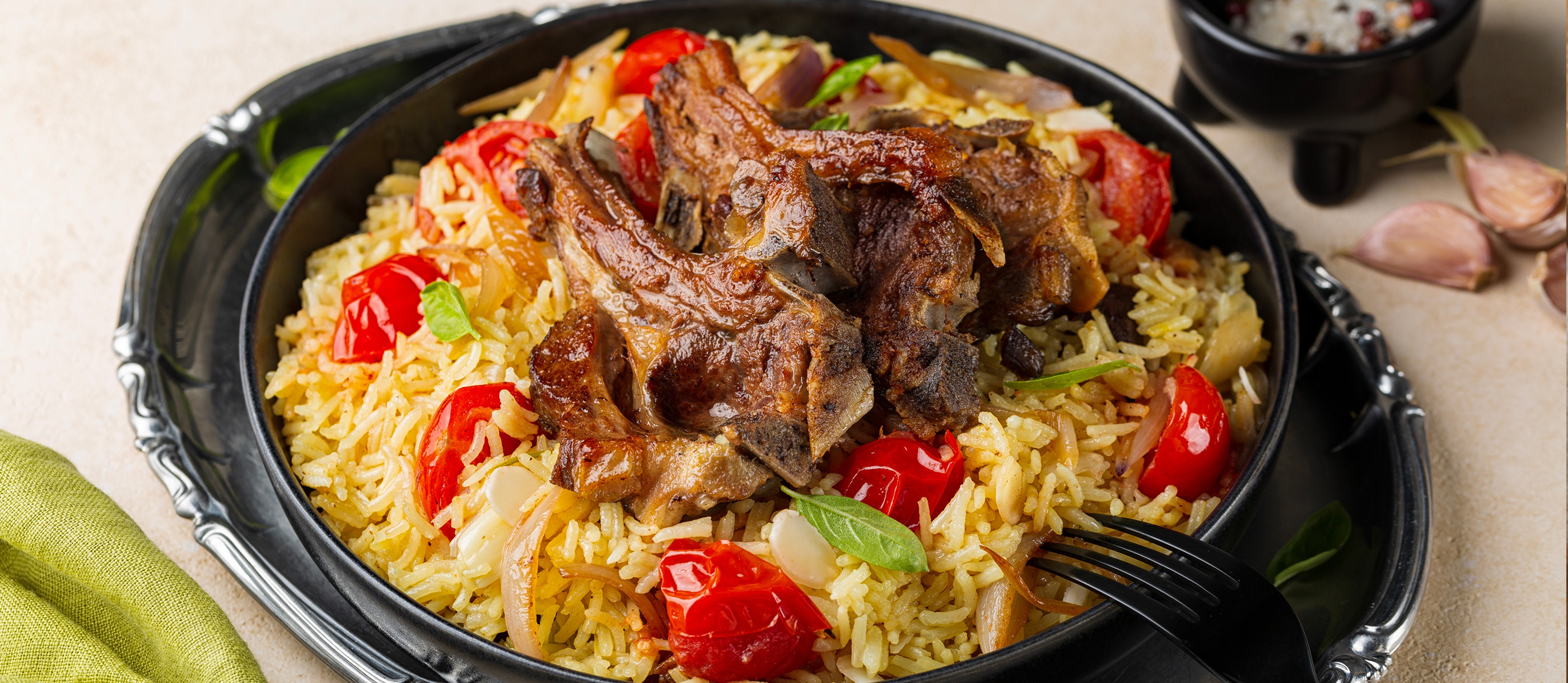 (Rice Dish, Lamb Dish / Arabian Peninsula, Asir, Saudi Arabia / الحنيذ) (Rice Dish, Lamb Dish / Arabian Peninsula, Asir, Saudi Arabia / الحنيذ)
Haneeth is a traditional dish from the Asir region of Saudi Arabia and Shabwah / Hadramout region of Yemen, popular across the Arabian Peninsula. It features slow-roasted, spice-rubbed lamb, typically cooked in a Tannour oven, served on a bed of rice. It is cooked in a tannour oven and has a different spice rub. Haneeth |
Aseeda (Asida)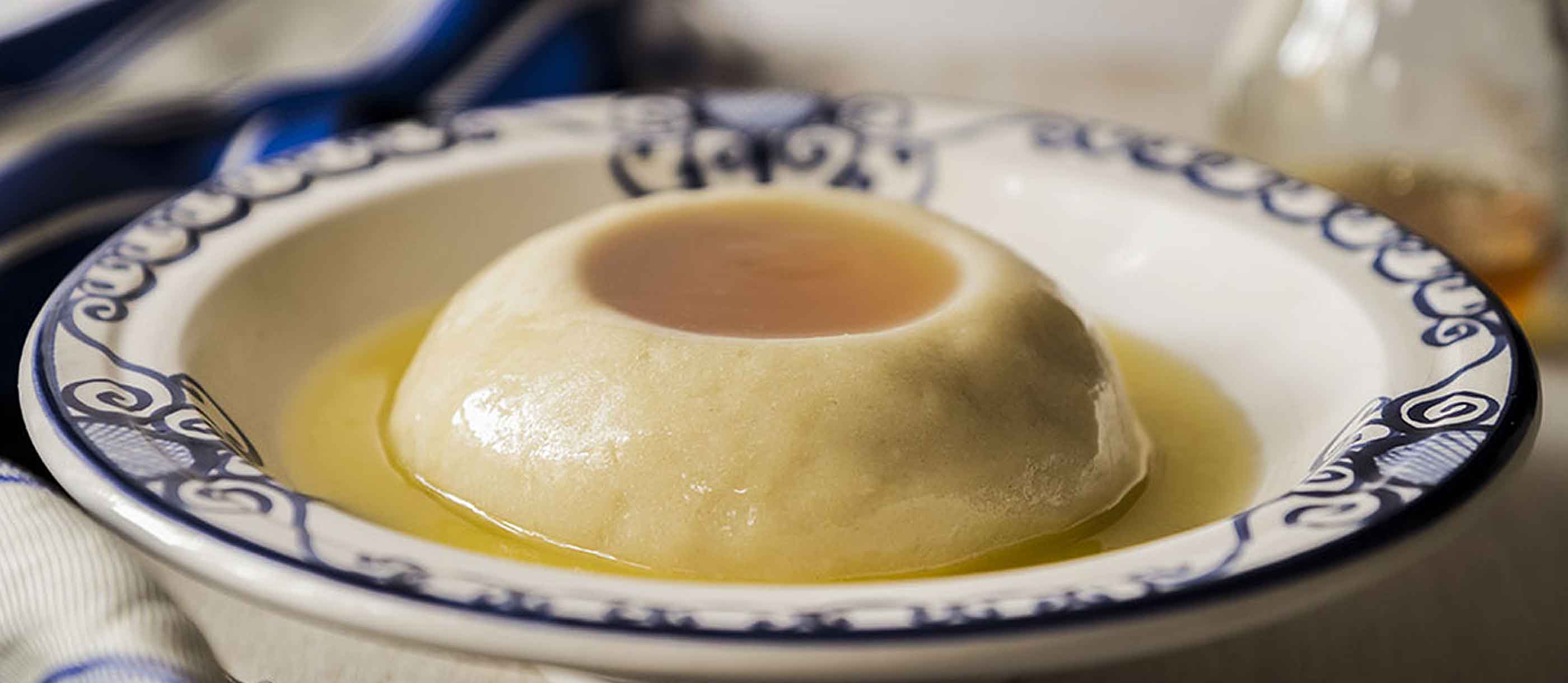 (Breakfast, Porridge, Pudding / Aseeda, Aseedah, Asida, عصيدة / Yemen, Saudi Arabia) (Breakfast, Porridge, Pudding / Aseeda, Aseedah, Asida, عصيدة / Yemen, Saudi Arabia)
Aseeda or asida is a moist, pasty dough consisting of wheat flour or sorghum, water, yogurt, salt and sunflower oil that is then served with a variety of accompaniments, such as honey, butter, dates or even a savory version with meat stew, depending on regional preferences. The dish is traditionally eaten |
Lahoh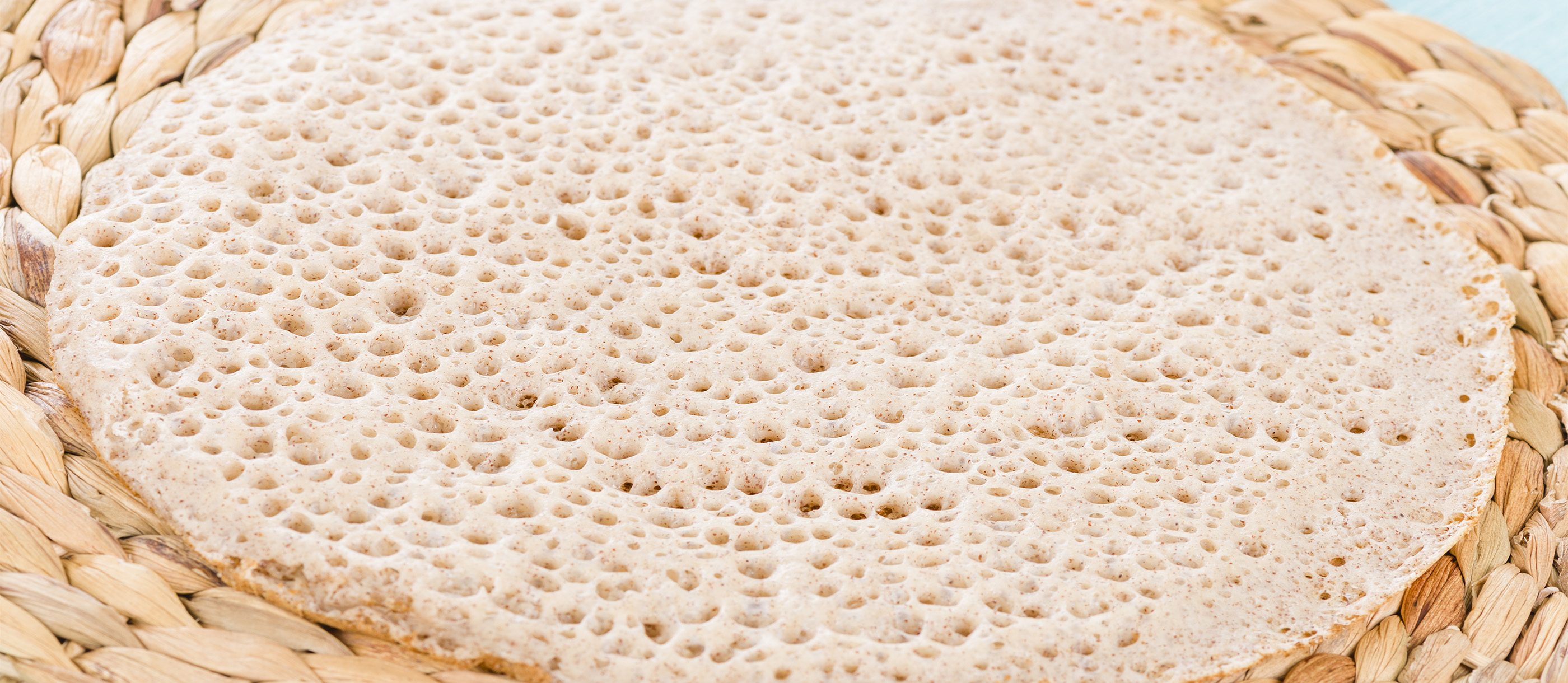 (لحوح, Lahooh, Laxoox, Canjeero, Canjeelo, 𐒐𐒖𐒄𐒝𐒄, 𐒋𐒖𐒒𐒃𐒜𐒇𐒙) (لحوح, Lahooh, Laxoox, Canjeero, Canjeelo, 𐒐𐒖𐒄𐒝𐒄, 𐒋𐒖𐒒𐒃𐒜𐒇𐒙)
Lahoh is a spongy flatbread popular throughout Somalia, Ethiopia, and Djibouti, among others. It is characterized by its circular shape with numerous holes on the surface. This pancake-like bread is made with plain flour, unlike its cousin injera which is usually made with teff flour. Lahoh can be consumed with both sweet and savory ingredients and dishes such as honey, sugar, stews, or soups. |
Qishr (Drink, Herbal Infusion / Yemen) Qishr is a traditional Yemeni infusion made with coffee husks, ginger, sugar, and sometimes cinnamon. In the past, qishr was used by Muslim dervishes as a part of religious ceremonies, but nowadays it is considered a universal drink which is consumed instead of coffee because it is less expensive. |
Shahi Haleeb (Tea, Herbal Infusion / Shai haleeb, Haleeb shai, Shai Adeni, Shai mulaban / Yemen) Shahi haleeb is a traditional spiced milk tea, known for its soothing and aromatic flavors. It is made by simmering milk with a blend of spices such as cardamom, cloves, and sometimes saffron, along with black tea leaves. Sweetened with sugar or honey, shahi haleeb is a popular beverage enjoyed in Yemen, especially in the mornings or evenings. |
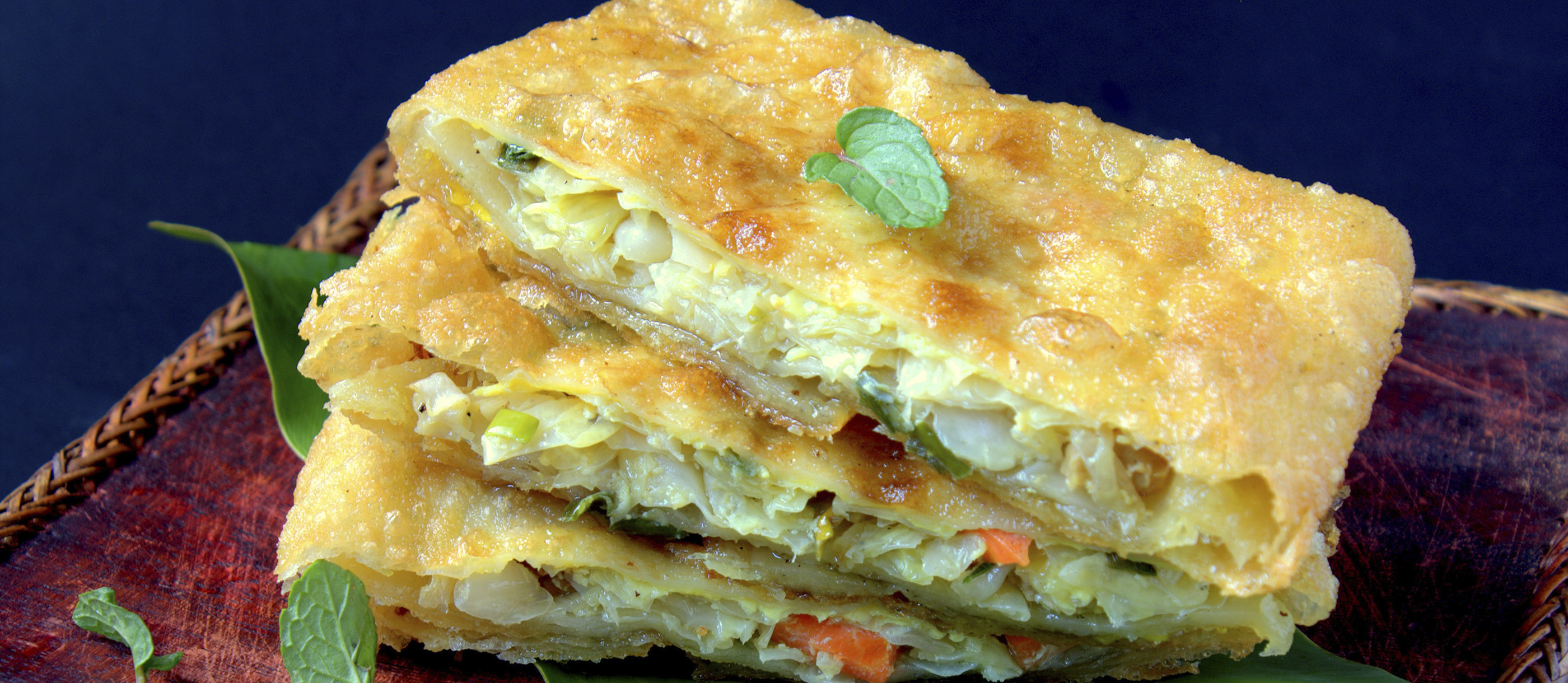
Martabak is a roti-like stuffed and fried pancake which is often served as a popular street food item in countries such as Saudi Arabia, Yemen, Indonesia, and Malaysia |
||
| Middle Eastern Cuisine Middle Eastern cuisine includes a number of cuisines from the Middle East. Common ingredients include olives and olive oil, pitas, honey, sesame seeds, dates, sumac, chickpeas, mint, rice and parsley, and popular dishes include kebabs, dolmas, falafel, baklava, yogurt, doner kebab, shawarma and mulukhiyah. The exact countries considered to be part of the Middle East are difficult to determine. Currently, the countries that are considered to comprise the Middle East are: Bahrain, Cyprus, Egypt, Iran, Iraq, Jordan, Kuwait, |
||
Arab Cuisine Collectively Arab cuisine refers to the regional culinary traditions of the Arab world, consisting of the Maghreb (the west) and the Mashriq (the east). These cuisines are centuries-old and reflect the culture of trading in ingredients, spices, herbs, and commodities among the Arabs. The regions have many similarities, but also unique traditions. They have also been influenced by climate, cultivation, and mutual commerce. Collectively Arab cuisine refers to the regional culinary traditions of the Arab world, consisting of the Maghreb (the west) and the Mashriq (the east). These cuisines are centuries-old and reflect the culture of trading in ingredients, spices, herbs, and commodities among the Arabs. The regions have many similarities, but also unique traditions. They have also been influenced by climate, cultivation, and mutual commerce.
Medieval Arab writers from the 9th to the 16th centuries wrote numerous cookbooks |
||
 Sky Division, Tasteatlas (World Food Atlas), Wikipedia, Receptengalerie (NL), Lidl (NL & Germany)… and other sources