
Walls of Our Hyper-individualistic Mindset
 As we know, life can be looked at from many different angles, yet oftentimes as if we get trapped in a monotonous ‘mindset’, we often speak of life offering many lenses, yet we so frequently find ourselves peering through only one, its frame so familiar we forget it is even there. As for the sake of “illustrating” our example, imagine having all of your life the mindset of “trumpism”… sure why not we would say, but what a pity : )
To imagine a life viewed solely through the single, rigid lens of any singular ideology – be it “trumpism” or any other worldview (in our mindset perhaps even ‘uncompromising’ worldview) – is to imagine a symphony heard only as a single, repeating note. One could march to that beat, sure, but what a profound pity to miss the strings, the woodwinds, the quiet spaces between the sounds, the entire, heartbreakingly beautiful composition of human experience.
So, the gentle, revolutionary act of calming the heart, of mindful breath, and of seeking inner peace become so much more than personal relaxation. They are acts of cognitive and spiritual liberation. Meditation, at its core, is not about emptying the mind, but about creating space within it.
It is the practice of watching our own thoughts – those ingrained narratives, those reactive judgments – pass by like clouds, without having to chase after every one and declare it the absolute truth. In that spacious silence, the grip of a monotonous mindset loosens. We are no longer the thought itself, we become the aware sky that holds it.
And from this place of inner quiet, a beautiful possibility emerges – the ability to truly see from another cultural perspective. This is not merely an intellectual exercise in tolerance. It is an enrichment of the soul. It is to discover that there are ways to grieve, to celebrate, to love, and to find meaning that are profoundly different from our own, yet equally valid and deeply poetic.
To sit with the Japanese concept of ‘wabi-sabi’ – finding beauty in imperfection and transience – can soften a heart hardened by a culture of relentless perfectionism. To contemplate the Southern African philosophy of ‘Ubuntu’ – “I am because we are” – can gently dismantle the walls of a hyper-individualistic mindset.
So by calming our heart, by meditating, by breathing, by finding peace we enrich ourselves, oftentimes maybe we can find value and peace in seeing things from another cultural perspective.
By finding peace within, we build a welcoming harbor within ourselves. From this secure anchorage, we can safely venture out to explore the vast oceans of human perspective, not as ‘invaders’ (in any sense), but as humble visitors. We return not with less of ourselves, but with our inner world immeasurably enriched, our single note having learned its place within a glorious, universal harmony.
The pity is not in holding a perspective, but in being imprisoned by it. The freedom – and the profound peace – lies in remembering we hold the key.
(S. Guraziu – Sky Division, J 2026)
– – –
Shibui‘Shibui‘ is a Japanese aesthetic that emphasizes simple, subtle, and unobtrusive beauty, often found in art, design, and everyday objects. It balances simplicity with complexity, allowing for a deeper appreciation and evolving understanding over time. ‘Shibui‘ can apply to a wide variety of subjects, not just art or fashion – it is an enriched, subdued appearance or experience of intrinsically fine quality with economy of form, line, and effort, producing a timeless tranquility.
The Japanese Concept of ‘Shibui’
‘Shibui‘ is beauty that’s subtle and unpretentious. It is the quality of an object that becomes more beautiful with use because it feels fundamentally right, inherently correct. Think of a well-designed coffee cup: when the design “disappears” and only the experience remains. No decorative distractions, no unnecessary attachments – just the pure, seamless interaction between person and purpose. You don’t notice the cup in your hand; you simply enjoy the coffee.
‘Shibui‘ is that quiet, profound space where design doesn’t shout. It isn’t only beautiful; it serves silently. The tool feels like an extension of thought, the interface breathes with our intention rather than imposing upon it. This is the heart of ‘shibui‘ – the beauty of the essential, the elegance of restraint. If something possesses this quality, it doesn’t announce its presence – it simply is.
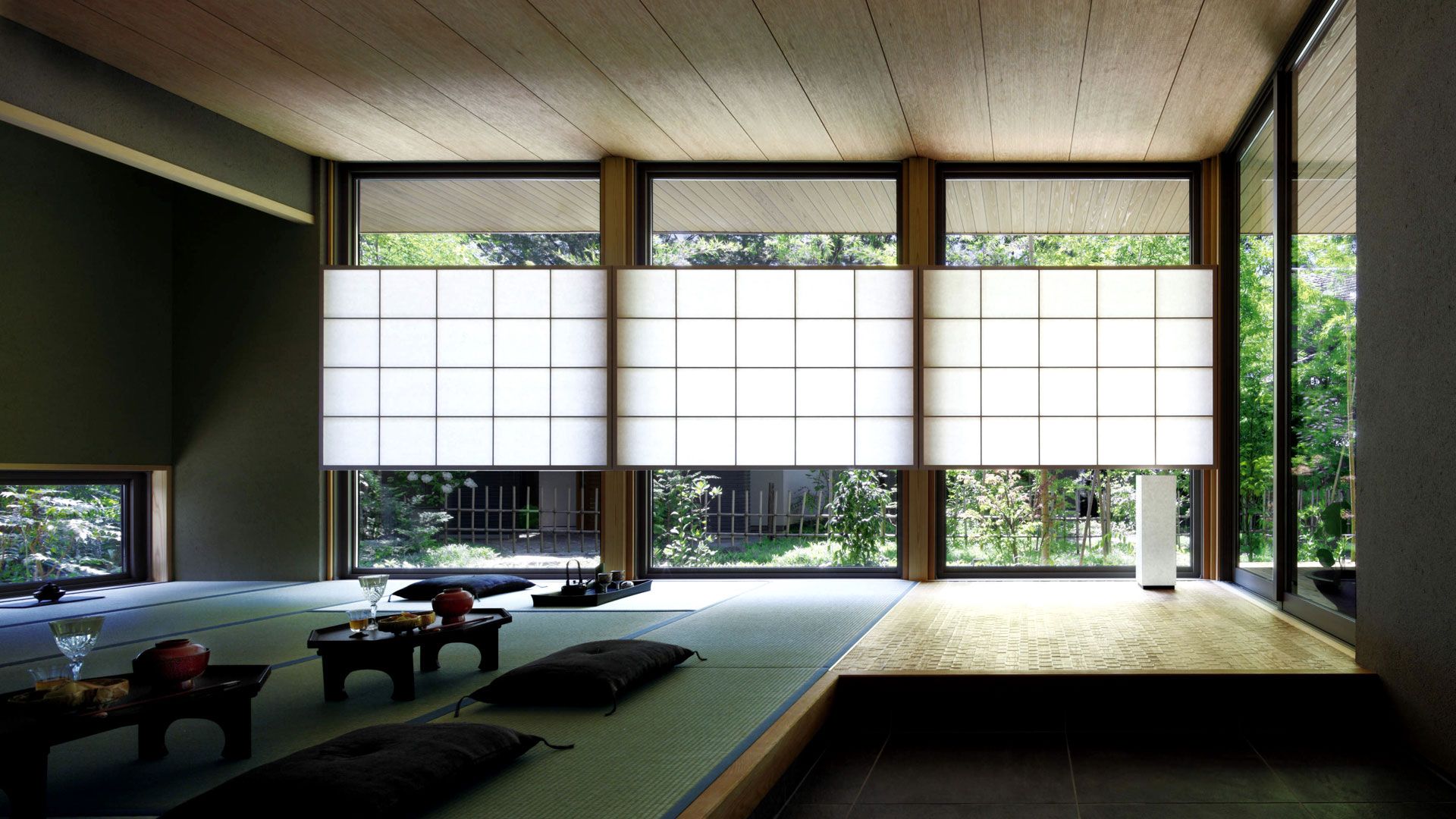
In other words, design matters not only because it is seen, but because it is felt. It is like a well-balanced, thoughtfully crafted poem where every word belongs exactly where it is – it feels inevitable, not invented.
‘Shibui‘ pulls us toward essential elegance. It reminds us that design is not merely beauty (one of many artistic dimensions), design serves rather than shouts, because it is balanced with naturalness and tends toward the timeless. Even before a design is born or formed, the designer’s desire for that seamless experience is the compass. Designers may not always achieve perfect, invisible harmony, but they are aiming for it. That intention for the ultimate natural experience gradually transforms vision into something beautiful.
There is a quiet magic in an object that does not demand ‘attention’ but earns it slowly, through the silent, faithful performance of its purpose. ‘Shibui‘ is a Japanese aesthetic that finds profound beauty not in ornament, but in essence. It is the antithesis of the flashy and the new, it is beauty pared down to its truth, becoming more resonant not despite use, but because of it. A ‘shibui‘ object possesses a rightness so fundamental that it feels inevitable, as if it could not – and should not – be any other way.
Think again of that coffee cup. Its curve fits not just the hand, but the very act of lifting and drinking. The glaze is not a garish declaration, but a subtle, tactile invitation. There is no extraneous detail to distract, no cleverness that calls to itself. In its perfect suitability, the design itself begins to dissolve. You do not admire the cup, you experience the warmth of the coffee, the morning ritual, the moment of pause. The object becomes a silent partner, facilitating an experience rather than competing with it.
This philosophy extends far beyond pottery. It lives in the clean lines of a wooden joint that grows smoother with time, in the muted, complex hue of a well-dyed fabric that deepens with age, or in a garden where moss and stone suggest rather than state. ‘Shibui‘ appreciates the patina of life – the slight wear on a handle that maps a history of use, the way light falls on an unadorned surface. It is a beauty that is patient, honest, and deeply respectful of both the material and the user. In a world saturated with noise and novelty, ‘shibui‘ offers a sanctuary of quiet integrity, reminding us that the most enduring satisfaction often lies not in being dazzled, but in being perfectly, unassumingly understood.
An object that possesses ‘shibui‘ has a quiet gravity – a term that reaches beyond mere aesthetics into the realm of felt experience. It is the profound satisfaction of a cup that fits perfectly in the palm, its glaze not glossy but deep and subdued, holding warmth without announcing it. This is design that has been listened to, not just seen, it has a whisper, not a voice. It understands that true elegance is not about addition, but about a respectful, almost reverential subtraction – stripping away the non-essential until what remains feels both surprising and utterly inevitable.
Like a well-crafted poem – you do not admire it because the words are ornate, but because each syllable sits in its rightful place, creating a rhythm so natural it seems to have always existed. The poet’s labor is invisible, the feeling is everything. ‘Shibui‘ operates on this same principle. The designer’s highest ambition is for their work to achieve this seamless harmony with the user and the world – to feel innate rather than invented. It is a compass set not toward novelty, but toward timelessness – toward materials that age with grace, forms that serve function with quiet dignity, and a balance that echoes the unforced order of nature.
This pursuit is a gentle but relentless discipline. It begins long before a sketch is made, rooted in the designer’s desire for that frictionless, intuitive experience. While the perfect, invisible harmony may always remain just out of reach, the intention itself becomes the guiding force. It is this very aim – this dream of naturalness – that gradually transforms vision into something beautiful. The result is an object that does not demand admiration, but earns a deeper loyalty. It is felt, it is used, and it is loved for the unspoken peace it brings to the hand and the eye.
***
In a world often dominated by excess, the Japanese concept of ‘shibui‘ emerges as a breath of fresh air, embodying a profound appreciation for simplicity, subtlety, and understated beauty. Rooted deeply in Japanese aesthetics, ‘shibui‘ refers to a quality of elegance that is not immediately apparent but reveals itself over time, much like the gradual unfolding of a well-crafted story.
However, while ‘shibui‘ promotes a serene and timeless appreciation, critics argue that such a restrained approach may overlook the value of vibrant expression and cultural diversity. In the vibrant tapestry of global aesthetics, ‘shibui‘ occupies a space of profound, quiet authority. It is the art of the understated – the weathered grain of aged wood, the muted hue of a dusk sky, the profound silence after a note of music fades.
Yet, in an era that champions bold individuality and the celebration of diverse voices, the disciplined quietude of ‘shibui‘ can, to some, feel like a whisper in a room yearning for song. The core of the critique lies in the potential for limitation. Could an aesthetic that prizes implication over declaration inadvertently stifle the creativity it seeks to refine?
Critics suggest that an overemphasis on ‘shibui‘ principles might lead to a cultural homogenization, where artists feel a subtle pressure to conform to traditional standards of subtlety. The full, chaotic, and magnificent spectrum of human emotion – from unbridled joy to raw anguish – can sometimes feel too loud, too messy, to fit within ‘shibui‘s’ serene parameters. In seeking a beauty that is “quiet,” do we risk silencing the parts of ourselves that are not?
The critique highlights a fundamental tension between the desire for aesthetic purity and the need for vibrant, expressive individuality. This tension, however, is perhaps where the most interesting dialogue resides. ‘Shibui‘ does not advocate for the absence of emotion, but rather for its distillation into a more potent, enduring form. It is the difference between a shout and a poem; both convey feeling, but one does so through a lifetime of careful consideration.
So, in some other words, can this tension be interpreted as the basic truth of “more is less, less is more”? Absolutely. The tension within ‘shibui‘ is a profound, lived expression of that very truth. While “less is more” often points toward minimalism and removal, ‘shibui‘ adds a crucial layer – it is not merely about austerity or emptiness. It is about achieving a potent, resonant simplicity that contains immense complexity.
Like a weathered stone in a Zen garden. Its form is stark and simple – “less”. But its surface tells a silent story of centuries, holding the memory of rain, moss, and time – an entire universe of “more” contained within that quiet presence. The tension lies in the balance – the restraint of the form versus the richness of the essence. It is “less is more,” but with the understanding that the “more” is not added, it is revealed, inherent, waiting to be quietly discovered within the subdued elegance of the “less”.
The challenge is not to discard ‘shibui‘, but to engage with it as one powerful language in a polyphonic world. True artistic freedom may be found not in choosing between restraint and exuberance, but in understanding the context for each. Sometimes, the most powerful statement is a deliberate, meaningful silence – a ‘shibui‘ moment – that makes the chorus of voices around it resonate all the more deeply.
Ultimately, ‘shibui‘ offers a rich and nuanced perspective, inviting us to appreciate often-overlooked details and promoting mindfulness. Yet the critique raises essential questions about the limits of restraint. By exploring both, we can cultivate a more inclusive understanding of beauty – one that honors quiet elegance while also celebrating the full, vibrant range of human expression.
 Sky Division & Logios, 2026