
The space station is a convergence of science, technology, and human innovation that demonstrates new technologies and enables research not possible on Earth. The space station serves as the springboard to NASA’s human exploration of deep space, including future missions to the Moon and Mars.
On November 2, 2025, the International Space Station (ISS) marked 25 years of continuous human presence in space, over 290 people from 26 countries have visited, conducting over 4,000 experiments in medicine, materials, and space technology to prepare for lunar and Martian exploration.
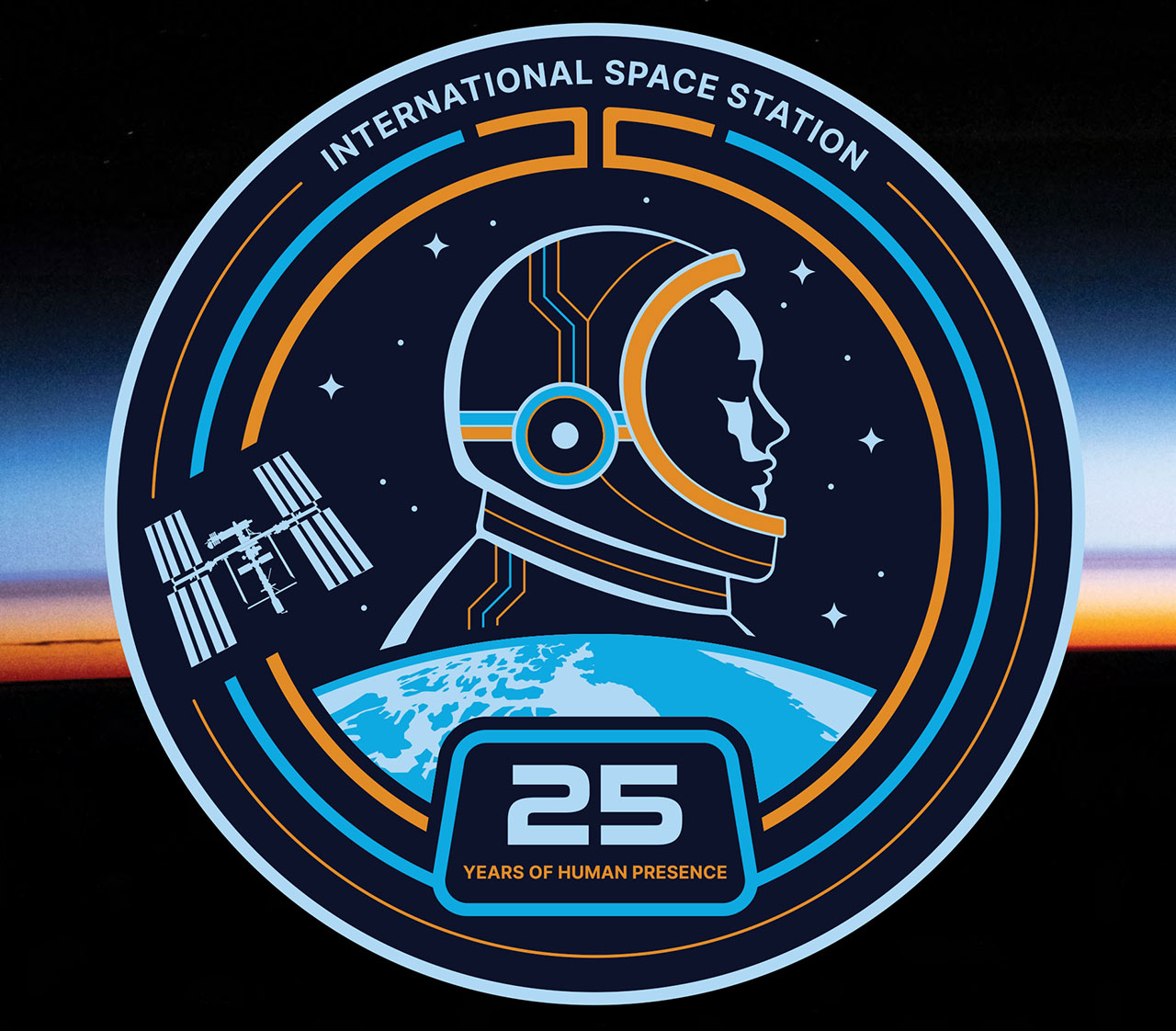
In November 2025, on its official pages, NASA wrote:
25 years ago, humanity launched a bold endeavor: to live and work together in space, not for a fleeting time, but continuously. What began as a fragile framework of modules has since grown into the most enduring platform for international cooperation in orbit – the International Space Station.
The lSS is a marvel of cooperative engineering, science, and research. Maintaining a 925,335-pound orbiting laboratory in space requires precision and coordination – both by the astronauts aboard the space station and between the crew and the teams on the ground. With an acre of solar arrays powering the orbiting laboratory and adding to the wingspan, on a clear night, even in the city, you can look up in the sky at dawn or dusk and see the station when it is flying over your home.
An international partnership of space agencies provides and operates the elements of the lntemational Space Station, making it one of the world’s most ambitious collaborations. The international partnership, created through the space station and its accomplishments, exemplifies how countries can work together to overcome complex challenges and achieve collaborative goals.
25 Years of Continuous Human Presence in Space
In more than two decades, over 290 individuals representing 26 countries and five international partners have launched to the International Space Station.
– In 25 Years 4,361 ,970,010 miles traveled
– 290 + visitors from 26 countries
– 1.5 million pounds of cargo delivered
– 20,100 packages of foof delivered
– 170.000 tortillas consumed
– 291 visiting vehicles
– 270 + spacewalks with 1.700 + hours logged
– 4,000 + research investigations + 5000 researchers + 110 countries
The ISS is viewed as a “steppingstone to deep space” – As we look to the future of space exploration, the International Space Station is the sole space-based proving ground that enables long-duration research on how living in microgravity affects living organisms, especially humans, as well as testing of technologies that will allow people to work on the Moon. The station is the foundation for complex operations in space, research in a microgravity environment, a growing space economy, and international partnerships dedicated to a common goal – returning to the Moon and eventually journeying to Mars and beyond.
***
For a quarter of a century, the space station has been our classroom, laboratory, and proving ground. Orbiting 250 miles above Earth at 17,500 miles per hour, it has hosted nearly 300 astronauts from across the globe. Together, they have carn’ed out thousands of experiments, yielding advances in medicine, materials science, and climate research. But beyond discovery, the space station has been preparing us for the next great leap. Living aboard the space station has taught us invaluable lessons in how to endure the physical and psychological demands of long-duration spaceflight. Every exercise routine,
meal, and spacewalk has provided data to help us understand how the human body adapts to microgravity – knowledge that will be essential for deep space missions that last months or even years. The station has been a testbed for new technologies: life support systems, solar arrays, and robotics that will one day sustain crews traveling far beyond Earth.
Most importantly, the space station has proven that great exploration is possible only through great collaboration. Nations join together to share air, water, and purpose aboard a single orbiting outpost. That spirit of partnership will be vital as we continue to use decades of testing and learning to prepare for the future of exploration.
As the space station marks 25 years of continuous human presence, it stands as the foundation for the next chapter. The orbiting laboratory has given humanity more than a vantage point on Earth – it has given us the confidence and the capability to look farther, to dream bigger, and to further ourjoumey into deep space.
***
Some of the greatest discoveries have come from tinkering and toying with new concepts and ideas, and NASA astronaut Don Pettit is no stranger to doing so. While on orbit, he conducted “science of opportunity” experiments during his off-duty time with materials readily available to the crew or included in his personal kit. Pictured above, he is preparing the freezer with a polarizing filter to create colorful ice crystal wafers. This experiment examined the differences in how water freezes in microgravity compared to on Earth.
Since Nov. 2, 2000, the lntemational Space Station has been occupied continuously by astronauts from NASA and its international partners. More than two decades later, the space station continues to serve as a world-class laboratory, still experiencing many firsts, scientific breakthroughs, and improving life on our home planet.
***
Environmental Occurrences – Even after more than two decades, the information obtained by crew photographs supports global-scale investigations related to the composition, health, and future of Earth. Maintaining a continuous human presence aboard the lntemational Space Station has been critical to supporting not only NASA’S science and research priorities, but also preparing the agency to lead the next generation of human presence in low Earth orbit to advance microgravity science, technology, and exploration.
***
Life on Station – With arguably the coolest office in the solar system, an international crew of about seven people live and work while traveling at a speed of five miles per second, orbiting Earth about every 90 minutes. In 24 hours, the space station sees 16 orbits of Earth, traveling through 16 sunrises and sunsets. The crew spends six to eight months on orbit, and come together to celebrate various holidays, birthdays, and special occasions.
On the International Space Station, a typical day unfolds in an extraordinary way. The mundane acts of life, eating, sleeping, working, are transformed by the absence of gravity. A spoonful of soup becomes a floating orb, a misplaced pen a miniature satellite. Our home is a high-tech marvel of human ingenuity, hurtling through the vacuum of space. The view from our window is a constantly shifting masterpiece of Earth’s vibrant blue, swirling clouds, and breathtaking auroras.
***
The ISS Cupola – The lntemational Space Station provides a spectacular vantage point of our planet. The cupola provides the crew a way to observe activity outside of the space station and is often referred to as the “window to the world”. Through its seven windows, crew members can monitor the Earth’s climate, natural disasters, and the environment, and they regularly take photographs of features such as volcanic eruptions, urban areas, bodies of water, and meteorological phenomena.
***
The graphic – NASA has created a dedicated identifier to symbolize this historic achievement. the central astronaut figure is representative of all those who have lived and worked aboard the lntemational Space Station during the 25 years of continuous human presence. In the dark sky of space sunounding the astronaut are 15 stars, which symbolize the 15 partner nations that support the orbiting laboratory. there Is a visual representation of the space station toward the edge of the design, where humans have had a continuous presence for the past 25 years. the Earth represents the planet which the station orbits, as well as the fact that the science conducted aboard the orbiting laboratory is ultimately for the benefit of all. Integrated into the border of the design is the number “25” to further represent the 25 years of human presence aboard the space station. After 25 years of continuous human presence, the space station remains the sole space-based proving ground and steppingstone as we look to explore the Moon, Mars, and beyond.
[ Source: International Space Station – nasa.gov/station ]