
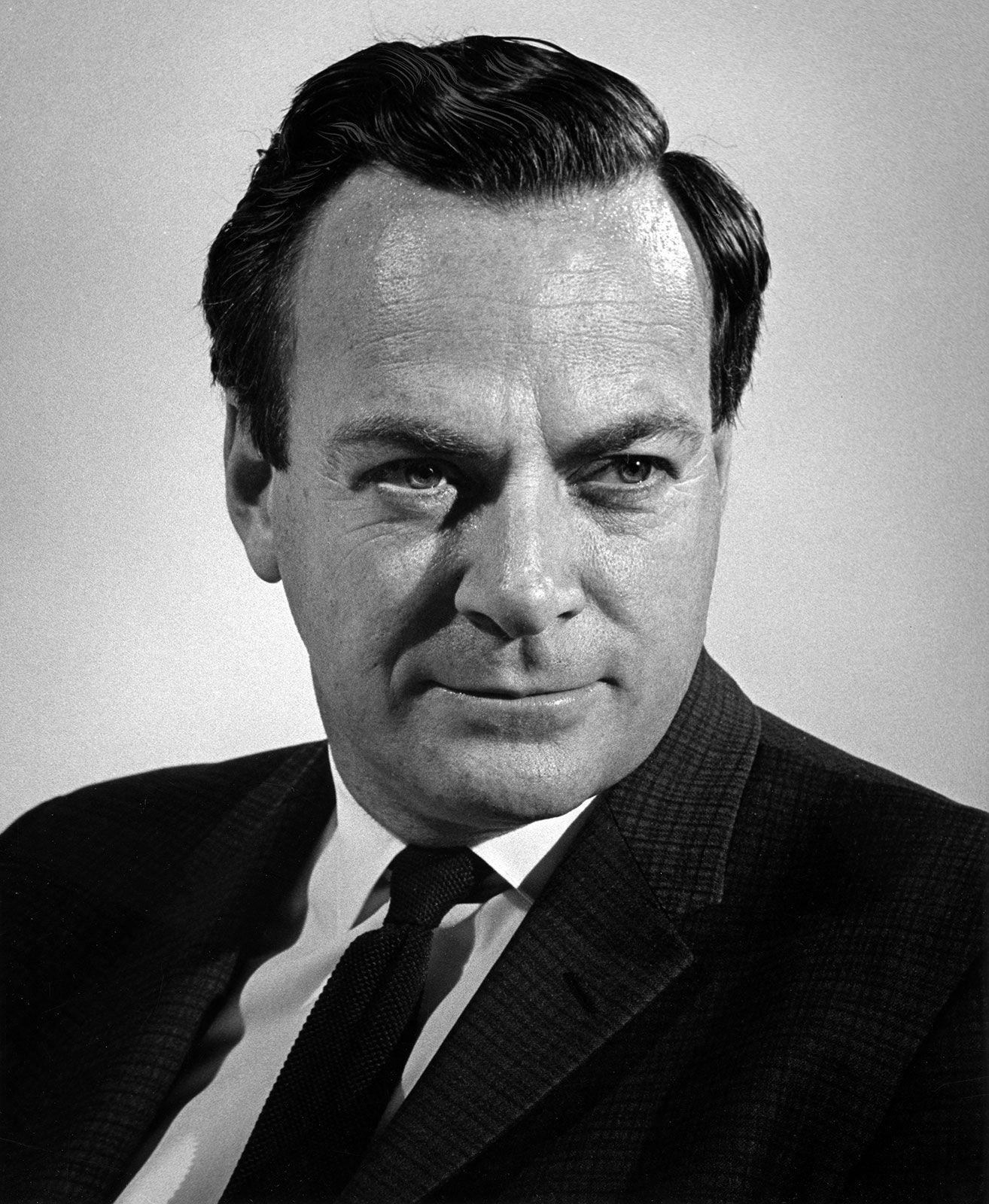
 Richard Feynman (1918-1988) – fitues i çmimit Nobel për punën rreth Elektrodinamikës Kuantike – shkëputje nga intervista e v. 1981 – BBC Horizon, titulluar “The Pleasure of Finding Things Out” (Kënaqësia e Zbulimit të Gjërave)
“…unë nuk di asgjë për çmimin Nobel, nuk e kuptoj se për çfarë bëhet fjalë apo çfarë vlen dhe sa vlen, dhe nëse njerëzit në Akademinë Suedeze vendosin që X, Y ose Z fiton një çmim Nobel, ashtu qoftë, unë nuk do kem t’bëj fare me çmimin Nobel, është një telash mëvete… Nuk i kam qejf nderimet, unë vlerësohem për punën që kam bërë dhe nga njerëzit që e vlerësojnë atë, dhe vërej se shumë fizikantë e përdorin punën time, nuk kam nevojë për asgjë tjetër, nuk mendoj se ka ndonjë sens për asgjë tjetër, nuk shoh që ka ndonjë rëndësi që dikush në Akademinë Suedeze të vendosë që kjo punë është mjaftueshëm fisnike për të marrë një çmim, unë e kam marrë tashmë çmimin, çmimi është kënaqësia e të zbuluarit të gjërave, eksitimi i zbulimit, vëzhgimi që njerëzit e tjerë e përdorin punën tuaj, ato janë gjërat e vërteta, nderimet janë jorealistike për mua, unë nuk besoj në nderime, më shqetësojnë, nderimet, më shqetësojnë nderimet si epoleta, nderimet si uniforma, im atë m’ka rritur në këtë mënyrë, nuk i duroj dot, më lëndojnë, kur isha në shkollë të mesme një nga nderimet e para që mora ishte të bëhesha anëtar i Arista-s, që është një grup fëmijësh që merrnin nota të mira dhe ku gjithësecili donte të ishte anëtar, dhe kur hyra në Arista, zbulova se ajo që bënin në mbledhjet e tyre ishte të uleshin përreth dhe të diskutonin se kush tjetër ishte i denjë për t’u bashkuar me këtë grup të mrekullueshëm që jemi ne, kështu që ne rrinim ulur duke u përpjekur të vendosnim se kush ishte ai që do të lejohej të hynte në Arista, kjo lloj gjëje më shqetëson psikologjikisht për një arsye apo një tjetër që as vetë nuk e kuptoj, nderimet që nga ajo ditë e deri më sot më kanë shqetësuar gjithmonë, kam pasur probleme kur u bëra anëtar i Akademisë Kombëtare të Shkencave dhe më në fund m’u desh të jepja dorëheqjen sepse ishte një organizatë, pjesa më e madhe e kohës e së cilës shpenzohej duke zgjedhur se kush ishte mjaftueshëm i shquar për t’u bashkuar, për t’u lejuar të na bashkohej në organizatën tonë duke përfshirë pyetje të tilla si: ne fizikantët duhet të qëndrojmë së bashku sepse është një kimist shumë i mirë që po përpiqen ta fusin dhe ne nuk kemi vend të mjaftueshëm, kështu që, çfarë të keqe na paska kimisti, e gjithë gjëja ishte e kalbur sepse qëllimi ishte kryesisht të vendosej se kush mund ta kishte këtë nder, mirë pra, nuk i pëlqej nderimet…”
[ video-pjesa në Youtube: https://youtu.be/f61KMw5zVhg ]
***
Richard Feynman (1918-1988) ishte një fizikant teorik amerikan, fitues i çmimit Nobel, i njohur për punën e tij, për pionierizmin në mekanikën kuantike dhe aftësinë e tij për të shpjeguar koncepte komplekse shkencore me thjeshtësi. I quajtur shpesh “Shpjeguesi i Madh”…
Kontributet kryesore shkencore:
– Elektrodinamika Kuantike (QED): Feynman ndau çmimin Nobel në Fizikë të vitit 1965 për punën e tij mbi QED.
– Diagramet e Feynman-it: Ai shpiku një përfaqësim piktoral për shprehjet matematike që përshkruajnë sjelljen e grimcave nënatomike.
– Projekti Manhattan: Gjatë Luftës së Dytë Botërore, ai ishte një fizikant i ri kyç në Los Alamos.
***
Excerpt from “BBC interview with Feynman”
[ video-excerpt on Youtube : https://youtu.be/f61KMw5zVhg ]
…I don’t know anything about the Nobel Prize, I don’t understand what it’s all about or what’s worth what, and if the the people in the Swedish Academy decide that X Y or Z wins a Nobel Prize then so be it, I won’t have anything to do with the Nobel Prize, it’s a pain in there… I don’t like honors, I appreciated for the work that I did and for people who appreciate it, and I notice a lot physicists use my work, I don’t need anything else, I don’t think there’s any sense to anything else, I don’t see that it makes any point that someone in the Swedish Academy decides that this work is Noble enough to receive a prize, I’ve already got the prize, the prize is the pleasure of finding the thing out, the kick in the discovery, the observation other people use it, those are the real things, the honors are unreal to me, I don’t believe in honors, it bothers me, honors bothers me, honors as epolets, honors as uniforms, my papa brought me up this way, I can’t stand it, it hurts me, when I was in high school one of the first honors I got was to be a member of the Arista which is a group of kids who got good grades and you, were well everybody wanted to be a member of the Arista, and when I got into the Arista, I discovered that what they did in their meetings was to sit around and to discuss who else was worthy to join this wonderful group that we are, okay so we sat around trying to decide who it was, who would get to be allowed in to the Arista, this kind of thing bothers me psychologically for one or another reason I don’t understand myself, honors have from that day to this always bothered me, I had trouble with when I became a member of the National Academy of Science and I had ultimately to resign because there was another organization most of whose time was spent in choosing who was illustrious enough to join, to be allowed to join us in our organization including, such questions as we physicists have to stick together because there’s a very good chemist that they’re trying to get in and we haven’t got enough room for so, so what’s the matter with chemist, the whole thing was rotten because the purpose was mostly to decide who could have this honor, okay I don’t like honors…
Richard Feynman (1918-1988) was a Nobel Prize-winning American theoretical physicist renowned for his groundbreaking work in quantum mechanics and his ability to explain complex scientific concepts with simplicity. Often called “The Great Explainer”…
Key scientific contributions
– Quantum Electrodynamics (QED): Feynman shared the 1965 Nobel Prize in Physics for his work on QED, which describes how light and matter interact.
– Feynman Diagrams: He invented a pictorial representation for the mathematical expressions describing the behavior of subatomic particles, which remains a fundamental tool in physics today.
– The Manhattan Project: During World War II, he was a key junior physicist at Los Alamos, assisting in the development of the atomic bomb.
The excerpt is from a famous 1981 BBC Horizon interview titled “The Pleasure of Finding Things Out.” In the video, he really emphasizes how the “real” prize for him wasn’t the medal from the Swedish Academy (0:15), but the “kick in the discovery” (0:54) and seeing other scientists actually use his work in their own research (0:54).
His story about the National Academy of Sciences is particularly famous (1:57); he actually resigned because he felt they spent more time acting like an exclusive club – deciding who was “illustrious enough” to join – rather than focusing on the science itself (2:03).
***
Feynman’s role in the Challenger disaster investigation is perhaps the most famous example of his “simplicity” in action. While NASA’s official commission was buried in technical charts and bureaucratic jargon, Feynman bypassed it all with a glass of ice water and a small C-clamp.
The 2013 BBC-Science Channel drama “The Challenger Disaster” starring William Hurt as Feynman, it beautifully captures how he used basic logic to expose a complex failure:
The Problem: The shuttle exploded because rubber seals (O-rings) in the rocket boosters failed in the cold morning air.The Simplicity: During a televised hearing, Feynman famously dipped a piece of the O-ring material into a cup of ice water. He showed that at freezing temperatures, the rubber lost its elasticity and wouldn’t spring back – meaning it couldn’t seal the joint.
The Truth: He proved that the disaster wasn’t just a technical fluke; it was a failure of management who ignored their own engineers’ warnings.
He famously ended his report with a line that fits your blog’s theme perfectly:
“For a successful technology, reality must take precedence over public relations, for nature cannot be fooled“.