| For us, every scientist is a name of consequence, each has contributed, and each burns like a candle of light. The Nobel Committee applies its own criteria and cannot recognize every deserving researcher – there are thousands of contributors across countless fields, and the scientific community is vast and always expanding. Committee members must select and narrow that field, they face genuinely difficult choices, they truly have to make some tough decisions. But for us, every scientist’s name is important, their contributions shine like stars in a constellation. Together they sustain the flame of four centuries of inquiry – the torch of humanity’s scientific progress. We honor them all, for no single ladder reaches every height, and the sky is far wider than any ranking.
Some scientists saved lives. Some overturned supposed laws of nature. Some overturned a dogma. Some worked in silence. Some taught a nation to count. Some measured the invisible. Some fed the hungry earth. Some built the roads between silence and speech. Some invented the impossible. All their achievements lie on different planes and resist comparison. Many will never have a statue, yet their light still reaches us. All burned. All belong. These are different dimensions and cannot be meaningfully compared. The names in our “list” are not a ranking, they represent a part of that beautiful constellation. |
|
| German Scientists click on the tooltip-link to keep it activated – click outside the box to deactivate it / to read more |➔| |
|
◉ Wilhelm Rontgen Wilhelm Röntgen (1845-1923), was a pioneering German physicist who revolutionized the field of medicine and earned the inaugural Nobel Prize in Physics in 1901. He is most famous for his accidental discovery of X-rays in 1895, which he originally termed "X-radiation" due to its unknown nature. Röntgen quickly realized the immense medical potential of his discovery, producing the world's first X-ray image of his wife's hand. Demonstrating immense public spirit, he refused to patent his discovery, believing that scientific advances Wilhelm Röntgen (1845-1923), was a pioneering German physicist who revolutionized the field of medicine and earned the inaugural Nobel Prize in Physics in 1901. He is most famous for his accidental discovery of X-rays in 1895, which he originally termed "X-radiation" due to its unknown nature. Röntgen quickly realized the immense medical potential of his discovery, producing the world's first X-ray image of his wife's hand. Demonstrating immense public spirit, he refused to patent his discovery, believing that scientific advances|➔| ◉ Albert Einstein  Albert Einstein (1879-1955), perhaps the most iconic physicist of the 20th century, he is best known for his theory of relativity, which includes the famous equation E=mc². This theory revolutionized our understanding of space, time, and gravity. In 1905, Einstein published the theory of special relativity, which introduced the concept that the laws of physics are the same for all non-accelerating observers and showed that time and space are interconnected. In 1915, he presented the theory of general relativity, which Albert Einstein (1879-1955), perhaps the most iconic physicist of the 20th century, he is best known for his theory of relativity, which includes the famous equation E=mc². This theory revolutionized our understanding of space, time, and gravity. In 1905, Einstein published the theory of special relativity, which introduced the concept that the laws of physics are the same for all non-accelerating observers and showed that time and space are interconnected. In 1915, he presented the theory of general relativity, which|➔| ◉ Werner Heisenberg  Werner Heisenberg (1901-1976), was a pioneering physicist who made significant contributions to the development of quantum mechanics in the early 20th century. He is most famous for formulating the Heisenberg Uncertainty Principle in 1927, which states that it is impossible to simultaneously determine the precise position and momentum of a particle with perfect accuracy. This principle fundamentally changed our understanding of the behavior of particles on the atomic and subatomic scales. Heisenberg’s matrix mechanics and wave mechanics played a crucial Werner Heisenberg (1901-1976), was a pioneering physicist who made significant contributions to the development of quantum mechanics in the early 20th century. He is most famous for formulating the Heisenberg Uncertainty Principle in 1927, which states that it is impossible to simultaneously determine the precise position and momentum of a particle with perfect accuracy. This principle fundamentally changed our understanding of the behavior of particles on the atomic and subatomic scales. Heisenberg’s matrix mechanics and wave mechanics played a crucial|➔| ◉ Max Planck  Max Planck (1858-1947), often referred to as the “father of quantum theory”, he made a groundbreaking contribution by introducing the concept of quantization of energy. In 1900, Planck formulated Planck’s law of black-body radiation, which explained how the energy of radiation emitted by a black body is quantized in discrete units, now known as photons. This work laid the foundation for quantum mechanics, a field that would later be developed by others, including Werner Heisenberg and Erwin Schrödinger. Planck’s constant Max Planck (1858-1947), often referred to as the “father of quantum theory”, he made a groundbreaking contribution by introducing the concept of quantization of energy. In 1900, Planck formulated Planck’s law of black-body radiation, which explained how the energy of radiation emitted by a black body is quantized in discrete units, now known as photons. This work laid the foundation for quantum mechanics, a field that would later be developed by others, including Werner Heisenberg and Erwin Schrödinger. Planck’s constant|➔| ◉ Johannes Kepler  Johannes Kepler (1571-1630), was a mathematician and astronomer best known for his work on the motion of planets. He made significant contributions to our understanding of celestial mechanics. Kepler formulated three laws of planetary motion known as Kepler’s Laws: Johannes Kepler (1571-1630), was a mathematician and astronomer best known for his work on the motion of planets. He made significant contributions to our understanding of celestial mechanics. Kepler formulated three laws of planetary motion known as Kepler’s Laws:- Kepler’s First Law (Law of Ellipses): Planets move in elliptical orbits with the sun at one of the two foci. - Kepler’s Second Law (Law of Equal Areas): A line segment joining a planet and the sun sweeps |➔| ◉ Robert Koch  Robert Koch (1843-1910), was a physician and microbiologist who made groundbreaking contributions to the field of bacteriology. In 1882, he discovered the bacterium Mycobacterium tuberculosis, the causative agent of tuberculosis (TB), and developed Koch’s postulates, a set of criteria for establishing the link between a specific microorganism and a particular disease. Koch’s work also led to the development of new techniques for culturing bacteria and studying infectious diseases. His research and methodology laid the groundwork for modern microbiology and epidemiology. Robert Koch (1843-1910), was a physician and microbiologist who made groundbreaking contributions to the field of bacteriology. In 1882, he discovered the bacterium Mycobacterium tuberculosis, the causative agent of tuberculosis (TB), and developed Koch’s postulates, a set of criteria for establishing the link between a specific microorganism and a particular disease. Koch’s work also led to the development of new techniques for culturing bacteria and studying infectious diseases. His research and methodology laid the groundwork for modern microbiology and epidemiology.|➔| ◉ Fritz Haber  Fritz Haber (1868-1934), was a chemist known for his significant contributions to physical chemistry and the development of chemical warfare during World War I. He is best known for the Haber-Bosch process, developed with Carl Bosch, which allowed for the large-scale synthesis of ammonia from nitrogen and hydrogen. This process revolutionized agriculture by enabling the production of synthetic fertilizers, greatly increasing food production worldwide. However, Haber’s work on chemical weapons, particularly the development of chlorine and mustard gas, remains controversial. Fritz Haber (1868-1934), was a chemist known for his significant contributions to physical chemistry and the development of chemical warfare during World War I. He is best known for the Haber-Bosch process, developed with Carl Bosch, which allowed for the large-scale synthesis of ammonia from nitrogen and hydrogen. This process revolutionized agriculture by enabling the production of synthetic fertilizers, greatly increasing food production worldwide. However, Haber’s work on chemical weapons, particularly the development of chlorine and mustard gas, remains controversial.|➔| ◉ Carl Friedrich Gauss  Carl Friedrich Gauss (1777-1855), was a mathematician, often referred to as the “Prince of Mathematicians” for his exceptional contributions to various areas of mathematics. He made groundbreaking discoveries in number theory, including the fundamental theorem of arithmetic, which states that every integer greater than 1 is either prime or can be uniquely factored into prime numbers. Gauss also developed the method of least squares, a statistical technique for estimating the parameters of a mathematical model from observed data, which has Carl Friedrich Gauss (1777-1855), was a mathematician, often referred to as the “Prince of Mathematicians” for his exceptional contributions to various areas of mathematics. He made groundbreaking discoveries in number theory, including the fundamental theorem of arithmetic, which states that every integer greater than 1 is either prime or can be uniquely factored into prime numbers. Gauss also developed the method of least squares, a statistical technique for estimating the parameters of a mathematical model from observed data, which has|➔| ◉ Max Born  Max Born (1882-1970), was a pioneering German-British theoretical physicist and mathematician who played a fundamental role in the mathematical foundation of quantum mechanics. He was awarded the 1954 Nobel Prize in Physics primarily for his milestone 1926 statistical interpretation of the wave function, which introduced the Born Rule. This discovery revolutionized physics by replacing deterministic Newtonian mechanics with a probabilistic framework for atomic particles. Beyond wave mechanics, Born collaborated with Werner Heisenberg and Pascual Jordan to develop matrix mechanics, and Max Born (1882-1970), was a pioneering German-British theoretical physicist and mathematician who played a fundamental role in the mathematical foundation of quantum mechanics. He was awarded the 1954 Nobel Prize in Physics primarily for his milestone 1926 statistical interpretation of the wave function, which introduced the Born Rule. This discovery revolutionized physics by replacing deterministic Newtonian mechanics with a probabilistic framework for atomic particles. Beyond wave mechanics, Born collaborated with Werner Heisenberg and Pascual Jordan to develop matrix mechanics, and|➔| ◉ Emmy Noether  Emmy Noether (1882-1935), was a pioneering mathematician who made significant contributions to abstract algebra and theoretical physics. She formulated Noether’s theorem, which relates symmetries in physical systems to conservation laws, such as the conservation of energy and momentum. This theorem is fundamental in modern physics. Her work in the fields of algebra, ring theory, and group theory has had a profound impact on mathematics and theoretical physics. Despite facing gender-based discrimination in academia, Noether’s contributions are now widely recognized and Emmy Noether (1882-1935), was a pioneering mathematician who made significant contributions to abstract algebra and theoretical physics. She formulated Noether’s theorem, which relates symmetries in physical systems to conservation laws, such as the conservation of energy and momentum. This theorem is fundamental in modern physics. Her work in the fields of algebra, ring theory, and group theory has had a profound impact on mathematics and theoretical physics. Despite facing gender-based discrimination in academia, Noether’s contributions are now widely recognized and|➔| ◉ Werner von Braun  Werner von Braun (1912-1977), was a rocket scientist and aerospace engineer who played a pivotal role in the development of rocket technology during and after World War II. He is best known for his work on the V-2 rocket, a ballistic missile used by Nazi Germany during the war. After the war, he and his team were brought to the United States as part of Operation Paperclip, where they continued their research. Von Braun was a key figure in the Werner von Braun (1912-1977), was a rocket scientist and aerospace engineer who played a pivotal role in the development of rocket technology during and after World War II. He is best known for his work on the V-2 rocket, a ballistic missile used by Nazi Germany during the war. After the war, he and his team were brought to the United States as part of Operation Paperclip, where they continued their research. Von Braun was a key figure in the|➔| ◉ Gustav Kirchhoff  Gustav Kirchhoff (1824-1887), was a highly influential German physicist who made fundamental contributions to electrical circuits, spectroscopy, and the study of radiation. While still a student, he formulated Kirchhoff's circuit laws, which remain foundational principles in electrical engineering for calculating current and voltage. Alongside chemist Robert Bunsen, Kirchhoff co-developed the technique of spectroscopy, using light to identify the unique chemical elements within burning materials. This breakthrough allowed them to discover new elements, like cesium and rubidium, and analyze the chemical Gustav Kirchhoff (1824-1887), was a highly influential German physicist who made fundamental contributions to electrical circuits, spectroscopy, and the study of radiation. While still a student, he formulated Kirchhoff's circuit laws, which remain foundational principles in electrical engineering for calculating current and voltage. Alongside chemist Robert Bunsen, Kirchhoff co-developed the technique of spectroscopy, using light to identify the unique chemical elements within burning materials. This breakthrough allowed them to discover new elements, like cesium and rubidium, and analyze the chemical|➔| ◉ Johann Heinrich Lambert  Johann Heinrich Lambert (1728-1777), was a brilliant, self-taught Swiss-German polymath who made major advancements in mathematics, physics, astronomy, and philosophy. In mathematics, Lambert achieved lasting fame by rigorously proving that the mathematical constant pi (π) is an irrational number. He was also a pioneer in non-Euclidean geometry and trigonometry. In physics, Lambert is considered a founder of photometry, the science of measuring light intensity, formulating the law governing light absorption known today as the Beer-Lambert law. Furthermore, he designed the Johann Heinrich Lambert (1728-1777), was a brilliant, self-taught Swiss-German polymath who made major advancements in mathematics, physics, astronomy, and philosophy. In mathematics, Lambert achieved lasting fame by rigorously proving that the mathematical constant pi (π) is an irrational number. He was also a pioneer in non-Euclidean geometry and trigonometry. In physics, Lambert is considered a founder of photometry, the science of measuring light intensity, formulating the law governing light absorption known today as the Beer-Lambert law. Furthermore, he designed the|➔| ◉ Christian Doppler  Christian Doppler (1803-1853), was an Austrian mathematician and physicist whose groundbreaking theories profoundly impacted modern science, astronomy, and medicine. He is world-renowned for formulating the "Doppler effect" in 1842, which describes how the observed frequency of a wave changes relative to the motion of the source and the observer. Doppler originally used this principle to explain the varying colors of binary stars in the night sky. While his ideas were initially met with skepticism by some peers, experimental testing with Christian Doppler (1803-1853), was an Austrian mathematician and physicist whose groundbreaking theories profoundly impacted modern science, astronomy, and medicine. He is world-renowned for formulating the "Doppler effect" in 1842, which describes how the observed frequency of a wave changes relative to the motion of the source and the observer. Doppler originally used this principle to explain the varying colors of binary stars in the night sky. While his ideas were initially met with skepticism by some peers, experimental testing with|➔| ◉ Georg Simon Ohm  Georg Simon Ohm (1787-1854), was a dedicated German physicist and mathematician who uncovered the fundamental law of electrical currents. Working as a secondary school teacher with self-built equipment, Ohm meticulously experimented with the conduction of electricity through different metals. In 1827, he published his findings, demonstrating a direct mathematical relationship between voltage, current, and electrical resistance, a principle now globally known as Ohm’s Law. Initially, his revolutionary work was rejected by the German scientific establishment, which favored a purely theoretical, Georg Simon Ohm (1787-1854), was a dedicated German physicist and mathematician who uncovered the fundamental law of electrical currents. Working as a secondary school teacher with self-built equipment, Ohm meticulously experimented with the conduction of electricity through different metals. In 1827, he published his findings, demonstrating a direct mathematical relationship between voltage, current, and electrical resistance, a principle now globally known as Ohm’s Law. Initially, his revolutionary work was rejected by the German scientific establishment, which favored a purely theoretical,|➔| ◉ Wilhelm Weber  Wilhelm Weber (1804-1891), was a prominent German physicist who played a crucial role in developing the international system of electrical and magnetic units. Working closely with the legendary mathematician Carl Friedrich Gauss, Weber investigated terrestrial magnetism and co-invented the first practical electromagnetic telegraph in 1833. His most significant achievement was the creation of a highly precise system for measuring electrical charge, current, and resistance based on absolute physical units. This work proved essential for the later development of electromagnetic theory Wilhelm Weber (1804-1891), was a prominent German physicist who played a crucial role in developing the international system of electrical and magnetic units. Working closely with the legendary mathematician Carl Friedrich Gauss, Weber investigated terrestrial magnetism and co-invented the first practical electromagnetic telegraph in 1833. His most significant achievement was the creation of a highly precise system for measuring electrical charge, current, and resistance based on absolute physical units. This work proved essential for the later development of electromagnetic theory|➔| |
|
| Max PlanckMax Planck (1858-1947), often referred to as the “father of quantum theory”, he made a groundbreaking contribution by introducing the concept of quantization of energy. In 1900, Planck formulated Planck’s law of black-body radiation, which explained how the energy of radiation emitted by a black body is quantized in discrete units, now known as photons. This work laid the foundation for quantum mechanics, a field that would later be developed by others, including Werner Heisenberg |
Albert EinsteinAlbert Einstein (1879-1955), perhaps the most iconic physicist of the 20th century, he is best known for his theory of relativity, which includes the famous equation E=mc². This theory revolutionized our understanding of space, time, and gravity. In 1905, Einstein published the theory of special relativity, which introduced the concept that the laws of physics are the same for all non-accelerating observers and showed that time and space are interconnected. In 1915, he presented the |
| Werner HeisenbergWerner Heisenberg (1901-1976), was a pioneering physicist who made significant contributions to the development of quantum mechanics in the early 20th century. He is most famous for formulating the Heisenberg Uncertainty Principle in 1927, which states that it is impossible to simultaneously determine the precise position and momentum of a particle with perfect accuracy. This principle fundamentally changed our understanding of the behavior of particles on the atomic and subatomic scales. Heisenberg’s matrix mechanics and |
Wilhelm RontgenWilhelm Röntgen (1845-1923), was a pioneering German physicist who revolutionized the field of medicine and earned the inaugural Nobel Prize in Physics in 1901. He is most famous for his accidental discovery of X-rays in 1895, which he originally termed "X-radiation" due to its unknown nature. Röntgen quickly realized the immense medical potential of his discovery, producing the world's first X-ray image of his wife's hand. Demonstrating immense public spirit, he refused to patent his |
◉ Hermann Minkowski Hermann Minkowski (1864-1909), was a brilliant German mathematician who created the geometric framework that made Albert Einstein’s theory of relativity possible. Born in Lithuania, Minkowski spent his academic career in Germany, where he excelled in number theory, mathematical physics, and the geometry of numbers. In 1908, he realized that the limitations of space and time could be unified mathematically into a four-dimensional continuum, famously declaring that space and time by themselves were doomed to fade away. This revolutionary concept, known Hermann Minkowski (1864-1909), was a brilliant German mathematician who created the geometric framework that made Albert Einstein’s theory of relativity possible. Born in Lithuania, Minkowski spent his academic career in Germany, where he excelled in number theory, mathematical physics, and the geometry of numbers. In 1908, he realized that the limitations of space and time could be unified mathematically into a four-dimensional continuum, famously declaring that space and time by themselves were doomed to fade away. This revolutionary concept, known|➔| ◉ Otto Hahn  Otto Hahn (1879-1968), was an eminent German chemist widely regarded as the pioneer of the atomic age and the "father of nuclear chemistry". In late 1938, alongside Fritz Strassmann and with theoretical guidance from Lise Meitner, Hahn discovered nuclear fission, the splitting of uranium nuclei when bombarded with neutrons. This monumental discovery earned him the 1944 Nobel Prize in Chemistry and unlocked the potential for both nuclear energy and atomic weapons. During World War II, Hahn worked on Germany's nuclear Otto Hahn (1879-1968), was an eminent German chemist widely regarded as the pioneer of the atomic age and the "father of nuclear chemistry". In late 1938, alongside Fritz Strassmann and with theoretical guidance from Lise Meitner, Hahn discovered nuclear fission, the splitting of uranium nuclei when bombarded with neutrons. This monumental discovery earned him the 1944 Nobel Prize in Chemistry and unlocked the potential for both nuclear energy and atomic weapons. During World War II, Hahn worked on Germany's nuclear|➔| ◉ Carl Bosch  Carl Bosch (1874-1940), was a brilliant German chemist and engineer who successfully bridged the gap between scientific laboratory discoveries and massive industrial production. He is best known for scaling up Fritz Haber’s laboratory method of fixing atmospheric nitrogen into an industrial reality. This breakthrough, known as the Haber-Bosch process, allowed for the mass production of synthetic fertilizers, which revolutionized global agriculture and effectively saved billions of people from starvation. For his pioneering work in high-pressure chemical technology, Bosch was awarded Carl Bosch (1874-1940), was a brilliant German chemist and engineer who successfully bridged the gap between scientific laboratory discoveries and massive industrial production. He is best known for scaling up Fritz Haber’s laboratory method of fixing atmospheric nitrogen into an industrial reality. This breakthrough, known as the Haber-Bosch process, allowed for the mass production of synthetic fertilizers, which revolutionized global agriculture and effectively saved billions of people from starvation. For his pioneering work in high-pressure chemical technology, Bosch was awarded|➔| ◉ Paul Ehrlich  Paul Ehrlich (1854-1915), was a visionary German physician and scientist who effectively founded the fields of hematology, immunology, and modern antimicrobial chemotherapy. He is most famous for his "side-chain theory", which explained how antibodies interact with toxins, a breakthrough that earned him the 1908 Nobel Prize in Physiology or Medicine. Ehrlich popularized the concept of a "magic bullet" - a targeted chemical compound that could kill specific disease-causing microbes without harming the human host. Putting this theory into practice, his Paul Ehrlich (1854-1915), was a visionary German physician and scientist who effectively founded the fields of hematology, immunology, and modern antimicrobial chemotherapy. He is most famous for his "side-chain theory", which explained how antibodies interact with toxins, a breakthrough that earned him the 1908 Nobel Prize in Physiology or Medicine. Ehrlich popularized the concept of a "magic bullet" - a targeted chemical compound that could kill specific disease-causing microbes without harming the human host. Putting this theory into practice, his|➔| ◉ Adolf von Baeyer  Adolf von Baeyer (1835-1917), was a preeminent German organic chemist whose research fundamentally shaped the synthetic dye industry and modern chemical theory. In 1880, after years of meticulous experimentation, Baeyer successfully synthesized indigo, a deeply popular blue dye that previously had to be harvested painstakingly from plants. His achievement revolutionized the textile industry and accelerated the growth of the German chemical sector. He also formulated the "strain theory", which explained the stability and shape of carbon ring molecules, and discovered Adolf von Baeyer (1835-1917), was a preeminent German organic chemist whose research fundamentally shaped the synthetic dye industry and modern chemical theory. In 1880, after years of meticulous experimentation, Baeyer successfully synthesized indigo, a deeply popular blue dye that previously had to be harvested painstakingly from plants. His achievement revolutionized the textile industry and accelerated the growth of the German chemical sector. He also formulated the "strain theory", which explained the stability and shape of carbon ring molecules, and discovered|➔| ◉ Walther Nernst  Walther Nernst (1864-1941), was a distinguished German chemist and physicist who helped establish the modern foundation of physical chemistry. He is most famous for formulating the Third Law of Thermodynamics in 1906, which states that as a system approaches absolute zero, its entropy reaches a constant minimum. This profound discovery earned him the 1920 Nobel Prize in Chemistry. Nernst also developed the Nernst equation, a fundamental formula in electrochemistry that relates the voltage of a chemical cell to its concentration Walther Nernst (1864-1941), was a distinguished German chemist and physicist who helped establish the modern foundation of physical chemistry. He is most famous for formulating the Third Law of Thermodynamics in 1906, which states that as a system approaches absolute zero, its entropy reaches a constant minimum. This profound discovery earned him the 1920 Nobel Prize in Chemistry. Nernst also developed the Nernst equation, a fundamental formula in electrochemistry that relates the voltage of a chemical cell to its concentration|➔| ◉ Lise Meitner  Lise Meitner (1878-1968), was an Austrian-Swedish physicist who co-discovered nuclear fission, fundamentally altering modern atomic science and geopolitics. She played a defining role in the discovery of nuclear fission, though she was long denied full historical credit. Working closely with chemist Otto Hahn in Berlin for decades, she led pioneering research on radioactivity and discovered the element protactinium. Following her forced flight from Nazi Germany in 1933, she provided the crucial theoretical explanation for fission from Sweden, calculating the massive Lise Meitner (1878-1968), was an Austrian-Swedish physicist who co-discovered nuclear fission, fundamentally altering modern atomic science and geopolitics. She played a defining role in the discovery of nuclear fission, though she was long denied full historical credit. Working closely with chemist Otto Hahn in Berlin for decades, she led pioneering research on radioactivity and discovered the element protactinium. Following her forced flight from Nazi Germany in 1933, she provided the crucial theoretical explanation for fission from Sweden, calculating the massive|➔| ◉ Alexander von Humboldt  Alexander von Humboldt (1769-1859), was a legendary German naturalist, explorer, and geographer whose work laid the foundations for modern ecology and biogeography. Between 1799 and 1804, Humboldt conducted an extensive, perilous scientific expedition through the Americas, mapping uncharted territories and meticulously measuring meteorological, geological, and botanical data. He was the first person to describe human-induced climate change and visualized nature as a complex, interconnected global web rather than a collection of isolated species. His masterwork, Cosmos, attempted to unify all Alexander von Humboldt (1769-1859), was a legendary German naturalist, explorer, and geographer whose work laid the foundations for modern ecology and biogeography. Between 1799 and 1804, Humboldt conducted an extensive, perilous scientific expedition through the Americas, mapping uncharted territories and meticulously measuring meteorological, geological, and botanical data. He was the first person to describe human-induced climate change and visualized nature as a complex, interconnected global web rather than a collection of isolated species. His masterwork, Cosmos, attempted to unify all|➔| ◉ Emil von Behring  Emil von Behring (1854-1917), was a groundbreaking German physiologist who became a savior of millions of children and the winner of the first Nobel Prize in Physiology or Medicine in 1901. Working alongside Kitasato Shibasaburo, Behring discovered that the body produces specific substances to fight off toxins, which he termed "antitoxins". Using this discovery, he successfully developed effective serums against diphtheria - then a leading, terrifying cause of childhood mortality - and tetanus. His revolutionary work earned him the popular Emil von Behring (1854-1917), was a groundbreaking German physiologist who became a savior of millions of children and the winner of the first Nobel Prize in Physiology or Medicine in 1901. Working alongside Kitasato Shibasaburo, Behring discovered that the body produces specific substances to fight off toxins, which he termed "antitoxins". Using this discovery, he successfully developed effective serums against diphtheria - then a leading, terrifying cause of childhood mortality - and tetanus. His revolutionary work earned him the popular|➔| ◉ Rudolf Virchow  Rudolf Virchow (1821-1902), was a monumental German physician, pathologist, and politician who is universally acclaimed as the "father of modern pathology". He revolutionized medicine by presenting cellular pathology, arguing that all diseases originate not in organs or fluids, but at the cellular level. His famous Latin maxim, omnis cellula e cellula (every cell originates from another cell), became a cornerstone of modern biology. Virchow was also a passionate advocate for public health, social medicine, and sanitation, famously stating that politics Rudolf Virchow (1821-1902), was a monumental German physician, pathologist, and politician who is universally acclaimed as the "father of modern pathology". He revolutionized medicine by presenting cellular pathology, arguing that all diseases originate not in organs or fluids, but at the cellular level. His famous Latin maxim, omnis cellula e cellula (every cell originates from another cell), became a cornerstone of modern biology. Virchow was also a passionate advocate for public health, social medicine, and sanitation, famously stating that politics|➔| ◉ Albrecht Kossel  Albrecht Kossel (1853-1927), was a distinguished German physician and biochemist who unlocked the chemical secrets of the cell nucleus, laying the groundwork for modern genetics. Studying under Felix Hoppe-Seyler, Kossel focused his research on "nuclein", a substance discovered inside cell nuclei. Between 1885 and 1901, he successfully isolated and described the five primary organic bases that make up nucleic acids: adenine, cytosine, guanine, thymine, and uracil. These compounds are now recognized as the fundamental building blocks of DNA and RNA. Albrecht Kossel (1853-1927), was a distinguished German physician and biochemist who unlocked the chemical secrets of the cell nucleus, laying the groundwork for modern genetics. Studying under Felix Hoppe-Seyler, Kossel focused his research on "nuclein", a substance discovered inside cell nuclei. Between 1885 and 1901, he successfully isolated and described the five primary organic bases that make up nucleic acids: adenine, cytosine, guanine, thymine, and uracil. These compounds are now recognized as the fundamental building blocks of DNA and RNA.|➔| ◉ Theodor Schwann  Theodor Schwann (1810-1882), was a brilliant German physiologist whose diverse discoveries fundamentally altered our understanding of biology and anatomy. Schwann is most famous for co-developing cell theory with Matthias Schleiden, extending the concept to animals and declaring that all living things are composed of cells. In addition to this monumental achievement, Schwann discovered pepsin, the first digestive enzyme isolated from animal tissue, and conducted pioneering research on fermentation. He also discovered the specialized cells that wrap around nerve fibers to Theodor Schwann (1810-1882), was a brilliant German physiologist whose diverse discoveries fundamentally altered our understanding of biology and anatomy. Schwann is most famous for co-developing cell theory with Matthias Schleiden, extending the concept to animals and declaring that all living things are composed of cells. In addition to this monumental achievement, Schwann discovered pepsin, the first digestive enzyme isolated from animal tissue, and conducted pioneering research on fermentation. He also discovered the specialized cells that wrap around nerve fibers to|➔| ◉ Matthias Jakob Schleiden  Matthias Jakob Schleiden (1804-1881), was a revolutionary German botanist who co-founded cell theory, a foundational principle of modern biology. Initially trained as a lawyer, Schleiden abandoned the legal profession after a personal crisis to dedicate his life to natural science. Using advanced microscopic analysis, he realized that all plant tissues are composed of individual units called cells. He posited that the cell is the essential building block of plant life and that new cells develop from the nucleus. In 1839, Matthias Jakob Schleiden (1804-1881), was a revolutionary German botanist who co-founded cell theory, a foundational principle of modern biology. Initially trained as a lawyer, Schleiden abandoned the legal profession after a personal crisis to dedicate his life to natural science. Using advanced microscopic analysis, he realized that all plant tissues are composed of individual units called cells. He posited that the cell is the essential building block of plant life and that new cells develop from the nucleus. In 1839,|➔| ◉ Konrad Lorenz  Konrad Lorenz (1903-1989), was a celebrated Austrian zoologist and ornithologist who is widely regarded as one of the founders of modern ethology, the study of animal behavior. Lorenz is most famous for his extensive research on the concept of "imprinting", famously demonstrating that newly hatched geese instinctively bond with the first moving object they see, including Lorenz himself. He argued that animal behaviors are largely shaped by genetically programmed instincts, contrasting with contemporary psychological theories that favored environmental conditioning. For Konrad Lorenz (1903-1989), was a celebrated Austrian zoologist and ornithologist who is widely regarded as one of the founders of modern ethology, the study of animal behavior. Lorenz is most famous for his extensive research on the concept of "imprinting", famously demonstrating that newly hatched geese instinctively bond with the first moving object they see, including Lorenz himself. He argued that animal behaviors are largely shaped by genetically programmed instincts, contrasting with contemporary psychological theories that favored environmental conditioning. For|➔| ◉ Otto von Guericke  Otto von Guericke (1602-1686), was a remarkable German scientist, inventor, and politician who famously demonstrated the immense power of atmospheric pressure and vacuums. While serving as the long-time mayor of Magdeburg, Guericke invented the world’s first vacuum air pump. In 1654, he conducted his famous Magdeburg hemispheres experiment, showing that two large, sealed copper spheres held together only by a vacuum could not be pulled apart by teams of horses. He also invented an early electrostatic generator that produced artificial Otto von Guericke (1602-1686), was a remarkable German scientist, inventor, and politician who famously demonstrated the immense power of atmospheric pressure and vacuums. While serving as the long-time mayor of Magdeburg, Guericke invented the world’s first vacuum air pump. In 1654, he conducted his famous Magdeburg hemispheres experiment, showing that two large, sealed copper spheres held together only by a vacuum could not be pulled apart by teams of horses. He also invented an early electrostatic generator that produced artificial|➔| ◉ Hermann von Helmholtz  Hermann von Helmholtz (1821-1894), was a towering German polymath whose genius spanned physics, physiology, psychology, and philosophy. In physics, he is celebrated for mathematically formulating the law of conservation of energy, demonstrating that energy cannot be created or destroyed. As a physiologist, Helmholtz invented the ophthalmoscope, a revolutionary device that allowed physicians to look inside the human eye, transforming ophthalmology forever. He also conducted pioneering research on the speed of nerve impulses, color vision, and the mathematics of acoustics and Hermann von Helmholtz (1821-1894), was a towering German polymath whose genius spanned physics, physiology, psychology, and philosophy. In physics, he is celebrated for mathematically formulating the law of conservation of energy, demonstrating that energy cannot be created or destroyed. As a physiologist, Helmholtz invented the ophthalmoscope, a revolutionary device that allowed physicians to look inside the human eye, transforming ophthalmology forever. He also conducted pioneering research on the speed of nerve impulses, color vision, and the mathematics of acoustics and|➔| ◉ Felix Klein  Felix Klein (1849-1925), was an influential German mathematician who left an indelible mark on geometry, function theory, and mathematics education. He is best known for the Erlangen Program, a revolutionary framework that classified different types of geometry based on their underlying symmetries and group theory. Klein also discovered the "Klein bottle", a famous one-sided, non-orientable topological surface that cannot exist in three-dimensional space without intersecting itself. Beyond his research, Klein was a visionary administrator at the University of Göttingen, transforming Felix Klein (1849-1925), was an influential German mathematician who left an indelible mark on geometry, function theory, and mathematics education. He is best known for the Erlangen Program, a revolutionary framework that classified different types of geometry based on their underlying symmetries and group theory. Klein also discovered the "Klein bottle", a famous one-sided, non-orientable topological surface that cannot exist in three-dimensional space without intersecting itself. Beyond his research, Klein was a visionary administrator at the University of Göttingen, transforming|➔| ◉ Heinrich Hertz  Heinrich Hertz (1857-1894), was a brilliant German physicist who conclusively proved the existence of electromagnetic waves, cementing his place in scientific history. Building upon James Clerk Maxwell’s mathematical theories, Hertz designed groundbreaking experiments that generated and detected radio waves in his laboratory. His work demonstrated that these invisible waves traveled at the speed of light and possessed the same reflective and refractive properties. Hertz also discovered the photoelectric effect, an observation that later proved critical to the development of quantum Heinrich Hertz (1857-1894), was a brilliant German physicist who conclusively proved the existence of electromagnetic waves, cementing his place in scientific history. Building upon James Clerk Maxwell’s mathematical theories, Hertz designed groundbreaking experiments that generated and detected radio waves in his laboratory. His work demonstrated that these invisible waves traveled at the speed of light and possessed the same reflective and refractive properties. Hertz also discovered the photoelectric effect, an observation that later proved critical to the development of quantum|➔| |
|
| Johannes KeplerJohannes Kepler (1571-1630), was a mathematician and astronomer best known for his work on the motion of planets. He made significant contributions to our understanding of celestial mechanics. Kepler formulated three laws of planetary motion known as Kepler’s Laws: - Kepler’s First Law (Law of Ellipses): Planets move in elliptical orbits with the sun at one of the two foci. - Kepler’s Second Law (Law of Equal Areas): A line segment joining a |
Robert KochRobert Koch (1843-1910), was a physician and microbiologist who made groundbreaking contributions to the field of bacteriology. In 1882, he discovered the bacterium Mycobacterium tuberculosis, the causative agent of tuberculosis (TB), and developed Koch’s postulates, a set of criteria for establishing the link between a specific microorganism and a particular disease. Koch’s work also led to the development of new techniques for culturing bacteria and studying infectious diseases. His research and methodology laid the groundwork |
| Fritz HaberFritz Haber (1868-1934), was a chemist known for his significant contributions to physical chemistry and the development of chemical warfare during World War I. He is best known for the Haber-Bosch process, developed with Carl Bosch, which allowed for the large-scale synthesis of ammonia from nitrogen and hydrogen. This process revolutionized agriculture by enabling the production of synthetic fertilizers, greatly increasing food production worldwide. However, Haber’s work on chemical weapons, particularly the development of chlorine |
Carl Friedrich GaussCarl Friedrich Gauss (1777-1855), was a mathematician, often referred to as the “Prince of Mathematicians” for his exceptional contributions to various areas of mathematics. He made groundbreaking discoveries in number theory, including the fundamental theorem of arithmetic, which states that every integer greater than 1 is either prime or can be uniquely factored into prime numbers. Gauss also developed the method of least squares, a statistical technique for estimating the parameters of a mathematical model |
Portraits by Sky Division, 2026 – Customized module using Stable Diffusion XL, by Stability AI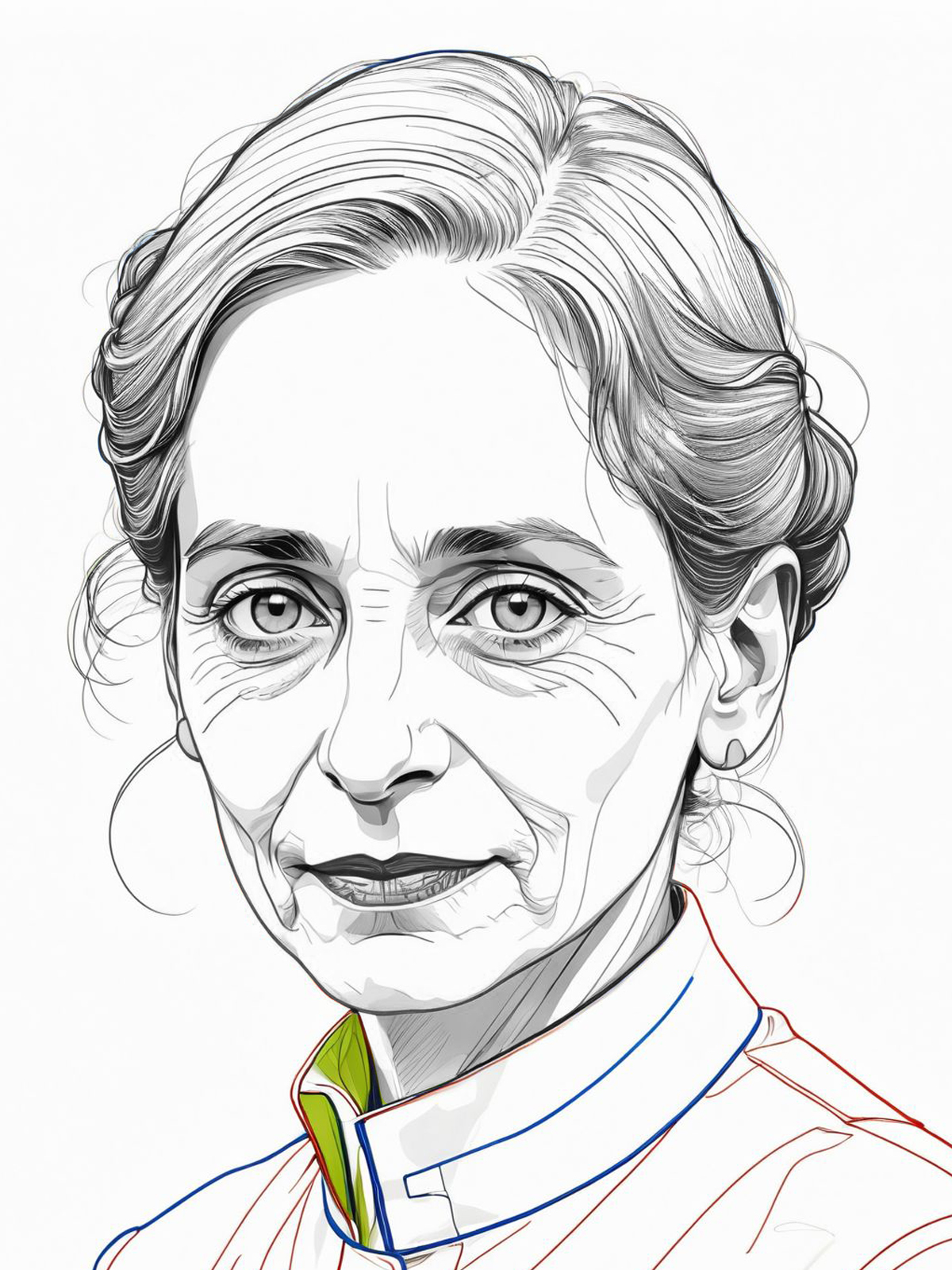 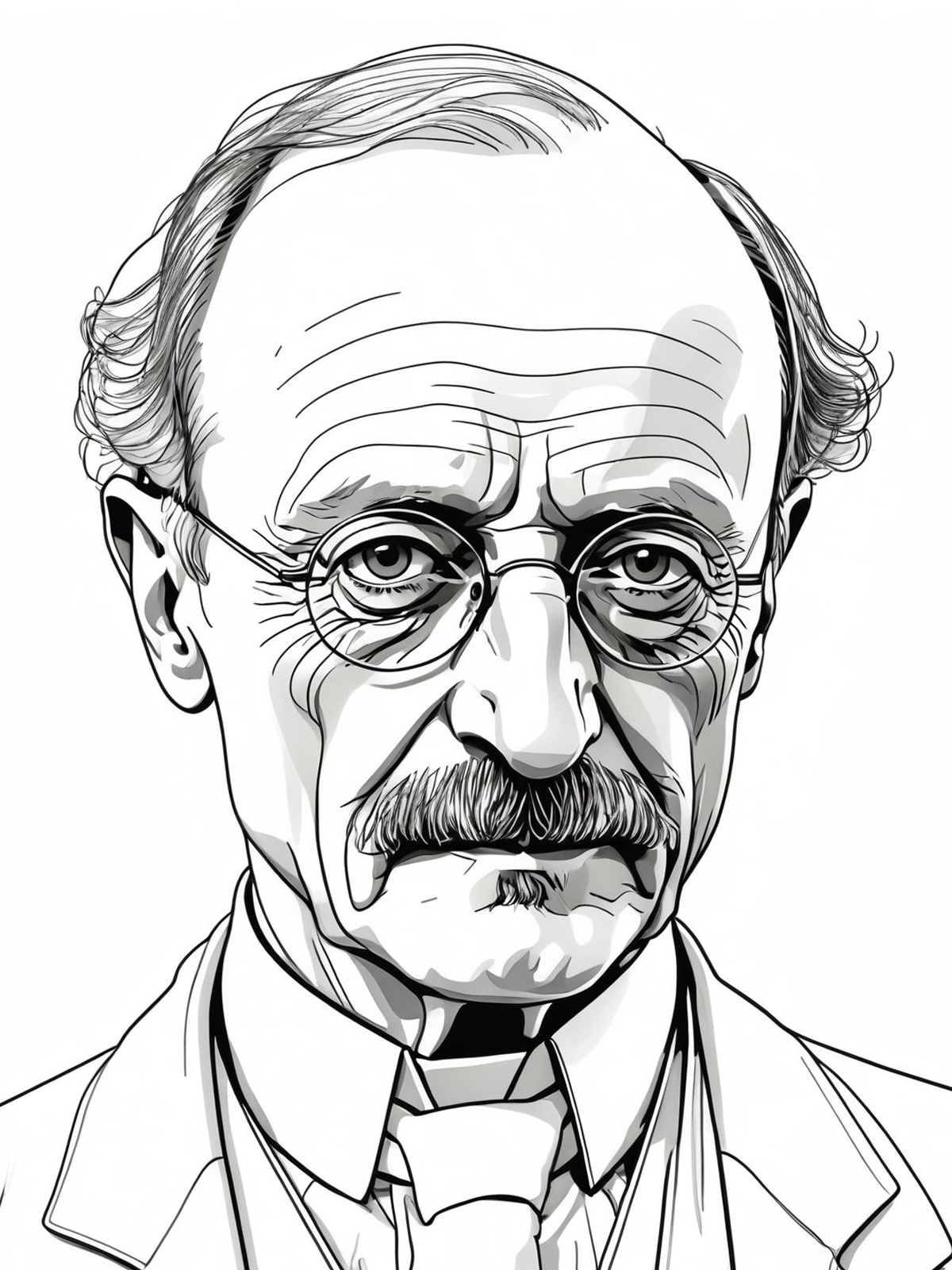 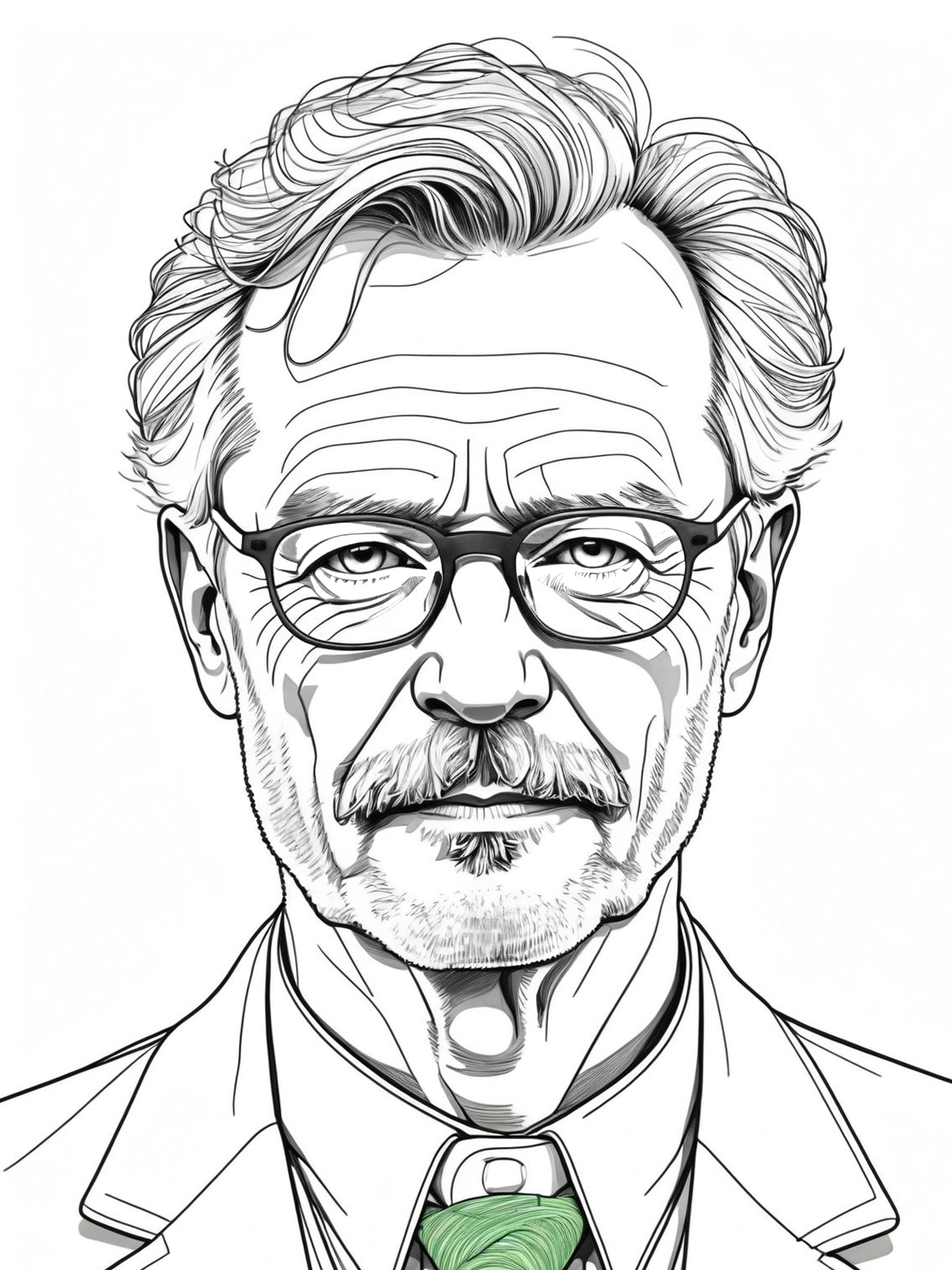  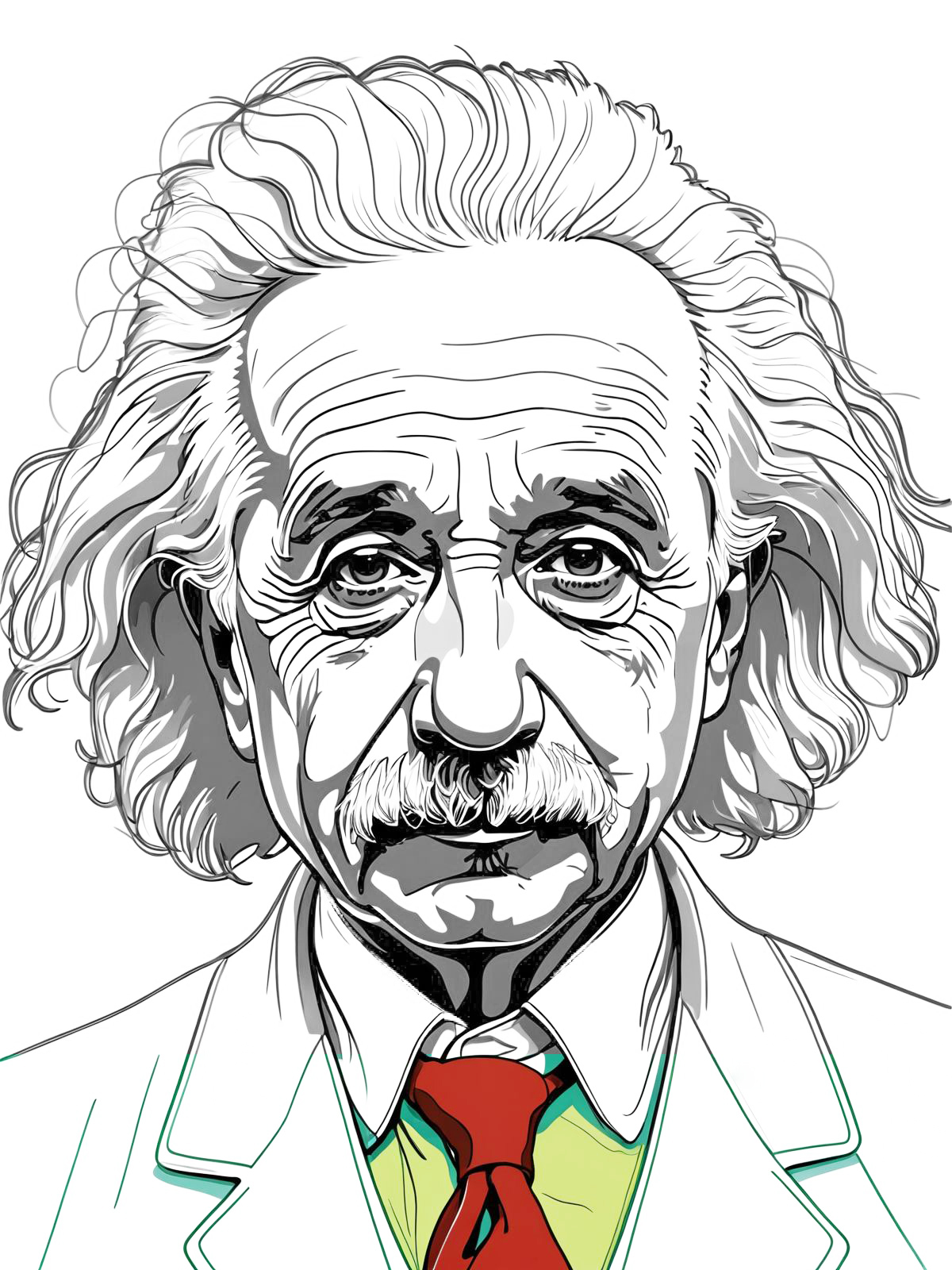 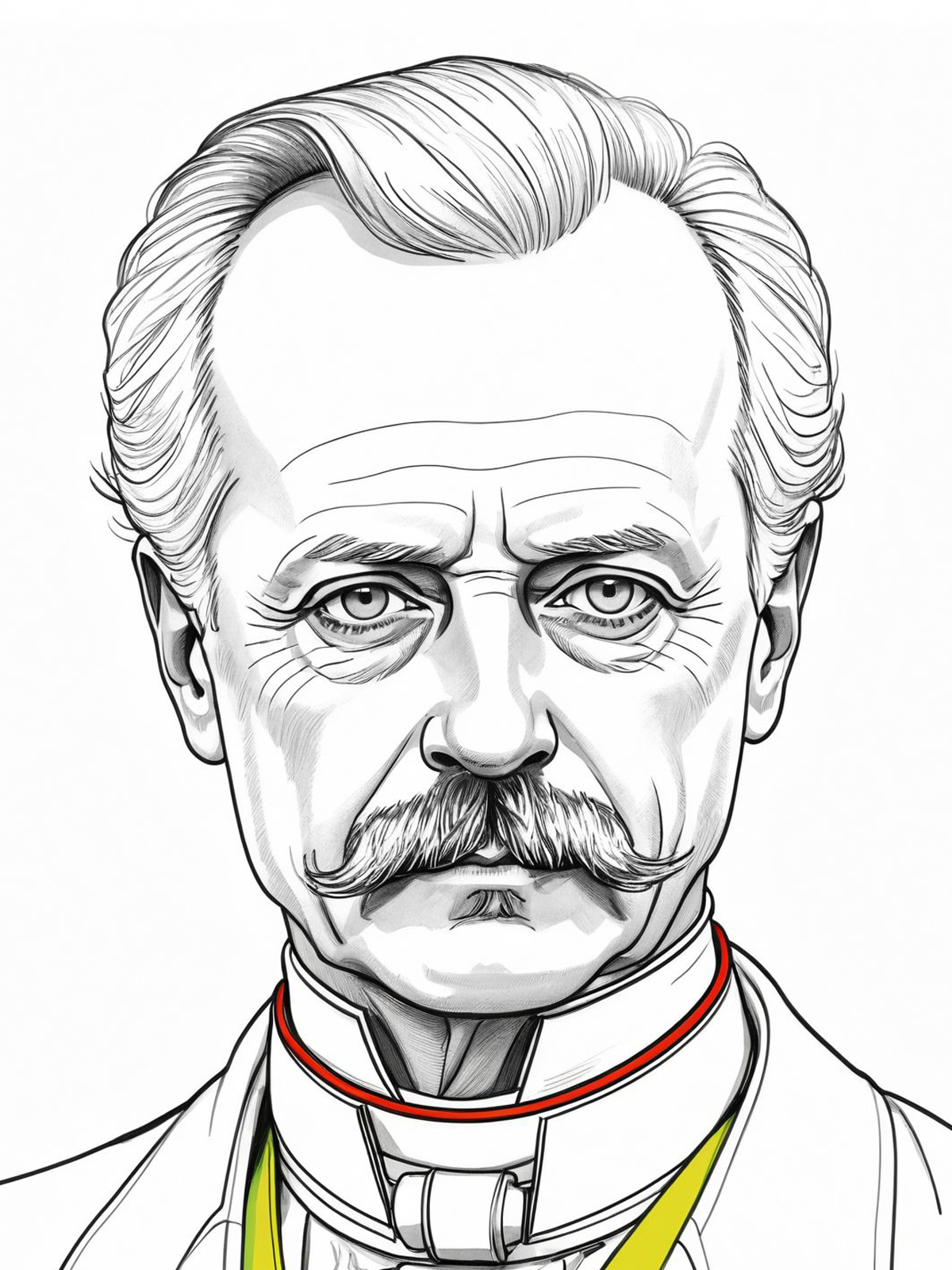 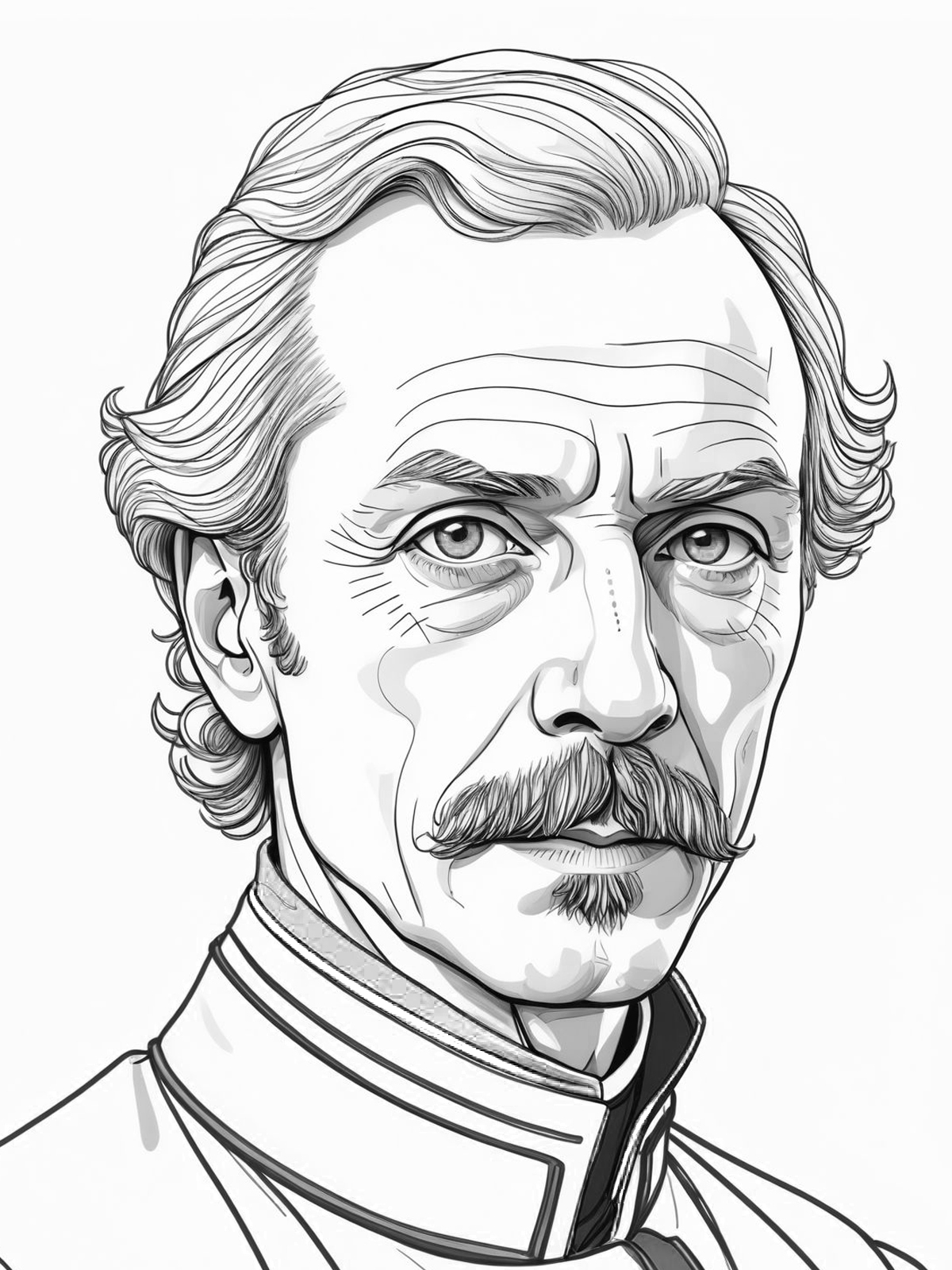 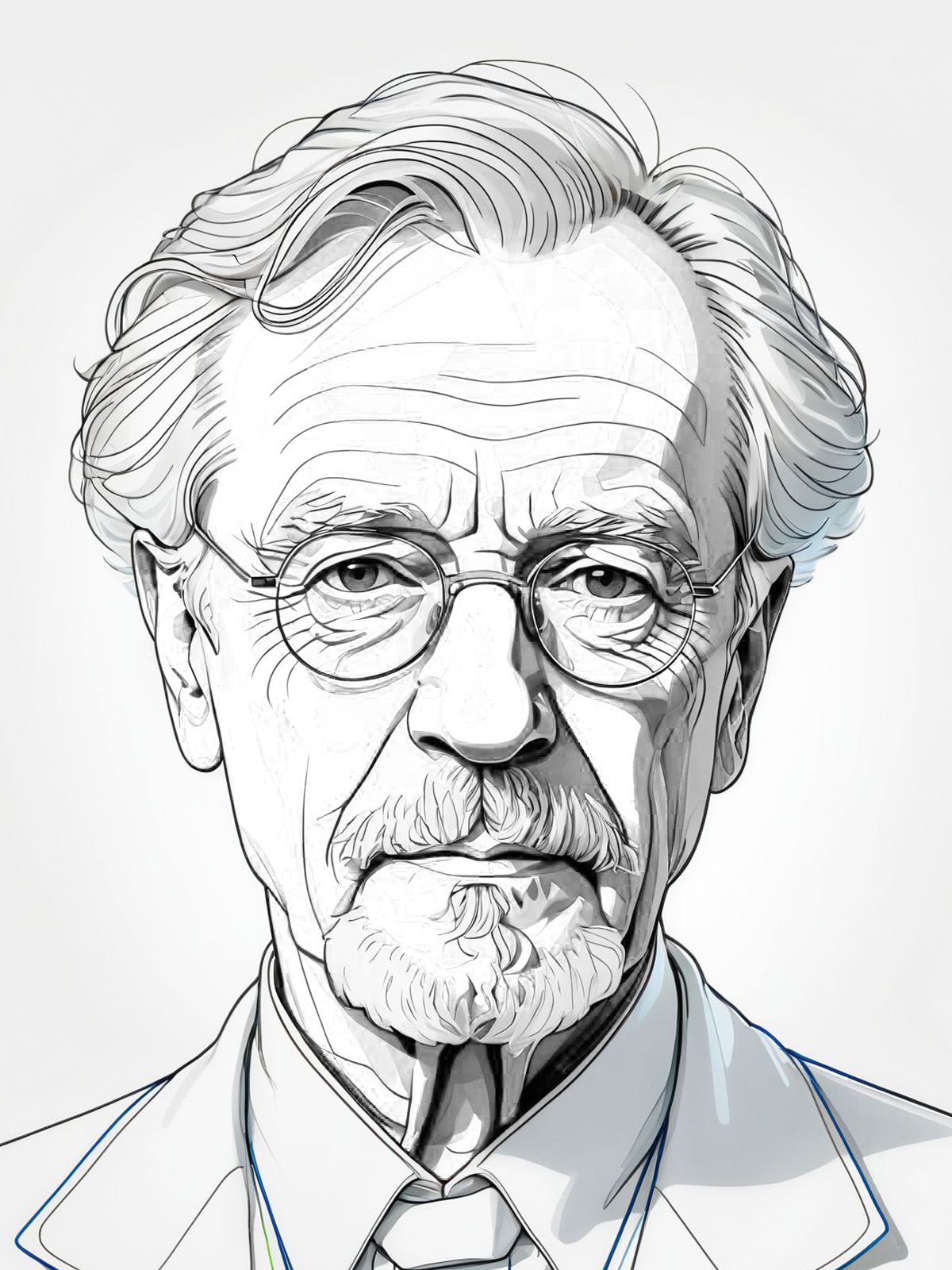 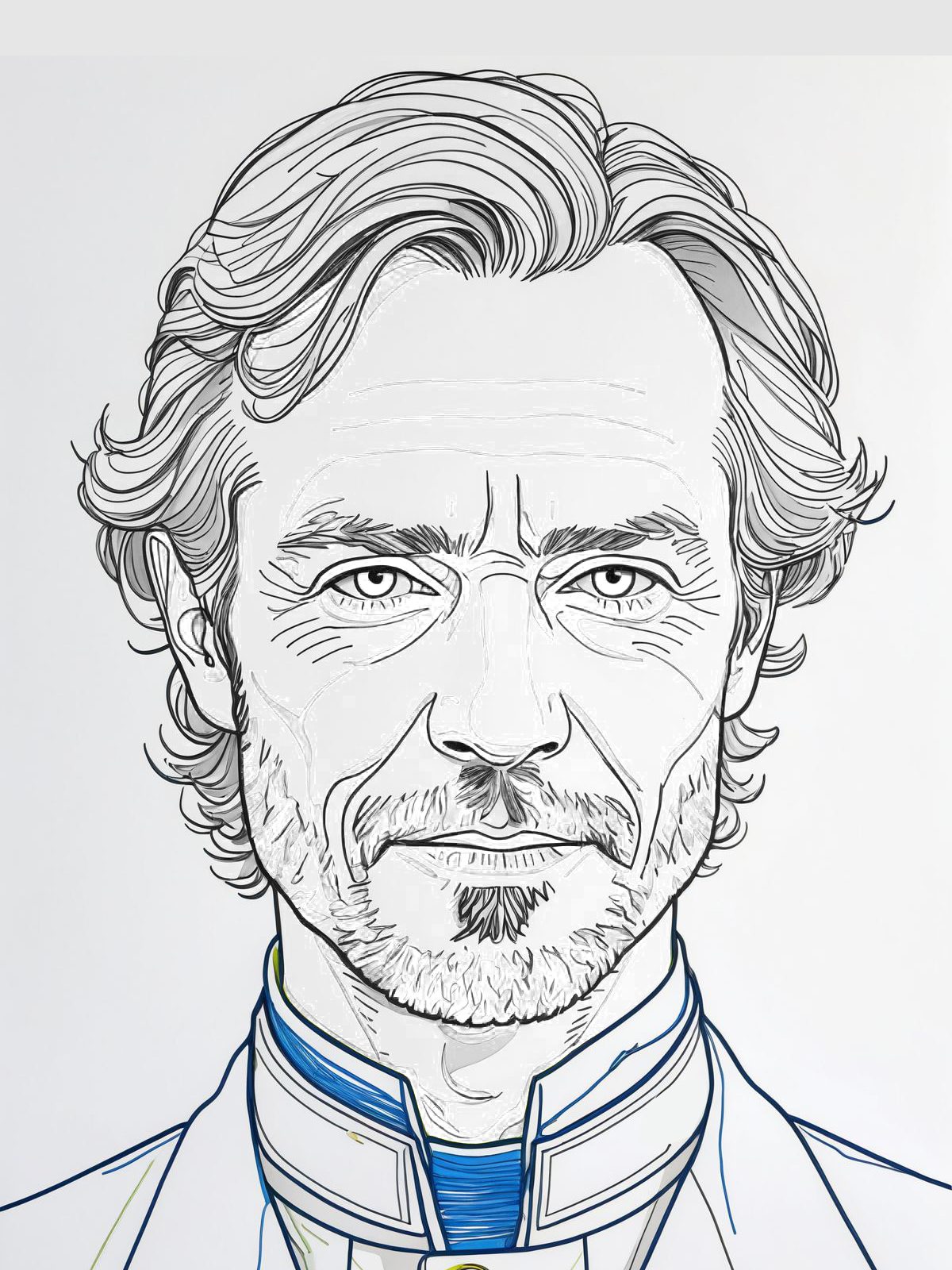 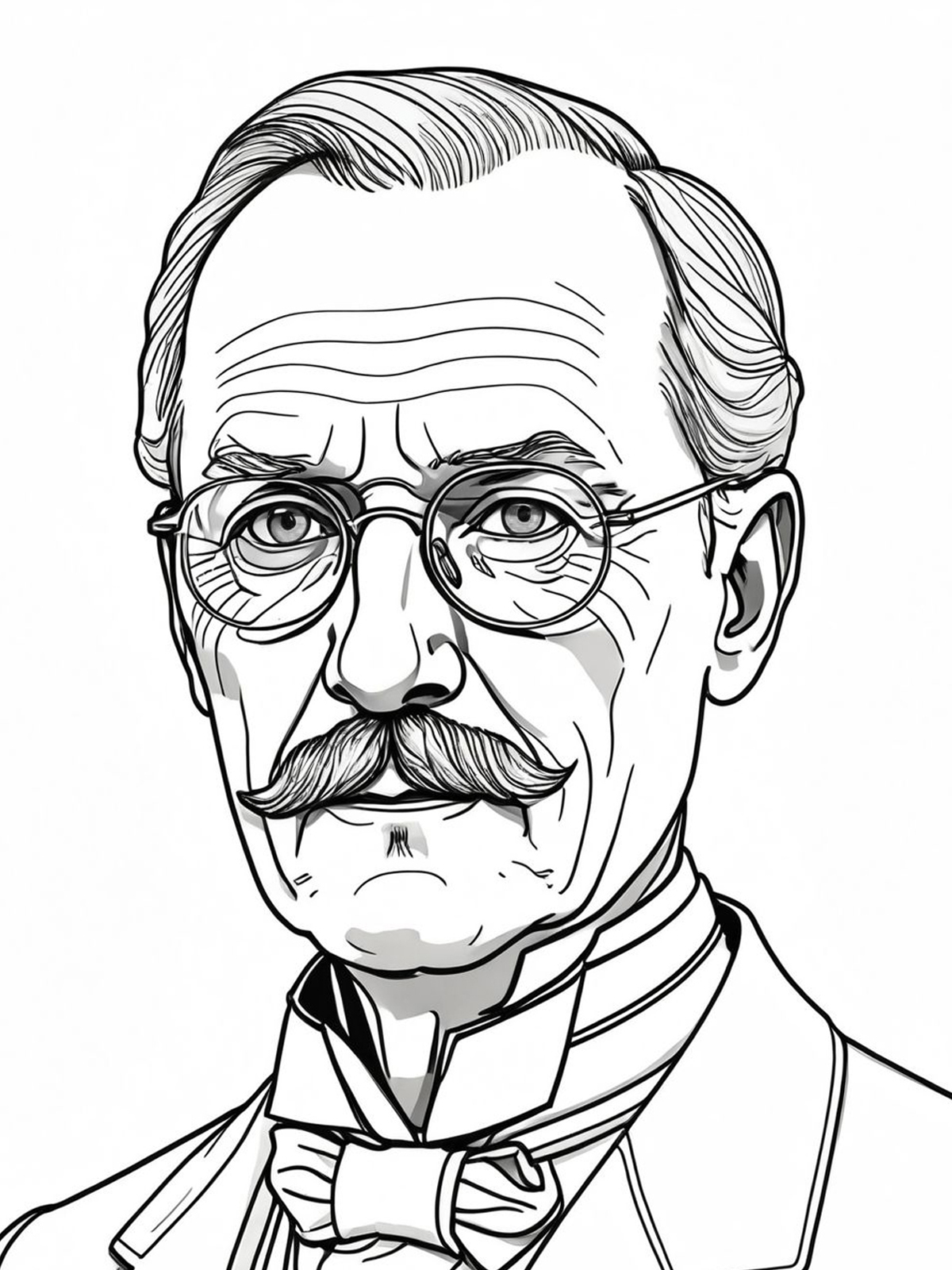 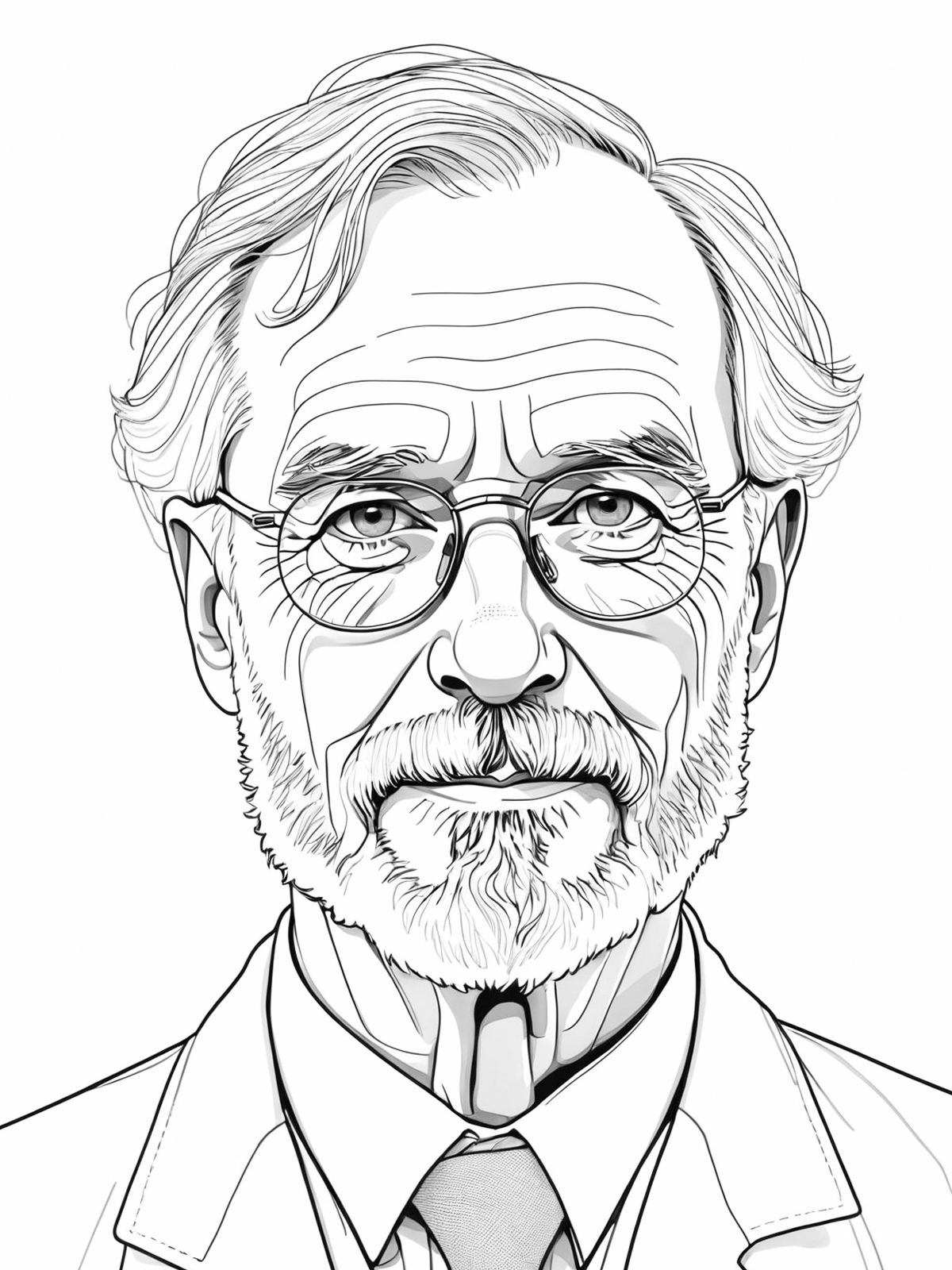 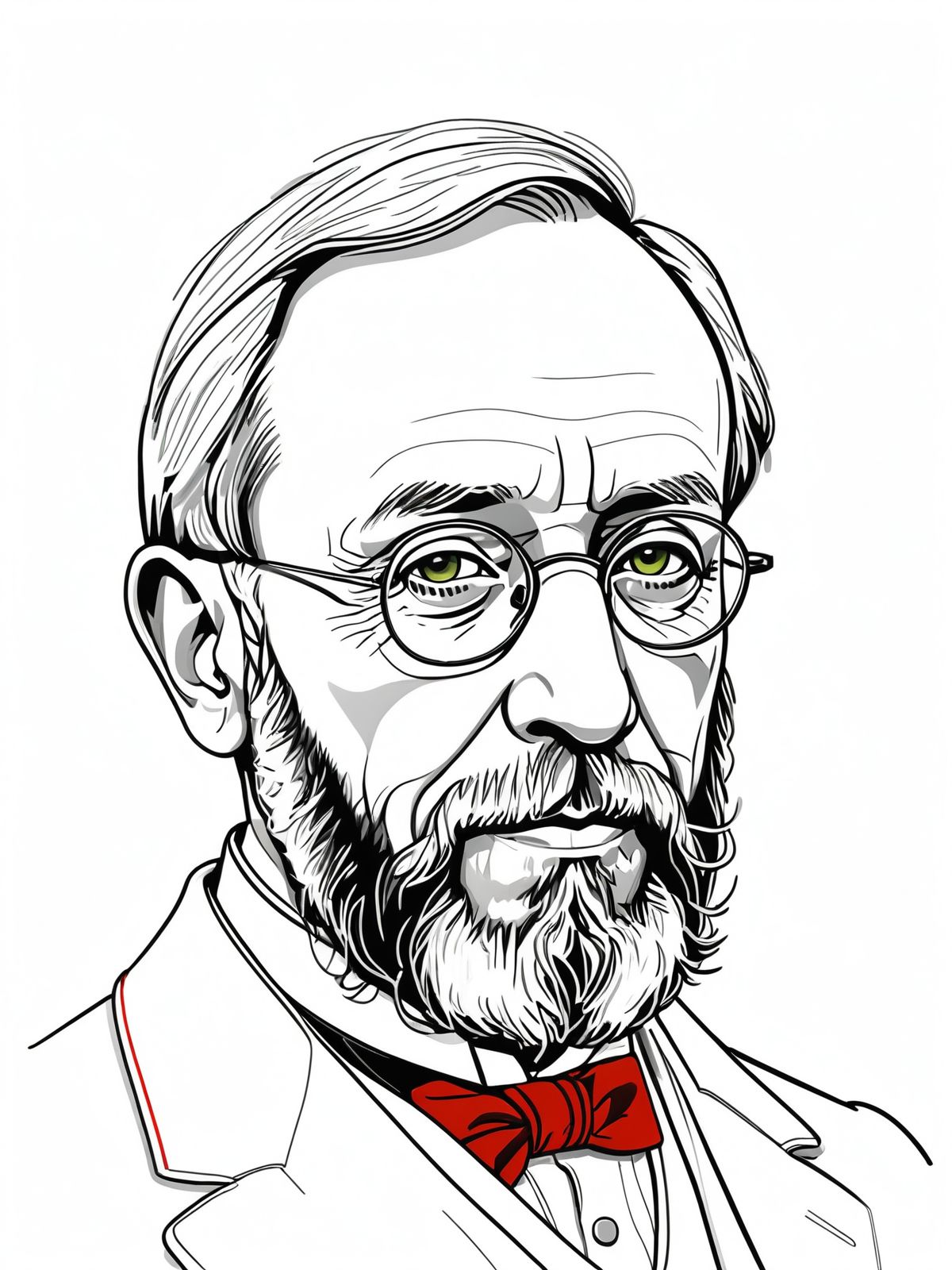 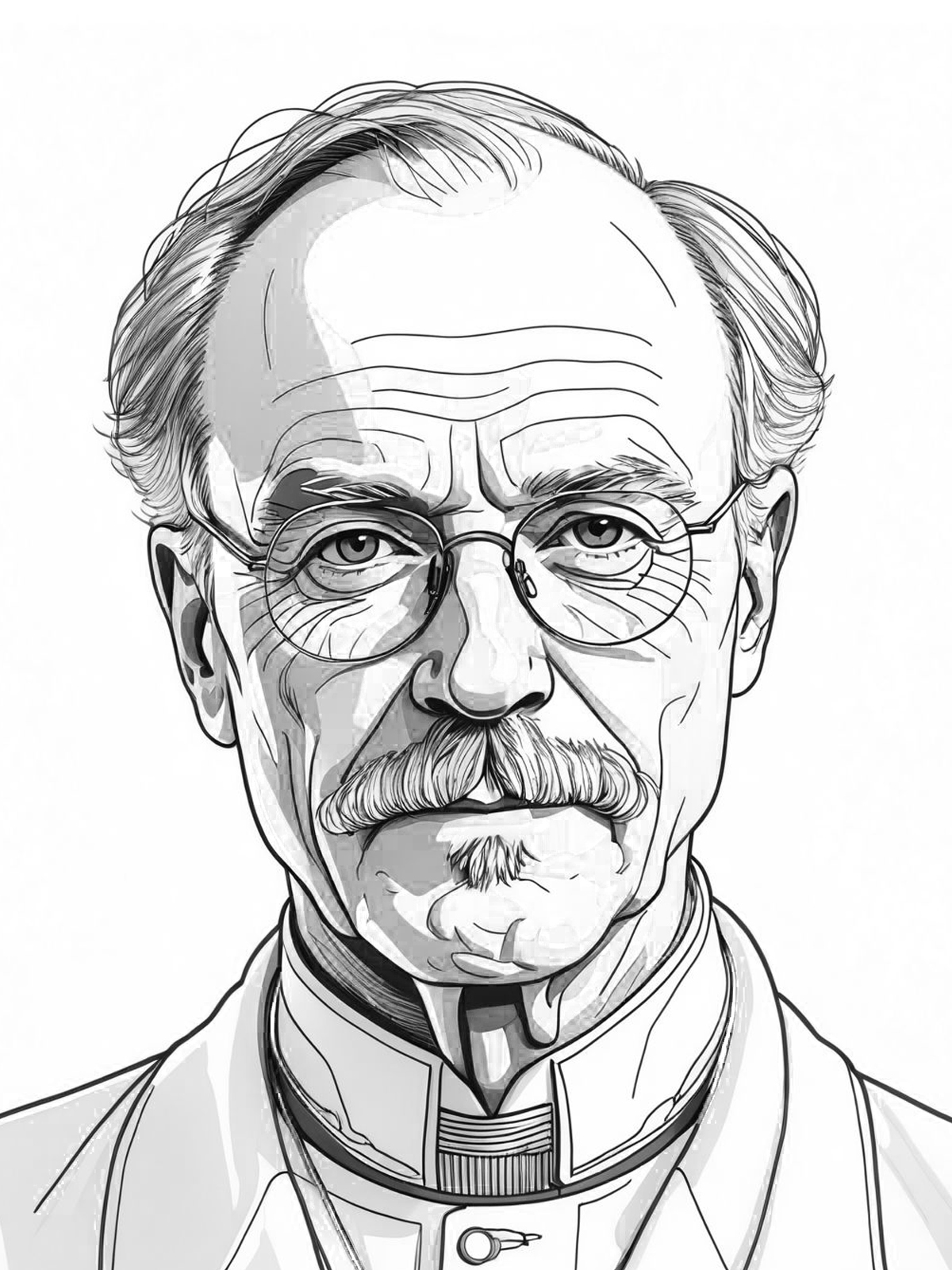 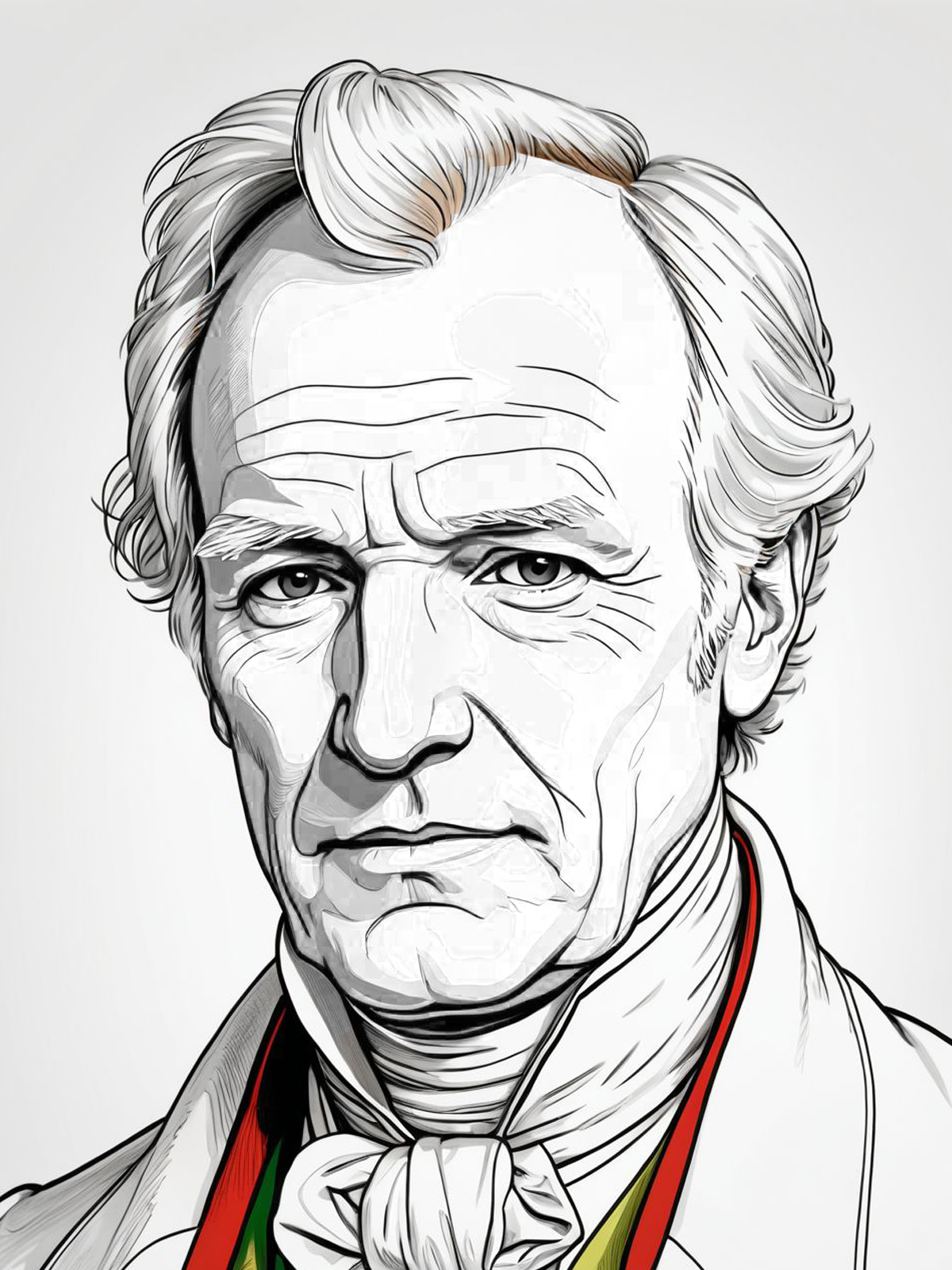 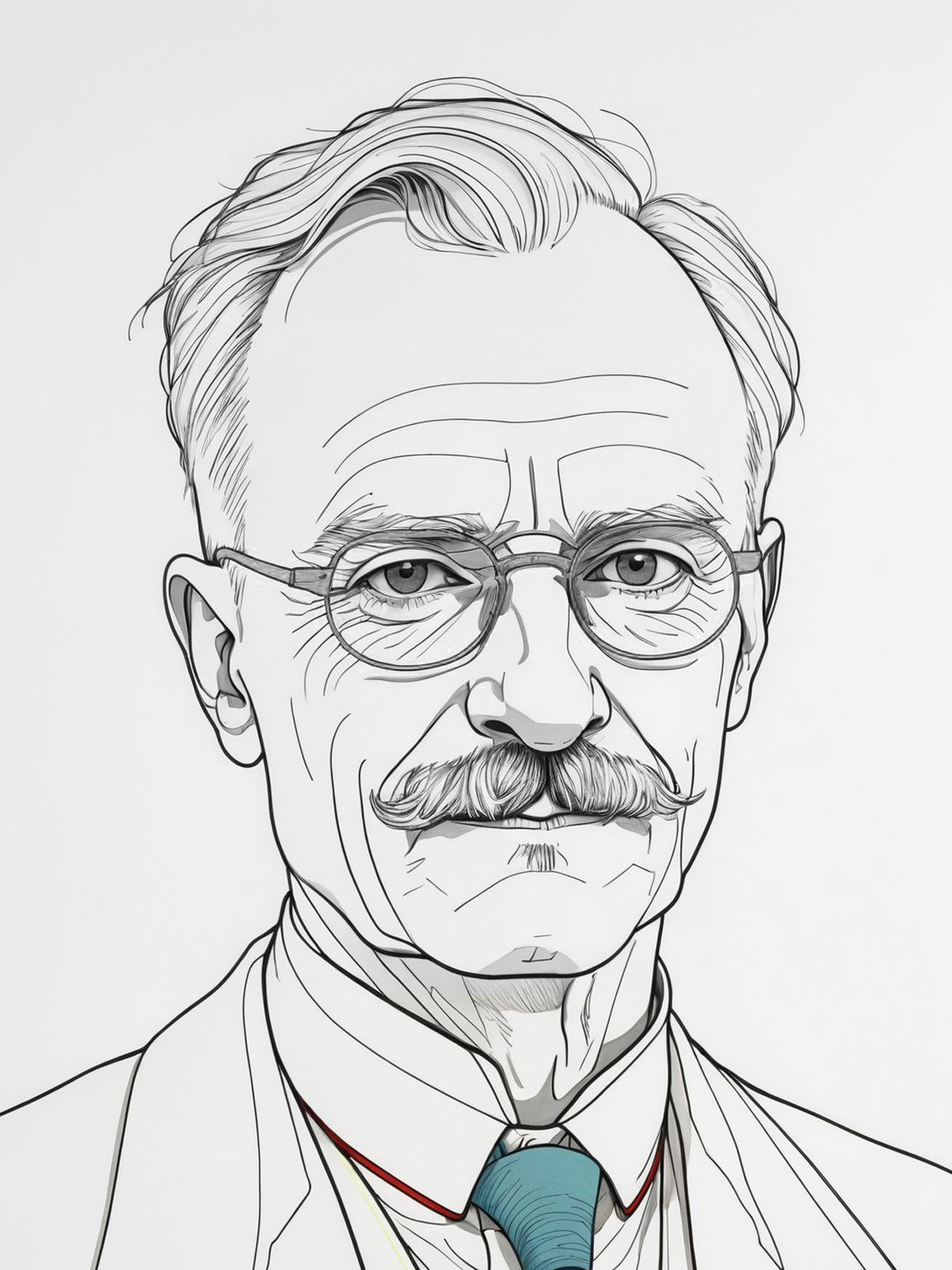 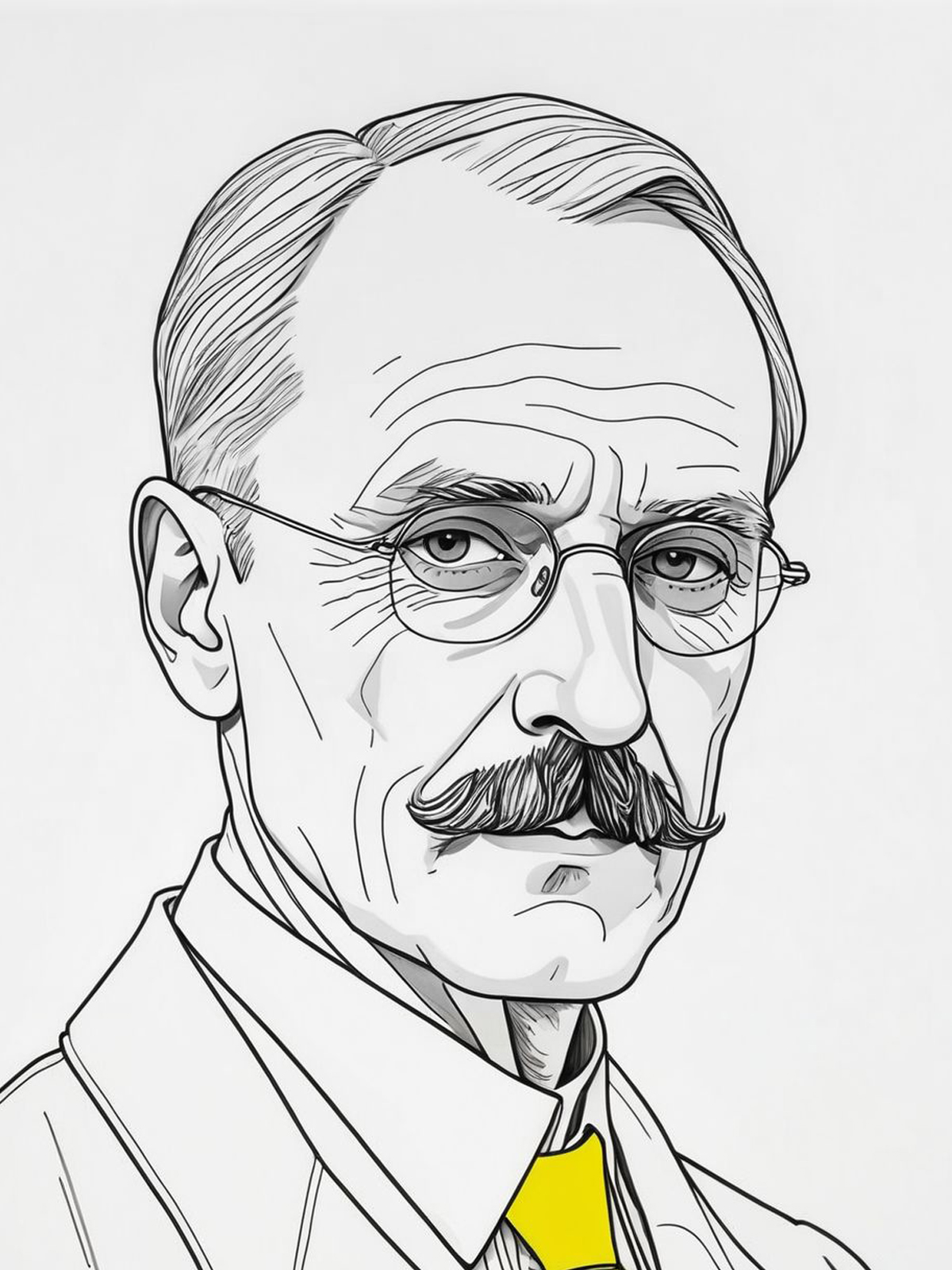 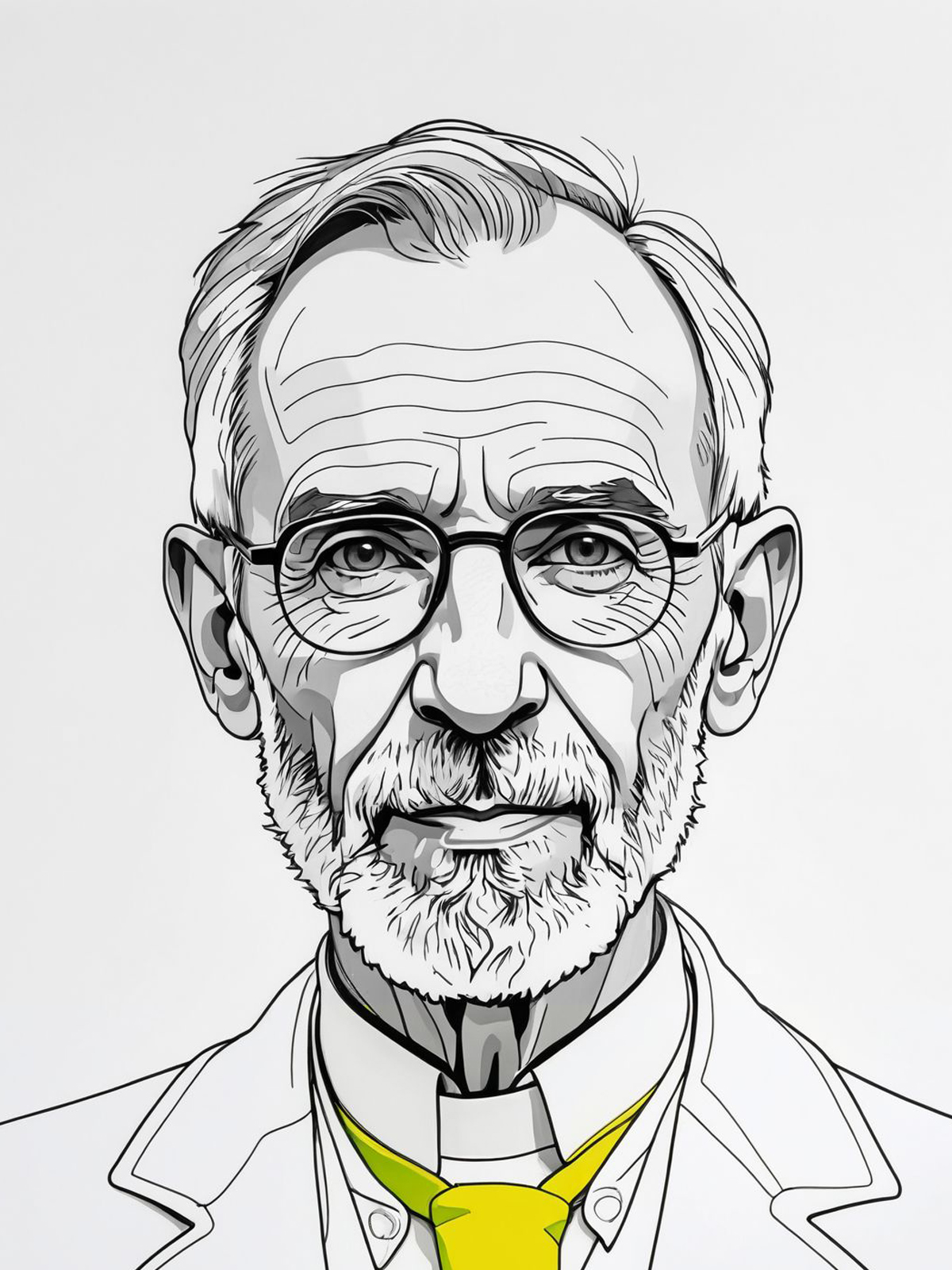 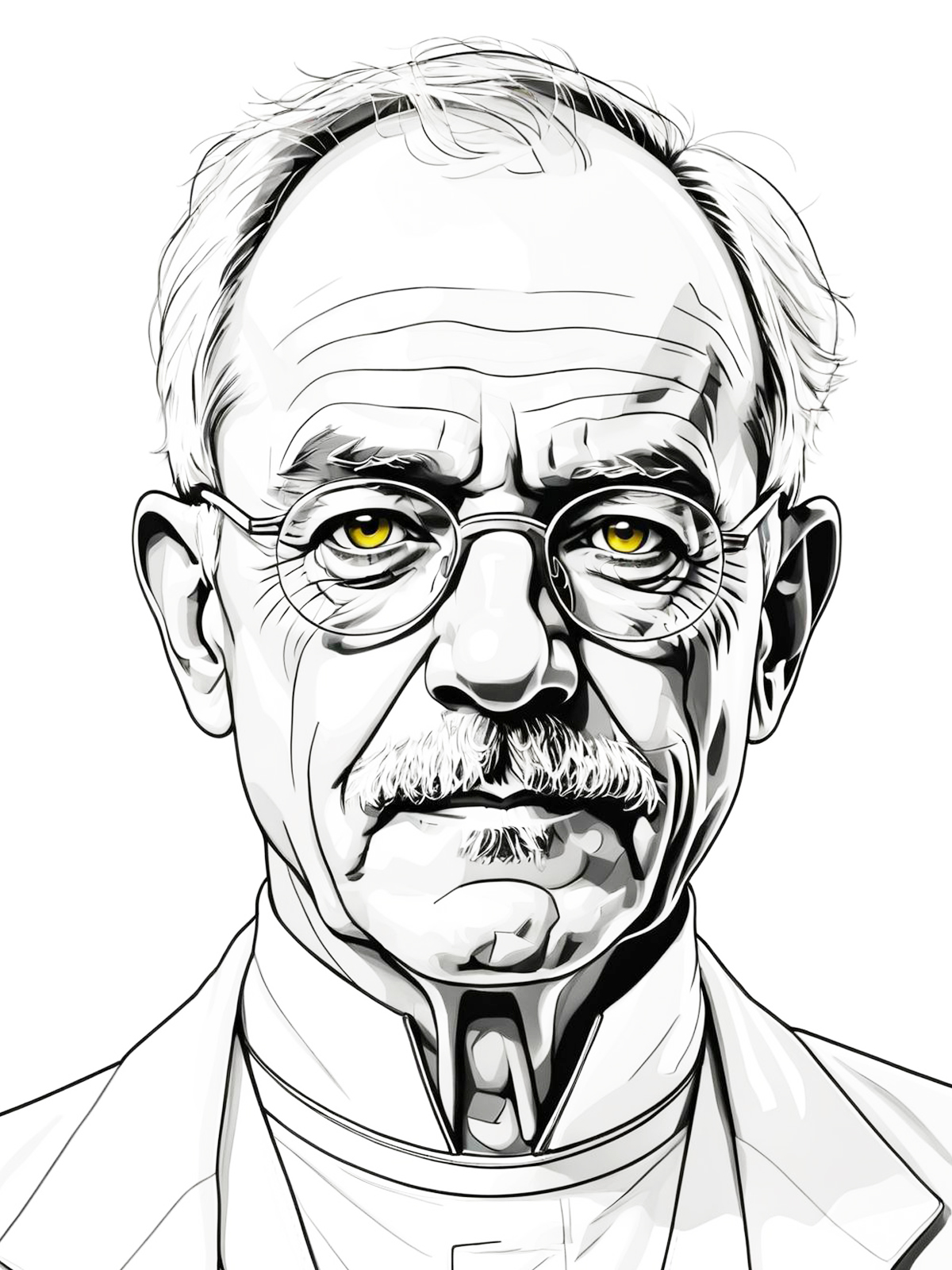 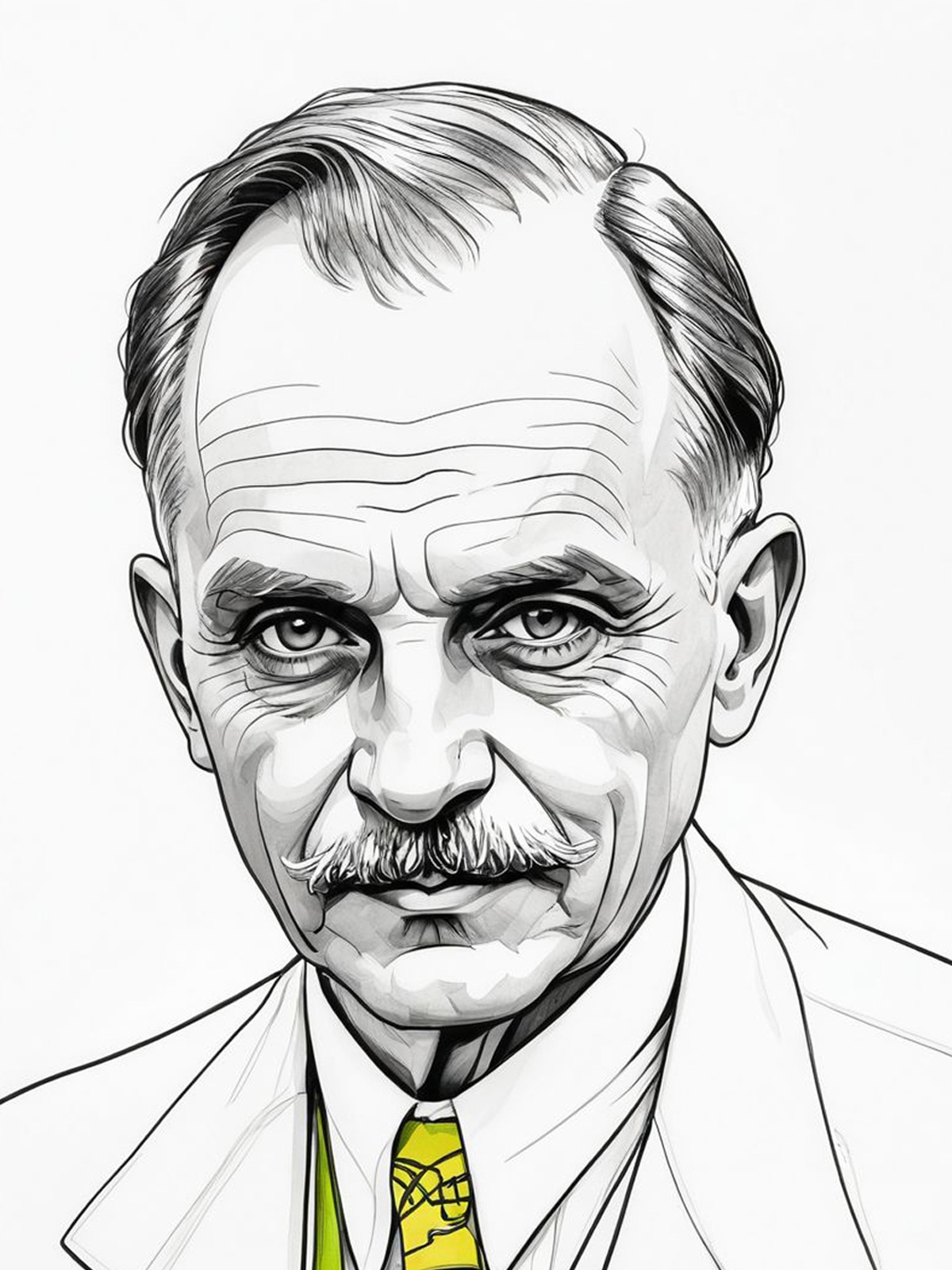 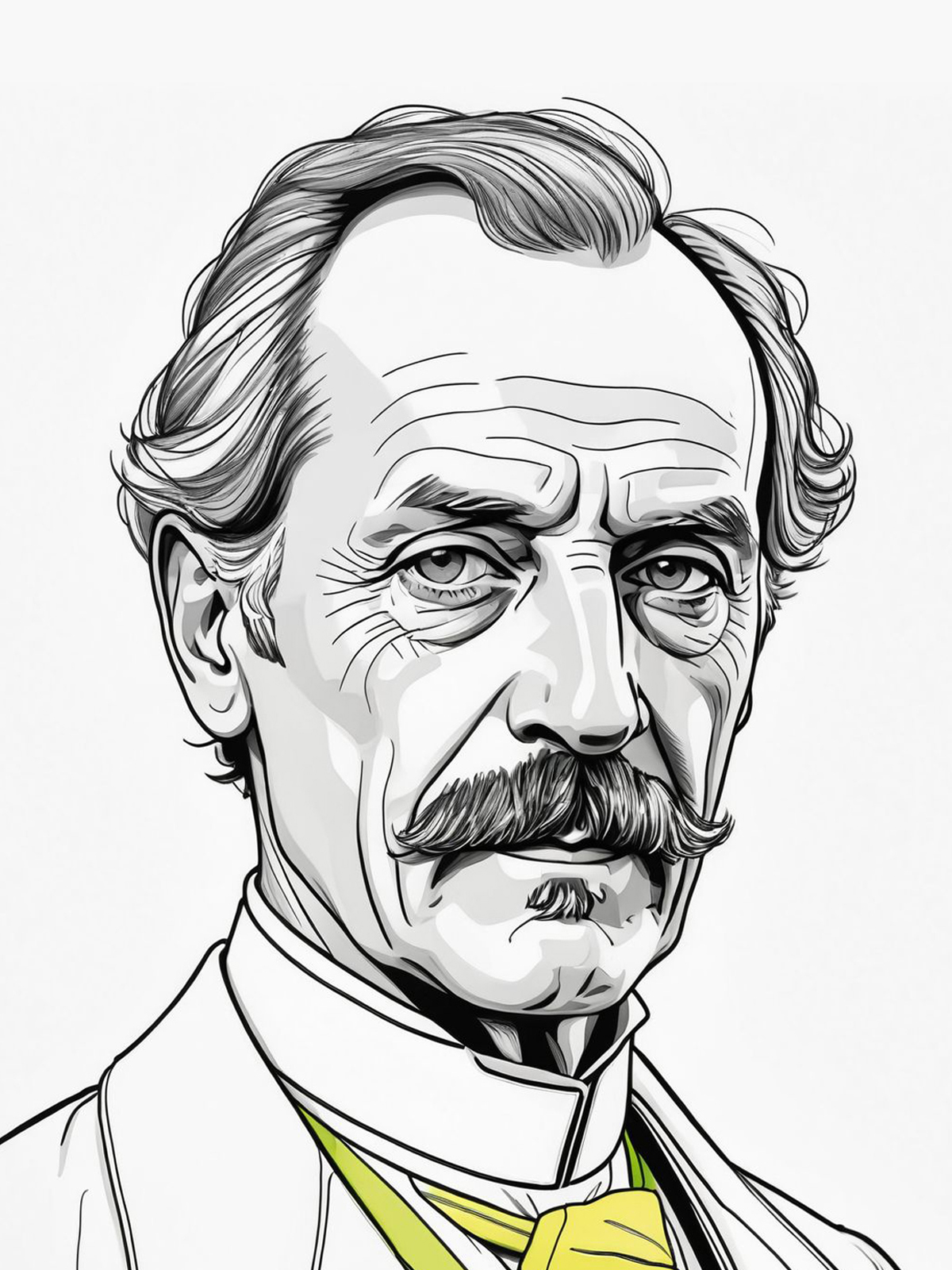 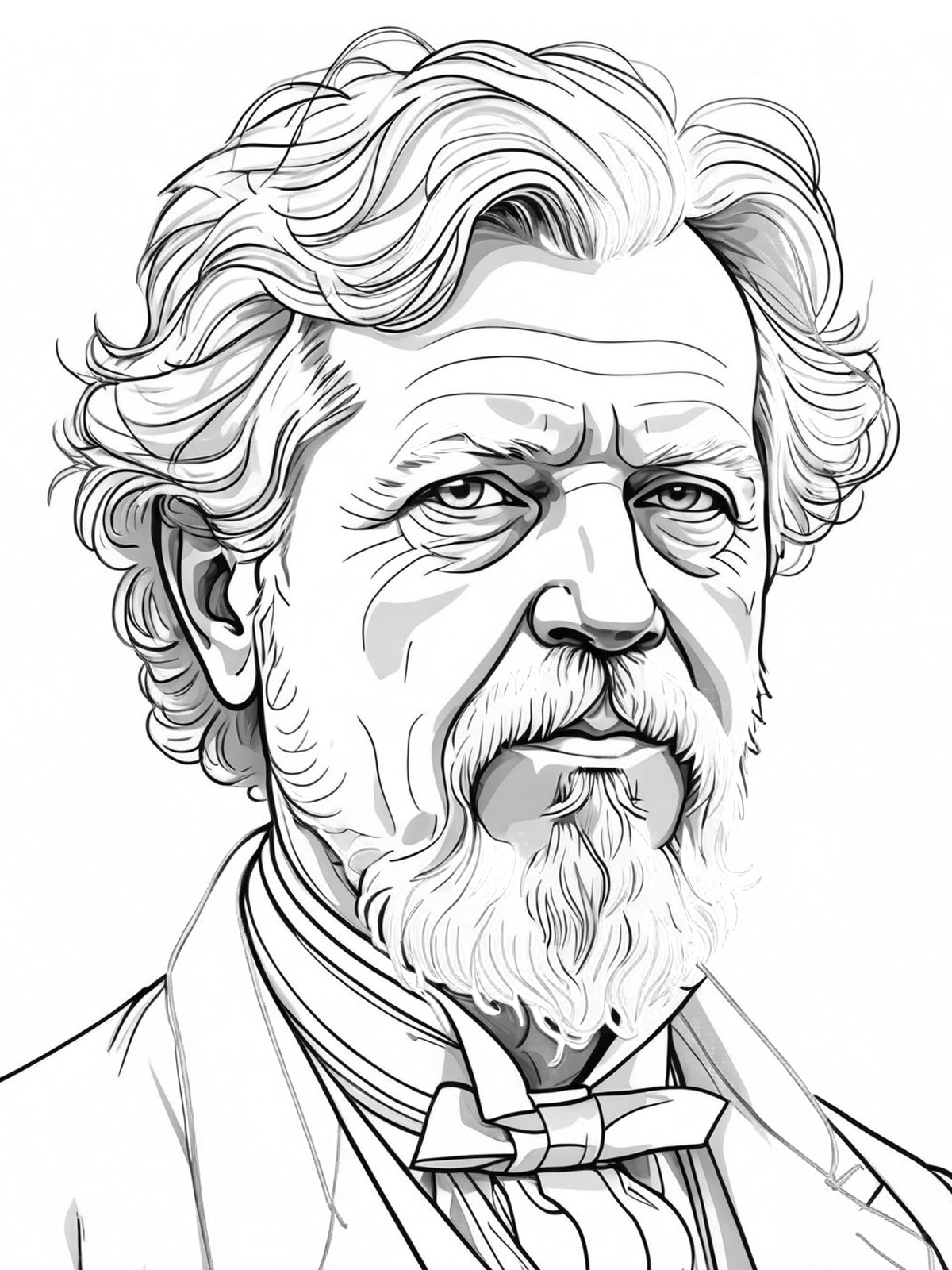 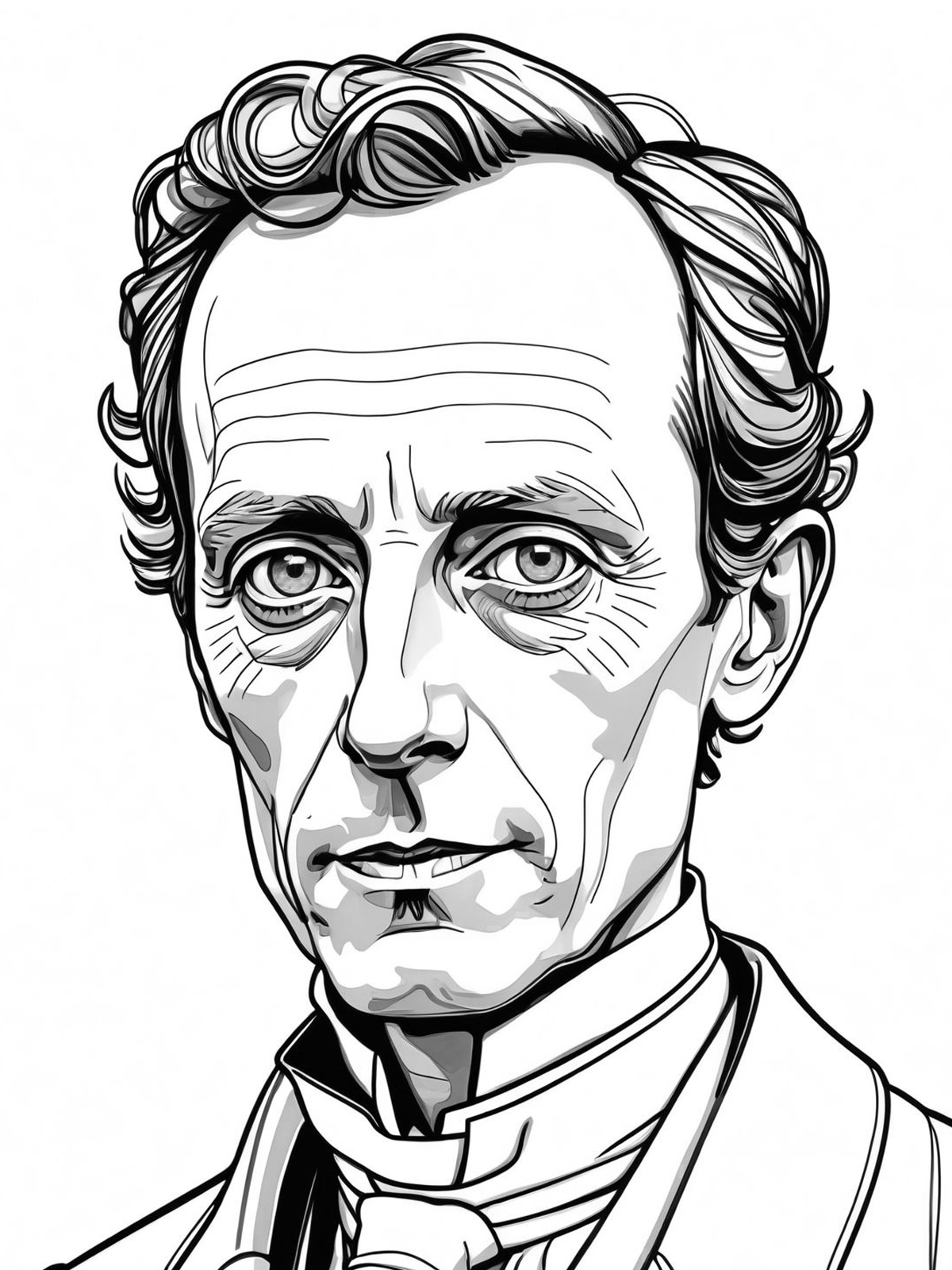 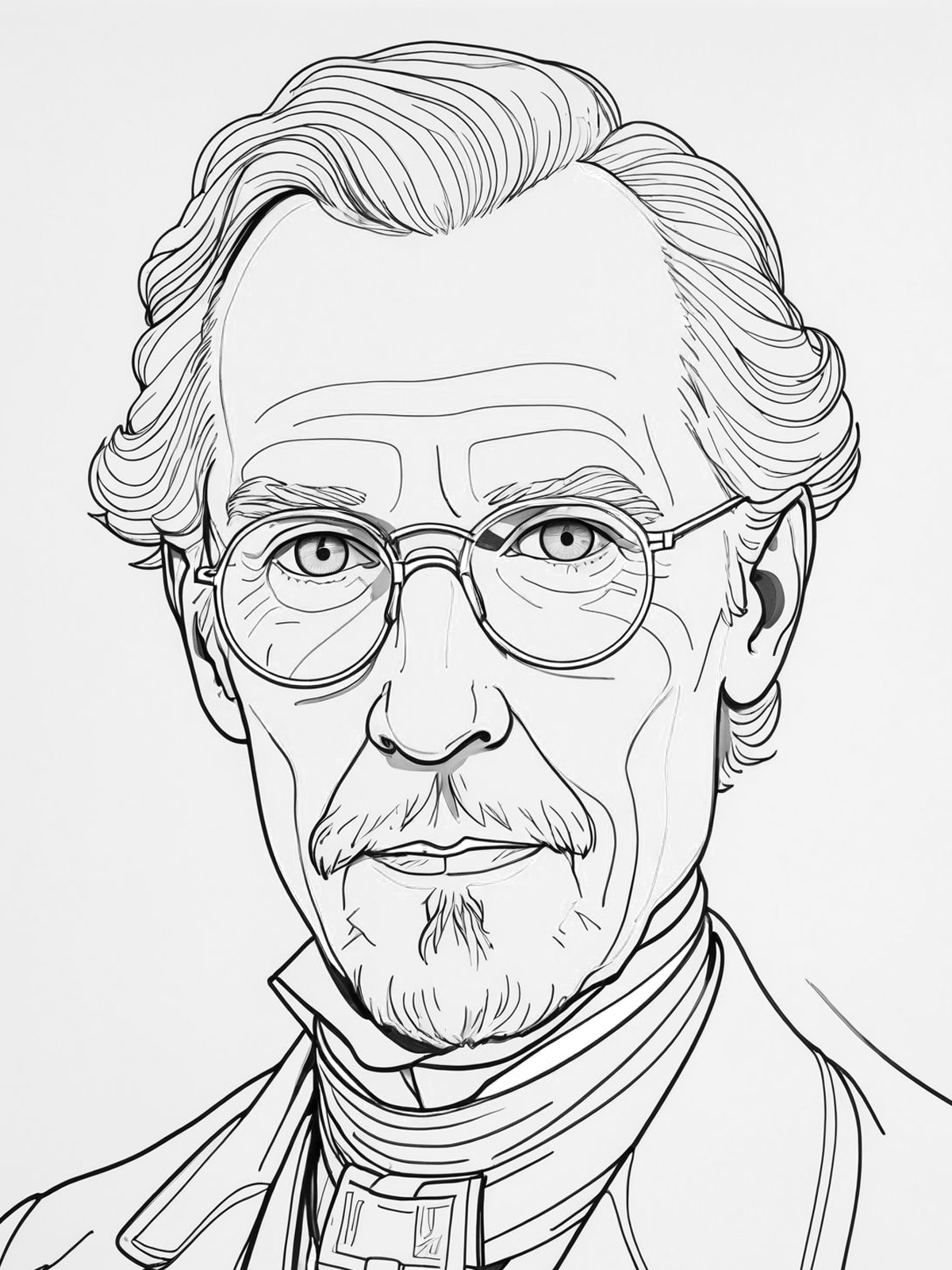   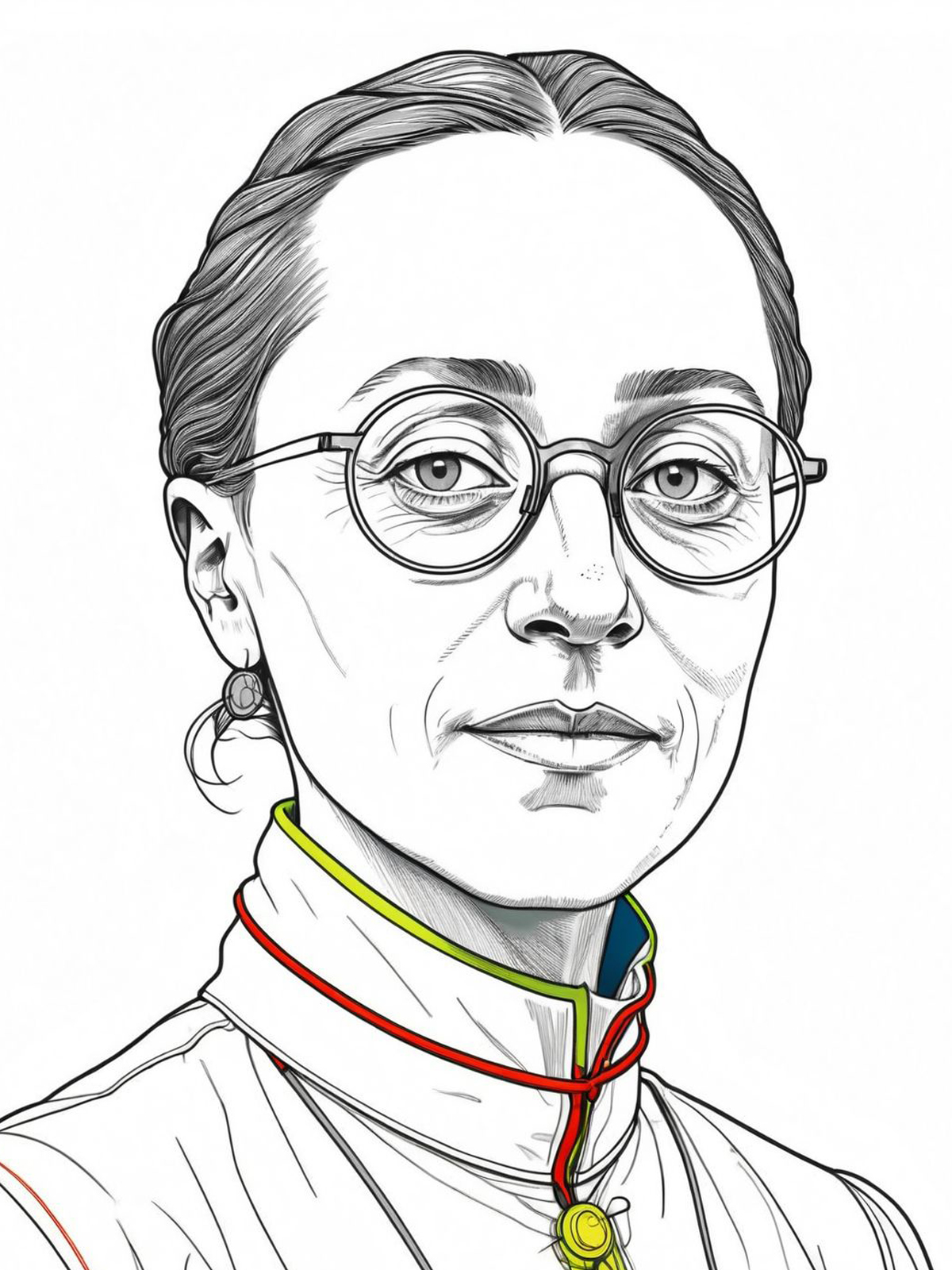 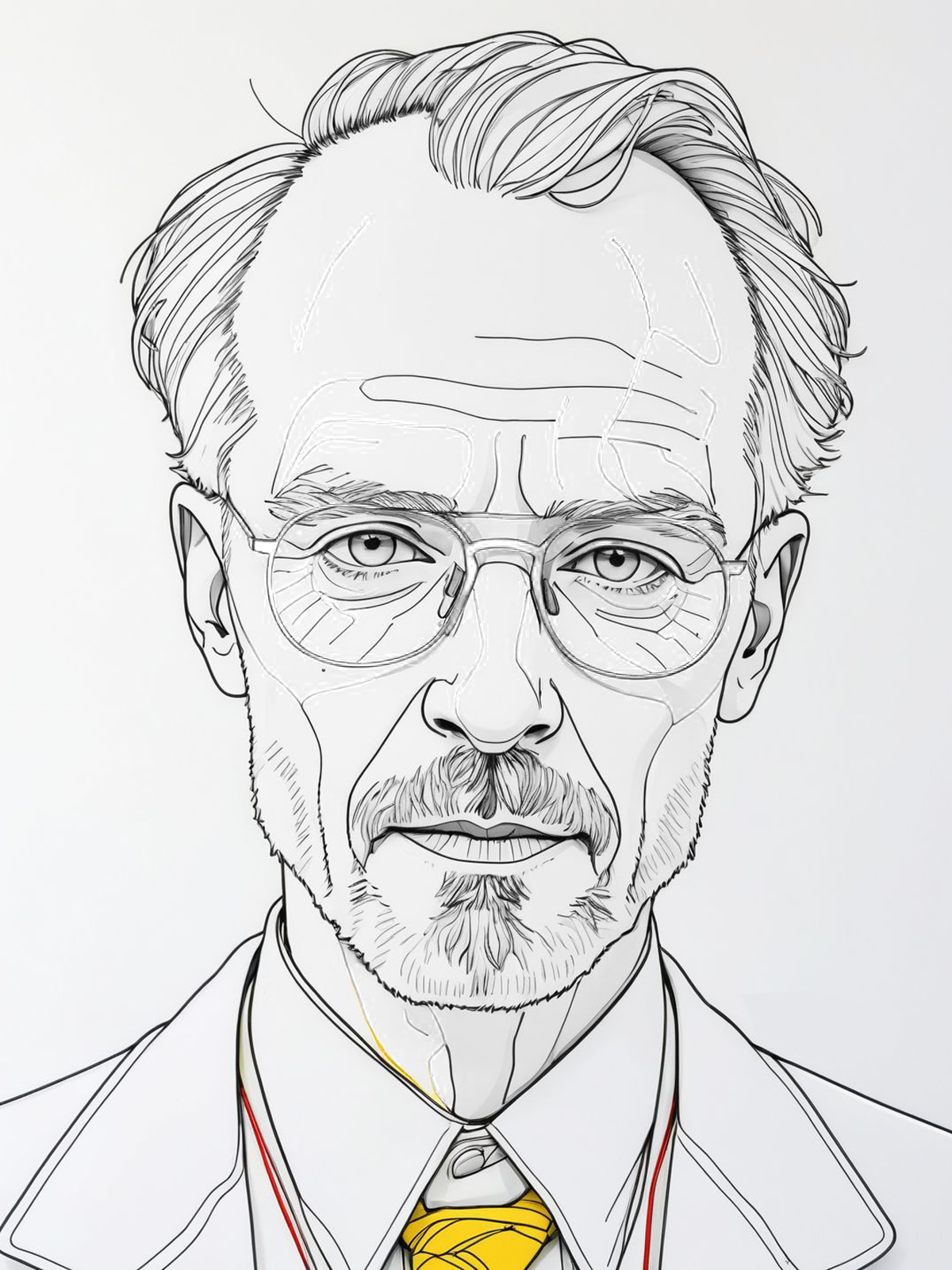 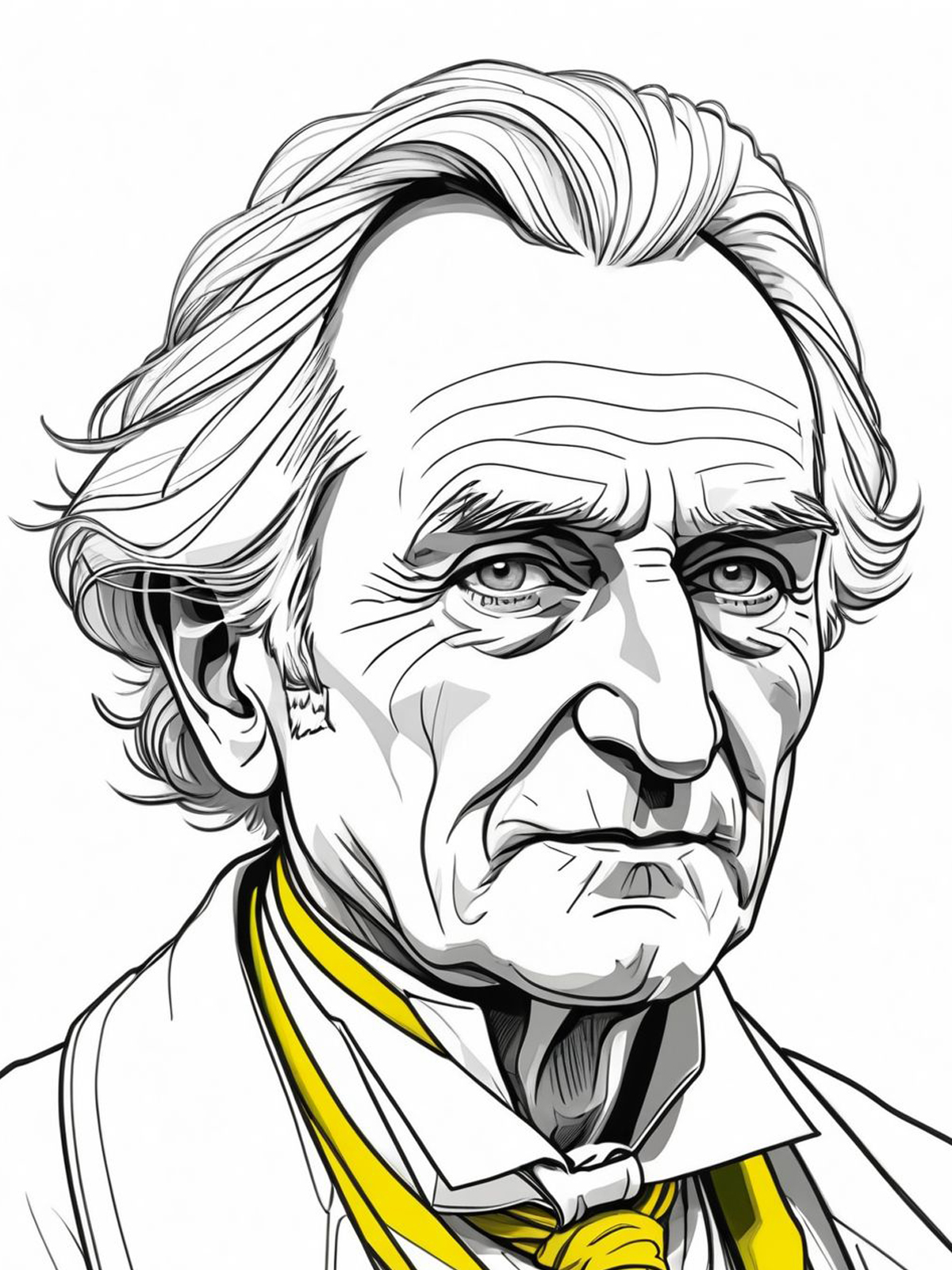 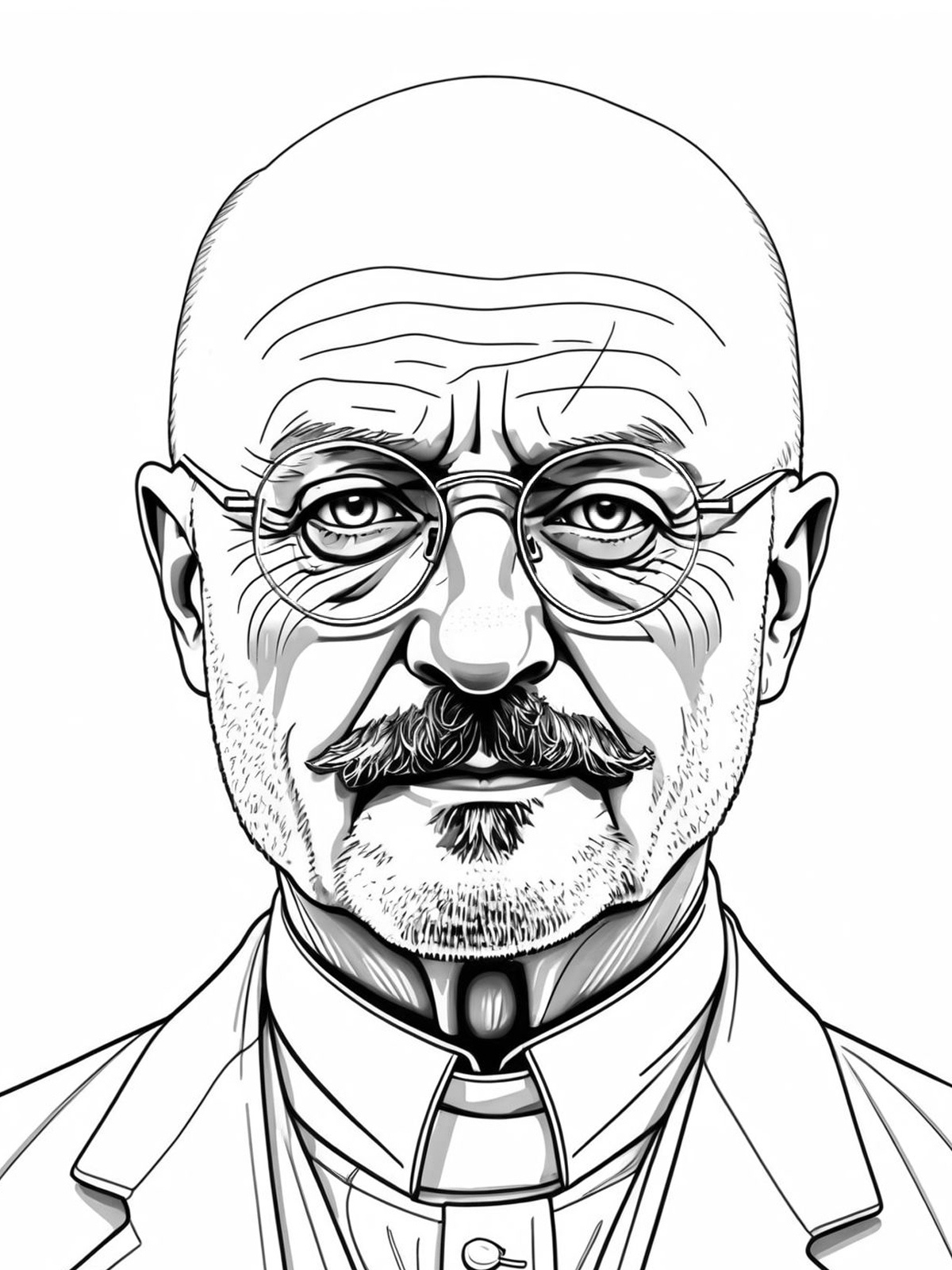 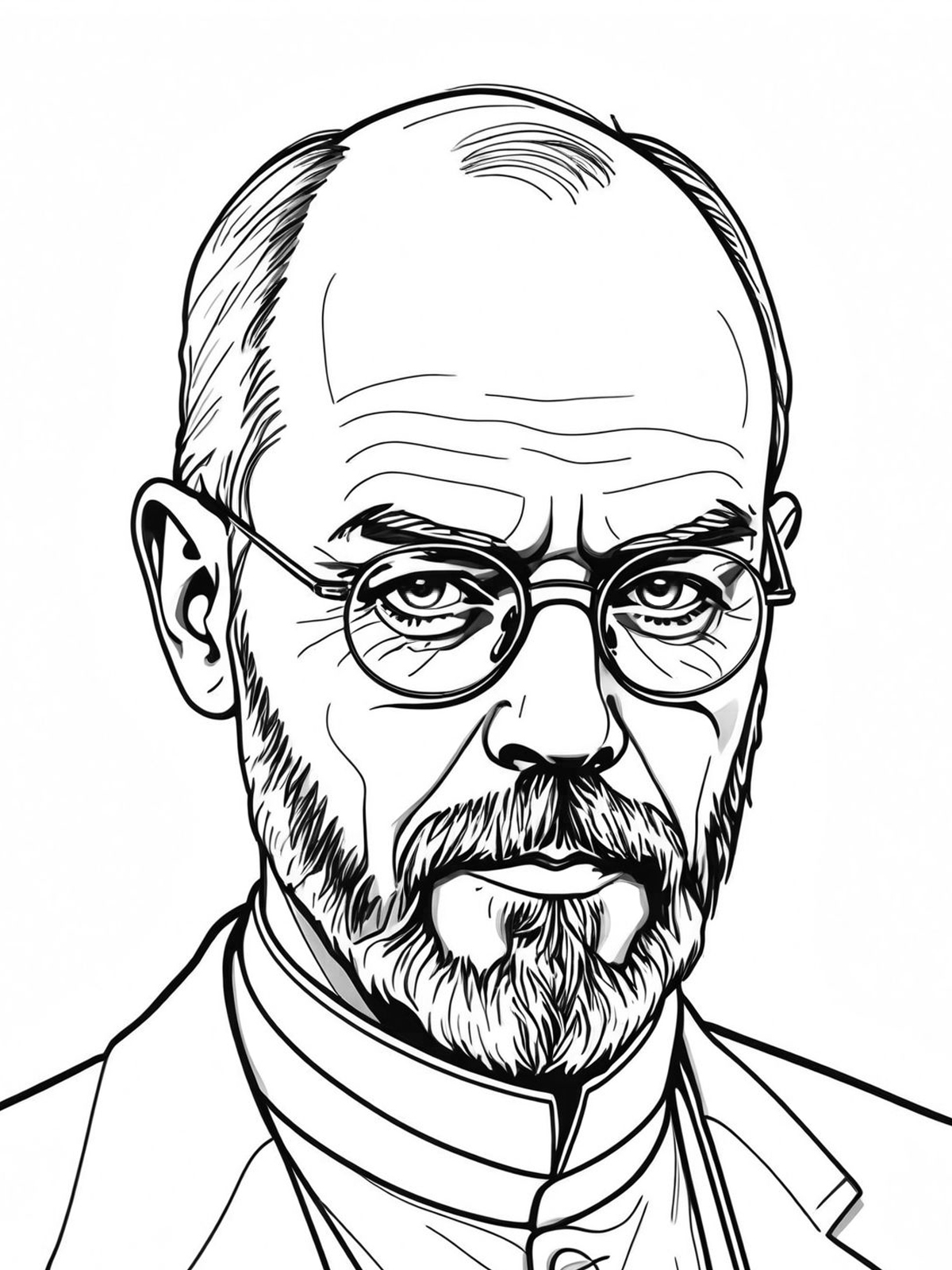  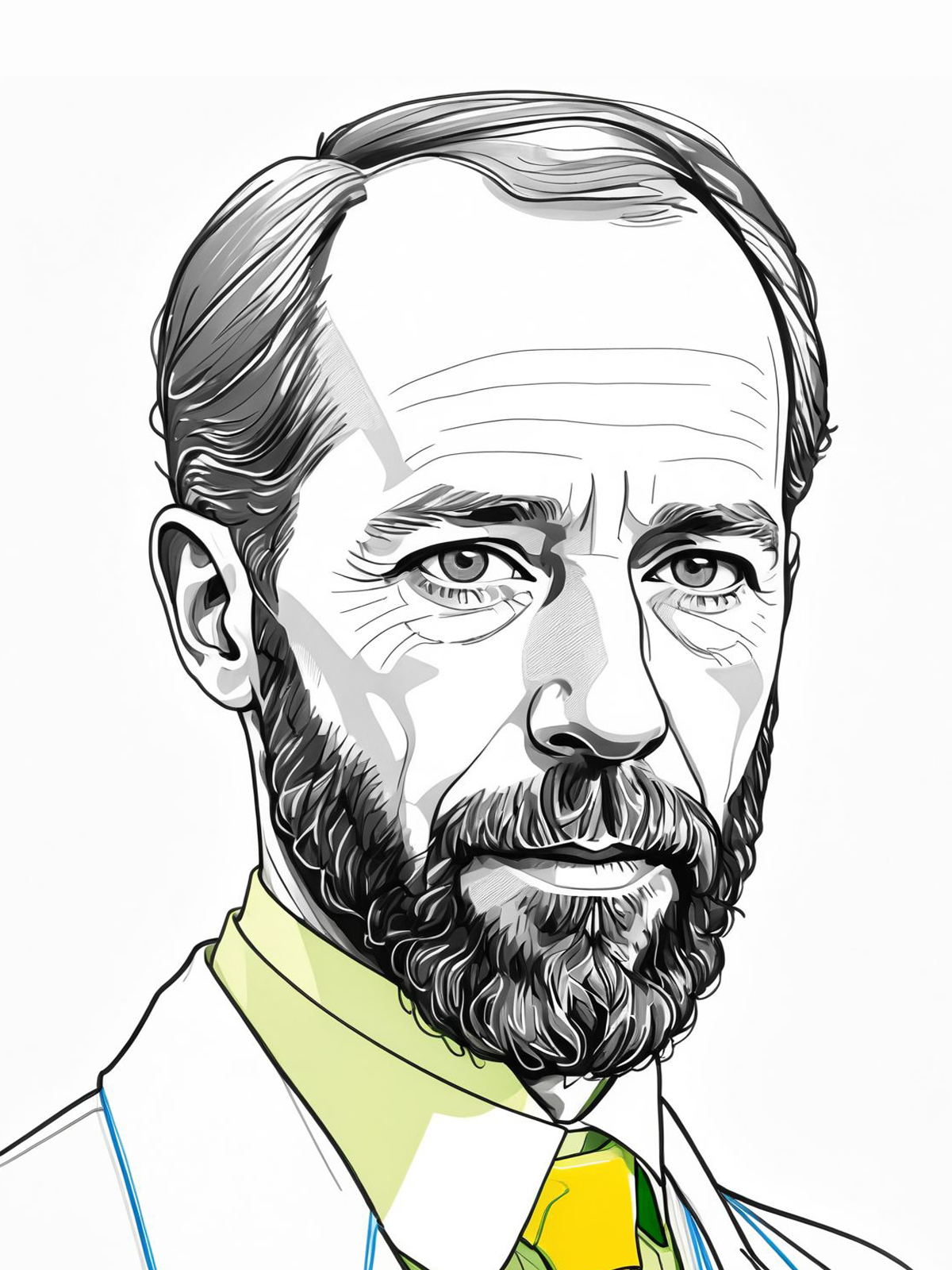   |
|
 Collaborative effort, Sky Division & Logios, M-J 2026 Collaborative effort, Sky Division & Logios, M-J 2026
|
|