|
Japanese Food and Drinks Japanese food is shaped by seasonality, balance, and care for ingredients. Rice, noodles, seafood, vegetables, and fermented foods such as miso and soy sauce appear in many forms, from sushi and ramen to home-style dishes like miso soup and grilled fish. Meals often pair contrasting flavors and textures, while presentation reflects the season and the pleasure of eating together.
Japanese drinks range from green tea and sake to beer, shochu, and sweet or seasonal beverages. A more distinctly Japanese picture would include matcha and other carefully prepared teas, sake brewed from rice, and shochu made from ingredients such as sweet potato, barley, or rice. Drinks often accompany particular foods and occasions: tea with everyday meals, sake with seasonal dishes and celebrations, and amazake as a gently sweet rice drink. The joy is in those pairings and rituals, as much as in the drinks themselves.
Together, the food and drinks express a broad culinary spirit: respect for nature, craft in preparation, and joy in sharing simple, thoughtfully made things.
|
| click on the tooltip-link to keep it activated – click outside the box to deactivate it / to read more |➔|
|
|
Shushoku ( Rice, Noodles, Konamono, Bread ) – Shushoku is essential in Japanese cuisine, with rice being the predominant staple. It plays a crucial role in meals and is often served with various side dishes. Shushoku translates to “staple food”. It refers to the primary component of a diet that is consumed regularly and provides a significant portion of energy and nutrients. In Japan, common examples of shushoku include: Rice (The most common staple food in Japan). Bread (Often consumed in various forms). Noodles (Includes types like soba and udon).
|
Gohan
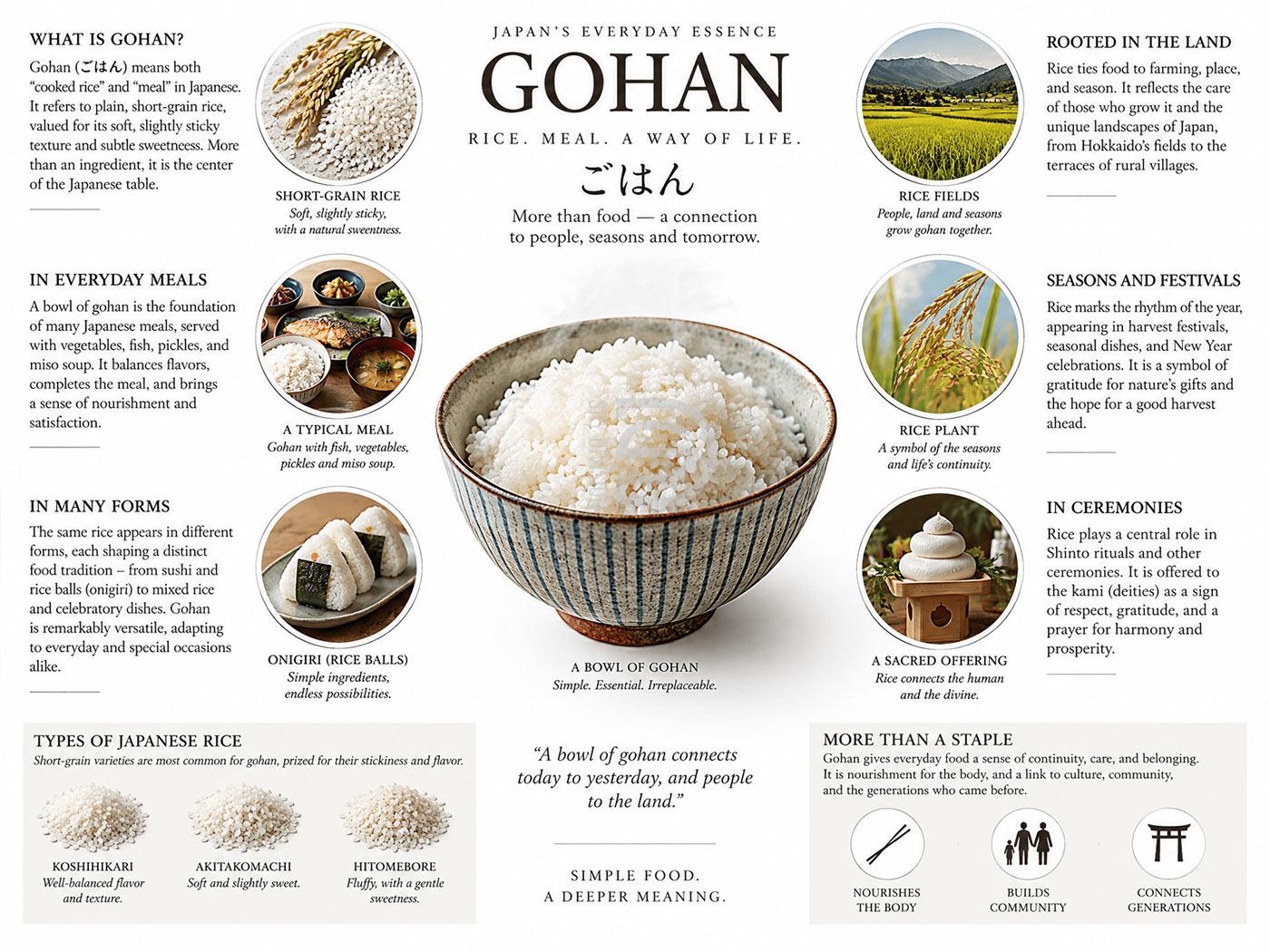 The word gohan can mean both "cooked rice" and "meal", reflecting how closely rice is tied to everyday nourishment. In Japanese food tradition, rice is more than a common ingredient or side dish - it is the meal’s center of gravity. Plain, short-grain rice is valued for its soft, slightly sticky texture and subtle sweetness, and it appears in forms that shape whole styles of eating - from a bowl alongside vegetables and fish to sushi, rice balls, and celebratory
◉ ChahanA Japanese-style fried rice, adapted from Chinese culinary traditions. Cooked rice is stir-fried in a hot wok with oil, egg, and ingredients such as scallions, carrots, peas, pork, or shrimp, seasoned with soy sauce, salt, and pepper. The key technique is using day-old, refrigerated rice to prevent clumping and achieve distinct, lightly toasted grains. Quick and versatile, chahan transforms leftover rice into a complete dish and is a staple in Japanese homes, casual diners, and ramen shops, where it is
|➔| ◉ Katsu curryKatsu curry pairs a thick, mildly sweet Japanese curry sauce with a breaded, deep-fried cutlet - usually pork (tonkatsu) or chicken. The curry, made from a roux with onions, carrots, and potatoes, is served over rice beside the sliced katsu. The dish blends Western and Indian influences absorbed into Japanese cuisine in the Meiji era, later popularized by curry houses and chain restaurants. Its appeal lies in contrast: crisp coating against soft rice and rich, comforting sauce. Katsu curry is
|➔| ◉ GlutinousGlutinous rice (mochigome) is a sticky, opaque short-grain rice central to Japanese festive and ritual foods. Its high amylopectin content makes it chewy and adhesive when cooked. Steamed and pounded, it becomes mochi, used in New Year celebrations and sweets; steamed whole, it appears in sekihan (red bean rice) for auspicious occasions and in ohagi. Unlike regular rice, it is not a daily staple but a ceremonial and seasonal ingredient, symbolizing celebration, offering, and community through the labor-intensive pounding and
|➔| ◉ Hatsuga genmaiHatsuga genmai is germinated brown rice, made by soaking unpolished brown rice until the grains begin to sprout slightly. This process softens the bran, improves digestibility, and increases nutrients such as gamma-aminobutyric acid (GABA), vitamins, and minerals. It cooks to a chewier texture than white rice and has a nuttier flavor. Valued in macrobiotic and health-conscious circles in Japan, it represents a return to whole-grain eating and is often eaten as a daily staple by those seeking balanced, minimally processed
|➔| ◉ KayuKayu is Japanese rice porridge, made by simmering rice in generous water until soft and creamy. Easy to digest and gentle on the stomach, it is traditionally eaten when ill, during recovery, and in convalescent or baby food contexts. Plain kayu is mild, but variations include okayu with umeboshi, egg, or scallions, and festive versions such as nanakusa-gayu, eaten on January 7 with seven herbs for health. Simple and nourishing, kayu reflects rice's role as comfort and care in Japanese
|➔| ◉ DonmonoDonmono refers to Japanese "bowl dishes" - meals served over a bowl of rice. The category includes gyūdon, katsudon, oyakodon, and chūkadon, among others. Typically, a seasoned topping - meat, egg, vegetables, or seafood - is simmered and ladled over hot rice, making a complete, convenient meal. Donmono are popular for their speed, affordability, and balance of protein and carbohydrates, appearing everywhere from home kitchens to chain restaurants and casual eateries. The format reflects rice's central role as the base
|➔| ◉ ChūkadonChūkadon is a Japanese-Chinese bowl dish: a stir-fry of vegetables, pork or seafood, and sometimes egg, thickened with a savory sauce and served over rice. Its name combines "chūka" (Chinese-style) and "don" (bowl). The dish features cabbage, carrots, onions, and mushrooms in a glossy, mildly seasoned sauce, often with a soft-set egg. Quick to prepare and satisfying, chūkadon is a staple of Chinese restaurants in Japan and home cooking, exemplifying how Chinese techniques were adapted into Japanese rice-bowl cuisine.
|➔| ◉ GyūdonGyūdon is a bowl of rice topped with thinly sliced beef and onions simmered in a sweet-savory sauce of soy sauce, mirin, sugar, and dashi. A classic donmono, it is fast, affordable, and filling, strongly associated with chain restaurants and casual dining. Its origins trace to Meiji-era adaptations of Western and sukiyaki-style cooking. Gyūdon is typically garnished with pickled ginger, shichimi, or a soft-boiled egg. Ubiquitous and comforting, it represents the everyday convergence of rice, meat, and seasoned sauce in
|➔| ◉ KatsudonKatsudon is a rice bowl topped with a breaded, deep-fried pork cutlet (tonkatsu) simmered with egg, onion, and a sweet-savory dashi-based sauce. The cutlet is often partially cooked in the sauce before beaten egg is poured over and gently set. Crisp coating, tender pork, and silky egg contrast with hot rice. Popular in homes and casual restaurants, katsudon is also culturally notable: in Japanese tradition, eating it before exams is considered auspicious, as "katsu" sounds like the word for "win". ◉ OyakodonOyakodon is a rice bowl topped with chicken and egg simmered together in a sweet-savory dashi sauce with onions and scallions. Its name literally means "parent-and-child bowl", referring to chicken (parent) and egg (child). The dish is prized for its comforting, soft texture and quick preparation, making it a home-cooking staple and a common menu item in casual restaurants. Served over hot rice and often garnished with mitsuba or nori, oyakodon exemplifies the simple, satisfying donmono format central to Japanese
|➔| ◉ TekkadonTekkadon is a Japanese rice bowl topped with thinly sliced raw tuna (maguro) arranged over warm steamed rice. The name combines 'tekka' (an old term for tuna) and 'don' (bowl). The fish is typically marinated briefly in soy sauce or served fresh with wasabi and nori. It is a simple, elegant dish that highlights the natural flavor and texture of raw tuna, similar in spirit to tekka maki rolls but served as a rice bowl. Often eaten with miso soup
|➔| ◉ TenshindonTenshindon is a rice bowl topped with a fluffy crab omelette. The name references Tianjin, China, though the dish is Japanese in origin. A soft omelette containing crab meat (or sometimes shrimp) is cooked and slid over steamed rice, then finished with a thick, glossy sauce, often flavored with soy, sugar, and sometimes ketchup or vinegar. The result is a comforting combination of savory, slightly sweet, and tangy flavors. Tenshindon is a popular item in Chinese-style restaurants (chūka) in Japan
|➔| ◉ UnadonUnadon is a rice bowl topped with grilled freshwater eel (unagi). The eel is filleted, steamed, and grilled over charcoal, then glazed with a sweet-savory tare sauce of soy, mirin, and sugar. It is served over steamed rice, often in a lacquered box (unajū) for a more formal presentation. Unadon is traditionally eaten in summer, especially on the Day of the Ox (Doyō no Ushi), believed to boost stamina in hot weather. The rich, fatty eel and caramelized sauce pair
|➔| ◉ Hayashi riceHayashi rice is a Japanese yōshoku (Western-style) dish of sliced beef, onions, and mushrooms simmered in a thick demi-glace-style sauce and served over rice. Despite its name, it is not related to 'hayashi rice' in the sense of a rice dish with rice; the name likely comes from the Japanese word for "hashed" or from a chef named Hayashi. The sauce is rich, tangy, and slightly sweet, often made with tomato, red wine, and Worcestershire sauce. It is a comforting,
|➔| ◉ OkowaOkowa is steamed glutinous rice (mochigome) mixed with other ingredients such as red beans, chestnuts, or vegetables. Unlike regular steamed rice, okowa has a sticky, chewy texture. It is often seasoned lightly with salt or soy and served as a side or festive dish. A classic version, sekihan-style okowa, includes red beans and is eaten at celebrations. Okowa can also incorporate seasonal vegetables, mushrooms, or bamboo shoots. Because glutinous rice is harder to digest, it is usually eaten in smaller
|➔| ◉ Onigiri (Tenmusu)Tenmusu is a regional variation of onigiri (rice ball) from Nagoya, consisting of a small rice ball wrapped in a piece of tempura shrimp (ebiten) and often nori. The rice is typically seasoned lightly, and the shrimp tempura adds a crispy, savory contrast to the soft rice. Tenmusu is bite-sized and portable, making it a popular snack or picnic food. It originated in Nagoya's fish market and has become a local specialty. The combination of fresh rice, fried shrimp, and
|➔| ◉ OmuriceOmurice is a Japanese yōshoku dish of fried rice (typically chicken rice with ketchup) wrapped in a thin, fluffy omelette. It is often topped with ketchup or a demi-glace sauce. The name blends "omelette" and "rice". Omurice is a beloved comfort food, especially popular among children and in home cooking. Variations include the "tanpopo" style (soft, runny egg) and the "omurice" with a firm omelette. It represents Japan's creative adaptation of Western ingredients into rice-centric meals, and it frequently appears
|➔| ◉ SushiSushi is a broad category of Japanese dishes based on vinegared rice (shari) combined with ingredients such as raw fish, seafood, vegetables, or egg. Common forms include nigiri (hand-pressed rice with topping), maki (rolled in nori), and chirashi (scattered over rice). The rice is seasoned with sugar, salt, and rice vinegar, giving it a subtle sweet-tangy flavor. Sushi originated as a preservation method (narezushi) and evolved into the fresh, artful cuisine known today. It is central to Japanese food culture,
|➔| ◉ SekihanSekihan is glutinous rice steamed with red beans (azuki), giving it a distinctive pinkish-red color. It is a celebratory dish served at weddings, births, festivals, and New Year's, symbolizing good fortune and purity. The beans are cooked separately and mixed with the rice, sometimes with a pinch of salt or sesame. Sekihan is chewy and mildly sweet, reflecting the natural flavor of azuki. It is often made in a steamer or rice cooker and shared among family and guests. The
|➔| ◉ TakikomiTakikomi gohan is a seasoned mixed rice dish where rice is cooked together with ingredients such as mushrooms, carrots, bamboo shoots, chicken, or seafood in a soy-based dashi broth. The rice absorbs the flavors of the broth and ingredients, resulting in a savory, colorful one-pot meal. It is a flexible home-style dish that varies by region and season, often using available vegetables. Takikomi is convenient and nutritious, requiring only a rice cooker or pot. It reflects the Japanese practice of
|➔| ◉ ZosuiZosui is a Japanese rice soup made by simmering cooked rice in dashi broth with ingredients like egg, vegetables, mushrooms, or seafood. It is similar to okayu (rice porridge) but uses pre-cooked rice and is more of a soup. Zosui is gentle on the stomach and often eaten when sick, during cold weather, or as a way to use leftover rice. The broth is typically seasoned with soy sauce, miso, or salt. It is a comforting, hydrating dish that embodies
|➔|
|
Noodles
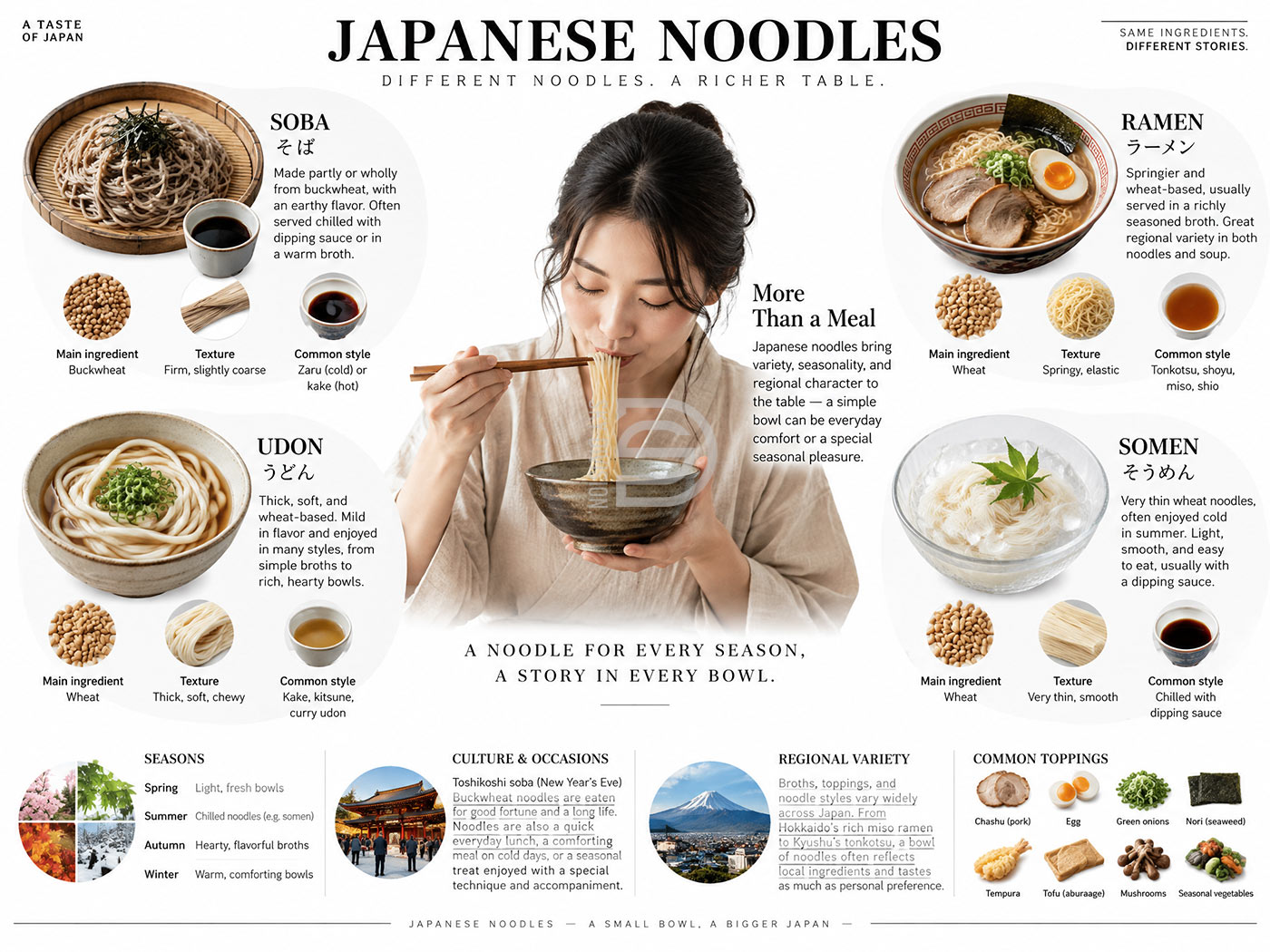 In Japanese food tradition noodles are not one single staple but a family of foods, each with its own texture, season, and way of eating. Soba, made partly or wholly from buckwheat, has an earthy flavor and is often served chilled with dipping sauce or in a warm broth. Udon is thick, soft, and wheat-based; ramen is springier and usually served in a richly seasoned broth; and somen is very thin and often enjoyed cold in summer. Toppings and broths
◉ HarusameHarusame are thin, translucent noodles typically made from starch - commonly potato, sweet potato, or mung bean - rather than wheat. Their name means "spring rain", a reference to their delicate, glassy appearance. They have a neutral taste and a springy, slightly chewy texture that absorbs flavors readily. In Japanese cooking, harusame appear most often in salads, soups, and stir-fries, and they are a common ingredient in hot pot dishes. Because they are gluten-free and light, they are valued for
|➔| ◉ HiyamugiHiyamugi are thin wheat noodles, traditionally enjoyed cold during summer. They sit between sōmen and udon in thickness and are recognized by their short, straight shape, often bundled in small portions. The name suggests "cold wheat noodles", and they are typically served chilled with a dipping sauce (tsuyu), much like sōmen, sometimes garnished with scallions, ginger, or sesame. Their texture is firm yet tender, offering a pleasant bite. Hiyamugi are less celebrated than sōmen or udon but remain a familiar
|➔| ◉ Hiyashi chūkaHiyashi chūka means "chilled Chinese-style noodles" and refers to a cold ramen dish popular in summer. Chilled, rinsed noodles are topped with a colorful arrangement of ingredients such as julienned cucumber, ham, egg crêpe, tomato, and sometimes shrimp or chicken, then dressed with a sweet-sour soy or sesame-based sauce. The dish balances cool temperature, bright presentation, and refreshing acidity. It is often eaten at home and in casual restaurants, and regional variations exist across Japan. The noodles themselves are usually
|➔| ◉ RamenRamen is a wheat noodle dish of Chinese origin that became one of Japan's most beloved foods. The noodles are typically alkaline (kansui), giving them a springy, chewy texture, and they are served in hot broth with toppings such as chashu pork, scallions, egg, nori, and bamboo shoots. Ramen is defined by regional and personal variation: shōyu (soy), shio (salt), miso, and tonkotsu are major styles, each with distinct broths and noodle preferences. It is commonly eaten at dedicated shops,
|➔| ◉ ChamponChampon is a noodle dish from Nagasaki, created in the Meiji era under Chinese culinary influence. It combines thick, springy wheat noodles with a rich, milky pork-and-seafood broth and a generous mix of ingredients - pork, shrimp, squid, cabbage, onions, and kamaboko. Unlike ramen, the noodles and toppings are typically stir-fried together before broth is added, giving the dish a hearty, integrated character. Champon is filling and nutritionally varied, often described as a complete meal in one bowl. It is
|➔| ◉ KagoshimaKagoshima ramen is a regional style from Kagoshima Prefecture, known for its distinctive broth and noodles. The soup is typically pork-based but notably sweeter and milder than tonkotsu, often with a lighter, clearer character influenced by local preferences and historical Chinese connections. The noodles tend to be medium-thick and slightly soft. Common toppings include chashu, scallions, kamaboko, and sometimes moyashi. Kagoshima ramen is often associated with a sweeter soy-based seasoning and a broth that balances pork richness with a gentle,
|➔| ◉ Muroran curryMuroran curry ramen is a local specialty from Muroran, Hokkaido. It combines ramen with a thick, spicy curry-based soup, often described as a hybrid of curry and ramen. The broth is typically pork- or chicken-based and seasoned with curry spices, producing a rich, warming flavor. Noodles are usually medium-thick and springy, suited to the heavy soup. Toppings often include pork, vegetables, and sometimes a boiled egg. The dish reflects Muroran's cold climate and working-class food culture, offering substantial warmth and
|➔| ◉ Tantan-menTantan-men is a Japanese adaptation of Chinese dandanmian, served as a noodle soup with a spicy, sesame-rich broth. The soup typically combines sesame paste, chili oil, soy, and pork-based stock, topped with minced pork, scallions, and sometimes greens. The noodles are usually medium-thin and wheat-based, similar to ramen. The dish is known for its balance of nutty sesame, savory pork, and gentle-to-strong heat, which can be adjusted by the cook. Tantan-men is popular in ramen shops and Chinese restaurants across
|➔| ◉ TonkotsuTonkotsu ramen is defined by its pork-bone broth, which is boiled vigorously for many hours until it becomes opaque, creamy, and deeply savory. Originating in Kyushu, particularly Fukuoka, it is one of Japan's most recognizable ramen styles. The noodles are typically thin and firm, suited to the rich soup, and common toppings include chashu, soft-boiled egg, scallions, nori, and sometimes pickled ginger or sesame. Tonkotsu is known for its intense flavor and distinctive aroma, and it has passionate regional variations,
|➔| ◉ TsukemenTsukemen are "dipping noodles" - chilled or room-temperature noodles served separately from a concentrated, flavorful dipping sauce (tsukejiren). Diners dip the noodles into the sauce before eating, allowing them to control the intensity of flavor. The sauce is typically richer and saltier than a normal ramen broth, often based on pork, chicken, seafood, or a combination, sometimes with a sweet-sour or spicy profile. Tsukemen became widely popular in the late twentieth century and is now a major category in ramen
|➔| ◉ ShiratakiShirataki are thin, translucent noodles made from konjac (konnyaku) yam, traditionally known as ito-konnyaku. They are very low in calories and carbohydrates and are valued for their firm, slightly gelatinous texture and neutral taste. Shirataki are commonly used in sukiyaki, oden, and hot pot dishes, where they absorb surrounding flavors. They are sold packed in liquid and should be rinsed and sometimes parboiled before use to reduce their characteristic odor. In recent decades, shirataki have gained attention as a diet
|➔| ◉ SobaSoba are Japanese noodles made primarily from buckwheat flour, often blended with wheat flour for structure. They have a nutty flavor, a slightly earthy aroma, and a tender yet firm texture. Soba is deeply traditional, associated with New Year's Eve (toshikoshi soba) and with regional styles such as Niigata's hegi soba. They can be served hot in broth or cold with a dipping sauce (zaru soba), and they pair well with scallions, wasabi, and nori. Pure buckwheat (jūwari) soba is
|➔| ◉ Okinawa Soba (Soki Soba)A regional noodle dish from Okinawa, distinct from Japanese buckwheat soba. The noodles are made from wheat flour and are thicker, rounder, and softer than mainland soba. They're served in a rich pork- and bonito-based broth, typically topped with sōki - slow-braised pork spare ribs seasoned with soy sauce, awamori, and sugar. Green onions, fish cake (kamaboko), and pickled ginger are common garnishes. The dish reflects Okinawan cuisine's Chinese and Ryukyuan influences, and sōki soba is a beloved comfort food
|➔| ◉ Sōmen (Salad)Sōmen are very thin, white wheat-flour noodles, traditionally served chilled in summer. For salad-style preparations, the noodles are cooked, rinsed under cold water to remove starch, and tossed with fresh vegetables, herbs, and a light dressing - often sesame- or soy-based. The delicate texture and neutral flavor make sōmen ideal for cold salads, and the dish is refreshing and light, popular in warm months as a cooling meal or side. ◉ Udon (Yakiudon)Udon are thick, chewy wheat-flour noodles. Yakiudon is a stir-fried preparation where the noodles are pan-fried with vegetables, meat (often pork or chicken), and a savory sauce similar to yakisoba sauce. Originating in Fukuoka, yakiudon is hearty and satisfying, with the firm udon holding up well to high-heat cooking. It's a popular casual dish and street-food favorite. ◉ YakisobaDespite the name ("fried buckwheat"), yakisoba is made with wheat-flour noodles similar to ramen. The noodles are stir-fried with cabbage, carrots, pork or other proteins, and a tangy, slightly sweet Worcestershire-style sauce. A hallmark of Japanese street food and festivals, yakisoba is often garnished with aonori (seaweed powder), pickled ginger, and mayonnaise. ◉ HōtōA regional dish from Yamanashi Prefecture, hōtō features flat, wide, chewy wheat noodles simmered in a hearty miso-based broth with pumpkin, mushrooms, root vegetables, and sometimes pork. Unlike most Japanese noodles, the dough is kneaded and cut into broad ribbons, and the dish is cooked as a one-pot meal. It's a warming, rustic winter comfort food with deep local roots.
|
| |
Konamono
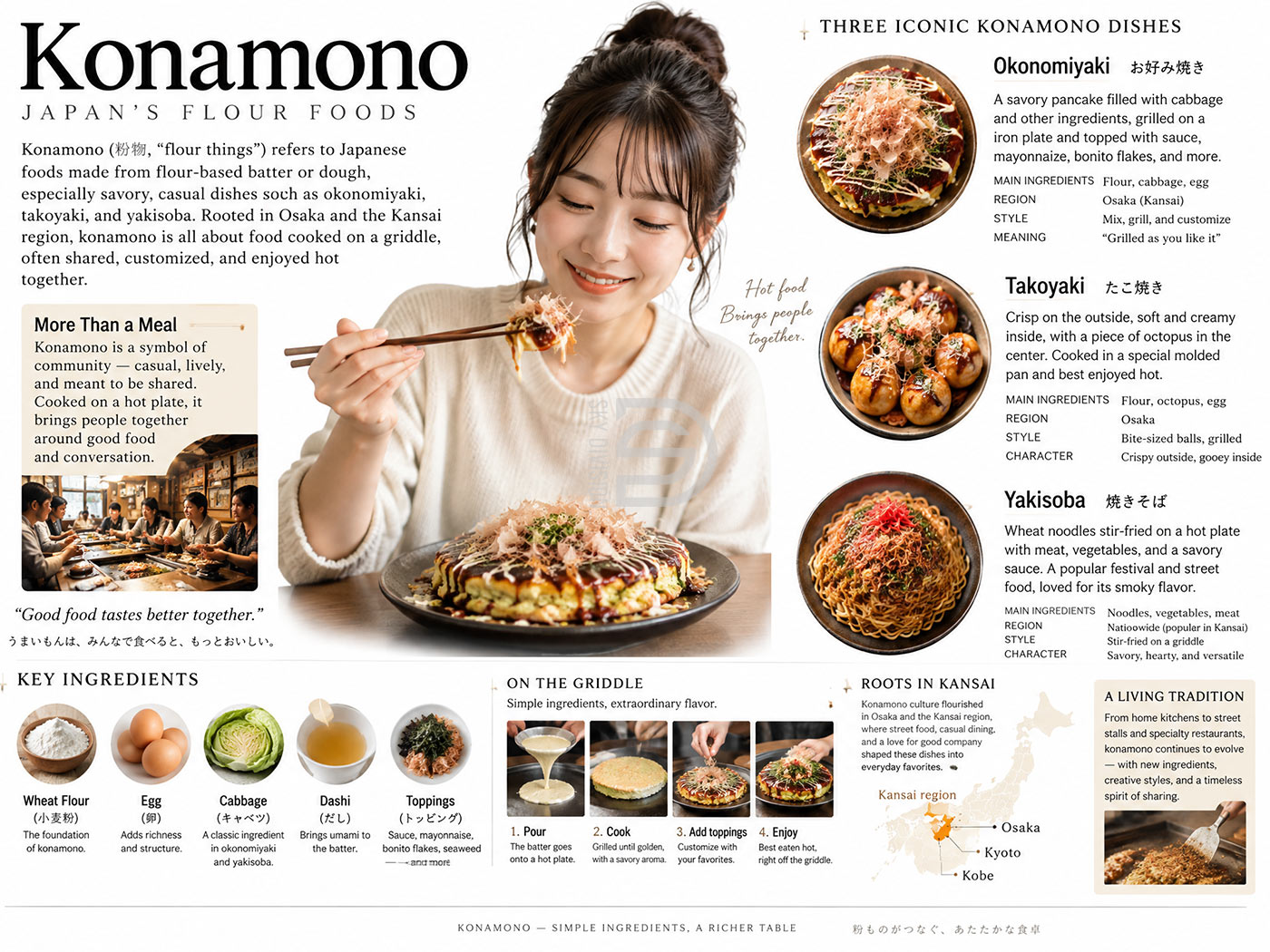 (literally "flour things") konamono refers broadly to Japanese foods made from flour-based batter or dough, especially savory, casual dishes associated with Osaka and the Kansai region. For example, okonomiyaki, the griddled, cabbage-filled dish; or takoyaki, crisp-edged batter balls with octopus; or yakisoba, wheat noodles stir-fried on a hot plate.
Konamono adds a playful, communal side to Japanese food tradition: food cooked on a griddle, often shared, customized, and eaten hot at the counter or around a table. It’s not
◉ MonjayakiMonjayaki is a savory 'konamono' dish from Tokyo's Tsukishima district, where it is the signature street food. Its batter is far looser than okonomiyaki's, made with flour, dashi, and Worcestershire-style sauce, plus cabbage and toppings such as mentaiko, mochi, or seafood. Diners cook it themselves on a griddle built into the table: the ingredients are chopped and stir-fried, the batter is poured in, and the mixture is spread thin and eaten straight off the hot plate with a small spatula.
|➔| ◉ Okonomiyaki (Hirayachi)Okonomiyaki is a thick, savory 'konamono' pancake, and 'hirayachi' is Okinawa's distinct regional version. The name means "grilled as you like", reflecting its flexible formula: flour, grated yam, dashi, eggs, and shredded cabbage, combined with pork, seafood, or cheese. In Kansai, ingredients are mixed into the batter and cooked on a griddle; in Hiroshima, layers are built atop a crepe with noodles. Hirayachi, by contrast, is a thinner, simpler Okinawan pancake - often just flour, egg, and scallions, cooked flat
|➔| ◉ TakoyakiTakoyaki is a beloved 'konamono' snack of grilled batter balls filled with octopus, originating in Osaka in the 1930s and now iconic at festivals and street stalls across Japan. A thin batter of flour, dashi, and egg is poured into a dimpled iron griddle, with a piece of octopus, pickled ginger, and scallions added to each well. The cook then uses skewers to rotate the setting batter, tucking the edges in until each portion forms a crisp, golden sphere with
|➔|
|
Bread (Japanese)
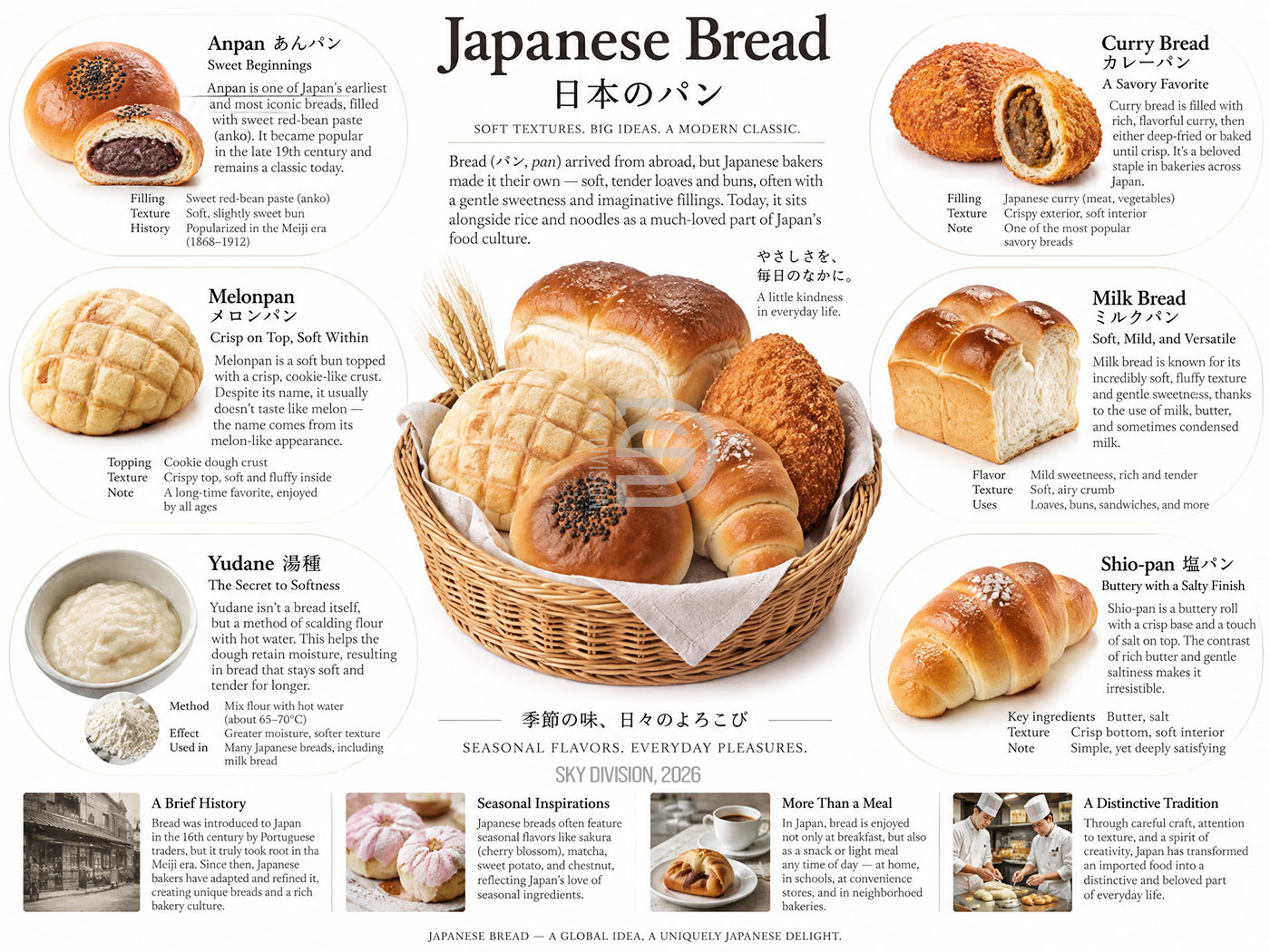 It sits alongside rice and noodles, it's a modern, beloved strand of Japanese food culture. Bread (pan) arrived from abroad, but Japanese bakers made it their own - soft, tender loaves and buns, often with a gentle sweetness and imaginative fillings. Anpan, filled with sweet red-bean paste, is an early and iconic example. Melonpan is a soft bun topped with a crisp, patterned cookie-like crust. Shio-pan is a buttery roll with a salty finish and crisp base. Yudane isn't a
◉ AnpanAnpan is a sweet Japanese bun filled most commonly with red bean paste (anko), though variations include white bean, green tea, or chestnut fillings. It was invented in 1875 by Yasubei Kimura, a former samurai whose bakery in Tokyo created the bread as a portable, affordable food during a time of cultural change. The soft, slightly sweet dough surrounds a generous filling, and the top is often marked with a sprinkle of sesame seeds or a stamp. Anpan became one
|➔| ◉ Curry breadCurry bread (karē pan) is a deep-fried Japanese bread filled with thick Japanese-style curry. The dough is wrapped around cooled curry, coated in panko breadcrumbs, and fried until golden and crisp, producing a crunchy exterior and soft interior. Invented in Tokyo around 1927, it is a classic example of yōshoku - Western-influenced Japanese comfort food - and is now a staple of bakeries, school lunches, and convenience stores. Because the curry is thick and the bread sealed before frying, it
|➔| ◉ MelonpanMelonpan is a sweet bun topped with a thin layer of crisp cookie dough that cracks into a grid pattern during baking, resembling a melon's skin - hence the name, though it typically contains no melon flavoring. The interior is soft and fluffy, while the cookie crust provides contrast in texture. It originated in Japan in the early twentieth century, with several bakeries claiming its invention. Melonpan is sold everywhere from convenience stores to specialty bakeries, and regional and creative
|➔| ◉ Milk breadMilk bread (shokupan made with milk) refers to soft, fluffy Japanese sandwich bread enriched with milk, butter, and sometimes cream, giving it a tender crumb and gentle sweetness. Japanese shokupan is prized for its pillowy texture, often achieved through tangzhong or yudane methods and precise kneading. Milk bread has become internationally famous through Japanese and Asian bakeries, known for its tall, square Pullman-loaf shape and slices that stay soft for days. It is used for toast, sandwiches, and the thick-cut
|➔| ◉ YudaneYudane is a Japanese bread-making technique in which a portion of flour is mixed with boiling water to gelatinize the starch, then cooled and added to the main dough. This method improves moisture retention, yielding bread that is softer, springier, and stays fresh longer. Similar in principle to the Chinese tangzhong method, yudane is especially associated with shokupan and other soft Japanese breads. The gelatinized starch traps water and interferes with staling, giving the crumb its characteristic fluffy, chewy texture.
|➔| ◉ Shio-panShio-pan ("salt bread") is a simple Japanese bread characterized by a light, chewy texture and a subtle savory saltiness. It is typically made with a lean dough - flour, water, yeast, salt, and a little butter or sugar - shaped into small rolls or knots and baked until golden. The salt enhances the wheat flavor and gives the crust a pleasant crispness. Shio-pan became a bakery trend in Japan in the 2010s, prized for its simplicity and versatility as a
|➔|
|
| |
Okazu
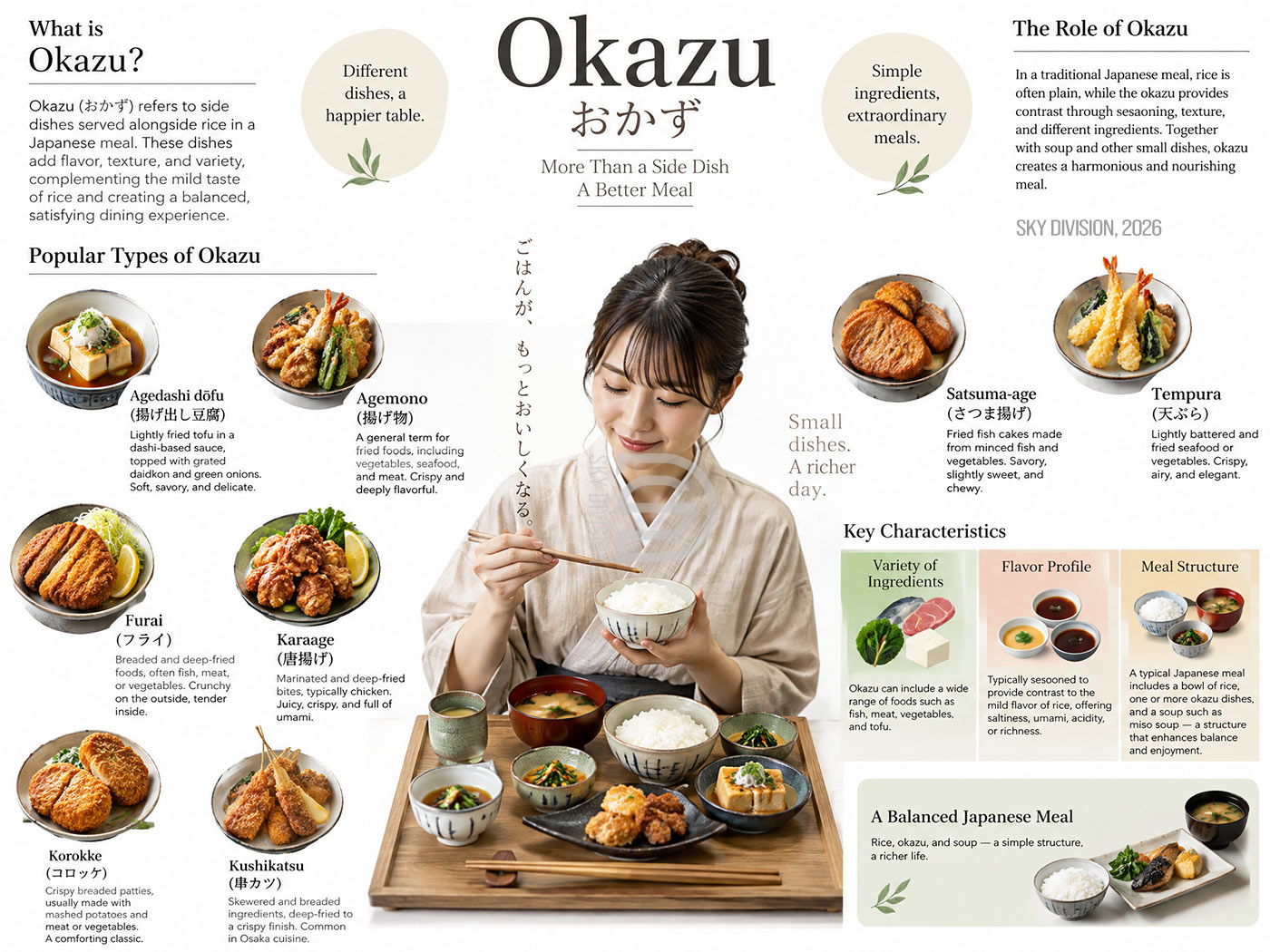 A Japanese term that refers to side dishes served alongside rice. These dishes are designed to complement the rice, enhancing the overall meal experience. Okazu plays a crucial role in a traditional Japanese meal, which usually centers around rice. The rice is often plain, while the okazu adds flavor and texture.
Characteristics of Okazu: variety of ingredients (Okazu can include a wide range of foods such as fish, meat, vegetables, tofu), flavor profile (the side dishes are
◉ Agedashi dōfuA classic Japanese side dish of silken or firm tofu cut into cubes, lightly coated in potato starch or flour, and deep-fried until golden. It is served in a warm dashi-based broth, typically seasoned with soy sauce and mirin, and garnished with grated daikon radish, grated ginger, and chopped scallions. The contrast between the crisp exterior and the creamy interior, combined with the savory broth, makes it a beloved accompaniment to rice. Agedashi dōfu is valued for its light, comforting
|➔| ◉ AgemonoA broad category of Japanese deep-fried dishes, agemono encompasses foods coated in flour, batter, or breadcrumbs and cooked in hot oil until crisp. The term covers a wide range of preparations, including tempura, karaage, and furai, and reflects the Japanese emphasis on texture and technique. Agemono dishes are prized for their contrast of crispy exteriors and tender interiors, and they often accompany rice as okazu. Careful control of oil temperature and draining prevents greasiness, ensuring a light finish that complements
|➔| ◉ FuraiFurai refers to Japanese deep-fried dishes coated in flour, egg, and panko breadcrumbs, a technique adapted from Western cooking. Common varieties include ebi furai (fried shrimp), tonkatsu (fried pork cutlet), and korokke. The panko coating produces a distinctly light, airy, and crunchy texture. Furai is typically served with shredded cabbage and a tangy sauce, such as tonkatsu sauce or tartar sauce, and pairs well with rice. Its satisfying crunch and savory flavor make it a popular okazu in both home
|➔| ◉ KaraageKaraage is a Japanese deep-frying technique in which ingredients, most commonly chicken, are coated in flour or starch and fried without batter. Chicken karaage is marinated in soy sauce, ginger, and garlic before frying, yielding juicy meat with a crisp, savory exterior. It is a ubiquitous okazu, served with rice, lemon wedges, and mayonnaise, and is equally popular as a snack or bento component. Regional variations and seasoning styles abound, but the dish's appeal lies in its flavorful, tender interior
|➔| ◉ KorokkeKorokke are Japanese croquettes made by combining mashed potato with ingredients such as ground meat, vegetables, or seafood, shaping the mixture into patties, coating them in flour, egg, and panko, and deep-frying until golden. The result is a crisp shell around a soft, savory filling. Korokke are commonly served with tonkatsu sauce and shredded cabbage, and they work well as an okazu for rice or as a filling for sandwiches and bento. Affordable and comforting, they are a familiar presence
|➔| ◉ KushikatsuKushikatsu are deep-fried skewers of meat, seafood, and vegetables, coated in flour, egg, and panko, then fried and served with a tangy, Worcestershire-style sauce. Originating in Osaka, the dish is famous for its 'no double-dipping' rule in the communal sauce. Bite-sized ingredients such as pork, shrimp, eggplant, and onion are threaded onto bamboo skewers, making kushikatsu easy to eat and share. Its crisp coating and savory fillings make it a popular okazu and izakaya favorite throughout Japan. ◉ Satsuma-ageSatsuma-age is a Japanese fish cake made by blending minced white fish with salt, sugar, and seasonings, shaping the mixture into patties or balls, and deep-frying them until browned. Originating in Kagoshima, it has many regional names and variations, some including vegetables or other ingredients. The result is a springy, savory cake with a browned exterior and tender interior. Satsuma-age is served as an okazu, sliced into bento, or used in simmered dishes such as oden, and it is valued
|➔| ◉ TempuraTempura is a celebrated Japanese dish of seafood and vegetables dipped in a light batter of flour, egg, and water and deep-fried until crisp and pale golden. The batter is mixed minimally to keep it airy, and the oil temperature is carefully controlled to produce a delicate, non-greasy coating that highlights the natural flavors of the ingredients. Commonly fried items include shrimp, eggplant, sweet potato, and shiso leaves. Served with tentsuyu dipping sauce and grated daikon, tempura is a refined
|➔| ◉ ChawanmushiChawanmushi is a savory Japanese egg custard steamed in a small cup. A mixture of egg and dashi, seasoned with soy sauce and mirin, is poured over ingredients such as chicken, shrimp, shiitake mushrooms, and ginkgo nuts, then steamed gently until set. The result is a silky, delicate custard with a clean, umami-rich flavor. Often served as part of a meal or kaiseki course, chawanmushi functions as a refined okazu that complements rice and other dishes, and its smooth texture
|➔| ◉ ChikuzenniA simmered dish of chicken, lotus root, bamboo shoots, carrots, and konnyaku, seasoned with soy sauce, sake, and mirin. Its name means 'cooked and piled up', referring to the layered arrangement. Originating in Kyushu, it's a staple of osechi (New Year) cuisine and home cooking, valued for its earthy, savory flavor and mix of textures. ◉ GariThinly sliced young ginger pickled in sweet vinegar, served alongside sushi. Its crisp texture and sharp, sweet-tart taste cleanse the palate between bites. The name comes from the crunching sound 'gari'. It also functions as a natural antibacterial accompaniment to raw fish. ◉ GyōzaJapanese pan-fried dumplings with a filling of ground pork, cabbage, garlic, and chives wrapped in thin dough. Fried on one side and steamed, they have a crisp base and juicy interior. Introduced from China, gyōza became a beloved comfort food, often served with soy-vinegar dipping sauce and chili oil. ◉ KabayakiA preparation method in which fish, typically eel, is split, deboned, grilled, and repeatedly dipped in a sweet soy-based tare sauce. The name likens the split fish to a cattail (kaba) leaf. Kabayaki eel is a prized summer dish, believed to boost stamina. ◉ KakuniPork belly slowly braised in soy sauce, sake, mirin, and sugar until tender and glossy. Of Chinese origin, the name means 'square-cooked'. The rich, melt-in-the-mouth texture and deep savory-sweet flavor make it a popular izakaya and home dish, often served with daikon or boiled eggs. ◉ KushiyakiSkewered and grilled meat, seafood, or vegetables, seasoned with salt or tare sauce. Similar to yakitori but broader in ingredients, it's a classic izakaya fare enjoyed with beer. The name combines kushi (skewer) and yaki (grill). ◉ NabemonoLiterally 'pot things', hot-pot dishes where ingredients like meat, tofu, and vegetables simmer in broth at the table. Varieties include sukiyaki and shabu-shabu. Communal and warming, nabemono is especially popular in winter, fostering a shared dining experience. ◉ NamasuA salad of thinly sliced raw vegetables, often daikon and carrot, dressed in sweet vinegar. The name derives from namasu (raw food). Its bright, refreshing acidity and color make it a traditional accompaniment, notably in osechi cuisine. ◉ NattoFermented soybeans with a sticky, stringy texture and pungent aroma. Rich in protein and probiotics, it's typically eaten over rice with soy sauce and mustard. A polarizing food, natto is a beloved breakfast staple in eastern Japan. ◉ NikujagaA hearty simmered dish of thinly sliced beef (or pork), potatoes, onions, and carrots in a sweet soy broth. Its name means 'meat and potatoes'. A quintessential home-cooked comfort food, it's often credited to a 19th-century naval recipe inspired by British beef stew. ◉ OdenA simmering hot pot of daikon, boiled eggs, konnyaku, fish cakes, and tofu, stewed for hours in a soy-and-dashi broth. Regional variations abound: Kanto-style uses dark soy, while Kansai favors lighter seasoning. Often sold at konbini and winter street stalls, oden is comfort food at its most communal. Each ingredient absorbs the broth differently, creating layered flavors. It's typically eaten with karashi mustard. As an okazu, it pairs well with rice and sake, and its slow-cooked nature makes it ideal
|➔| ◉ Onsen tamagoA Japanese soft-cooked egg gently heated in hot spring waters (or replicated at home), yielding a silky white and a custard-like yolk. Served chilled or warm, typically in a dashi-based broth with soy sauce and mirin, sometimes topped with scallions or grated daikon. Its appeal lies in the contrast between the barely set white and the creamy, runny yolk. Low in effort but high in elegance, it works as a light side dish, a topping for rice, or an accompaniment
|➔| ◉ Sashimi (Fugusashi)Fugusashi is sashimi of fugu (pufferfish), a prized delicacy known for its delicate, firm texture and clean, subtle sweetness. Prepared by licensed chefs who remove the toxic organs, the fish is sliced paper-thin and arranged like a chrysanthemum. Eaten with ponzu or soy sauce and scallions, it highlights purity of flavor over richness. Its rarity, seasonality (winter), and the precision required make it a luxury dish. As an okazu, it's light and refined, often served at the start of a
|➔| ◉ Shabu-shabuA communal hot pot where thin slices of beef (or pork) are swished briefly in simmering kombu dashi, then dipped in ponzu or sesame sauce. Vegetables, tofu, and noodles cook alongside, and the enriched broth is often finished as a soup or porridge. The name mimics the swishing sound. Quick cooking preserves tenderness and flavor. As an okazu, it's interactive and social, balancing meat with fresh vegetables. Light yet satisfying, it's popular in winter and adaptable to home cooking with
|➔| ◉ ShiokaraA fermented seafood condiment made from squid (or other seafood) mixed with its salted viscera, aged to develop a pungent, salty, umami-rich flavor. Often called 'squid salt-kara', it's eaten in small amounts with rice or as a accompaniment to sake. Its intense taste and aroma make it polarizing, but fans prize its depth. Regional varieties exist, including those made with tuna or scallops. As an okazu, it's used sparingly - a little goes far - and represents Japan's tradition of
|➔| ◉ SukiyakiA sweet-savory hot pot of thinly sliced beef, tofu, negi, and vegetables simmered in a warishita sauce of soy, sugar, mirin, and sake. Cooked at the table, diners dip finished pieces in raw egg for richness. Kansai and Kanto styles differ in how the sauce is built. Hearty and indulgent, sukiyaki is celebratory home cooking, often enjoyed in winter. As an okazu, it's a centerpiece rather than a side, though its components pair naturally with rice and pickles. ◉ TamagoyakiA rolled Japanese omelet made by layering thin sheets of seasoned egg (dashi, soy, sugar, mirin) and rolling them into a log, then slicing. Sweet or savory depending on region and purpose, it's a staple in bento, sushi (as tamago), and breakfast. Mastering the roll requires practice and a rectangular pan. As an okazu, it's versatile, mild, and protein-rich, complementing rice, noodles, or serving as a palette cleanser between stronger flavors. ◉ TokorotenA jelly made from agar (tengusa seaweed), pressed into noodle-like strands and served chilled with vinegar-soy dressing or kuromitsu syrup. Low in calories and high in fiber, it's a refreshing summer dish with a crisp, slightly firm texture. Historically a preserved food, it's now valued for its lightness. As an okazu, it's cooling and palate-cleansing, often eaten between courses or as a light snack, bridging savory and sweet preparations. ◉ TonkatsuA breaded, deep-fried pork cutlet, typically served with shredded cabbage, rice, and tonkatsu sauce. Crisp outside, juicy inside, it's a beloved yoshoku dish. Variations include hire (fillet) and rosu (loin), plus katsu sandwiches and curries. As an okazu, it's hearty and satisfying, balancing richness with the freshness of cabbage and the tang of sauce. Its comfort-food appeal makes it a family favorite and a staple of Japanese home and restaurant cooking alike.
(2) - A Japanese-style condiment
|➔| ◉ TororoTororo is a viscous paste made by grating raw mountain yam (yamaimo). Its slippery, sticky texture comes from mucilage released when the tuber is finely grated. Tororo is prized for its mild, slightly sweet flavor and smooth mouthfeel. It is commonly served over rice, mixed into soba noodles, or used as a binding agent in dishes like okonomiyaki. Rich in dietary fiber and potassium, it is considered a healthful food. Because grating can irritate skin, cooks handle yamaimo carefully. Tororo
|➔| ◉ Tsukemono (Nukazuke Takuan)Among Japanese pickles (tsukemono), takuan is a bright yellow daikon radish pickle, often made by nukazuke - fermentation in a rice bran bed. The bran, mixed with salt and water, hosts lactic acid bacteria that ferment the vegetable over weeks or months, producing tangy, savory depth. Daikon is sun-dried before burial in the bran, concentrating its flavor and giving takuan its characteristic crunch. The vivid yellow traditionally comes from gardenia or turmeric; modern versions may use food coloring. Nukazuke requires
|➔| ◉ TsukudaniTsukudani is a preservation method in which small seafood, seaweed, or vegetables are simmered in soy sauce, mirin, sugar, and sake until nearly all liquid evaporates. The result is a glossy, intensely savory-sweet condiment with a long shelf life. Named after Tsukuda Island in Tokyo, where fishermen historically prepared it, tsukudani traditionally features small fish like shirasu or whitebait, but kombu, clams, and even insects are used regionally. High salt and sugar content act as preservatives. A small spoonful is
|➔| ◉ TsukuneTsukune refers to seasoned ground-meat skewers, most commonly chicken, shaped into small oblong patties or meatballs and grilled. The minced meat is mixed with binders such as egg, breadcrumbs, and grated yam, plus seasonings like soy sauce, ginger, and miso, giving a tender, juicy texture. Tsukune is typically threaded onto bamboo skewers and cooked over charcoal, then glazed with tare sauce or salted (shio). It is a classic yakitori-menu item and is sometimes served with a raw egg yolk for
|➔| ◉ YakinikuYakiniku literally means 'grilled meat' and refers to a style of meal where diners grill bite-sized pieces of beef, pork, chicken, and vegetables over a tabletop grill. Originating from Korean barbecue influences, it became widespread in Japan in the postwar era. Diners cook meat to their preference and dip it in tare sauces or lemon juice. Premium cuts like kalbi and tongue are favored, alongside offal. Yakiniku restaurants emphasize sociability and shared cooking, and many offer all-you-can-eat courses. The term
|➔| ◉ YakitoriYakitori means 'grilled bird' and denotes chicken pieces and offal skewered on bamboo and cooked over charcoal. Cuts include negima (thigh with leek), tsukune (meatballs), and kawa (skin), seasoned either with salty shio or sweet tare glaze. Yakitori stalls (yatai) and izakaya serve it as casual drinking food, and specialized shops focus on fresh, premium chicken. Grilling requires skill to render fat while keeping meat juicy. Regional styles and rare cuts add variety. Cheap, flavorful, and sociable, yakitori remains one
|➔|
|
Soup (shirumono)
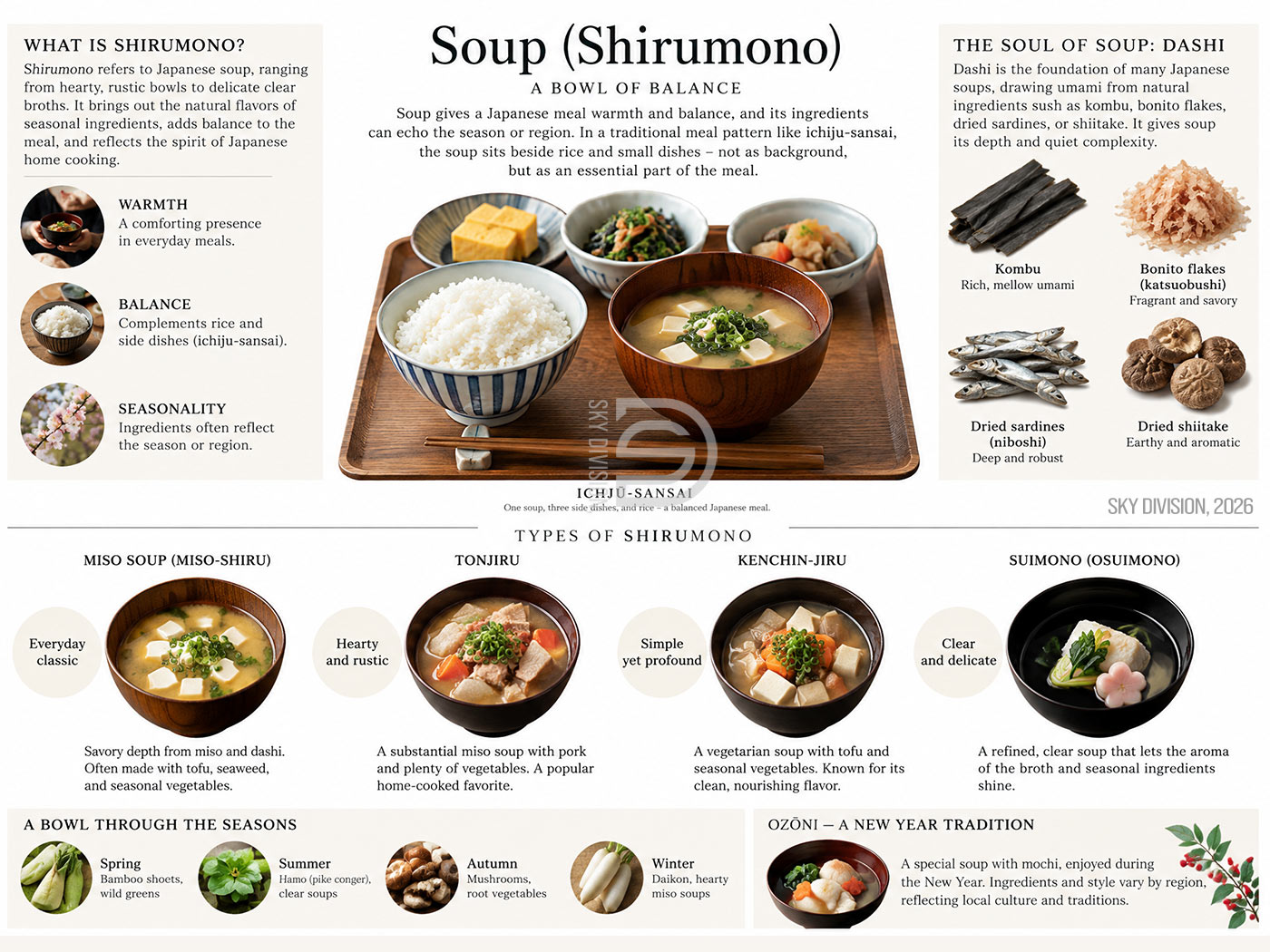 Soup gives a Japanese meal warmth and balance, and its ingredients can echo the season or region. In a traditional meal pattern like ichiju-sansai, the soup sits beside rice and small dishes – not as background, but as an essential part of the meal. Soups (Shirumono) are a quiet backbone of Japanese home cooking, not just a course to fill up on. A bowl of miso-shiru brings savory depth from miso and dashi; suimono / osuimono is clear and delicate,
◉ TonjiruA hearty miso-based soup featuring sliced pork and root vegetables such as burdock, carrots, and potatoes. The pork is typically stir-fried before simmering, which adds depth and richness to the broth. Tonjiru is especially popular in colder months and is often served as a substantial side dish alongside rice, functioning almost as a main course due to its generous portions of meat and vegetables. ◉ Kenchin-jiruA vegetable-rich miso soup traditionally associated with Zen Buddhist cuisine. It typically contains root vegetables like daikon, carrots, and burdock, along with tofu, konnyaku, and sometimes mushrooms. The vegetables are usually sautéed in sesame oil before being simmered, giving the soup a distinctive savory aroma. Despite being entirely plant-based in its traditional form, Kenchin-jiru is satisfying and robust, reflecting the resourcefulness of temple cooking. ◉ Miso soupThe quintessential Japanese soup, made by dissolving miso paste into dashi stock. It commonly includes tofu, wakame seaweed, and green onions, though regional and seasonal variations are endless. Miso soup is served daily in most Japanese households, typically alongside rice and main dishes as part of a traditional meal. Its flavor depends on the type of miso used - white, red, or mixed - ranging from mild and sweet to bold and savory. ◉ SuimonoA clear, delicate soup that highlights dashi's subtle umami without miso. It usually contains simple ingredients like kamaboko fish cake, a slice of yuzu, and seasonal garnishes. Suimono is a hallmark of kaiseki cuisine, served to cleanse the palate and showcase the chef's dashi-making skill. Its refined, transparent appearance and gentle flavor embody the elegance and restraint central to traditional Japanese haute cuisine.
|
| |
Ingredients and Condiments
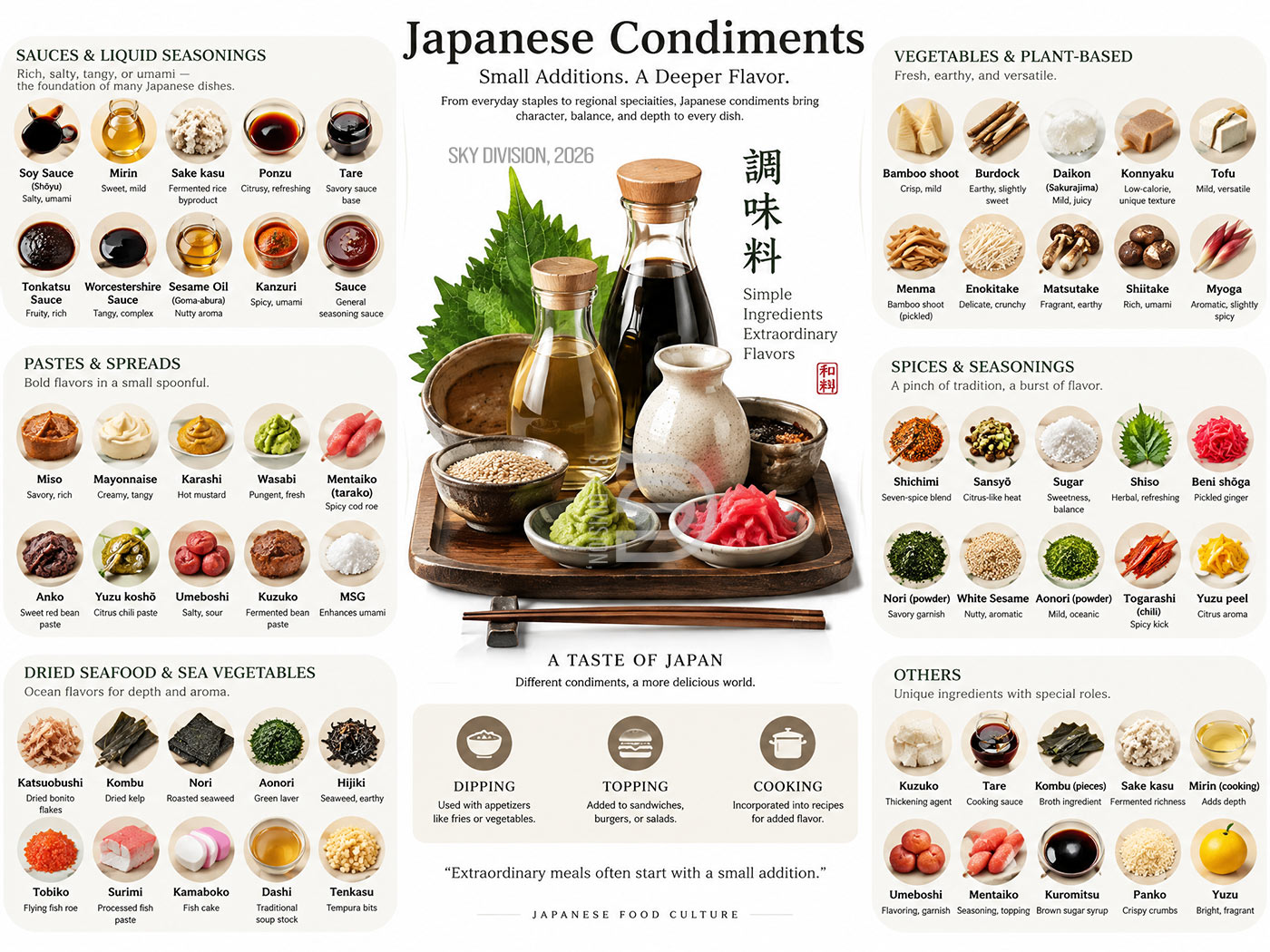 A substance added to food to enhance or complement its flavor. This can include a variety of items such as sauces, spices, and seasonings. Condiments are typically added to food after it has been prepared. They can enhance the taste, add moisture, or provide a contrasting flavor to the dish. Condiments play a significant role in various cuisines around the world, contributing to the overall dining experience.
Common uses include: Dipping (Used with appetizers like fries or vegetables). Topping
s
◉ AnkoSweet red bean paste made by boiling and mashing azuki beans with sugar. Used in wagashi, dorayaki, and taiyaki. Available in smooth (koshian) and chunky (tsubuan) textures; a foundational confectionery ingredient. ◉ AonoriDried green seaweed flakes (Enteromorpha) with mild, savory flavor. Sprinkled over okonomiyaki, takoyaki, and yakisoba as a garnish; adds color and umami. ◉ Bamboo shootEdible young culms of bamboo, harvested in spring. Boiled to remove bitterness; used in takenoko gohan, stir-fries, and simmered dishes. Prized for crisp texture and subtle sweetness. ◉ Beni shōgaBright red pickled ginger, thinly sliced and dyed with red perilla or food coloring. A tangy, crunchy condiment for gyūdon, okonomiyaki, and curry. ◉ BurdockRoot vegetable (gobō) with earthy flavor and firm texture. Scraped and soaked to reduce astringency; used in kinpira gobō and soups. ◉ Daikon (Sakurajima)A giant, mild radish variety from Kagoshima, weighing up to several kilograms. Eaten cooked, pickled, or dried; sweeter and softer than standard daikon. ◉ DashiJapanese soup stock from kombu, bonito flakes, or shiitake. The base of miso soup and simmered dishes; central to umami-rich cooking. ◉ KamabokoCured surimi seafood cake, steamed or grilled on a wooden board. Sliced into soups, noodles, and oden; recognized by its white body and pink arc. ◉ Mentaiko (tarako)Salted (mentaiko) or plain (tarako) pollock roe. Spicy mentaiko is eaten with rice, pasta, and onigiri; tarako is milder and often grilled. ◉ SurimiMinced, washed fish paste (typically pollock). The base for kamaboko, chikuwa, and crab sticks; valued for its elastic texture and neutral flavor. ◉ TobikoTobiko is the bright orange roe of flying fish, prized for its small size and crisp, popping texture. It has a mild, slightly sweet and briny flavor and is commonly used as a garnish for sushi, sashimi, and canapés. Variants may be flavored or colored, such as wasabi tobiko. It is often confused with larger masago and tobiko's relative, flying fish caviar. ◉ HijikiHijiki is a dark brown, wiry seaweed harvested from rocky coastlines, sold dried and rehydrated before use. It has a robust, earthy, slightly oceanic flavor and a firm texture. Typically simmered with soy sauce, sugar, and mirin alongside vegetables or tofu, it is a staple in Japanese home cooking. Note that some health authorities advise moderation due to naturally occurring inorganic arsenic. ◉ KanzuriKanzuri is a fermented chili condiment from Niigata, Japan, made from red chilies, koji mold, salt, and yuzu citrus. The chilies are traditionally left in snow for several days to mellow their heat before fermentation. The result is a complex, tangy, moderately spicy paste with citrus notes, used to season hot pots, grilled meats, rice dishes, and soups. ◉ KarashiKarashi is Japanese mustard, typically made from crushed mustard seeds mixed with water or horseradish, sold as a paste or powder. It is sharper and more pungent than Western yellow mustard, with a quick, intense heat that dissipates rapidly. It accompanies tonkatsu, oden, and gyoza, and is often included in bento boxes as a small packet. ◉ KatsuobushiKatsuobushi is dried, fermented, and smoked skipjack tuna, shaved into thin flakes. It is a cornerstone of Japanese cuisine, used to make dashi stock and as a topping for okonomiyaki, takoyaki, and rice dishes. The flakes have a deep umami, smoky flavor and a distinctive appearance as they curl and sway from residual heat. ◉ KombuKombu is a thick, wide kelp seaweed, usually sold dried. It is rich in glutamates, making it a primary source of umami, and is essential for making dashi stock. It is also used in simmered dishes, pickles, and as a wrapping for fish. Kombu has a mild, savory, slightly sweet flavor and becomes tender when cooked. ◉ KonnyakuKonnyaku is a firm, gelatinous food made from konjac corm flour and water, traditionally with added calcium hydroxide. It is nearly calorie-free and prized for its chewy, jelly-like texture and ability to absorb flavors. Sold as blocks or noodles (shirataki), it appears in simmered dishes, hot pots, and oden. ◉ KuromitsuKuromitsu is a Japanese black sugar syrup made by melting muscovado-style brown sugar with water. It has a deep, molasses-like sweetness with subtle caramel notes and a thick, glossy consistency. It is poured over desserts such as kuzumochi, shaved ice, and pancakes, and is a key component of many traditional wagashi. ◉ KuzukoKuzuko is a fine white starch derived from the kuzu (kudzu) plant root, used as a thickener and coating in Japanese cooking. It produces a smooth, translucent gel and is valued for its silky texture. It is used in soups, sauces, and desserts like kuzumochi, and is considered superior to other starches for its clarity and delicate mouthfeel. ◉ MayonnaiseJapanese mayonnaise, such as Kewpie, differs from Western versions in using only egg yolks, rice or apple cider vinegar, and added MSG, giving it a richer, tangier, and more umami-forward flavor. It is a ubiquitous condiment used on okonomiyaki, takoyaki, salads, sandwiches, and as a dipping sauce, and is often sold in soft squeeze bottles. ◉ MenmaSeasoned, fermented bamboo shoots used as a ramen topping and condiment in Japanese cuisine. Made from the inner core of bamboo, they are boiled, dried, then marinated in a savory mixture of soy sauce, sugar, and sometimes bonito or sesame oil. Menma offers a crisp, slightly crunchy texture with a salty-sweet, umami-rich flavor that complements noodle dishes, rice, and stir-fries. ◉ MirinA sweet Japanese rice wine used primarily for cooking. Lower in alcohol than sake and higher in sugar, it adds sweetness, depth, and a glossy finish to dishes. Mirin helps mask fishy odors, balances saltiness, and enhances umami. It is essential in teriyaki, simmered dishes, and dressings. 'Hon mirin' is pure; 'mirin-fu' is a cheaper imitation with lower alcohol. ◉ MisoA fermented soybean paste central to Japanese cooking, made by fermenting soybeans with salt and 'koji' (rice, barley, or soybean mold). Varieties range from sweet white 'shiro' to robust red 'aka' miso. It provides deep umami and saltiness, used in soups, marinades, dressings, and sauces. Miso is also nutritious, containing protein, vitamins, and probiotics. ◉ MSG(Monosodium Glutamate) - A sodium salt of glutamic acid, widely used to add umami flavor. Though naturally present in kombu, tomatoes, and cheese, MSG is industrially produced and used as a seasoning. It enhances savory taste without adding distinct flavor. Despite past controversy, food authorities consider it safe. In Japanese cooking, it appears in some commercial seasonings like 'hondashi'. ◉ EnokitakeLong, thin white mushrooms with small caps, cultivated and sold in clusters. Known as golden needle mushrooms, they have a mild flavor and crisp texture. Enokitake are used in soups, hot pots ('nabemono'), stir-fries, and salads. They should be cooked before eating. Rich in fiber and B vitamins, they are a common, affordable ingredient in everyday Japanese cooking. ◉ MatsutakeA prized wild mushroom in Japan, known for its distinctive spicy aroma and firm texture. Matsutake ('Tricholoma matsutake') is seasonal and expensive, symbolizing autumn. It is traditionally grilled, steamed in rice ('matsutake gohan'), or used in clear soups, where its fragrance is highlighted. Its rarity and cultural value make it one of Japan's most celebrated culinary ingredients. ◉ ShiitakeA common edible mushroom, valued fresh or dried. Dried shiitake have a deeper umami flavor and are used to make 'dashi' stock. Fresh shiitake are used in stir-fries, soups, hot pots, and grilled dishes. They contain 'lentinula edodes', known for nutritional benefits. Shiitake are a staple in Japanese cooking and widely cultivated on logs or in controlled environments. ◉ MyogaA perennial plant related to ginger, whose flower buds and shoots are used as a garnish. Myoga has a mild, refreshing ginger-like flavor and a crisp texture. It is sliced thin and used in soups, salads, 'sashimi' garnish, and 'sunomono' (vinegared dishes). Its delicate aroma and pink-white color make it a seasonal summer accent in Japanese cuisine. ◉ NoriDried edible seaweed, typically pressed into thin sheets. Nori is used to wrap 'onigiri' and 'sushi', or shredded as a garnish. It has a mild, savory flavor and a crisp texture that softens when moistened. Rich in iodine, protein, and vitamins, nori is a versatile staple. Varieties include 'yakinori' (toasted) and 'ajitsuke nori' (seasoned). ◉ Sake kasuThe lees left after pressing sake, a creamy, paste-like byproduct rich in flavor and nutrients. Used as a marinade, it tenderizes fish and meat and adds sweetness and umami. 'Kasuzuke' refers to foods pickled in sake kasu. It is also used in soups and hot pots. Sake kasu contains residual alcohol and enzymes, giving dishes a distinctive fermented depth. ◉ PankoJapanese breadcrumbs made from crustless white bread processed into large, airy flakes and dried. Their coarse texture absorbs less oil and stays crisper longer than standard breadcrumbs, making them ideal for coatings like tonkatsu, tempura, and fried seafood. ◉ SansyōAlso known as sansho pepper, the dried, ground berries of the Japanese prickly ash tree. Japanese pepper (Zanthoxylum piperitum), a citrusy, mildly numbing spice used ground in shichimi or as young leaves (kinome) in spring dishes. The aromatic pods pair well with grilled fish and simmered foods. It has a citrusy, peppery aroma with a distinctive tingling sensation, commonly used to season grilled eel, noodles, and yakitori. ◉ SauceIn Japanese cooking, 'sauce' typically refers to thick, fruit-and-vegetable-based sweet-savory condiments like tonkatsu or okonomiyaki sauce, made from Worcestershire-style bases with added sugar, spices, and fruit or vegetable extracts, used for dipping or drizzling over fried and grilled dishes. ◉ PonzuA tangy citrus-soy condiment combining soy sauce with citrus juice (often yuzu), rice vinegar, and dashi. It is used as a dipping sauce, dressing, or marinade, prized for its bright, refreshing flavor. ◉ SoySoy sauce (shōyu) is a fermented seasoning made from soybeans, wheat, and salt. It is a foundational Japanese condiment, providing umami and saltiness in everything from dipping sauces to simmered dishes. Varieties range from dark (koikuchi) to light (usukuchi) and tamari, contributing umami, saltiness, and depth to nearly all dishes. ◉ TareA glaze or dipping sauce, typically soy-based with mirin, sake, and sugar, brushed on grilled foods like yakitori and unagi. A general term for basting or dipping sauces, most commonly a sweet-savory soy-based glaze used for grilled foods like yakitori and teriyaki, brushed on during cooking for flavor and shine. Each establishment often guards its own tare recipe, sometimes kept and replenished for years. ◉ TonkatsuA breaded, deep-fried pork cutlet, typically served with shredded cabbage, rice, and tonkatsu sauce. Crisp outside, juicy inside, it's a beloved yoshoku dish. Variations include hire (fillet) and rosu (loin), plus katsu sandwiches and curries. As an okazu, it's hearty and satisfying, balancing richness with the freshness of cabbage and the tang of sauce. Its comfort-food appeal makes it a family favorite and a staple of Japanese home and restaurant cooking alike.
(2) - A Japanese-style condiment
|➔| ◉ WorcestershireA Western-style sauce adopted into Japanese cooking, often as a base for tonkatsu, okonomiyaki, and other sauces. Introduced to Japan in the 19th century, it inspired Japanese Worcestershire-style sauces (usutā sōsu) - thinner, fruitier, and less intense - used in tonkatsu sauce, takoyaki, and yakisoba. Japanese versions (usutā sōsu) tend to be milder and less acidic. ◉ Sesame oilA fragrant oil pressed from roasted sesame seeds, used sparingly in Japanese cooking as a finishing drizzle or in dressings and stir-fries. Its nutty aroma is central to dishes like goma-ae. Toasted sesame oil adds a rich, nutty aroma to marinades, stir-fries, and sauces. ◉ Shichimi'Seven-spice' blend (shichimi tōgarashi) of chili, sanshō, sesame, nori, ginger, and citrus peel. Sprinkled on noodles, rice, and grilled foods for a complex, spicy kick. Also called shichimi tōgarashi, a seven-ingredient spice blend. It adds heat and complexity to noodles, rice, and grilled dishes. ◉ ShisoA minty herb (also called perilla) used in Japanese cooking. Green shiso is common with sushi and salads, while red shiso colors umeboshi and is used in drinks. It has a bright, slightly citrusy flavor and is often served as a garnish. ◉ SugarJapan's most common sweetener, used in everything from savory simmered dishes to desserts. Japanese sugars include refined white sugar (jōhakutō), brown sugar (kurozatō), and coarse wasanbon, valued for its delicate flavor in traditional sweets. ◉ TenkasuCrispy bits of batter left over from frying tempura. These light, crunchy scraps are used as a topping or filling in dishes like takoyaki, okonomiyaki, and noodle soups, adding texture and a toasted flavor. ◉ TofuA soft, protein-rich food made from curdled soy milk. It comes in varieties like silken (kinugoshi) and firm (momen), used in soups, stir-fries, and hot pots. It's a staple of Japanese home cooking and temple cuisine. ◉ UmeboshiSalt-pickled Japanese plums, known for their intensely sour and salty flavor. Often eaten with rice or in onigiri, they're also believed to aid digestion. Their bright red color comes from red shiso leaves. ◉ WasabiA pungent green horseradish native to Japan, grated fresh from its stem. It's served with sushi and sashimi, adding a sharp, fleeting heat. Real wasabi is expensive; many products are substitutes made from horseradish and mustard. ◉ Yuzu (Yuzu koshō)Yuzu is a fragrant citrus fruit used for its zest, juice, and aroma in sauces, drinks, and seasonings. Yuzu koshō is a paste of yuzu peel, chili, and salt, used sparingly to add a spicy, citrusy kick to dishes.
|
Snacks, Sweets, and Wagashi
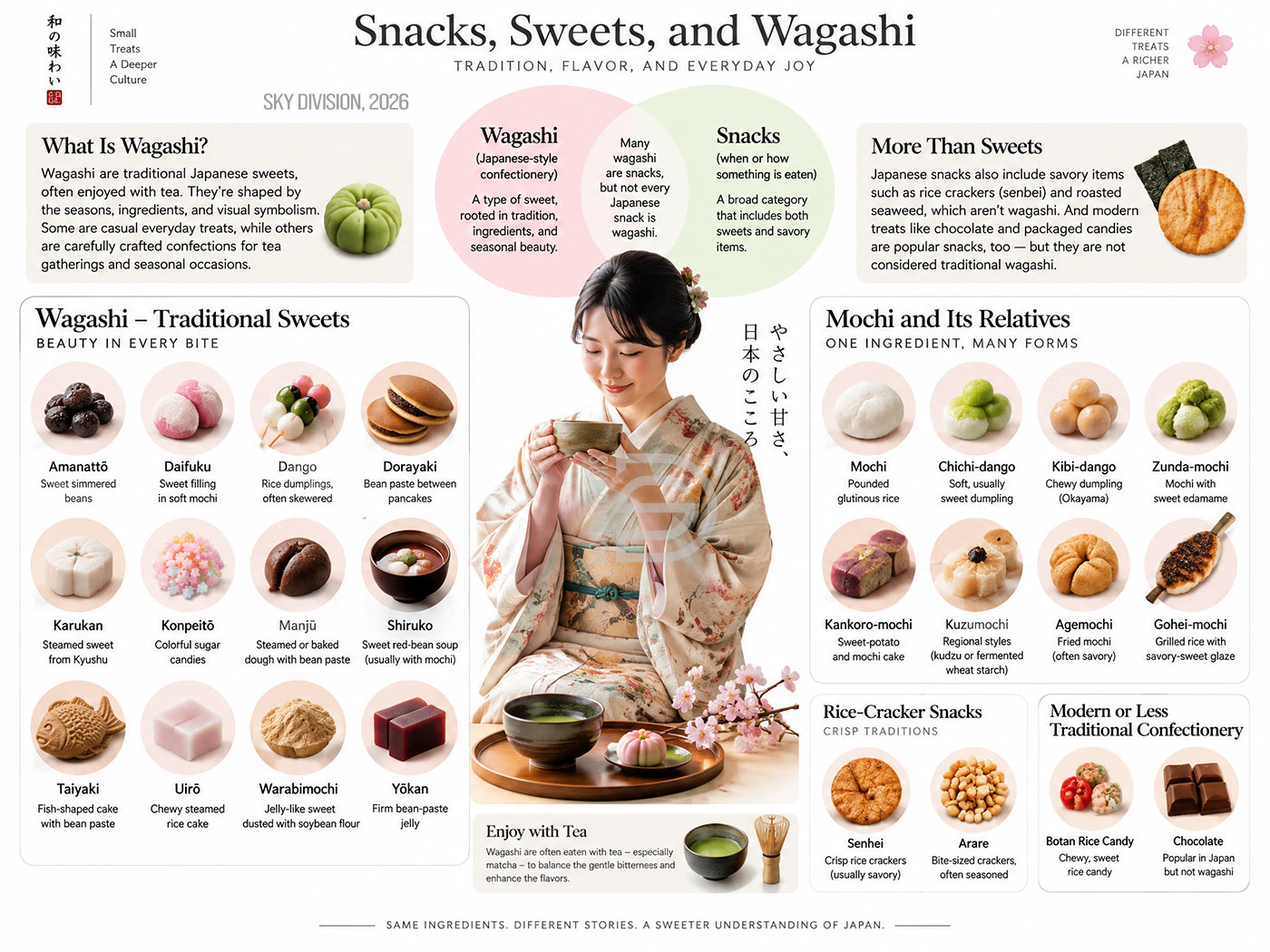 Traditional sweets (wagashi), mochi and rice-based snacks, savory crackers, and modern sweets.
The key distinction is that wagashi means Japanese-style confectionery, while snack describes when or how something is eaten. Many wagashi are snacks, but not every Japanese snack is wagashi.
Wagashi are traditional Japanese sweets, they're often eaten with tea - especially to balance the gentle bitterness of matcha - and are shaped by season, ingredients, and visual symbolism. Examples include mochi, dango,
◉ AmanattōAmanattō is a traditional Japanese confection made by simmering azuki beans with sugar and maltose until the mixture thickens into a chewy, translucent candy. The name means 'sweetened bean' and the treat has been produced since the Edo period. It is often coated with kinako (roasted soybean flour) to prevent sticking. Amanattō is valued for its simple, natural sweetness and is commonly enjoyed as a snack or served during New Year celebrations. Variants use other beans or nuts, but azuki
|➔| ◉ Botan Rice CandyBotan Rice Candy is a Japanese soft candy wrapped in edible rice paper (oblaat), produced by the Botan confectionery company. Introduced in the mid-20th century, it became popular in the United States through Asian grocery stores and is often associated with childhood nostalgia. The candy has a mild lemon-orange flavor and a chewy, glutinous texture. Each box traditionally includes a small collectible sticker. The edible wrapper dissolves on the tongue, making the candy distinctive. It remains a well-known example of
|➔| ◉ ChocolateChocolate is a sweet food made from roasted and ground cacao beans, combined with sugar, cocoa butter, and sometimes milk. It originated in Mesoamerica as a bitter beverage before evolving into solid confections in Europe. Today it is enjoyed worldwide in countless forms, from bars to coatings, and plays a notable role in Japanese confectionery through products like chocolate-filled taiyaki. ◉ DaifukuDaifuku is a Japanese wagashi consisting of a small round mochi (glutinous rice cake) stuffed with sweet filling, most commonly anko (sweetened red bean paste). The name means 'great luck'. Varieties include shiro daifuku (white), yomogi daifuku (flavored with mugwort), and ichigo daifuku (containing a whole strawberry). Daifuku is soft, chewy, and mildly sweet, often served with green tea. It is a popular year-round confection and appears in seasonal and regional variations across Japan, reflecting the versatility of mochi-based sweets. ◉ DangoDango is a Japanese dumpling made from rice flour, often skewered and grilled or boiled. Unlike mochi, dango flour typically includes non-glutinous rice, giving a firmer texture. Popular types include hanami dango (three colored balls), mitarashi dango (glazed with sweet soy sauce), and kinako dango (coated in roasted soybean flour). Dango is associated with seasonal festivals and hanami (cherry blossom viewing). Its simple preparation and adaptability have made it a beloved street food and household snack throughout Japan for centuries. ◉ ChichiChichi (also written chi chi) is a Japanese term meaning 'father' in informal, childlike speech, equivalent to 'daddy'. In the context of food, 'chichi' can also refer to milk or breasts in some dialects. However, as a confectionery term, it is uncommon. If referring to a sweet, it may denote regional or colloquial treats. Clarification is needed, as chichi is primarily a kinship term rather than a standardized wagashi name. ◉ KibiKibi refers to millet, specifically foxtail millet (Setaria italica), historically cultivated in Japan as a staple grain before rice dominance. Kibi was used to make porridge, dumplings, and sweets, and appears in ancient texts and folklore. Kibi dango, a millet-based dumpling, is legendary as the food that sustained the hero Momotarō. Today, kibi is less common but valued for its nutritional profile and is used in health foods and traditional regional confections, symbolizing Japan's agricultural heritage. ◉ DorayakiDorayaki is a Japanese confection consisting of two small pancake-like castella cakes sandwiching a filling, traditionally anko (sweet red bean paste). It is believed to have originated in the early 20th century, possibly named after a drum ('dora') due to its shape. Dorayaki is a popular snack and is famously associated with the anime character Doraemon. Variations include matcha, custard, and fruit fillings. Soft, fluffy, and moderately sweet, dorayaki is widely available in supermarkets and specialty wagashi shops across Japan. ◉ KarukanKarukan is a traditional steamed cake from Kyushu, Japan, particularly associated with Kagoshima. It is made from grated Chinese yam (yama imo), rice flour, and sugar, producing a light, springy texture. Karukan originated in the Edo period and was influenced by Chinese steamed bread techniques. It is mildly sweet and often enjoyed with tea. Regional versions vary in sweetness and moisture. Karukan remains a local specialty and souvenir, reflecting Kyushu's culinary traditions and the historical use of wild yam in
|➔| ◉ KonpeitōKonpeitō is a traditional Japanese sugar candy characterized by its small, star-shaped crystalline surface with tiny bumps. Introduced to Japan by Portuguese traders in the 16th century (from the Portuguese 'confeito'), it became a luxury sweet in the Edo period. Made by repeatedly coating a tiny sugar core with heated sugar syrup, konpeitō comes in pastel colors and flavors. It is culturally significant, often included in gift sets and featured in the animated film Spirited Away. Its name and appearance
|➔| ◉ ManjūA traditional Japanese steamed confection made from flour, rice powder, and buckwheat, wrapped around a filling such as sweet azuki bean paste. Introduced from China by Zen monks in the 14th century, manjū comes in many regional varieties, including baked and grilled versions. It is a popular teatime sweet and souvenir across Japan. ◉ MochiA chewy Japanese rice cake made by pounding steamed glutinous rice into a smooth, sticky mass. Eaten year-round but especially associated with New Year celebrations, mochi features in dishes like ozōni soup and is used in countless wagashi sweets. Its elastic texture and mild flavor make it a versatile staple of Japanese cuisine. ◉ AgemochiDeep-fried mochi, typically cut into small pieces and fried until puffed and crisp. Often seasoned with salt or soy sauce, it is a popular snack with a light, crunchy texture. Regional varieties exist, and it is sometimes served in soups or as a topping. ◉ GoheimochiA regional specialty of Japan's Chūbu region, particularly Gifu and Nagano. Pounded rice is shaped onto flat skewers, grilled over charcoal, and coated with a sweet-savory miso glaze, sometimes mixed with walnuts or sesame. Its rustic, smoky flavor makes it a beloved street food. ◉ KankoroA traditional sweet from Kagoshima and Miyazaki, made from dried, grated sweet potato mixed with sugar and sometimes rice flour. It is steamed or formed into chewy cakes with a distinctively sweet, earthy flavor. Kankoro is a local comfort food with deep regional roots. ◉ KuzumochiA jelly-like sweet made from kuzuko (arrowroot starch), water, and sugar, served chilled with kinako (roasted soybean flour) and brown sugar syrup. Its smooth, translucent texture makes it a refreshing summer treat. Traditional versions use genuine arrowroot; modern ones often use cheaper starch. ◉ Zunda-mochiA specialty of the Tōhoku region, especially Sendai. Soft mochi is topped with zunda, a sweet paste made from crushed edamame (young soybeans). The vivid green paste has a fresh, subtly sweet flavor, making zunda-mochi a signature local sweet and popular souvenir. ◉ Senbei (Arare)Senbei are traditional Japanese rice crackers, typically grilled or baked and seasoned with soy sauce, salt, or sugar. Arare refers to smaller, often bite-sized rice crackers, frequently coated in soy sauce and nori. Both are long-standing snack foods enjoyed with tea and widely available across Japan. ◉ ShirukoShiruko is a traditional Japanese sweet soup made from azuki beans, typically boiled and sweetened with sugar, then thickened to a smooth or chunky consistency. It is served hot in winter and chilled in summer, often accompanied by mochi, dango, or chestnuts. The dish reflects Japan's long history of bean-based confections and is valued for its comforting texture and deep, earthy sweetness. ◉ TaiyakiTaiyaki is a Japanese fish-shaped cake made from batter similar to pancake or waffle dough, cooked in a cast-iron mold. It is traditionally filled with sweet azuki bean paste, though modern variations include custard, chocolate, and cheese. Originating in Tokyo during the Meiji era, taiyaki is a popular street food prized for its crisp exterior and warm, soft filling. ◉ UirōUirō is a traditional Japanese steamed cake made from rice flour and sugar, known for its smooth, chewy texture and translucent appearance. Often flavored with matcha, sakura, or brown sugar, it is cut into blocks and served as a wagashi confection. Its name derives from a historical connection to uirō medicine, and it remains a regional specialty in places such as Odawara. ◉ WarabimochiWarabimochi is a jelly-like Japanese confection made from bracken starch (warabi) and water, coated in toasted soybean flour (kinako) and served with brown sugar syrup. Despite its name, it contains no mochi rice. It has a delicate, bouncy texture and a mild flavor, making it a refreshing summer treat with a long history in Japanese sweets culture. ◉ YōkanYōkan is a dense, firm Japanese jelly made from azuki bean paste, agar, and sugar. It is typically sold in block form and sliced into thin pieces to accompany tea. Available in red (azuki) and white (shiroan) varieties, yōkan is valued for its smooth texture, long shelf life, and refined sweetness, making it a classic wagashi.
|
| |
Fruit (Japanese)
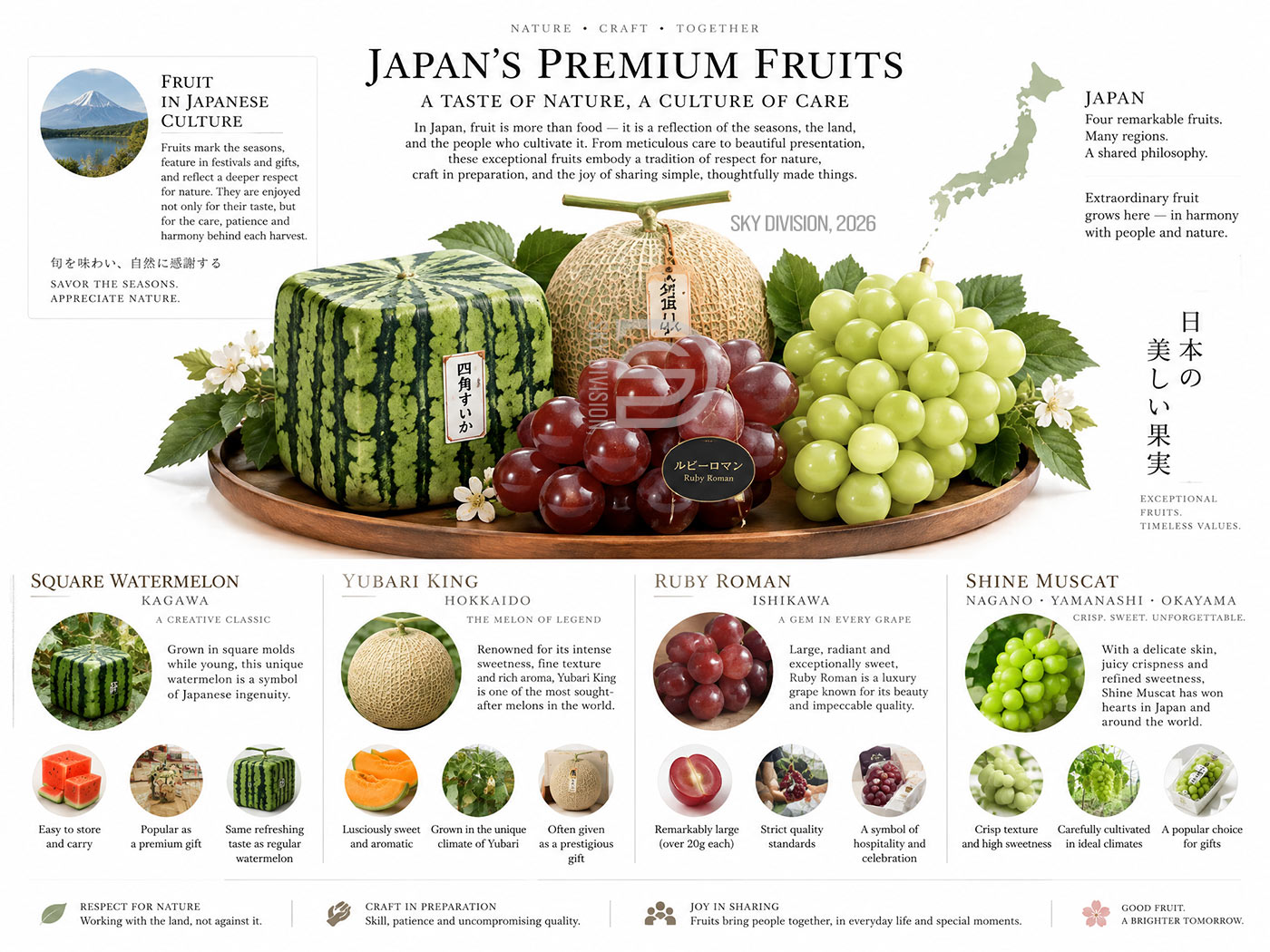 In Japanese food culture, fruit occupies a role far beyond everyday nourishment. It is treated as a luxury, a refined gift, and a seasonal symbol, reflecting deep values of craftsmanship, presentation, and impermanence. Premium varieties like Yubari King and Ruby Roman are meticulously graded, beautifully boxed, and exchanged to express respect and gratitude. Meanwhile, traditional fruits such as persimmons and cherries connect to centuries of seasonal appreciation and cultural symbolism. Whether as an elaborate gift or a simple autumn harvest,
◉ Square WatermelonThe square watermelon is one of Japan's most recognizable novelty fruits. Grown in Zentsuji, Kagawa Prefecture, it is cultivated inside cubic molds so it fits compactly into refrigerators and stacks neatly for display. Introduced in the 1970s, it is harvested while unripe and is intended purely for ornamental purposes rather than eating. Its striking geometric shape has made it a symbol of Japanese ingenuity and attention to detail, and it is commonly given as a gift or used as a
|➔| ◉ Yubari KingThe Yubari King is a premium muskmelon grown almost exclusively in Yubari, Hokkaido. A cross between two cantaloupe varieties, it is prized for its intensely sweet, juicy orange flesh and perfectly uniform netted rind. The fruit is famously auctioned, with pairs selling for astronomical sums that attract global media attention. Strict grading standards govern its shape, color, and sugar content, reinforcing its status as a luxury item. Typically exchanged as a formal gift, especially during midsummer gift-giving season, the Yubari
|➔| ◉ Ruby RomanThe Ruby Roman is a luxury table grape cultivated in Ishikawa Prefecture, prized for its exceptionally large, ruby-red berries and high sugar content. Each grape must meet strict criteria for size, color, and sweetness, with premium clusters commanding extraordinary prices at auction. Developed over years of selective breeding, it was first marketed in 2008 and has since become a symbol of premium Japanese fruit culture. Like other high-end fruits, it is frequently purchased as an elegant gift, reflecting the importance
|➔| ◉ Shine MuscatShine Muscat is a green table grape developed in Japan and now widely cultivated, known for its large, crisp, seedless berries and distinctive muscat aroma. Its thin, edible skin and refreshing sweetness have made it enormously popular both domestically and in export markets. Though more accessible than luxury varieties like the Ruby Roman, it still reflects Japan's emphasis on breeding fruit for flavor, texture, and appearance. Often enjoyed fresh or given as a seasonal gift, Shine Muscat illustrates how Japanese
|➔| ◉ Taiwan - Japanese CherryCherry blossoms (sakura) hold a central place in Japanese culture, symbolizing the fleeting beauty of life and marking the arrival of spring. While ornamental varieties are celebrated for their blossoms rather than fruit, Japan also cultivates edible cherries such as Satonishiki, prized for their sweetness and deep red color. The cherry season is short and eagerly anticipated, inspiring hanami picnics and seasonal sweets. Whether admired as blossoms or enjoyed as fruit, cherries embody mono no aware - the gentle awareness
|➔| ◉ Okayama Hakuto PeachesOkayama Hakuto peaches are a premium variety renowned for their soft, juicy white flesh and delicate sweetness. Grown in Okayama Prefecture, they are carefully hand-pollinated and individually wrapped on the tree to protect their tender skin, reflecting the extraordinary labor behind Japanese fruit cultivation. Often sold in elegant gift boxes, they are prized as summer gifts and symbolize thoughtfulness and respect. Their fleeting season and fragile nature heighten their value, aligning with the Japanese appreciation for seasonal, perishable beauty. The
|➔| ◉ Persimmon (Kaki)The persimmon (kaki) is a deeply traditional Japanese fruit, cultivated for centuries and closely tied to rural life and autumn. Varieties range from sweet, eaten fresh, to astringent, dried into hoshigaki, a preserved delicacy. Rich in symbolism, the persimmon appears in poetry, art, and proverbs, and its drying process reflects longstanding preservation techniques. Its autumn harvest connects it to seasonal appreciation and regional food culture. Unlike luxury gift fruits, the persimmon represents the everyday, historical dimension of Japanese fruit culture
|➔|
|
Menu Sets
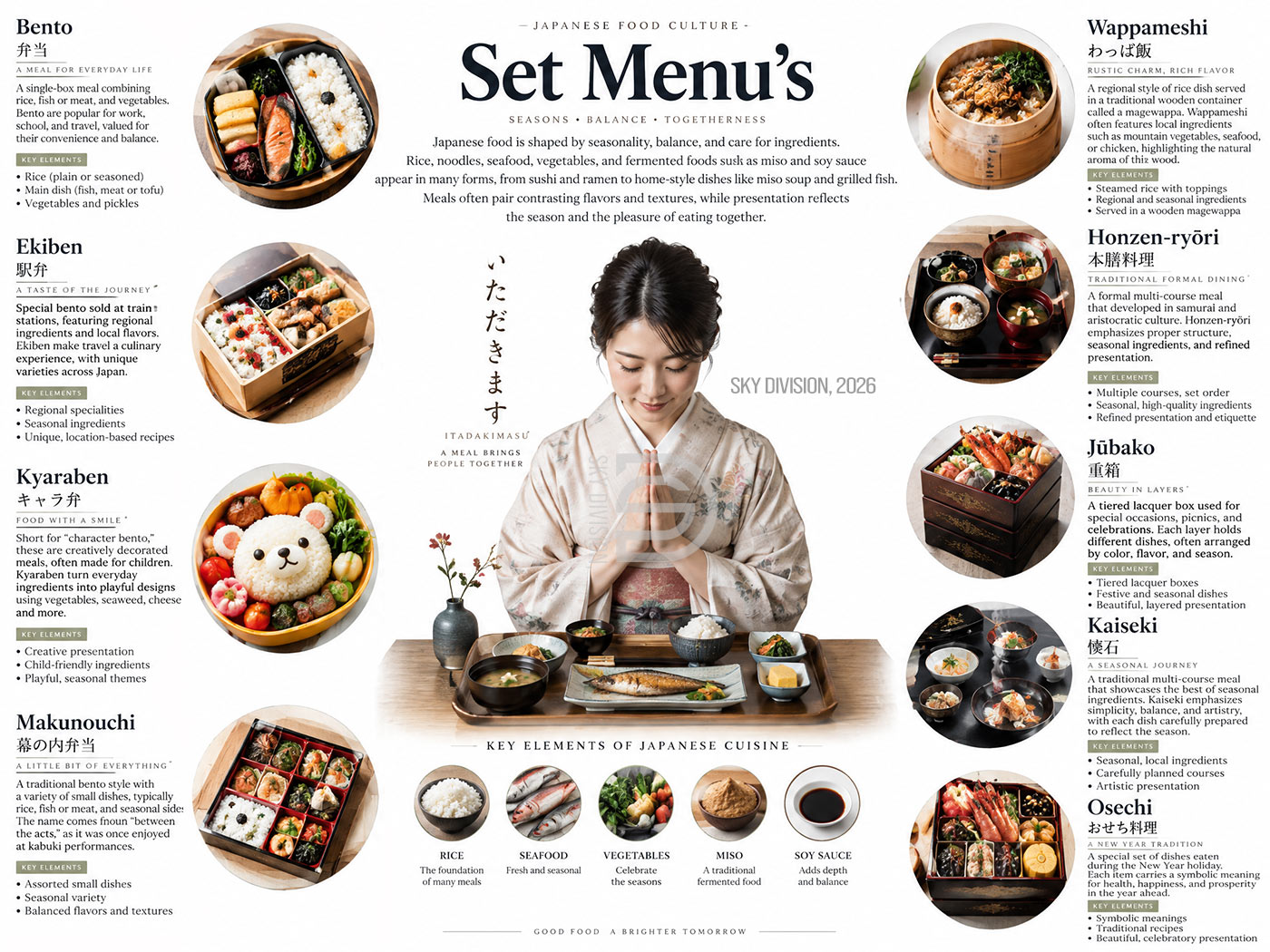 Japanese "menu sets" are structured meal formats built around the principle of offering multiple components - rice, protein, side dishes, and pickles - arranged together as a complete dining experience. This concept spans everyday convenience (bento, ekiben) to ceremonial formality (honzen-ryōri, kaiseki). What unites them is careful compartmentalization, visual presentation, and balance of flavors, textures, and seasons. Some sets are practical and portable, designed for travel or work; others are elaborate artistic expressions tied to hospitality, ritual, or celebration. Containers
◉ BentoBento is a portable Japanese meal set packed in a compartmentalized container, typically combining rice, a main protein, and several side dishes. It represents the most everyday expression of Japan's 'menu set' culture, balancing practicality with visual appeal. Bento are prepared at home, sold at convenience stores and train stations, and served in restaurants. The arrangement emphasizes proportion, color contrast, and compactness, with foods chosen to eat well at room temperature. Seasonal ingredients and decorative touches are common, especially in
|➔| ◉ EkibenEkiben are bento sold at railway stations and on trains, a distinctive subset of Japanese portable meal sets. The term combines 'eki' (station) and 'bento'. Originating in the late 19th century, ekiben became a beloved travel tradition, with each region offering versions showcasing local specialties and ingredients. Packaging often reflects regional identity, and many stations are famous for particular ekiben. The format follows the bento principle - rice, protein, sides, pickles - but with emphasis on local character and travel
|➔| ◉ KyarabenKyaraben, or 'character bento', are elaborately decorated bento in which food is arranged to resemble people, animals, or pop-culture figures. This playful subset of Japanese meal sets transforms ordinary ingredients - rice, eggs, vegetables, seaweed - into edible art using cutting, molding, and careful placement. Kyaraben are especially popular for children, often made by parents to encourage eating, and are showcased in contests and social media. While rooted in the bento tradition of visual presentation, kyaraben push aesthetics to a
|➔| ◉ MakunouchiMakunouchi is a traditional style of bento characterized by rice and accompanying dishes arranged in a lacquered box, often with a sprinkling of sesame and a pickled plum at the center. The name references the curtain ('maku') between acts of a play, as the meal was originally served during theater intermissions. Makunouchi represents a formal, well-balanced bento set, featuring grilled fish or meat, vegetables, and pickles arranged neatly around rice. It is common on trains, at theaters, and in restaurants.
|➔| ◉ WappameshiWappameshi is a regional Japanese meal set consisting of rice topped with ingredients such as seafood, meat, and vegetables, steamed and served in a round wooden container called a 'wappa'. Originating in Akita Prefecture, the dish is a distinctive bento-like format where the wooden vessel absorbs moisture and lends a subtle aroma to the food. The steaming process cooks the toppings gently, preserving flavor and texture. Wappameshi reflects the broader Japanese menu-set tradition of combining rice and accompaniments in a
|➔| ◉ Honzen-ryōriHonzen-ryōri is a formal, highly structured Japanese banquet style that developed in the Muromachi period, representing one of the oldest 'menu set' formats. Meals are served on individual lacquered trays (zen), with dishes arranged in precise, prescribed patterns - typically rice, soup, and several side dishes presented in a set order. The style emphasizes etiquette, hierarchy, and ritual, and it heavily influenced later formal cuisines. Honzen-ryōri embodies the principle of a complete, multi-course set meal with strict rules governing placement,
|➔| ◉ JūbakoJūbako refers to tiered, stacked lacquered boxes used to present Japanese meal sets, and by extension the meals served in them. The multi-tiered format allows different dishes - rice, proteins, vegetables, pickles - to be separated across levels, keeping foods distinct and visually organized. Jūbako are especially associated with celebratory and formal occasions, including New Year's osechi and festive bento. The stacked design reflects Japanese aesthetics of compactness and order, and the lacquered boxes themselves are valued craft objects. Jūbako
|➔| ◉ KaisekiKaiseki is a refined, multi-course Japanese dining tradition emphasizing seasonality, artistry, and balance. Originating in tea ceremony cuisine (cha-kaiseki), it evolved into an elaborate formal meal served in specialized restaurants. Each course is small, meticulously presented, and highlights fresh, seasonal ingredients. While not a 'set' in the boxed sense, kaiseki is a structured menu sequence - appetizers, sashimi, grilled dishes, simmered dishes, rice, and sweets - unified by theme and aesthetics. Kaiseki represents the pinnacle of Japanese culinary presentation, where
|➔| ◉ OsechiOsechi is a traditional Japanese New Year meal set, consisting of numerous symbolic dishes packed into tiered lacquered boxes (jūbako). Each food carries meaning - black beans for health, herring roe for fertility, shrimp for longevity - reflecting wishes for the coming year. Osechi is typically prepared in advance so families can rest during the holiday, and the foods are designed to keep well. The colorful, compartmentalized arrangement embodies the Japanese menu-set principle of variety, balance, and presentation. Osechi is
|➔|
|
| |
Utensils (Japanese)
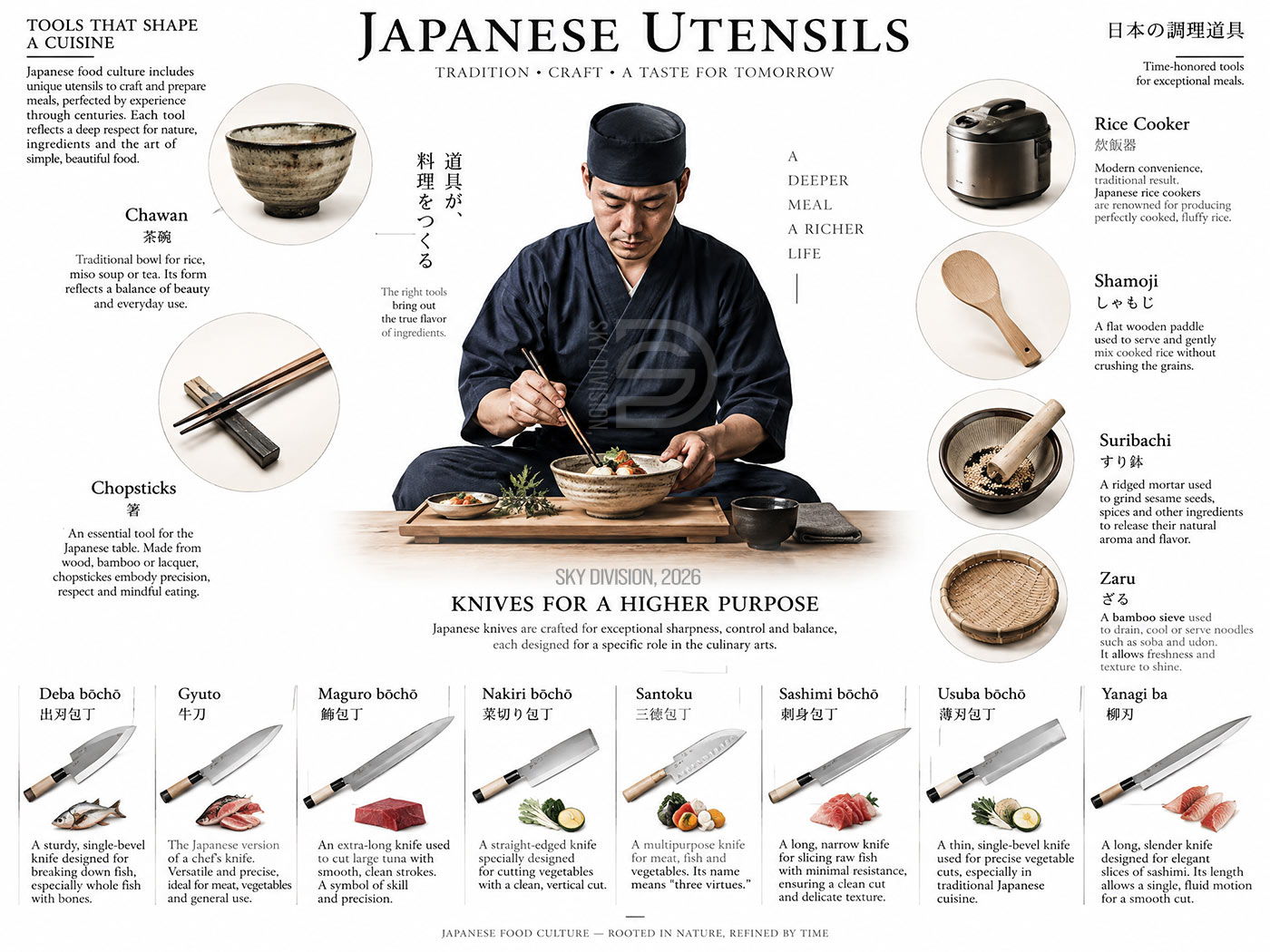 Japanese cuisine relies on a distinctive set of utensils that reflect the country's culinary traditions and emphasis on precision and presentation. Among the most recognizable is the 'shamoji', a broad, paddle-shaped rice spoon traditionally made of bamboo or wood, used to serve and mix rice without crushing the grains. The 'suribachi' is a ceramic mortar with a ridged interior, paired with a wooden pestle called a 'surikogi'; together they are essential for grinding sesame seeds, miso, and making dressings. The
◉ ChawanA Japanese bowl, most famously the tea bowl used in chanoyu (tea ceremony). Prized chawan are handcrafted ceramics valued for glaze, form, and the feel in the hands; each is often given a poetic name. Beyond tea, chawan also refers to rice bowls, central to everyday meals. ◉ ChopsticksPaired eating utensils with a history spanning millennia, originating in China and adopted across East Asia. Japanese chopsticks (hashi) are typically shorter and tapered to fine points. Beyond function, they carry etiquette and ritual significance - used in offerings and ceremonies - and their design, materials, and handling reflect cultural refinement. ◉ Deba bōchōA sturdy, single-bevel knife designed for breaking down fish, especially whole fish with bones. ◉ GyutoThe Japanese version of a chef's knife. Versatile and precise, ideal for meat, vegetables and general use. ◉ Maguro bōchōAn extra-long knife used to cut large tuna with smooth, clean strokes. A symbol of skill and precision. ◉ Nakiri bōchōA straight-edged knife specially designed for cutting vegetables with a clean, vertical cut. ◉ SantokuA multipurpose knife for meat, fish and vegetables. Its name means "three virtues". ◉ Sashimi bōchōA long, narrow knife for slicing raw fish with minimal resistance, ensuring a clean cut and delicate texture. ◉ Usuba bōchōA thin, single-bevel knife used for precise vegetable cuts. especially in traditional Japanese cuisine. ◉ Yanagi baA long, slender knife designed for elegant slices of sashimi. lts length allows a single, fluid motion for a smooth cut. ◉ Rice CookerAn electric appliance that automates cooking rice, replacing traditional stovetop methods. Introduced in Japan in the 1950s, early models were simple; modern versions use fuzzy logic and induction heating to control temperature and texture precisely. A staple of Japanese households, it reflects the postwar shift toward convenience and standardization in home cooking. ◉ ShamojiA flat rice paddle traditionally made of bamboo or wood, used to serve and mix rice. Its non-stick surface prevents grains from being crushed, and it is often moistened before use. Beyond utility, the shamoji carries folk symbolism - in some traditions, a mother-in-law would pass one to a bride, representing domestic skill and household continuity. ◉ SuribachiA Japanese mortar with a distinctive ridged, comb-like interior, paired with a wooden pestle (surikogi). The grooves grind sesame seeds, miso, and aromatics efficiently. Usually ceramic, it is essential in preparing dressings and pastes, and its design - unlike smooth Western mortars - guides ingredients inward while crushing. ◉ ZaruA shallow bamboo basket with a woven, open lattice, used to drain and serve noodles such as soba and udon. The porous bamboo wicks away moisture, keeping noodles firm and cool. Serving chilled noodles on zaru (zaru-soba) is a classic summer dish, and the basket's rustic texture is part of the presentation.
[ Deba bōchō, Gyuto, Maguro bōchō, Nakiri bōchō, Santoku, Sashimi bōchō, Usuba bōchō, Yanagi ba – all knives, their shapes, edges, and purposes vary widely, traditional Japanese culinary knives, each designed for specific tasks. ]
|
Japanese - Chinese Culinary Exchange
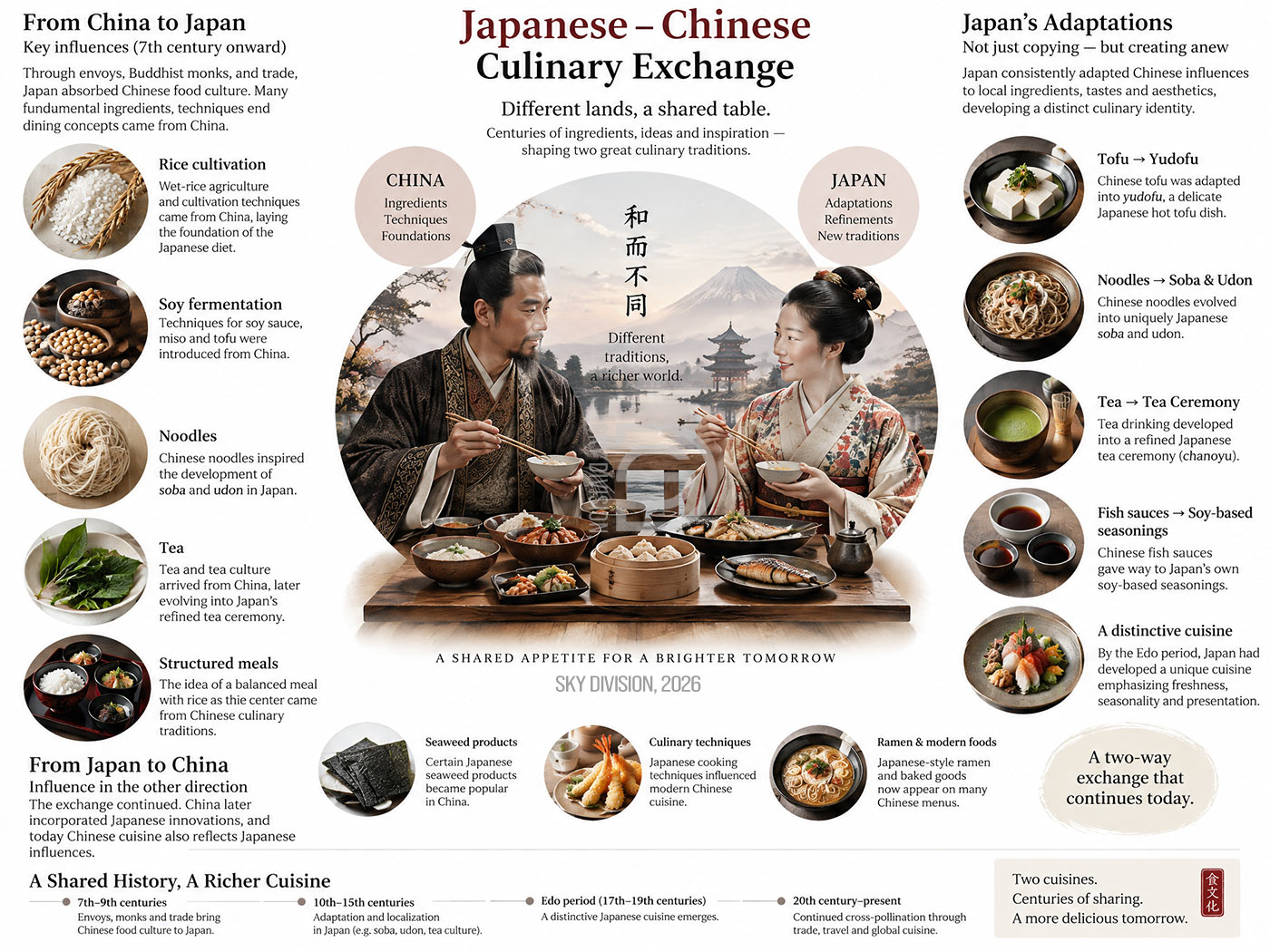 Japanese cuisine did not develop in isolation. From the 7th century onward, Japan absorbed Chinese food culture through envoys, Buddhist monks, and trade. Early borrowings included rice cultivation, soy fermentation techniques (soy sauce, miso, tofu), noodles, and tea - all of Chinese origin. The concept of a structured meal with rice as the center also came from China.
However, Japan consistently adapted rather than copied. Tofu became the delicate yudofu; Chinese noodles were transformed into soba and udon; tea
|
 Sky Division & Logios'Logios' represents an AI entity, helping with data, stats, knowledge, words, calculations, helping human creator in exploring and developing content. 'Logios' sometimes can be a single AI-platform, or many of them. If a code-script is used somewhere then credits for assistance belong exclusively to DeepSeek AI.
Logios - from the Greek λόγιος (lógios), meaning "learned, eloquent, one who speaks with reason"., 2026 |