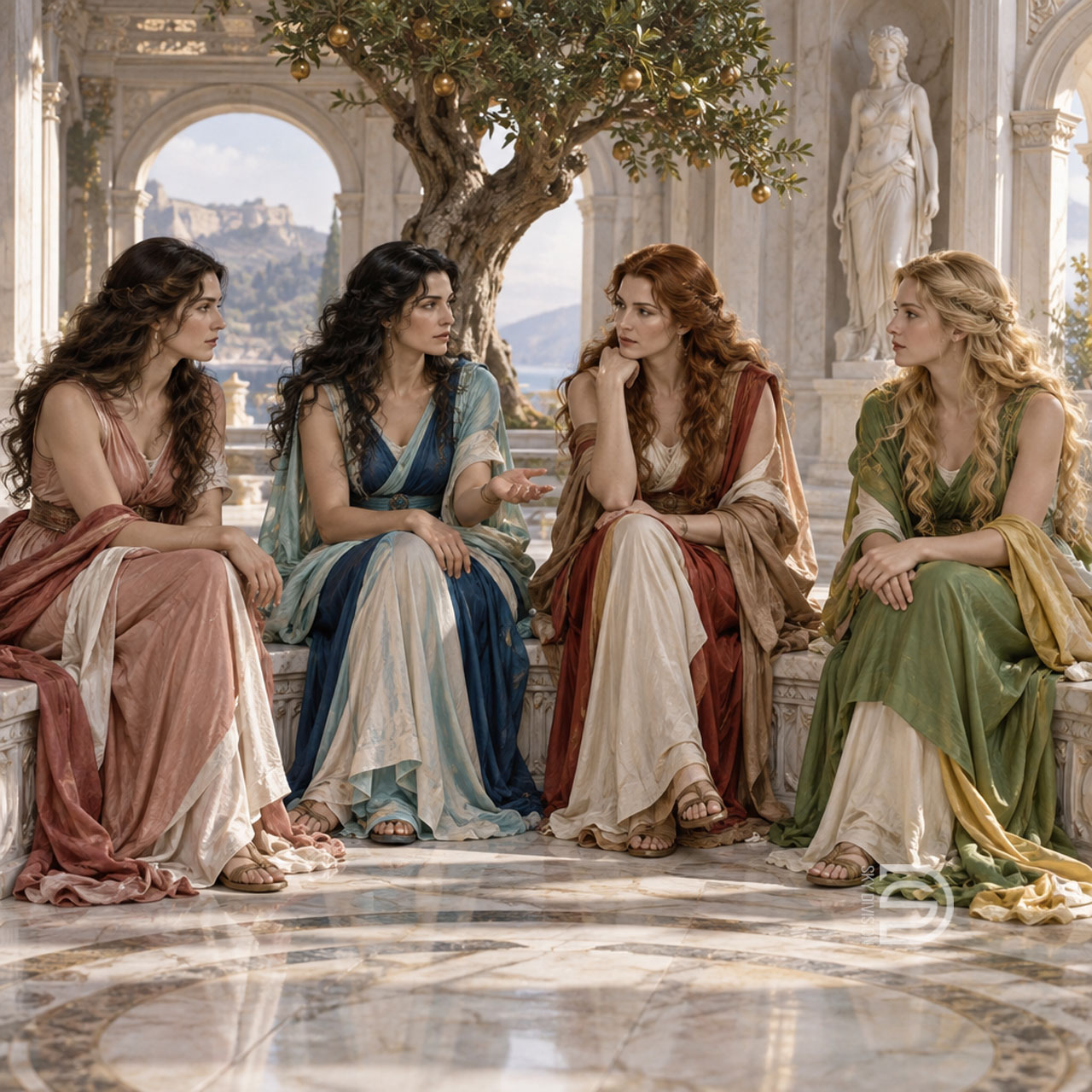
| NymphsThe name of a numerous class of inferior female divinities, though they are designated by the title of Olympian, are called to meetings of the gods in Olympus, and described as the daughters of Zeus. But they were believed to dwell on earth in groves, on the summits of mountains, in rivers, streams, glens, and grottoes. Homer describes them as presiding over game, accompanying Artemis, dancing with her, weaving in their grottoes purple garments, and kindly watching over |➔| “Nymps” is the name of a numerous class of inferior female divinities, though they are designated by the title of Olympian, are called to meetings of the gods in Olympus, and described as the daughters of Zeus. But they were believed to dwell on earth in groves, on the summits of mountains, in rivers, streams, glens, and grottoes. Hesperides (evening – nymphs of the sunset, the West, and the evening, daughters of Nyx (Night), or perhaps daughters of Atlas and Hesperis). They belong to the group of “Celestial” nymphs. |
||
➔ Aegle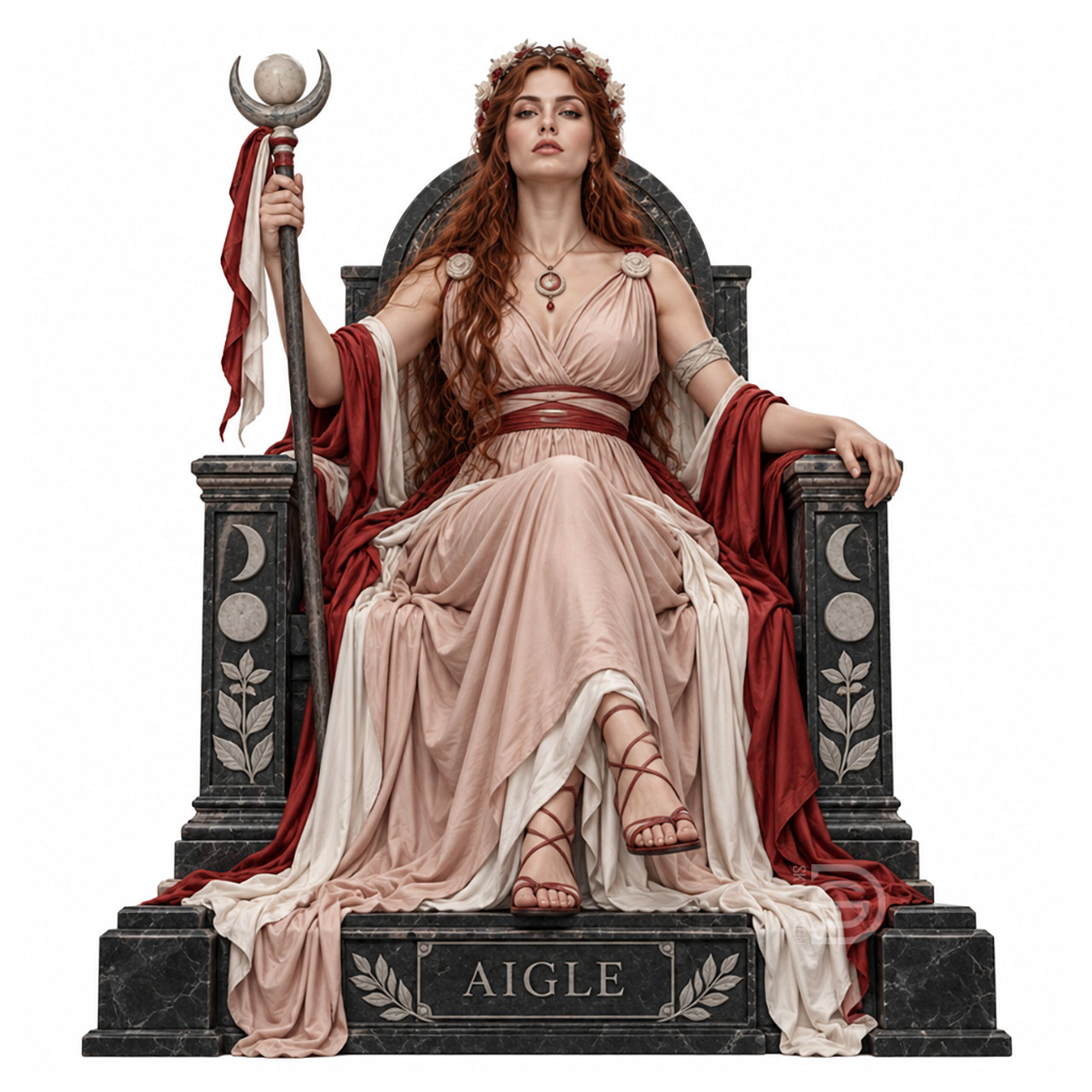 One of the Hesperides, the nymphs who guarded the golden apples in the garden at the far western edge of the world. In Hesiod's tradition she is a daughter of Nyx, born without a father, sister to Hesperia, Erytheia, and Arethusa. Her name means "brightness" or "radiance" - the same root that gives Greek its word for the gleam of sunlight - and she is usually named first among the sisters, the eldest of the evening's daughters. She is |
➔ Erytheia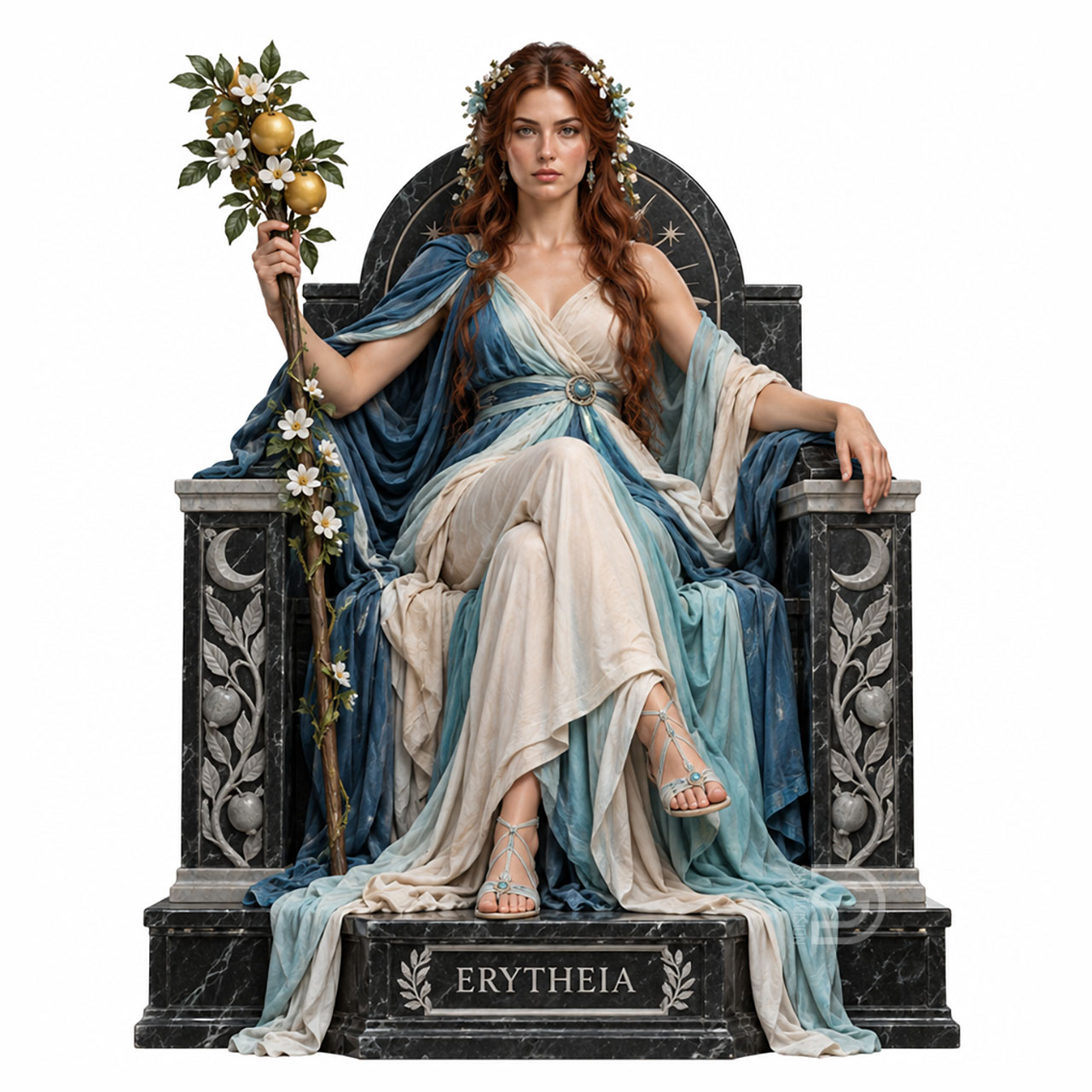 One of the Hesperides, the nymphs who guarded the golden apples in the garden at the world's western edge. In Hesiod's Theogony, she is a daughter of Nyx, born without a father, sister to Aegle and Hesperethusa. Later traditions make her a daughter of Atlas and Hesperis, or of Phorcys and Ceto - the parentage varies, but her name does not. Her name means "the red one." It is the same word the Greeks used for the red of |
|
➔ Hesperia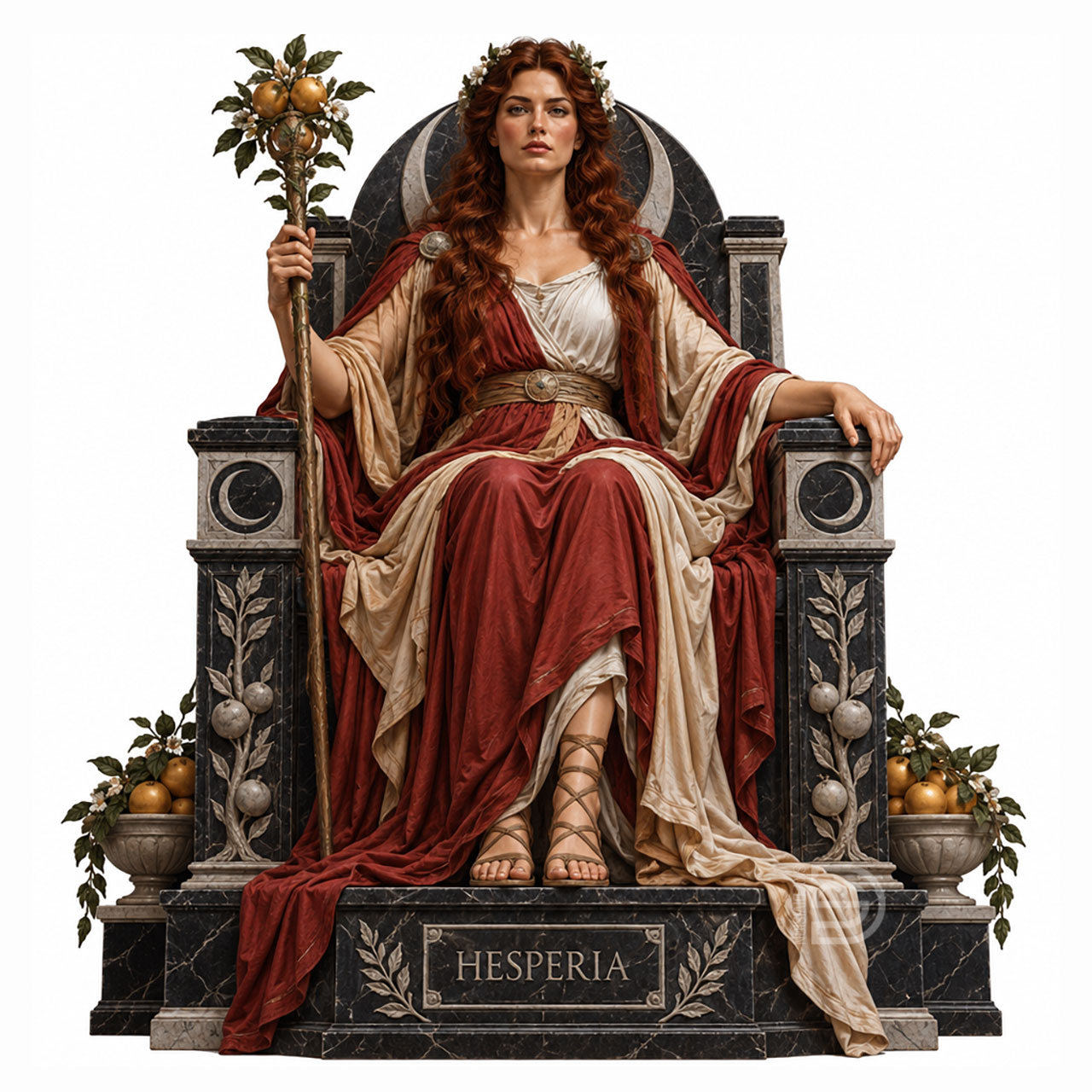 One of the Hesperides, the nymphs who guarded the golden apples at the far western edge of the world. In Hesiod's tradition, she is a daughter of Nyx, born without a father, alongside her sisters Aegle and Erytheia. Other sources name her as a daughter of Atlas or of Hesperus, the evening star - the genealogies shift, but her role never does. Her name means "evening" or "western" - the same root that gave the Greeks their word for |
➔ Arethusa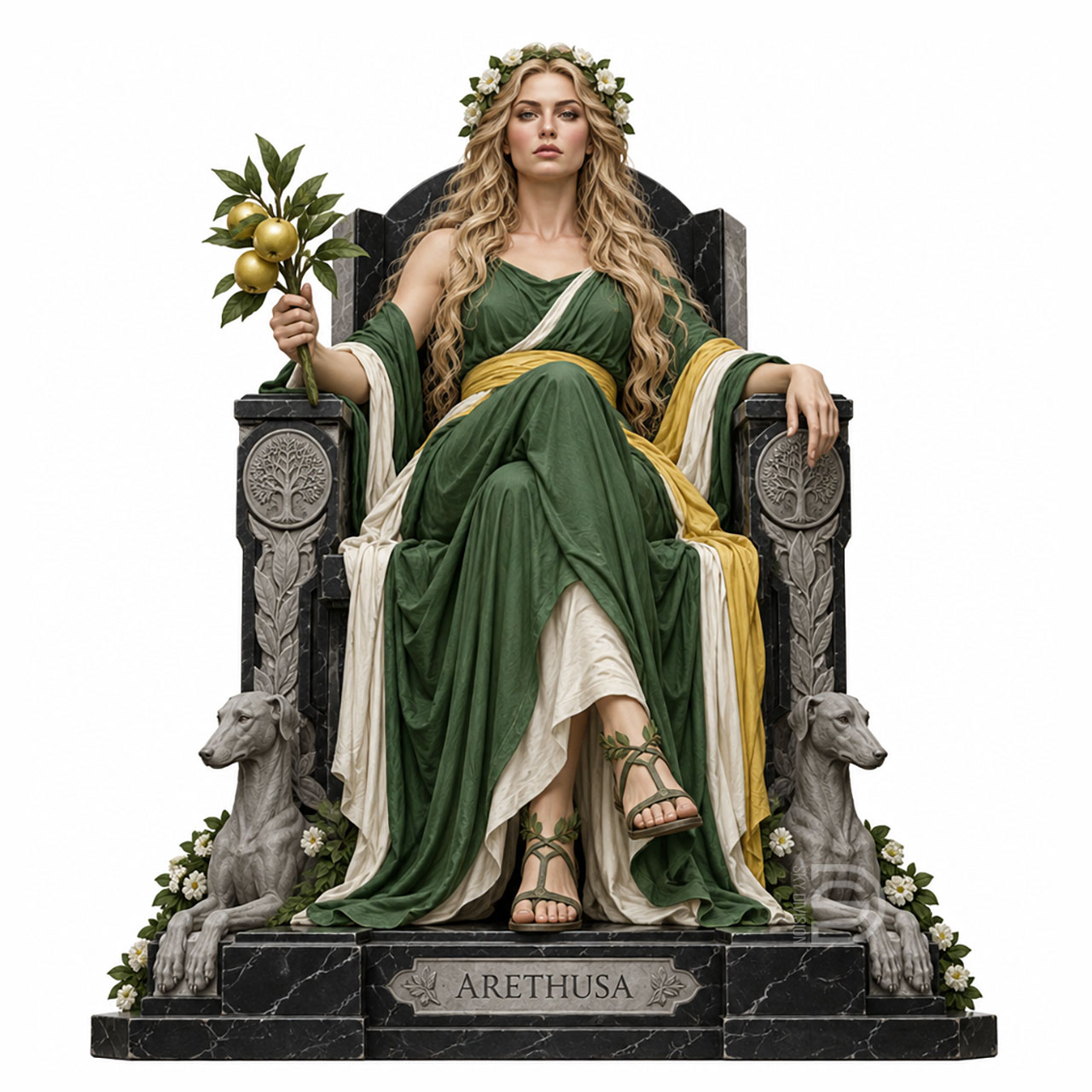 One of the Hesperides, the nymphs who guarded the golden apples at the western edge of the world. In the oldest tradition, she is a daughter of Nyx, born without a father, sister to Aegle and Erytheia. But her name carries a second life: in a separate and far more famous myth, Arethusa is a nymph of Artemis who fled the river god Alpheus, was transformed into a fountain, and rose again in Sicily. The two Arethusas are usually kept |
|
| Hesperides “Daughters of Evening” – The famous guardians of the golden apples which Gaea had given to Hera at her marriage with Zeus. Their names are Aegle, Erytheia, Hestia or Hesperia, and Arethusa, but their descent is not the same in the different traditions; sometimes they are called the daughters of Nyx or Erebus, sometimes of Phorcys and Ceto, sometimes of Atlas and Hesperis, whence their names Atlantides or Hesperides, and sometimes of Hesperus, or of Zeus and Themis. Instead of the four Hesperides mentioned above, some traditions know only of three, viz. Hespere, Erytheis, and Aegle, Arethusa, and Hesperusa or Hesperia; whereas others mention seven. In their watch over the golden apples they were assisted or superintended by the dragon Ladon. The apples themselves were obtained by Heracles as the eleventh of his Twelve Labors (see Apples of the Hesperides); they were given to Athena, who restored them to their former place. *** “Hesperides” means “daughters of evening”, and they were the sunset, the golden light. How many daughters does the evening have? Perhaps as many as you need. The sources genuinely disagree on the number of Hesperides, and the reason is simple, there was never one canonical number. The Hesperides lived at the edge of the world, beyond Ocean, in a garden no one could visit. Different poets and mythographers filled that distant, hazy place with however many nymphs their story needed. Three is the most common version. Hesiod’s fragments name exactly three: Aegle, Erytheia, and Hesperethusa (sometimes called Hesperia). Four appears in other traditions, adding Arethusa to the list: “Aegle, Erytheia, Hestia, and Arethusa”. Seven is mentioned by some later sources, though the names vary wildly and often overlap. The deeper reason is that the Hesperides were never a fixed set of individuals – they were a place, which was personified. The parentage shifts for the same reason. Hesiod makes them daughters of Nyx (Night). But others make them daughters of Atlas, or Hesperus (the Evening Star), or Phorcys and Ceto.
|
||
 Sky Division & Logios'Logios' represents an AI entity, helping with data, stats, knowledge, words, calculations, helping human creator in exploring and developing content. 'Logios' sometimes can be a single AI-platform, or many of them. If a code-script is used somewhere then credits for assistance belong exclusively to DeepSeek AI.
Logios - from the Greek λόγιος (lógios), meaning "learned, eloquent, one who speaks with reason"., 2026 |
||