Nymphs
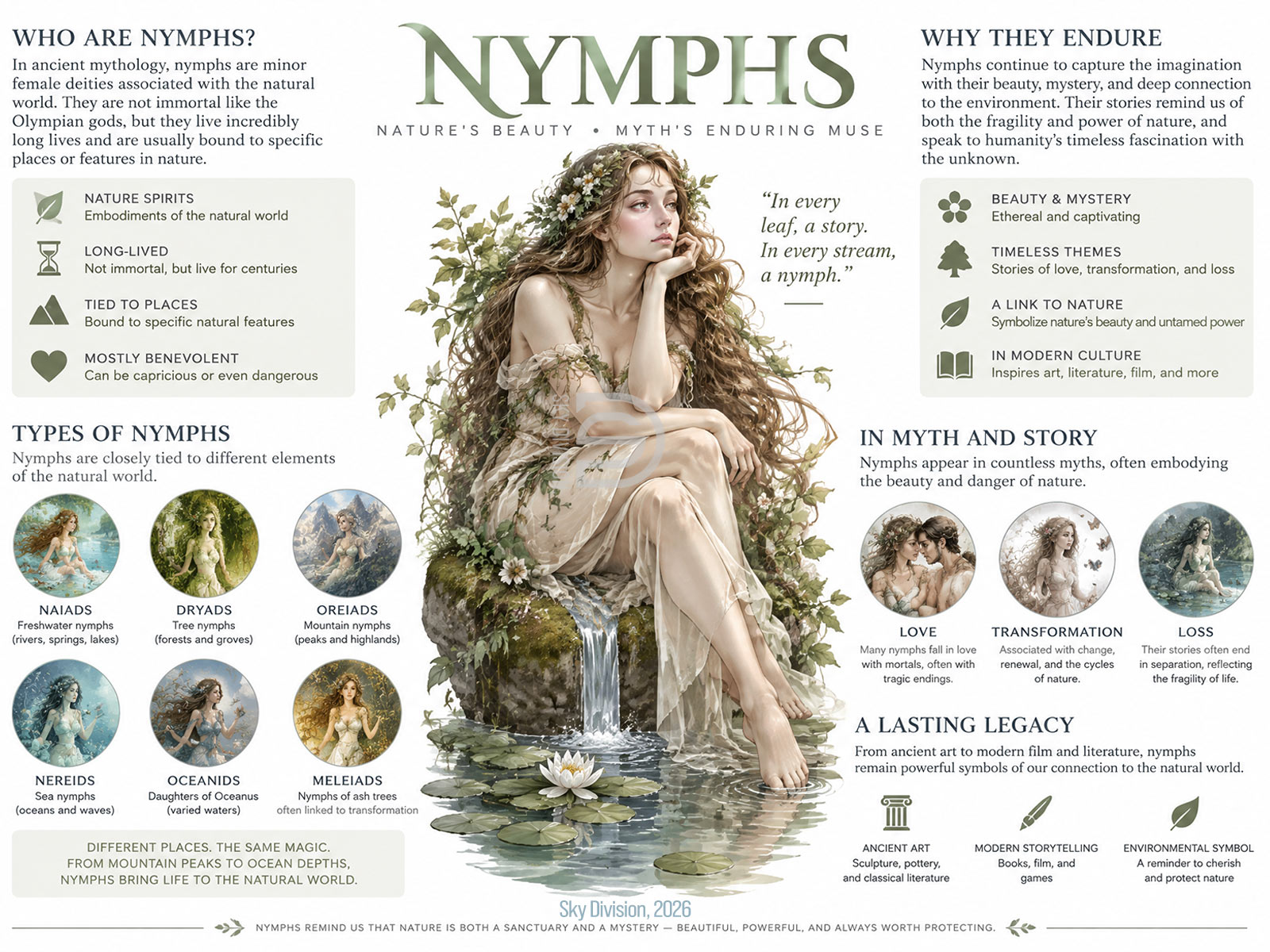 The name of a numerous class of inferior female divinities, though they are designated by the title of Olympian, are called to meetings of the gods in Olympus, and described as the daughters of Zeus. But they were believed to dwell on earth in groves, on the summits of mountains, in rivers, streams, glens, and grottoes.
Homer describes them as presiding over game, accompanying Artemis, dancing with her, weaving in their grottoes purple garments, and kindly watching over
|
◉ Naiads
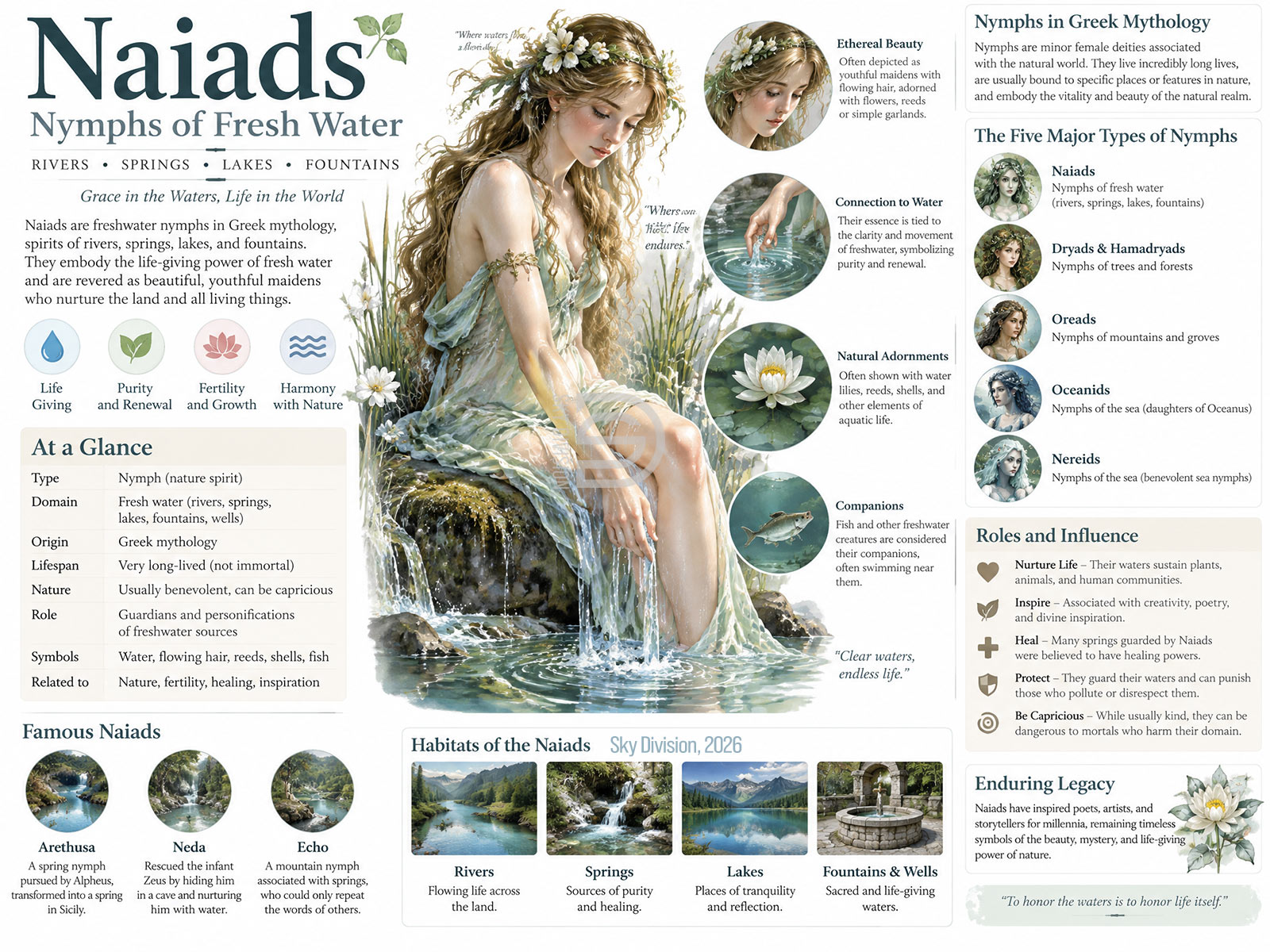 • Abarbarea (lover of Bucolion) • Abarbarea (ancestor of the Tyrians) • Caliadne • Cleocharia • Creusa • Hieromneme • Melite
They are also called hydriades. The fresh-water nymphs who inhabited the numerous lakes, springs, rivers, and brooks. They are the daughters of the various river gods, the potamoi. The naiades (ναϊάδες) often appear as the lovers or the nurses or the attendants of the Olympian gods, and as the wives of local rulers. Many have cities
|
◉ Dryads & Hamadryads
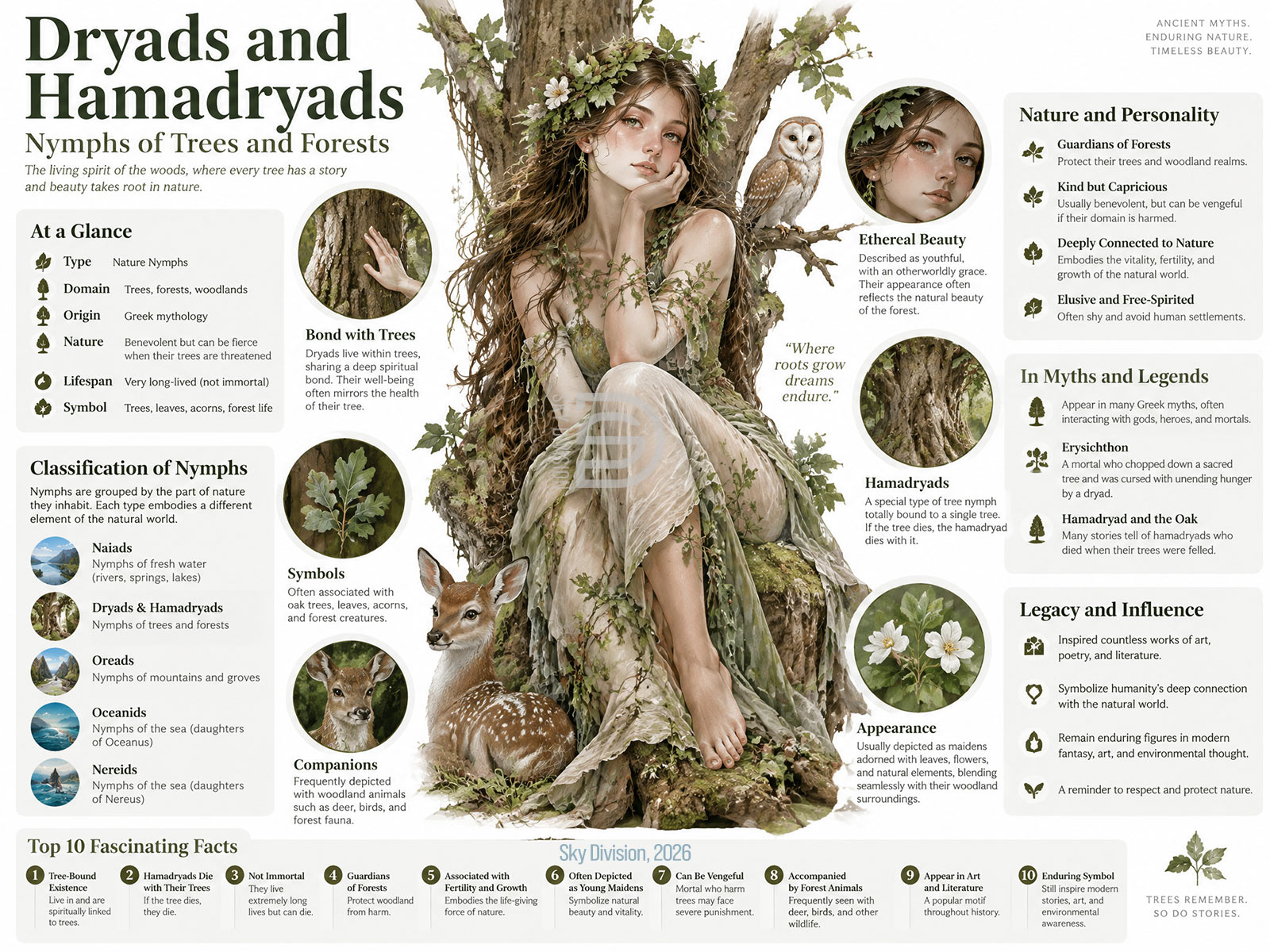 • Atlanteia • Chrysopeleia • Erato • Eurydice
Nymphs of trees, were believed to die together with the trees which had been their abode, and with which they had come into existence. They were called dryades (δρυάδες), hamadruades (ἁμαδρυάδες) or hamadryades (ἁδρυάδες), from drys (δρῦς), which signifies not only an oak, but any wild-growing lofty tree; for the nymphs of fruit trees were called melides (μηλίδες), meliades (μηλιάδες), epimelides (ἐπιμλίδες), or hamamelides (ἁμαμηλίδες). They seem to be of Arcadian origin, and never appear together with any of the great gods. |
◉ Nereids
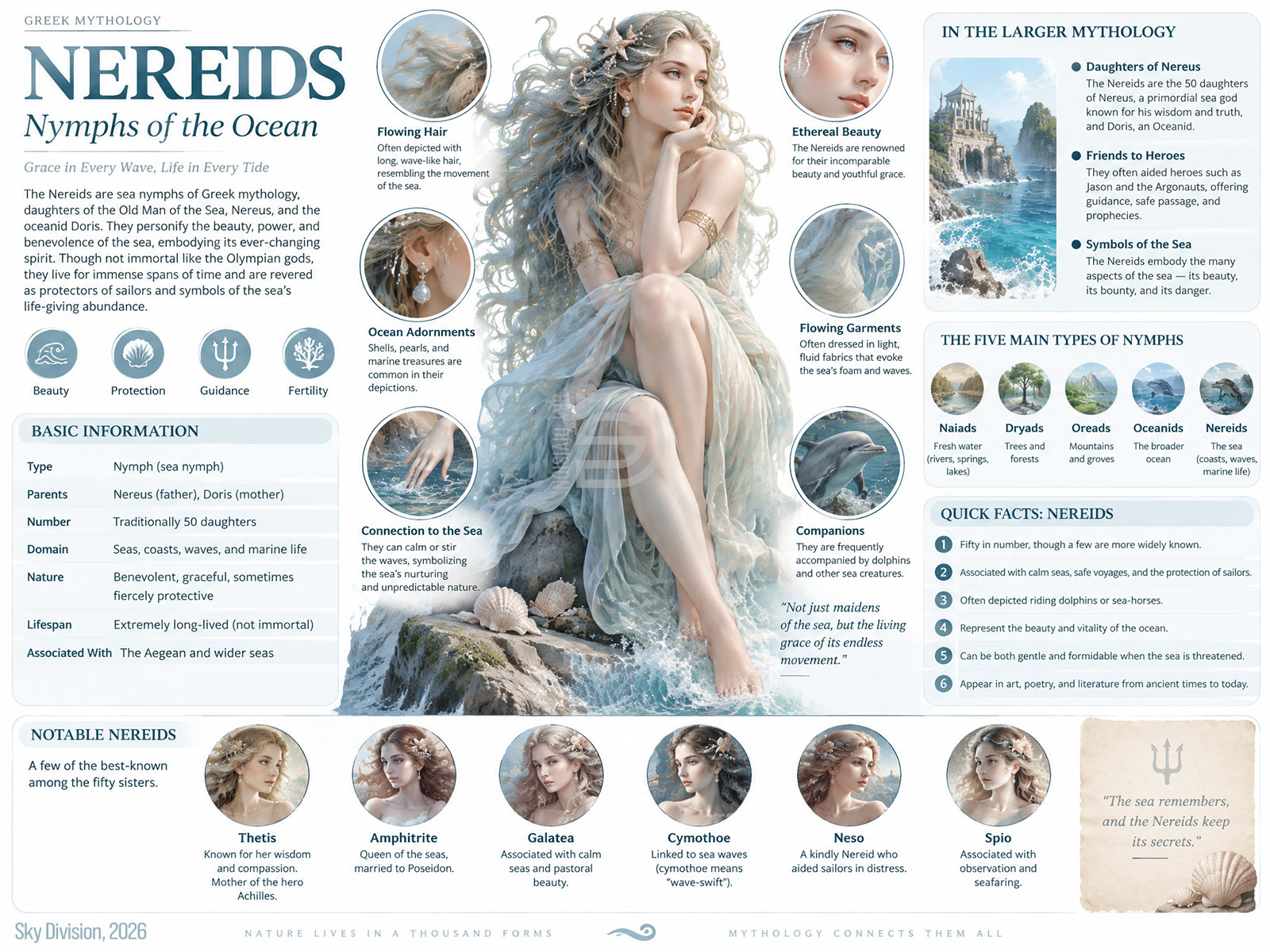 Nymphs of the watery element - Nymphs of the Mediterranean or inner sea, who are regarded as the daughters of Nereus, whence they are called Nereides (Νηρεΐδες).
• Amatheia • Amphithoe • Amphitrite • Apseudes • Callianassa • Callianeira • Cranto • Creneis • Cymatolege • Cymo • Cymodoce • Cymothoe • Dero • Dexamene • Doto • Dynamene • Eione • Euarne • Eucrante • Eumolpe • Eunice • Eupompe • Galatea • Glauconome • Halimede
|
◉ Oceanids
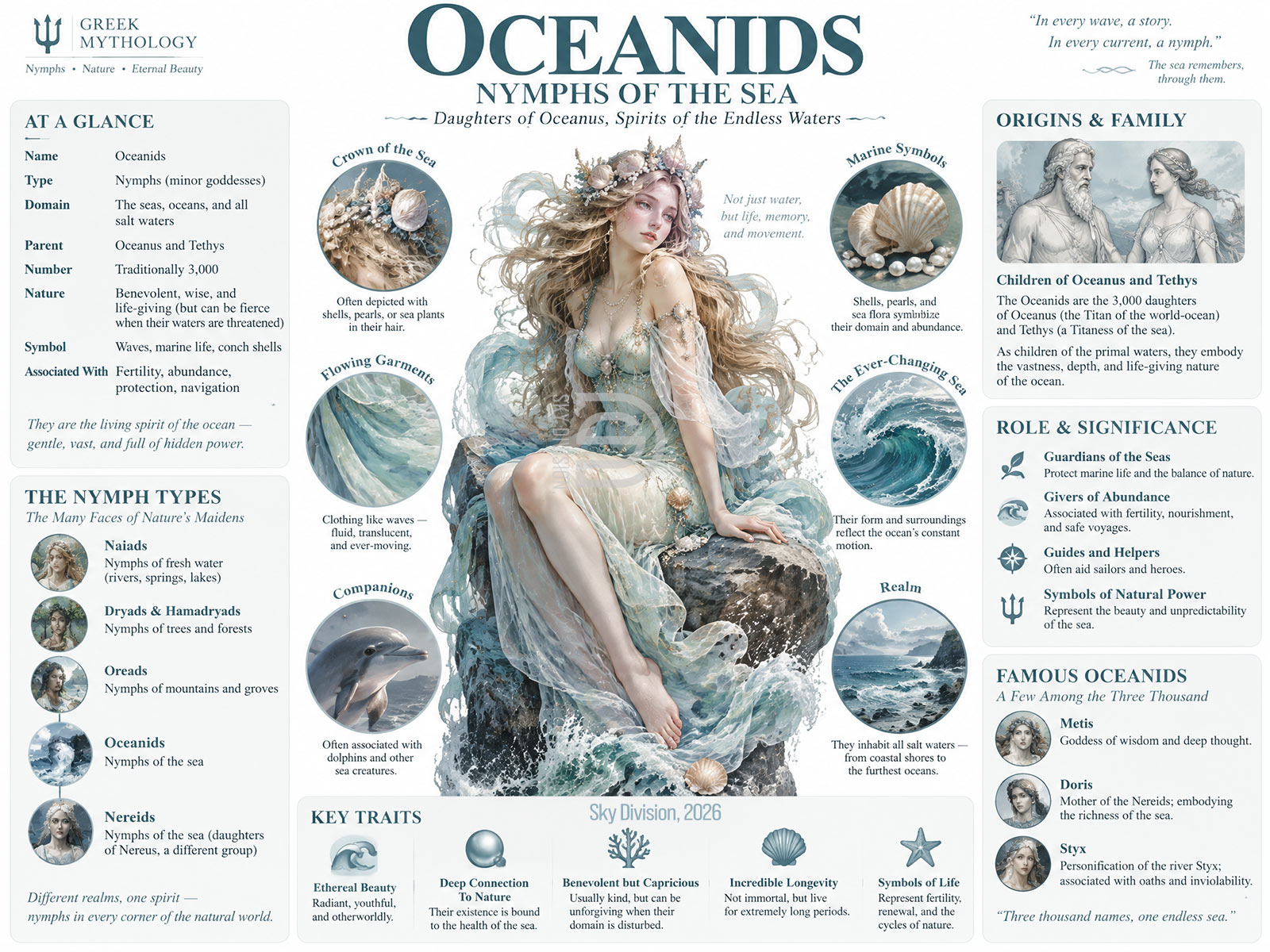 Nymphs of the watery element - Nymphs of the ocean, Oceaninae (Ὠκεανῖναι) or Oceanides (Ὠκεανίδες), nymphai aliai (νύμφαι ἅλιαι), who are regarded as the daughters of Oceanus.
• Acaste • Admete • Amphirho • Asia • Callirhoe • Camarina • Capheira • Cerceis • Clymene (mother of Phaethon) • Clymene (wife of Iapetus) • Clytie • Coryphe • Daeira • Dodone • Electra • Eurynome • Galaxaura • Hesione • Iache • Ianthe • Idyia • Melia (consort of Apollo) • Melia (consort of Inachus) • Melobosis • Metis • Pasithoe • Peitho • Perse • Phaeno • Philyra • Pleione • Pluto • Prymno • Styx • Telesto • Theia • Zeuxo |
◉ Dryads
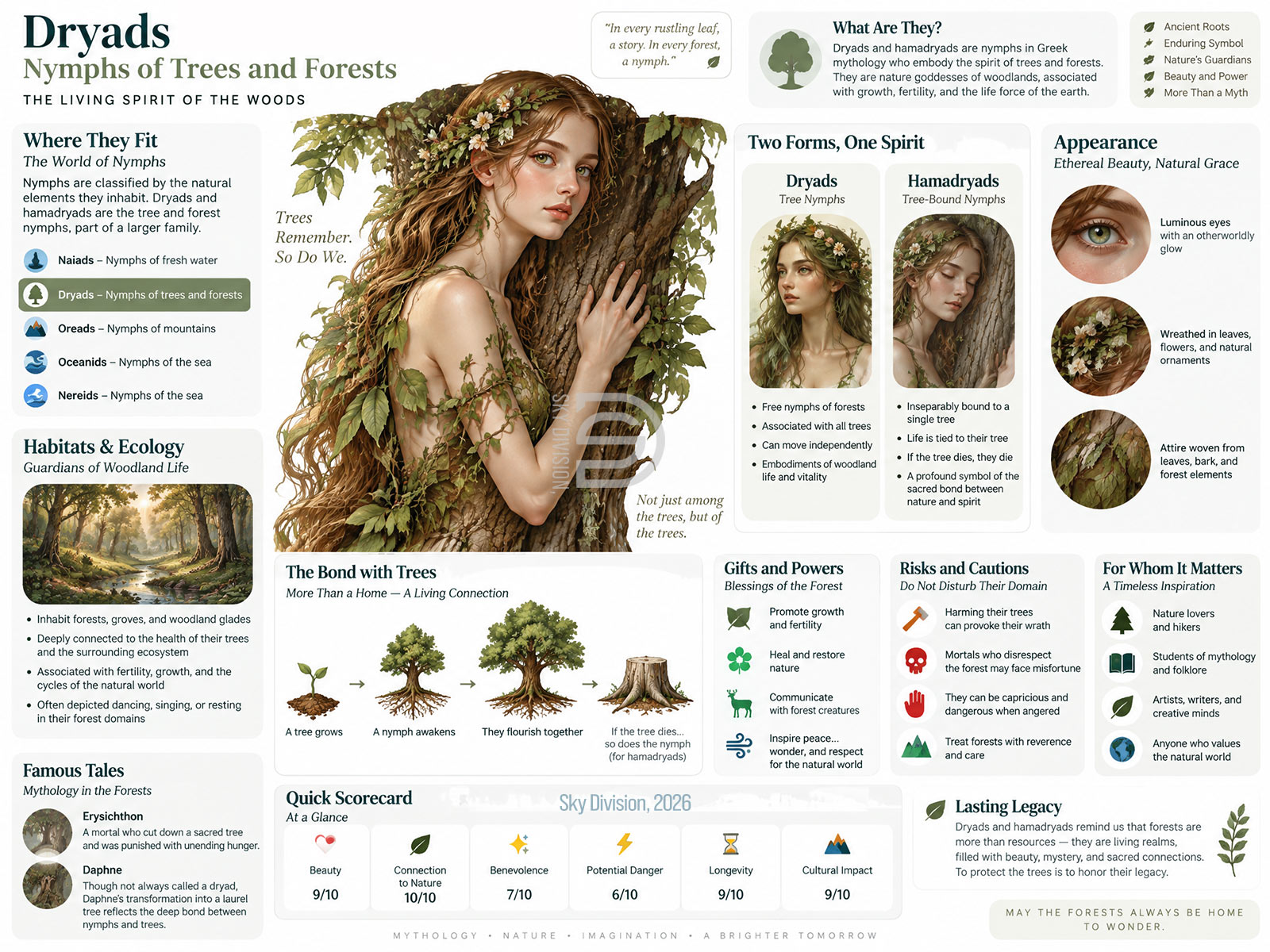 Nymphs of the trees. A female spirit (nymph) of nature who lives in a tree. The fate of the dryades (δρυάδες) is closely connected to that of the trees they inhabit. There several classifications of dryades:
Meliae - the nymphs of ash-trees;
Hamadryades - the nymphs of oak and poplar trees;
Epimelides / Maliades / Hamamelides - the nymphs of fruit trees;
Daphnae - the nymphs of laurel trees;
Oreades - the nymphs
|
◉ Nymphs (Other)
• Aba • Adrasteia • Aegina • Aex • Aganippe • Amalthea • Anthracia • Aora • Arethusa • Argyra • Astacia • Axioche • Bolbe • Brettia • Callirhoe • Calypso • Cassotis • Chesias • Chloris • Cleodora • Clonia • Corycia • Cyane • Cyllene • Cynosura • Daphne • Daulis • Dercetis • Diopatra • Drosera • Dryope • Echemeia • Echo • Eunoë • Hagno • Harmonia • Hegetoria • Himalia • Ida • Idaea
|
◉ Land Nymphs
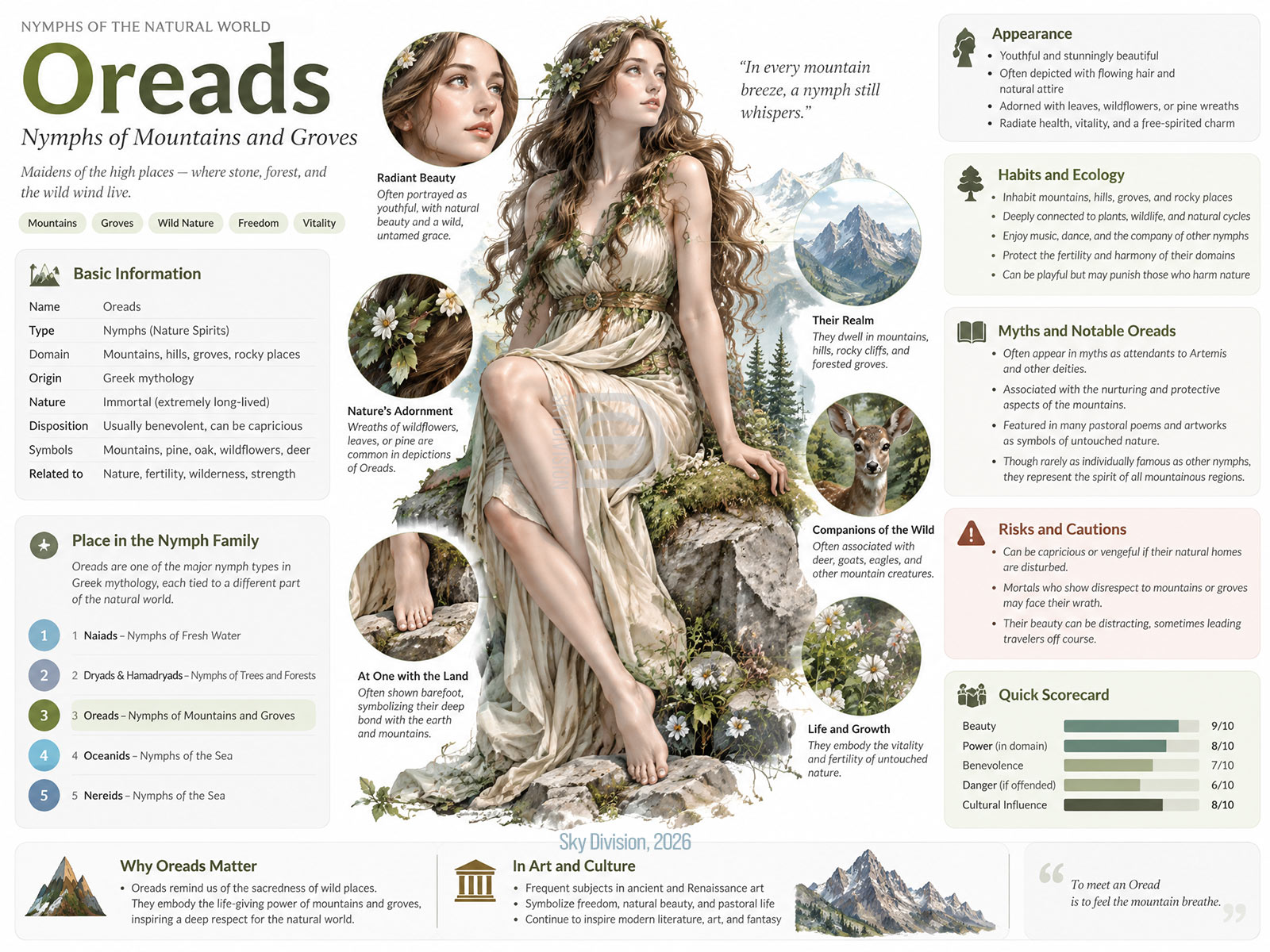 • Alseides (groves) • Auloniades (valleys, see also Napaeae) • Leimonides (meadows) • Napaeae (dells, see also Auloniades) • Oreads (mountains, grottoes, also Orodemniades)
Nymphs of mountains and grottoes, are called orodemniades (ὀροδεμνιάδες) and oreades (ὀρειάδες) but sometimes also by names derived from the particular mountains they inhabited, as Kithaironides (Κιθαιρωνίδες), Peliades (Πηγιάδες), Korukiai (Κορύκιαι), etc.
Nymphs of forests, groves, and glens, were believed sometimes to appear to and frighten solitary travelers. They are designated by the names alseides (ἀλσηΐδες), holeoroi (ὑληωροί), auloniades (αὐλωνιάδες), and napaeae (vαπαῖαι). |
◉ Wood & Plant Nymphs
• Anthousai (flower nymphs) • Dryades (trees) • Hamadryades or Hadryades • Daphnaiai (Δαφναίαι, nymphs associated with the laurel tree) • Epimeliades or Epimelides (apple tree; also protected flocks - other name variants include Meliades, Maliades and Hamameliades; same as these are also the Boucolai (Pastoral Nymphs) • Kissiae (ivy) • Oenone (India - mother of Melantheus, an Indian chief assisting Dionysus in the war against the Indians) • Meliae (manna-ash tree, born from the drops of blood that fell
|
◉ Celestial Nymphs
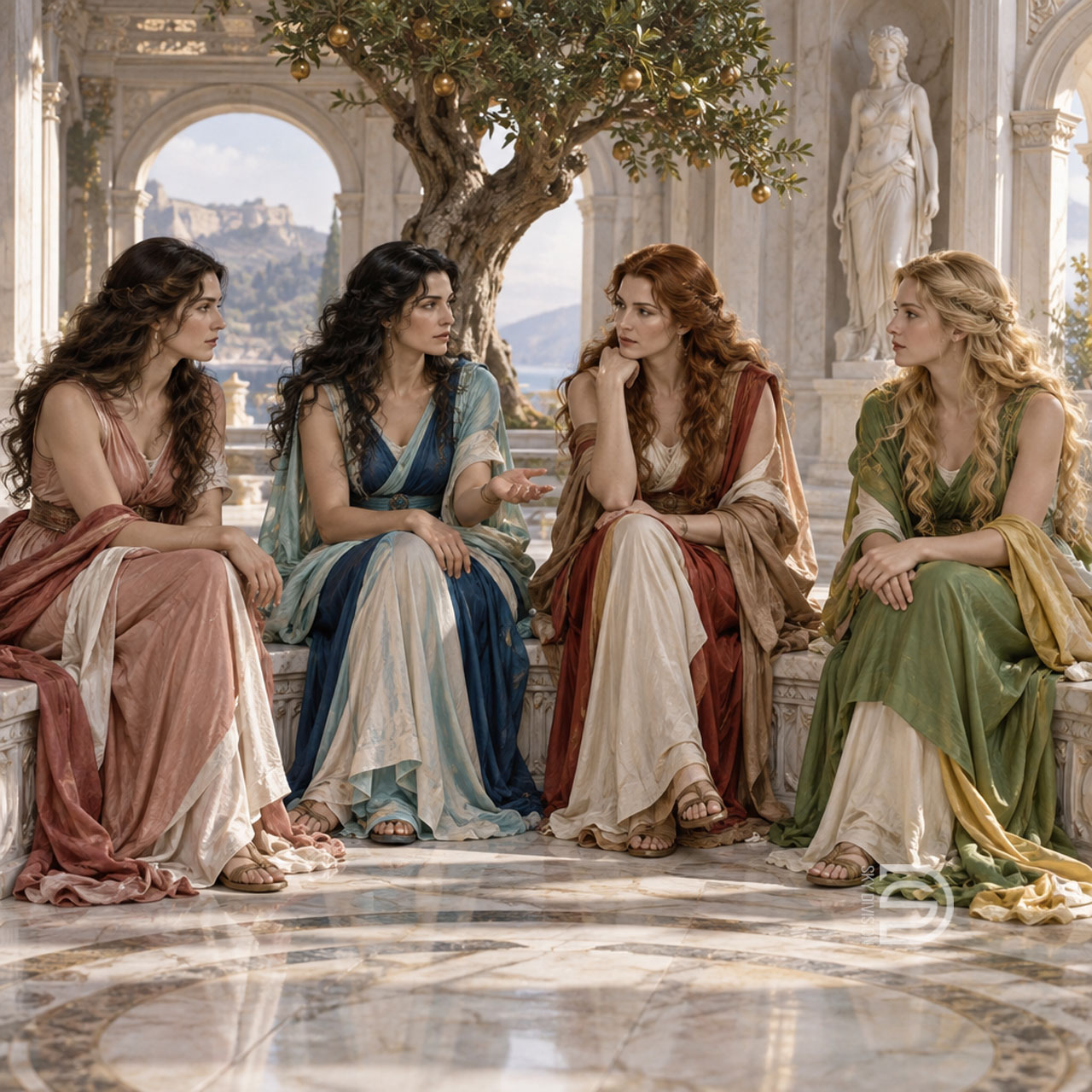 • Aurae (breezes - also called Aetae or Pnoae, daughters of Boreas) • Hesperides (evening - nymphs of the sunset, the West, and the evening; daughters of Atlas and Hesperis; also had attributes of the Hamadryads) • Aegle • Arethusa • Erytheia (or Eratheis - mother of Eurytion by Ares) • Hyades (star cluster; sent rain - daughters of Atlas by either Pleione or Aethra) • Pleiades (daughters of Atlas and Pleione; constellation; also were classed as Oreads) • Maia
|
◉ Epimelides
Rustic nymphs responsible for the protection of sheep flocks and apple orchards. Also called maliades. The white-haired nymphs of meadows and pastures. The ancient Greek word μηλον (mēlon) means both "sheep" and "apple / fruit", which has led some authors to name them the protectors of the flocks of sheep as well as the nymphs of apple trees and fruit trees. |
◉ Maliades
The nymphs who were worshiped as the protectors of flocks and of fruit-trees. They are also called meliades (μηλίδες) or epimelides (ἐπιμηλίδες). The same name is also given to the nymphs of the district of the Malians on the river Spercheius. |
◉ Alseides
Dryad-nymphs of the groves, Nymphs of forests, groves, and glens. They occasionally appeared to solitary travelers and frightened them. |
◉ Underworld Nymphs
• Orphne (Hades - is a representation of the darkness of the river Styx, the river of hatred, but is not to be confused with the goddess Styx herself nor with Nyx, goddess of night, despite being associated with both. She is the consort of Acheron (the god of the river in Hades), and the mother of Ascalaphus (the orchardist of Hades) • Leuce (white poplar tree - daughter of Oceanus and lover of Hades) • Melinoe (Orphic nymph, daughter
|
◉ Nymphs by Location
individual nymphs or groups thereof associated with this or that particular location. Nymphs in such groups could belong to any of the classes (Naiades, Oreades etc)
• Aeaean Nymphs (Aeaea Island - handmaidens of Circe) • Aegaeides (Aegaeus River on the island of Scheria) • Aesepides (Aesepus River in Anatolia) • Abarbarea • Acheloides (Achelous River in Acarnania) • Callirhoe (second wife of Alcmaeon) • Acmenes (Stadium in Olympia, Elis) • Amnisiades (Amnisos River on the island
|
◉ Nymphs (Unspecified)
(nymphs whose class was not specified in the source texts)
• Alphesiboea (India - loved by Dionysus) • Aora (Crete - eponym of the town Aoros in Crete) • Areia (daughter of Cleochus and mother of Miletus by Apollo) • Axioche (or Danais - Elis - mother of Chrysippus by Pelops) • Brettia (Mysia - eponym of Abrettene, Mysia) • Brisa (brought up the god Dionysus) • Calybe (Troy - mother of Bucolion, Laomedon) • Carmentis (or
|
 Sky Division & Logios'Logios' represents an AI entity, helping with data, stats, knowledge, words, calculations, helping human creator in exploring and developing content. 'Logios' sometimes can be a single AI-platform, or many of them. If a code-script is used somewhere then credits for assistance belong exclusively to DeepSeek AI.
Logios - from the Greek λόγιος (lógios), meaning "learned, eloquent, one who speaks with reason"., 2026 |