|
Carl Orff – Carmina Burana, Fortuna Imperatrix Mundi: No. 1, O Fortuna, 1937 (Audio – David Parry; London Philharmonic Orchestra, London Philharmonic Choir)
“O Fortuna” is the opening and closing movement of ‘Carmina Burana’, a scenic cantata composed by Carl Orff between 1935 and 1936. The work is based on a collection of medieval poems from the 11th–13th centuries, and “O Fortuna” sets one of these Latin poems to music. It belongs to the ‘Fortuna Imperatrix Mundi’ (“Fortune, Empress of the World”) section, which frames the entire cantata. The text is a dramatic appeal to Fortuna, the Roman goddess of fortune and luck. The speaker laments Fortune’s cruelty and unpredictability, describing her as a wheel that constantly turns – raising people up one moment and casting them down the next. The poem emphasizes the fleeting nature of power, wealth, and happiness, and the helplessness of humanity before fate. Musically, “O Fortuna” is characterized by its powerful, insistent rhythm and massive choral and orchestral forces. It opens with a thunderous, repetitive chordal pattern that immediately commands attention, and the choir declaims the text with intense, almost threatening energy. The dynamics shift between overwhelming fortissimo passages and quieter, more ominous moments, creating a sense of inexorable fate. The movement is widely recognized in popular culture, frequently used in films, television, and advertising to evoke drama, epic scale, or impending doom. Its raw energy and stark message about the unpredictability of fortune have made it one of the most famous choral pieces of the 20th century. Carl Orff – Carmina Burana, Fortuna Imperatrix Mundi: No. 1, O Fortuna, 1935-36 |
Carl Orff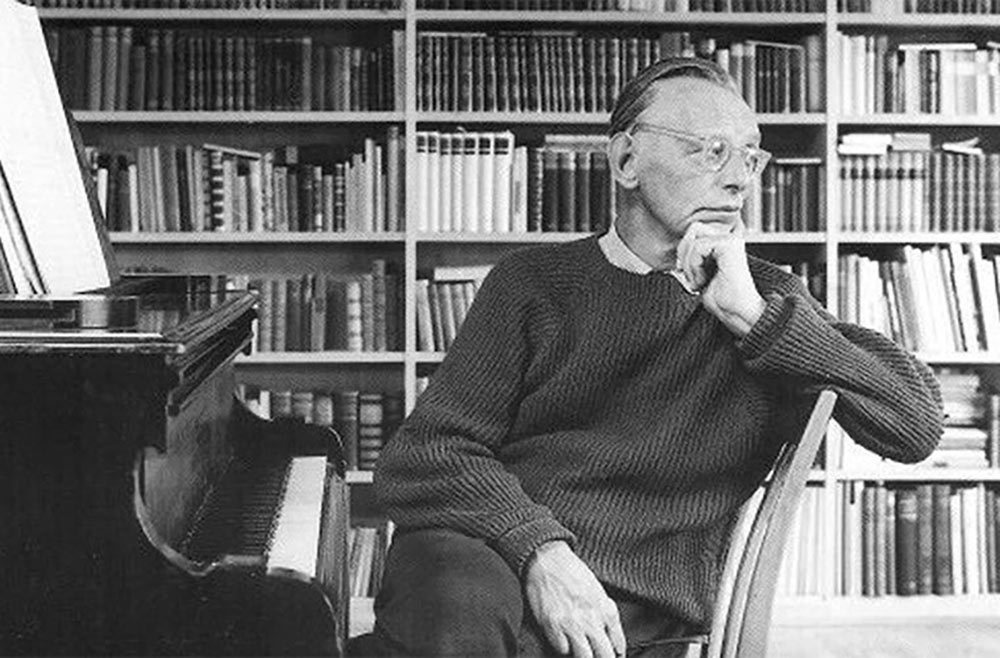 Carl Orff (1895-1982) was a German composer and music educator, best known for his dramatic choral work 'Carmina Burana' (1937), a setting of medieval Latin and German poems whose opening movement, "O Fortuna" has become one of the most recognizable pieces in classical music. Orff developed a distinctive compositional style built on driving rhythms, simple harmonic structures, and percussive textures, favoring directness and theatrical impact over complex counterpoint. Beyond composition, Orff had a major influence on music |
 Sky Division & Logios'Logios' represents an AI entity, helping with data, stats, knowledge, words, calculations, helping human creator in exploring and developing content. 'Logios' sometimes can be a single AI-platform, or many of them. If a code-script is used somewhere then credits for assistance belong exclusively to DeepSeek AI.
Logios - from the Greek λόγιος (lógios), meaning "learned, eloquent, one who speaks with reason"., 2026 |
|