![]() |
||||||||
| click on the tooltip-link to keep it activated – click outside the box to deactivate it / to read more |➔| | ||||||||
| Elia Kalamatas (Olives / Ελιά Καλαμάτας, Kalamon olives, Kalamata olives / Kalamata, Greece) Called either Kalamata, after the city and region on the southwestern side of the Peloponnese where they are traditionally grown, or Kalamon, after the variety of olive tree, these olives are an organic product of exceptional quality that stands out for its authentic taste and intense aroma. They are never harvested green, and to avoid bruising, they must be|➔| |
Kalamata (Olive Oil / Καλαμάτα / Kalamata, Greece) This olive oil is closely linked to the history, traditions and culture of the region of Messinia and the southwestern part of the Peloponnese where the oil is produced. Olive oil production is the main occupation of Messinia's inhabitants at the end of the year and a key factor in the regional economy. This extra virgin olive oil is produced mainly from Koroneiki|➔| |
Kolymvari Chanion Kritis (Olive Oil / Κολυμβάρι Χανίων Κρήτης / Kolymvari, Greece) This high-quality extra virgin olive oil is made in the western part of the island of Crete, the largest and sunniest Greek island. This distinctive olive oil is produced exclusively from Koroneiki olives. The olives are gathered by beating the tree branches, but special care is taken not to bruise the fruit in the process. The oil has a beautiful green-gold|➔| |
||||||
| Konservolia Stylidas (Olives / Κονσερβολιά Στυλίδας, Stylida olives / Phthiotis, Greece) This table olive comes from olive trees of the Konservolia variety grown in Phthiotis prefecture in central Greece. This region is characterized by a Mediterranean climate with warm summers and humid winters that is ideal for the cultivation of olive trees. Traditionally, the olives are harvested by hand either during the initial state of ripening while they are still green or|➔| |
Konservolia Atalantis (Olives / Κονσερβολιά Αταλάντης, Atalantis olives / Phthiotis, Greece) This large table olive is obtained from olive trees of the Konservolia variety grown in Phthiotis prefecture in central Greece. They are harvested by hand, either when ripe and black or earlier when they are still green. When transported to the processing plant, the black olives are soaked in a caustic soda solution and the green ones in a salt solution to|➔| |
Throumpa Chiou (Olives / Θρούμπα Χίου / Chios, Greece) The Greek island of Chios has a wonderful Mediterranean climate and fertile soil that enables the cultivation of many high-quality products. Among the most interesting products on the island are Throumpa Chiou table olives. Nets are placed under these olive trees to catch the olives as they fall naturally from the tree when they reach their full ripeness, and they are gathered every|➔| |
||||||
| Sitia Lasithiou Kritis (Olive Oil / Sitia Municipality, Greece) This extra virgin olive oil of exceptional quality is obtained from the Koroneiki olive variety, which is traditionally cultivated in Sitia. These olives are gathered by beating the trees with small wooden sticks in order to avoid bruising the fruit. The best olives from the harvest are selected and cleaned to be processed in traditional or centrifugal olive mills. The processing conditions are monitored|➔| |
Finiki Lakonias (Olive Oil / Φοινίκι Λακωνίας, Finiki olive oil / Finiki, Greece) This high quality extra virgin olive oil is obtained from Koroneiki (70%), Tsounati (25%), and Asprolia (5%) olives cultivated in the Finiki area of Lakonia prefecture. This oil owes its unique organoleptic properties to the special microclimate of the area and its chalky soils. Its aroma is described as reminiscent of fresh cut grass and its taste is quite|➔| |
Vorios Mylopotamos Rethymnis Kritis (Olive Oil / Βόρειος Μυλοπόταμος Ρεθύμνης Κρήτης / Mylopotamos, Greece) Olive cultivation on Crete began in ancient times and, according to some findings, the largest Greek island may even be the home of the olive. Vorios Mylopotamos Rethymnis Kritis olive oil is extracted mechanically from Koroneiki variety (at least 90%) and Chondrolia variety olives. Both are cultivated in the province of Mylopotamos in Rethymnon prefecture, an area with soil content|➔| |
||||||
| Kranidi Argolidas (Olive Oil / Κρανίδι Αργολίδας / Ermionida, Greece) Kranidi Argolidas is an extra virgin olive oil obtained from the olives of the varieties Koroneiki and Manaki within the administrative boundaries of the municipal areas of Ermioni, Thermisia, Iliokastro, Didyma, Fourni, Kilada, Portocheli and Kranidi, in the province of Ermioni, in the Peloponnese region. The gathering of the olives is usually done by hand or using small combs and nets. It|➔| |
Exeretiko Thrapsano (Olive Oil / Εξαιρετικό παρθένο ελαιόλαδο Θραψανό / Thrapsano, Greece) Exeretiko Partheno Eleolado Thrapsano - This olive oil has been produced for centuries in the municipality of Thrapsano in Crete's Heraklion prefecture. The region's excellent soil and weather is perfect for growing the Psilolia and Koroneiki olive varieties from which this oil is made. These olives are picked when they are light yellow to violet in color, depending on their|➔| |
Lygourio Asklipiou (Olive Oil / Λυγουριό Ασκληπιείου / Asklipieio, Greece) The extra virgin olive oil Lygourio Asklipiou is obtained from the olives of the Manaki type within the municipal area of Asklipieio. In order to avoid bruising the fruit, they are collected directly from the tree by hand or using combs. The olives from the ground are never used for the production. Once the best olives have been selected, within three days|➔| |
||||||
| Viannos Irakliou Kritis (Olive Oil / Βιάννος Ηρακλείου Κρήτης / Viannos, Greece) This extra virgin olive oil is the finest oil produced in the Viannos region of the island of Crete. This mountainous region is perfectly suited for cultivating olive trees due to its ideal climate and its very fertile soil, which is enriched with deposits from rivers and streams that end here. The oil is made from the Koroneiki olive variety, which|➔| |
Galano Metaggitsiou Chalkidikis (Olive Oil / Γαλανό Μεταγγιτσίου Χαλκιδικής / Metagkitsi, Greece) This extra virgin olive oil is produced in Metaggitsi in the Sithonia municipality, an area enclosed by a river, hills, and the sea. It is characterised by the presence of the Strongilolia (Galani or Prasinolia) variety of olive, which is grown commercially in this area and almost nowhere else. Chondrolia Chalkidikis olives may also be used in this olive oil, but only|➔| |
Agoureleo Chalkidikis (Olive Oil / Αγουρέλαιο Χαλκιδικής, Chalkidiki olive oil / Chalkidiki, Greece) This extra-virgin olive oil is made from the Hondrolia Chalkidikis and Chalkidikis olive varieties, which are indigenous to Greece's Chalkidiki peninsula. These are the largest Greek olive varieties, and they are harvested very early and processed while they are still green, making Agoureleo Chalkidikis the first Greek olive oil produced each year. All stages of the production process must|➔| |
||||||
| Petrina Lakonias (Olive Oil / Πέτρινα Λακωνίας / Petrina, Greece) This extra virgin olive oil is obtained from Koroneiki olives that grow in the village of Petrina in the Laconia prefecture. This beautiful village has the perfect weather conditions for cultivating olive trees – the sunny weather helps the town's olive trees produce around 300 tons of extra virgin olive oil each year. Petrina Lakonias' color is yellowish-green, depending on how ripe|➔| |
Arxanes Irakliou Kritis (Olive Oil / Αρχάνες Ηρακλείου Κρήτης, Archanes olive oil / Archanes-Asterousia, Greece) Crete, the largest Greek island, has the perfect climate for growing olives. The olive from used to produce Arxanes Irakliou Kritis extra virgin olive oil is the Koroneiki olive variety, which is believed to originate from this island. The olives must be harvested and cleaned before processing in traditional or centrifugal olive mills in the municipality of Archanes|➔| |
Peza Irakliou Kritis (Olive Oil / Πεζά Ηρακλείου Κρήτης / Heraklion Region, Greece) This extra virgin olive oil is obtained from Koroneiki olives grown in the area surrounding the city of Heraklion on the island of Crete. The olives are harvested when the fruit is ripe, and the trees are either beaten with small wooden sticks or shaken with machines to free the olives from their stems. The harvested olives are cleaned and|➔| |
||||||
| Throumpa Rethymnis Kritis (Black Olives / Θρούμπα Αμπαδιάς Ρεθύμνης Κρήτης / Amari, Greece) Throumpa Ampadias Rethymnis Kritis - These olives are cultivated in the province of Amario in Rethymnon prefecture on the island of Crete. The Mediterranean climate and fertile soil on the island provide excellent conditions for olive growing. These Throuba olives fall on the ground when fully ripe, and they are collected using olive nets. They are characteristically black in color|➔| |
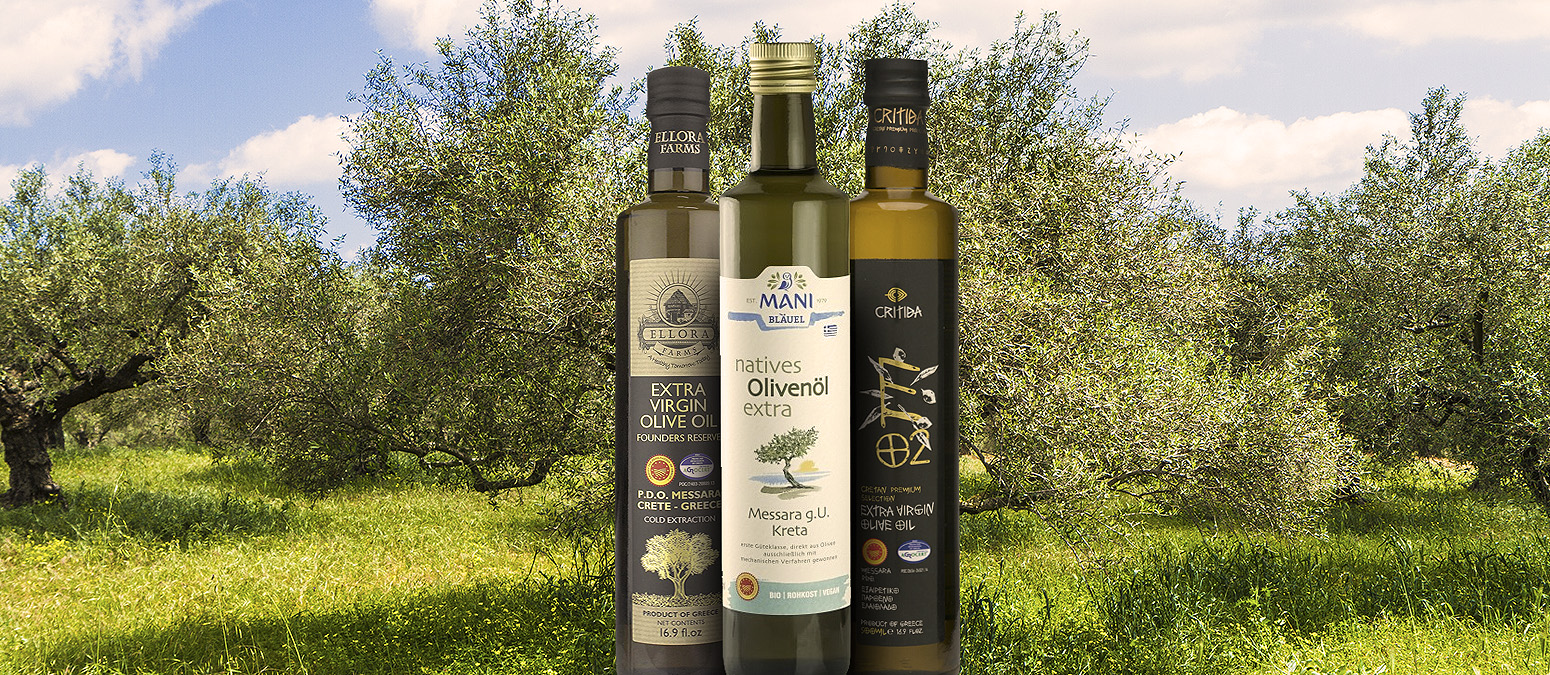
Messara (Olive Oil) (Olive Oil / Μεσσαρά / Crete, Greece) The extra virgin olive oil Messara is the 100th Greek agricultural product to receive protected status under European Union law. It is obtained by mechanical processes from olives of the Koroneiki variety in the Messara region on the island of Crete, where these olives have been grown since the Minoan times. The unique climate and geographical features of this southernmost area of the|➔| |
Exeretiko Selino Kritis (Olive Oil / Εξαιρετικό Παρθένο Ελαιόλαδο Σέλινο Κρήτης / Kantanos-Selino, Greece) Exeretiko Partheno Eleolado Selino Kritis - The province of Selinos, where this oil is made, is located in Hania prefecture on the island of Crete, the largest and most populous Greek Mediterranean island. Exeretiko Partheno Eleolado Selino Kritis (also known as simply 'Selinou') is an extra virgin olive oil derived from Tsounati (at least 60%) and Koroneiki olives (40% at|➔| |
||||||
| Exeretiko Eleolado Trizinia (Olive Oil / Εξαιρετικό παρθένο ελαιόλαδο Τροιζηνία / Troezen, Greece) Exeretiko Partheno Eleolado Trizinia - This extra virgin olive oil is produced either exclusively from Manaki olives or by adding no more than 50% Koroneiki olives by weight. This oil is produced exclusively in Trizonia. The olives are not left to over-ripen on the tree, which would result in higher acidity. Trizinia olive oil owes its exceptional quality to the|➔| |
Krokees Lakonias (Olive Oil / Κροκεές Λακωνίας / Krokees, Greece) Krokees Lakonias is an extra-virgin olive oil obtained from olives of the varieties Mirtolia and Anthinolia produced within the administrative boundaries of the municipal area of Krokees, in the Laconia prefecture, in the Peloponnese region. The olives are gathered by hand or using small combs and nets. They are transported to the production plant in plastic baskets or bags where they are|➔| |
Elaiolado Makris (Olive Oil / Ελαιόλαδο Μάκρης / Makri, Greece) Elaiolado Makris is a premium olive oil originating from Greece, specifically linked to the region surrounding the village of Makris. This olive oil stands out for its rich, fruity aroma and balanced, smooth taste that captures the unique terroir of the Mediterranean landscape. The cultivation of olives in Makris is deeply connected to the region's climate and soil, which provide ideal conditions for|➔| |
||||||
|
Fun fact (did you know that : ) Albania produces more olives than USA – Albania 16,000 T (2023-24) / United States 15,000 T (2023-24)
The Greek olive industry is a vital part of the country’s economy. The industry is characterized by a variety of olives, including the well-known Kalamata and Koroneiki, and relies heavily on family-run farms for cultivation and production. According to an article by Helena Rhodes (published 2025), with over 132 million olive trees dotting the landscape, Greece produces approximately 350,000 tons of olive oil annually, making it the world’s 3rd-largest producer. Other sources (IOOC 2023-24) say Greece is the 5th world producer. Anyways, continues Rhodes, Greek olive oil production isn’t just agriculture – it’s a 4,000-year-old art form that transforms humble olives into culinary masterpieces. Annual output of Peloponnese is 227,500 tons (65%) and that of Crete – 70,000 tons (20%). The top olive oil producing countries are Spain, Italy, Turkey, Tunisia and Greece. Spain is the largest producer, accounting for about 45% of the world’s olive oil production. Italy has the largest number of PDO and PGI olive oils in the European Union. Top 10 Countries with the Highest Olive Oil Production (Tons, IOOC 2023-24) – Spain 766,400 T, Italy 288,900 T, Turkey 210,000 T, Tunisia 200,000 T, Greece 195,000 T, Portugal 150,000 T, Morocco 106,000 T, Syria 95,000 T, Algeria 93,000 T, Egypt 40,000 T |
||||||||
|
Three European Union schemes of geographical indications and traditional specialties, known as protected designation of origin (PDO), protected geographical indication (PGI), and traditional speciality guaranteed (TSG), promote and protect names of agricultural products and foodstuffs, wines and spirits.
[ PDOThe protected designation of origin (PDO) is a type of geographical indication of the European Union aimed at preserving the designations of origin of food-related products. The designation was created in 1992 and its main purpose is to designate products that have been produced, processed and developed in a specific geographical area, using the recognized know-how of local producers and ingredients from the region concerned. |
||||||||
Konservolia Amfissis
|
||||||||
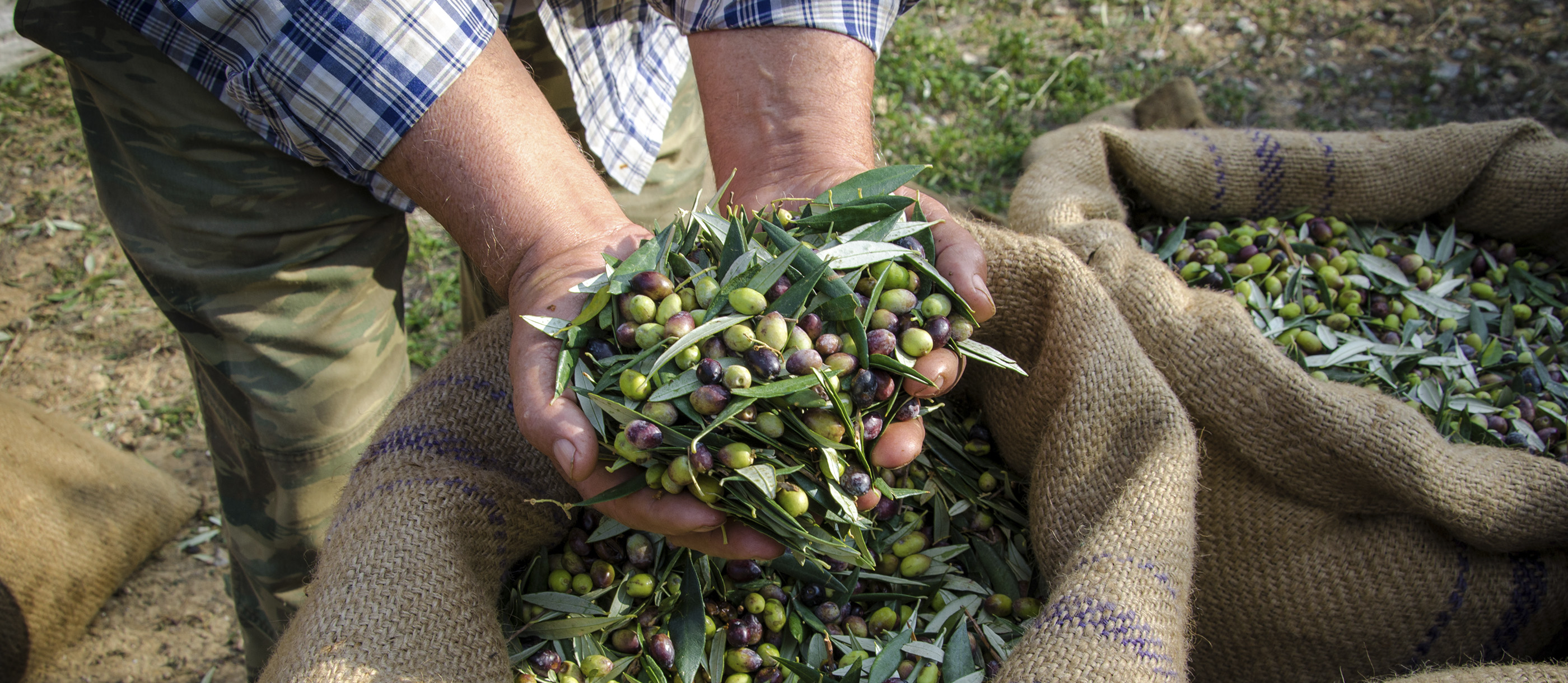
Konservolia Rovion
|
||||||||
Messara (Olive Oil)
|
||||||||
Sky Division, EU (European Union), Tasteatlas (World Food Atlas), Wikipedia… and other sources